
How to Find a Reliable Straw Hat Supplier?
Finding a dependable Straw Hat Supplier takes more than comparing prices or browsing polished product photos. Straw hats vary in weave, shape retention, trim, and finish. A sample may look excellent under studio lighting, then arrive with uneven brims or loose stitching. Small details matter.
Trade data can help buyers understand the market, but it has limits. UN Comtrade classifies many plaited or assembled hats under HS 6504, offering a way to review international trade flows. That category does not prove a supplier’s craftsmanship, factory capacity, or delivery record. Use the numbers as context, not as a recommendation. Ask for proof.
A practical evaluation starts with a physical sample, a written specification, and clear production milestones. Check straw consistency, brim symmetry, stitching, band attachment, and how the hat holds its shape after gentle handling. Request recent product references, sample lead times, minimum order quantities, and documented quality checks. ISO 2859-1 provides recognized sampling procedures for inspection, though a standard alone cannot guarantee a good shipment. Buyers should also confirm who performs inspections and how defects are recorded.
Experience teaches a less comfortable lesson: supplier presentations can be persuasive, while communication during production tells a different story. Send the same specification to several candidates and compare the clarity of their questions. A reliable partner will flag uncertainties rather than promise perfection. That may feel slower. It is often safer than discovering hidden costs or inconsistent quality after production begins.
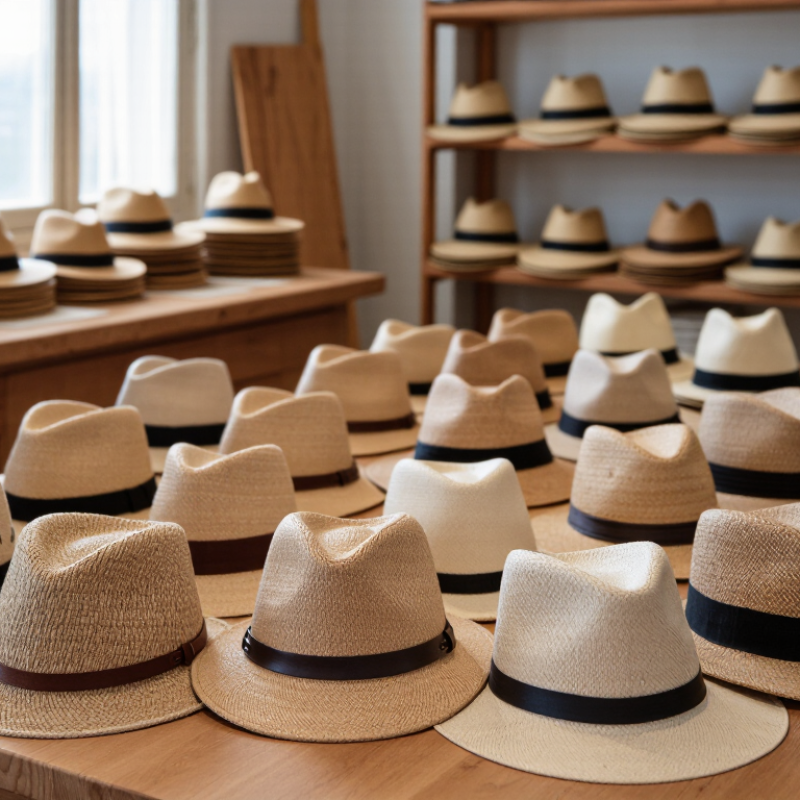
Define Your Straw Hat Requirements
Before contacting a straw hat supplier, turn “good quality” into measurable requirements. Specify the intended use, target customer, order quantity, target price, and delivery window. Then describe the hat: head circumference, crown height, brim width, shape, color, and acceptable measurement tolerance. Small details matter.
Name the material precisely, such as wheat straw, raffia, paper braid, or a stated blend. Ask for the fiber composition, origin, weave density, and any coatings or trims. Textile Exchange’s 2024 Materials Market Report estimates that global fiber production reached 124 million tonnes in 2023. The report does not measure straw hats specifically, but it shows why material claims should be clearly defined and documented. Request a sample made to the proposed specification, not merely a similar style.
Set inspection criteria before production: check loose ends, uneven braiding, odor, color variation, brim symmetry, and whether the hat keeps its shape after packing. Define how many defects are acceptable and what packaging prevents crushing. Not every test fits. I would also record what remains uncertain, such as natural-fiber shade variation; buyers sometimes overlook it, then reject a usable batch. A simple specification sheet gives both sides a concrete reference.
How to Find a Reliable Straw Hat Supplier? - Define Your Straw Hat Requirements
| Requirement | Details to Define | Example Specification | Why It Matters |
|---|---|---|---|
| Hat style and use | Intended wearer, occasion, and overall silhouette | Adult summer sun hat with a medium-width brim for everyday outdoor wear | The use case affects shape, comfort, durability, and material choice. |
| Material | Natural or synthetic fiber; specify the material where known | Natural straw, such as raffia or paper straw; state whether mixed materials are acceptable | Materials differ in texture, flexibility, appearance, and care requirements. |
| Weave and finish | Weave appearance, surface feel, and acceptable variation | Even, closely spaced weave with no sharp protruding fibers; approve against a physical sample | A clear standard helps assess consistency across samples and production. |
| Size and fit | Head circumference, sizing system, and adjustment features | Adult size range of 56–58 cm; measure the inside circumference and specify any adjustable band | Sizing conventions vary, so measurements reduce fit-related returns. |
| Crown and brim dimensions | Crown height, brim width, and shape | Crown height: 10–11 cm; brim width: approximately 7–9 cm, measured from the crown edge | Measurements make the silhouette easier to reproduce and inspect. |
| Color and trim | Base color, band material, trim, and color-matching method | Natural straw tone with a removable dark fabric band; approve colors using a sample or reference swatch | Natural fibers can vary in shade, making sample approval important. |
| Construction and tolerances | Stitching, edge finish, shape retention, and acceptable measurement variation | Secure, even stitching; neatly finished brim edge; agree on measurement tolerances before production | Written quality criteria make inspection more objective. |
| Order quantity and timing | Initial quantity, repeat-order potential, and required delivery window | Request a quote for a defined trial quantity and confirm production and shipping lead times in writing | Quantity and schedule affect pricing, production planning, and delivery feasibility. |
| Packaging and shipping | Individual packaging, carton protection, labeling, and shipping destination | Specify whether hats must be shipped flat or shaped, and request packing details to help prevent crushing | Bulky or delicate hats may be damaged if packaging is not planned for their shape. |
| Compliance and documentation | Destination-market requirements, fiber information, and requested test or product documents | List the destination market and ask what applicable labeling or documentation can be provided; verify requirements independently | Requirements depend on the product and destination, so they should be confirmed before ordering. |
| Sample approval and inspection | Sample process, approval checkpoints, and defect criteria | Approve a pre-production sample and agree on inspection points for dimensions, weave, color, and finish | A documented reference sample gives both sides a shared quality benchmark. |
Example specifications are starting points, not universal standards. Confirm final measurements, materials, tolerances, and market requirements with the supplier before placing an order.
FAQS
State the intended use, order quantity, target price, and delivery window. Include head circumference, crown height, brim width, shape, color, and measurement tolerance. Small details matter.
Name the fiber, such as wheat straw, raffia, paper braid, or a specific blend. Ask about composition, origin, weave density, coatings, and trims. Request a sample made to your written specification.
Check for loose ends, uneven braiding, odor, color variation, and a symmetrical brim. Pack the hat and see whether it keeps its shape. I might overlook a small flaw on a quick check.
Workshops can suit handmade runs, while export houses may simplify mixed orders. Larger factories may offer steadier sizing and finishing. Ask who actually weaves the hats.
No. Capabilities vary by workshop, even in established weaving regions. Ask about fiber preparation, seasonal availability, and color consistency, then inspect the actual sample.
Compare the full cost, including sample fees, labels, inner bands, cartons, and freight. Ask for prices at several quantities. A low unit price can hide setup charges.
Put minimum order quantity, payment stages, production time, and damage remedies in writing. Confirm whether lead time starts after artwork approval. Easy to miss.
Ask who provides updates, how quickly they respond, and how repeat orders use saved specifications. Agree on a photo process for defects or short carton counts. I should compare response times more carefully.
Conclusion
Finding a reliable Straw Hat Supplier begins with clearly defining your needs, including hat styles, materials, target customers, quality standards, and expected order quantities. With these requirements in place, you can compare different supplier types and sourcing regions, then assess whether each candidate has the equipment, skilled workers, and production capacity to meet your specifications consistently.
Before placing a larger order, request samples and check their craftsmanship, comfort, fit, and durability. Ask for references or examples of previous work to learn more about a supplier’s communication and track record. Finally, compare pricing alongside minimum order quantities, lead times, payment terms, and policies for handling defects or delays. A supplier that offers clear answers and dependable ongoing support can help make production more predictable and build a stable long-term business relationship.
