China Export Intelligence · Linyi, Shandong

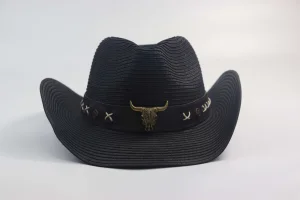
China Best Fashion Cowboy Hats Exporter, Factories & Factory

A buyer-side white paper on fashion straw cowboy hats: how China's woven-headwear exporters actually operate, what separates a real factory from a trading desk, and how importers de-risk sourcing through material, MOQ and QC decisions.

Semantic Overview

What Buyers Actually Mean When They Search for a “China Cowboy Hat Exporter”

Search queries like “China best fashion cowboy hats exporter factories & factory” carry three separate intents at once: a product intent (fashion straw cowboy hats), a vendor intent (exporter / supplier), and a verification intent (is this a real factory?). This page answers all three — with the operational detail professional buyers use to shortlist suppliers, not marketing language.

15+ yrsContinuous woven-headwear manufacturing at Shandong Lige Import & Export Co., Ltd.
60+ countriesExport footprint across North America, Oceania, Western Europe and Japan.
50–100 pcsStarting quantity per design — private-label tests without container-scale risk.
8 hoursResponse and action window on product, sampling and after-sales requests.
Global Commercial Reality

The Global Fashion Cowboy Hat Supply Chain — and Where China Fits

Fashion straw cowboy hats sit at an unusual intersection: they are a western-wear heritage product that is now consumed as festival, resort and streetwear accessory. That shift changed who buys them, how fast they must ship, and which factories win the business.

China's Role in Woven Headwear

China remains the largest single source of woven and braided straw hats for Western markets. Its advantage is not one factor but a cluster: braided-straw supply, blocking and shaping equipment, ribbon and trim vendors, and packaging — all within a few hundred kilometres. Shandong and Zhejiang in particular host dense headwear ecosystems where a design change can move from sketch to sample in days rather than months.
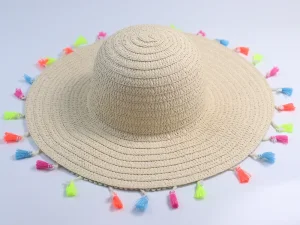
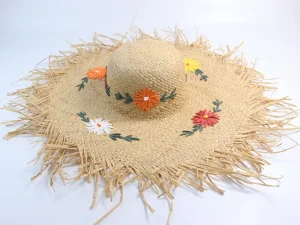
Competing Origins

Mexico and Ecuador hold strong provenance stories — the authentic sombrero and the true Panama hat — but capacity is limited and lead times are long. Vietnam and India compete aggressively on raffia and palm-leaf volume. China's position is therefore not "cheapest" but "most complete": deep SKU breadth, consistent sizing, reliable export documentation and a mature sampling culture that emerging origins are still building.

Why "Fashion" Changed the Brief

Traditional western retailers ordered two seasons per year in deep quantities. Festival and resort buyers now order four to six micro-drops a year in shallow quantities, with heavy colour rotation and logo/badge customization. This fragmented demand structurally favours factories with low MOQ tolerance, in-house design support and rapid re-cut capability — precisely the operating model a specialized exporter must offer.

“A fashion cowboy hat program fails most often not in the weave, but in the handoff — sample approved on a Monday, colour standard lost by Friday. The supplier who documents the standard is the supplier who ships to spec.”

— Sourcing note, Lige Hats product & QC team, Linyi
Industry Trends

Five Trends Reshaping Fashion Cowboy Hat Export

Trend 01

Micro-Drop Ordering

Retail and DTC brands are shifting from 2 seasonal buys to 5–6 capsule drops. For a hat exporter this means MOQ flexibility and repeatable colour accuracy matter more than raw unit price. Factories that cannot re-cut a 200-piece run profitably are being quietly replaced.

Trend 02

Festival & Country Music Demand

Country music festivals and rodeo events across North America have become major apparel sales windows. Buyers need themed colourways and quick-turn trims — feathers, conchos, embroidered bands — which pushes factories to hold trim inventory rather than weave-only stock.

Trend 03

Gender-Neutral Silhouettes

The category is no longer men-only. Unisex cattleman and teardrop crowns in soft braids are ordered in matched women's sizing. Exporters that publish clear size charts and offer size grading from one sample set win unisex programs that other suppliers decline.

Trend 04

Packability as a Spec

Travel retail and resort buyers increasingly write "packable" into the spec sheet. Raffia and paper straw constructions can be engineered to fold and recover. A factory that understands fiber recovery behaviour can defend a packability claim; one that cannot risks chargebacks.

Trend 05

Traceability Requests

European and premium importers now request fiber origin notes and dye-standard declarations. Exporters who maintain material records — raffia origin, paper straw grade, trims — can answer these questions inside the RFQ window instead of losing the account to a more transparent competitor.

Trend 06

Digital-First RFQ

Buyers increasingly open a supplier conversation with a mood board, a marketplace screenshot and a target FOB — not a full tech pack. Exporters who respond with material recommendations and a costed sampling plan within a day are converting at a measurably higher rate.

Localized Application Scenarios

Where Fashion Cowboy Hats Actually Sell — Market by Market

The same hat that works for a Texas rodeo buyer is wrong for a French resort boutique. Localization is a manufacturing instruction, not a marketing afterthought.

United States & Canada

Rodeo, country festivals and western-wear chains. Buyers expect cattleman or teardrop crowns, firm brim shaping, and structured braid that holds form in dry heat. Sizing tends to run larger; brims wider. Core colours dominate with seasonal accent bands.

Australia & New Zealand

Sun protection is a genuine functional requirement, not decoration. UPF-labelled constructions, wide brims and ventilation matter. Buyers respond well to paper-straw blends that stay comfortable in humid coastal conditions.

Western Europe

Resort boutiques in France, Italy and Spain favour softer, more sculptural silhouettes — drooping brims, natural undyed raffia, tonal ribbon. Order quantities are smaller but design-led; colour and finish consistency is scrutinized heavily.

Japan & South Korea

Precision sizing, refined finishing and restrained colour palettes. Buyers often request small-size grading and inspect stitch quality closely. Clean liners, neat bow attachment and box-ready packaging influence repeat orders strongly.

Buyer Strategy

Localization Checklist Before You Place a PO

  • Crown shape — confirm cattleman, teardrop, pinch-front or flat with a photographed reference, not a name.
  • Brim stiffness — wire-edged, stiffened or soft-drape; specify explicitly because it changes the fiber choice.
  • Size grading — request the full size curve at quotation stage, not after sampling.
  • Trim inventory — ask which bands, bows and conchos are held in stock versus custom-sourced.
  • Packaging format — flat-pack, nested or hat-box; this materially affects freight cost and crush risk.
  • Incoterm & port — FOB Qingdao versus FCA and the resulting document flow should be agreed in writing.
Technology Roadmap

From Braid to Container: The Manufacturing Technology Path

Understanding the production route lets a buyer place specifications at the right stage — and catch defects before the blocking bench, where correction becomes expensive.

01

Fiber Sourcing & Grading

Raffia, paper straw yarn and natural grass braid are sorted by width, flexibility and colour consistency. Grading at intake determines whether a batch can support a tight colour standard.

02

Weaving & Braiding

Hand-weaving for premium raffia; machine braiding for uniform paper-straw yardage. Density of weave sets both sun protection value and how well the crown will hold shape.

03

Blocking & Shaping

Steam and heat-set blocking over wooden or aluminium forms creates the crown and brim geometry. Consistency here is why exporters keep dedicated form libraries per crown family.

04

Finishing & Trim

Bands, bows, eyelets, sweatbands and branding are attached by hand. This is the stage where design differentiation is realized — and where QC sampling frequency should double.

05

Inspection & Measurement

Final inspection covers crown height, brim width, circumference, stitch integrity and trim attachment — measured against the approved golden sample.

06

Packing Engineering

Nesting, tissue support and carton compression ratings protect soft crowns in transit. Poor packing engineering is a leading hidden cause of "factory defect" claims.

07

Export Documentation

Commercial invoice, packing list, HS classification and certificate of origin prepared for sea freight via Qingdao Port, or air/express for urgent drops.

08

Future: Digital Spec Lock

Forward-looking exporters are moving toward digital color standards, digital golden samples and structured spec records so a reorder three seasons later reproduces the original exactly.

Macro Solution Framework

Material Decision Matrix for Fashion Cowboy Hat Programs

Fiber choice drives hand-feel, shape memory, cost and packability. This matrix is the practical short-form of how our product team advises buyers before a sample is cut.

Fiber Shape Retention Hand-Feel Cost Position Best Fashion Cowboy Use
RaffiaMedium — recovers after packingSoft, flexible, natural resinPremiumFloppy-drape fashion western, colour-led drops, resort crossover
Paper StrawMedium-High — holds with blockingLight, uniform, clean finishVolume-competitiveEntry-to-mid cattleman and teardrop crowns, high-SKU programs
Natural Grass StrawHigh — crisp and structuredFirm, artisanal, texturedMid to premiumStructured western shapes, shelf-stable retail display
Fabric / KnitHigh — dependent on interliningSoft, textile characterEntryOff-season western styling, children's and promotional lines
50+Starting pcs per design
8hResponse & action window
25+Global distributors served
QingdaoPrimary export gateway
Macro Industry Solution

A Complete Program Architecture — Not Just a Hat Order

Professional importers do not buy "hats." They buy a repeatable program: a spec system, a sampling loop, a QC gate and a logistics path. Here is how that architecture is assembled with a single exporter.

Design & Spec Layer

Mood board or reference sample converted into a written spec: crown family, brim width, fiber, colour standard, band type, sizing curve and branding method.

Sampling & Approval

Proto sample, fit sample and photo sample rounds. Approval is recorded against a golden sample so production and reorder reference the same standard.

Production & QC Gate

In-house weaving, blocking and trimming with final inspection measuring crown height, brim width, circumference and trim attachment.

Logistics & Reorder

FCL or LCL sea freight via Qingdao Port; air or express for urgent drops. Spec records enable faithful reorder in later seasons.

Future Outlook

Where Fashion Cowboy Hat Export Is Heading Next

The category's next competitive edge will not be a cheaper weave. It will be reproducibility — the ability to deliver the same hat, in the same colour, three seasons apart, at short notice, with documentation that satisfies an increasingly traceability-conscious buyer.

Expect three parallel shifts over the coming cycle. First, digital specification standards will replace paper tech packs for mid-size importers, making supplier comparison faster and less subjective. Second, fiber disclosure will move from "nice to have" to an RFQ requirement in European markets. Third, low-MOQ capability will consolidate supplier lists — buyers will prefer a smaller number of factories able to serve both test orders and scale-up, rather than splitting between a sampler and a volume source.

For exporters, the practical implication is that capacity alone no longer differentiates. Documented process, transparent material records and a reliable response window become the actual product being purchased.

“The buyers who reorder are not the ones who found the lowest quote. They are the ones who received a spec they could repeat.”

— Lige Hats, export account management principle
  • Digital colour standards replacing physical swatch mail-outs
  • Fiber origin notes bundled into standard quotation packs
  • Consolidated supplier lists favouring low-MOQ + scale-up flexibility
  • Packing engineering treated as a costed line item, not an afterthought
Buyer Q&A

Frequently Asked Questions — Exporter & Factory Due Diligence

What is the minimum order quantity for custom fashion cowboy hats?

Our starting quantity for small orders is 50 to 100 pieces per design, depending on material and craftsmanship. This allows boutiques, emerging brands and importers to test new western and festival styles before scaling into larger seasonal runs.

Can you produce private-label cowboy hats with our own logo?

Yes. OEM and ODM production is our core business. We customize shape, material, color, size and hat band, and can add branding elements such as woven labels, patches and hang tags. Our in-house designers can also develop new styles from your mood board or reference samples.

Where is your factory located and how are orders shipped?

We are located in Linyi City, Shandong Province, China, close to Qingdao Port. Bulk orders are typically exported by sea freight as FCL or LCL shipments, while samples and urgent small orders can be sent by air or express courier.

Which markets do you export hats to?

Most of our products are exported to the United States, Canada, Australia, Mexico, Western Europe and Japan. We serve customers in more than 60 countries and work with over 25 global distributors.

How quickly does your team respond to buyer requests?

We respond and take action within 8 hours, covering product questions, sampling, order follow-up and after-sales service.

What products do you manufacture besides straw hats?

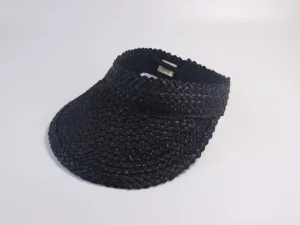
In addition to straw hats, we manufacture paper hats, straw bags and paper bags, as well as children's straw hats, toy hats, lifeguard hats, sun visors, winter hats and other bags — allowing a single-supplier, year-round accessory program.

How do I verify a supplier is a real factory rather than a trading company?

Ask three questions in the first exchange: which production steps happen on your own premises, can we see the blocking and finishing area on a live video call, and who performs final inspection and against what document. A genuine manufacturer answers all three specifically and immediately. A trading desk tends to answer in generalities or defer to "our partner factory."

What information should I include in my first enquiry for a faster quote?

Send a reference image or sample photo, the crown and brim direction you want, preferred fiber, target colourway, full size curve, quantity per colour, branding method and destination port. With those six inputs, an experienced exporter can return a costed sampling plan rather than a generic price list.

Next Step

Build a Repeatable Fashion Cowboy Hat Program

Send your reference images, target quantity and destination market. The Lige Hats team replies within 8 hours with material recommendations, a sampling plan and a production timeline — from a factory in Linyi, Shandong, shipping through Qingdao Port.

Contact the Export Team