
Global Market Context
The Commercial Reality of High End Straw Hats in 2025
High end straw hats are no longer a seasonal beach accessory — they are a structured, design-led product category with measurable global demand, traceable material imports and a well-defined supplier landscape.
The global headwear market has shifted decisively toward premium natural-fibre straw hats. Buyers in North America, Western Europe, Australia and Japan increasingly search for raffia, paper straw, natural grass and Panama-style constructions that combine sun protection with a fashion-forward silhouette. This semantic shift matters: search queries have moved from generic "cheap straw hat" toward long-tail intent such as "custom embroidered raffia western hat manufacturer" and "OEM wide brim cloche hat supplier".
China — and specifically Shandong Province, anchored by Linyi and the Qingdao Port gateway — has emerged as the operational heart of this category. Factories here combine traditional hand-weaving skills with modern blocking, dying and finishing capabilities, producing high-end hats at a quality-to-cost ratio that few other regions can match.
- Rising demand for verified, traceable natural fibres in premium retail lines
- Brand-led customization (logos, patches, embroidered bands) as default expectation
- Low-MOQ pilot programs that let boutiques test styles before scaling
Category Snapshot — High End Straw Hats
- Primary Demand RegionsUS / EU / AU / JP
- Dominant FibresRaffia & Paper Straw
- Typical MOQ (Premium)50 – 100 pcs
- Lead Time (Bulk)25 – 40 days
- Export GatewayQingdao Port
- Key Buying TriggerCustom OEM / ODM
Featured High End Styles
Premium Straw Hat Products from China Suppliers & Factories
Each style below is produced in-house with OEM/ODM capabilities, customizable branding, and export-grade quality control. Click through to review the full specification.
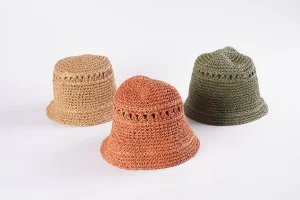
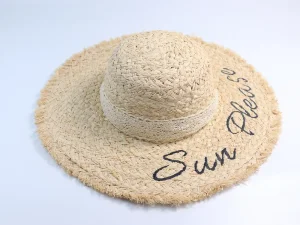
High-Quality Fashionable UV Protection Sun Hats for Women - Quality Designs from China Suppliers
View Product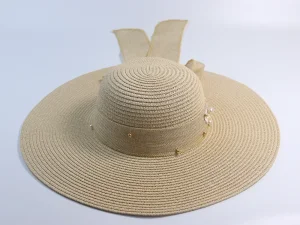
China Women's Sun Protective Floppy Beach Straw Hat - Factory Suppliers for Custom Designs
View Product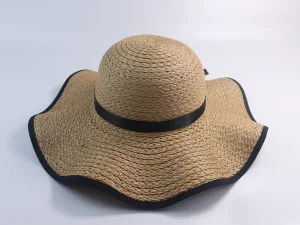
High-Quality Women's Large Brim Summer Beach Hat - Wavy Edge Sun Protection from China Suppliers
View Product
Factory Efficiency Advantage
Why China Factories Dominate High End Straw Hat Production
Vertically integrated supply chains, mature hand-weaving labour pools and proximity to Qingdao Port give Chinese factories a structural efficiency advantage that is difficult to replicate at scale.
Full Vertical Integration
Raw material sorting, weaving, blocking, dyeing, finishing and QC occur under one roof. This eliminates cross-factory delays and keeps unit pricing stable across repeat orders — a decisive advantage for premium buyers who cannot tolerate inconsistent weave quality.
Skilled Labour Pools
Linyi and the surrounding Shandong region hold generations of hand-weaving expertise. Production managers with 20+ years of experience, paired with QC specialists averaging 15 years, deliver craftsmanship that machines alone cannot replicate in raffia and natural grass fibres.
8-Hour Response Cycle
Competitive suppliers operate on an 8-hour response and action standard across product questions, sampling, order follow-up and after-sales service. For brand owners running tight seasonal calendars, this responsiveness is a measurable competitive edge.
Low MOQ Pilot Programs
Starting quantities of 50 to 100 pieces per design allow boutiques, emerging brands and importers to validate styles with real sell-through data before committing to container volumes — a mechanism that de-risks new-season launches.
Qingdao Port Proximity
Linyi sits within efficient road-freight range of Qingdao Port, one of China's major container gateways. FCL and LCL exports ship directly to North America, Europe and Australia, which keeps transit planning predictable and freight costs competitive.
OEM & ODM Design Ownership
In-house designers convert mood boards and reference samples into production-ready specs, handling shape, material, color, size, band and branding (woven labels, patches, hang tags). Buyers get private-label output without owning a factory.
15+Years of Factory Experience
60+Countries Served
25+Global Distributors
8hAverage Response Time
Localized Application Scenarios
Where High End Straw Hats Actually Sell Across Global Markets
Understanding regional use-cases is critical for aligned search-intent targeting, assortment planning and purchase-order sizing. Premium straw hats perform differently across climates, cultures and retail channels.
01
North America — Resort & Western
US and Mexican buyers lean heavily toward western silhouettes, wide-brim cattleman crowns and customizable raffia embroidered hats. Beach resort chains, country-music festival merchandise and premium RV travel retail drive measurable reorder cycles.
02
Western Europe — Riviera & Boater
France, Italy and Spain favor structured boater hats, wide-brim Panama-style cloche hats and elegant UV-protection sun hats for Riviera and Mediterranean resort wear. Grosgrain ribbons and refined colorways are baseline expectations.
03
Australia — UV & Outdoor
High-UV climates drive demand for breathable natural-grass straw visors, bucket hats and floppy sun hats for tennis, surf and outdoor sports. Custom logos for club and event merchandise are common purchase triggers.
04
Japan — Craft & Minimalist
Japanese retail prioritizes clean silhouettes, refined raffia textures and precise blocking. Premium cloche and flat-top straw hats with subtle natural dye colors command higher unit prices and long-term brand relationships.
05
Middle East — Shade & Luxury
Extended-shade large-brim hats, UV-protective sun hats and premium raffia western styles serve luxury resort and outdoor events. Lightweight natural-fibre construction is a functional and aesthetic requirement.
06
Global Cruise & Resort Retail
Onboard boutiques and beach resort retail chains require low-MOQ, high-margin straw hat assortments with custom-branded bands. These channels reward suppliers who can ship small mixed containers quickly and reliably.
Industry Trends to Watch
What Is Reshaping High End Straw Hat Manufacturing
These five forces are shaping buyer expectations, factory roadmaps and search intent across the category heading into 2025 and beyond.
Sustainability & Traceable Materials
Consumers and buyers alike are demanding planet-friendly fibre sourcing. Natural raffia, paper straw and grass constructions with documented supply chains are replacing synthetic alternatives across premium retail line sheets.
Hyper-Customization at Low MOQ
Private-label expectations have shifted from "can you add my logo" to "can you tailor the weave, band, embroidered patch and packaging". Low-MOQ ODM programs are now the default competitive requirement.
UV & Function-First Design
Hat specifications increasingly include UPF-related performance claims. Breathability, shape retention and lightweight wearability are treated as specification-level requirements rather than afterthoughts.
Semantic Search Demand Shifts
Search intent has moved from category keywords ("straw hat") to supplier-specific, material-specific long-tail queries. Buyers now search for "OEM raffia cloche hat factory China" and expect structured supplier detail in return.
Global Buyer Procurement Checklist
- Verified MOQ & Sampling CapabilityRequired
- OEM / ODM Design SupportRequired
- Material TraceabilityHigh
- Export Documentation & Port AccessRequired
- Post-Sale Responsiveness< 8 Hours
- Repeat-Order ConsistencyCritical
Procurement Intelligence
What Global Enterprises Actually Demand From Straw Hat Suppliers
Enterprise buyers — retail chains, hospitality groups, resort operators and branded headwear programs — evaluate suppliers against procurement criteria that go well beyond unit price. The winning factories are those that reduce operational friction across the entire supply chain.
- Predictable lead times aligned to seasonal retail calendars, with clear sampling-to-bulk timelines.
- Brand-grade customization including woven labels, embroidered patches, custom bands and packaging.
- Consistent QC across repeat orders — same weave density, same crown height, same color fastness.
- Documented compliance for materials, sizing and export documentation.
Suppliers who can demonstrate these capabilities through structured, verifiable content — rather than simple product listings — capture higher-intent buyer attention in semantic search results.
Expanded Premium Range
More High End Straw Hats From Verified China Factories
Buckets, Panamas, western silhouettes, boater classics and visor constructions — all available for OEM/ODM production with low-MOQ entry points.
China Sun Protective Floppy Beach Straw Hat – Lady Flat Top Hat for Women
View Product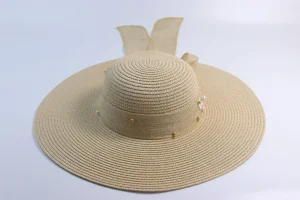
High-Quality Stylish Big Floppy Hat for Sun Protection & Fashion - Quality from China Suppliers
View Product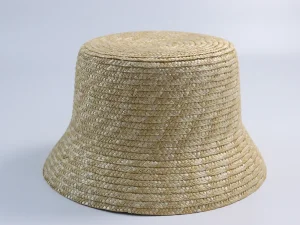
High-Quality China Suppliers Factory Unisex Summer Straw Hat Panama Style with Custom Logo
View Product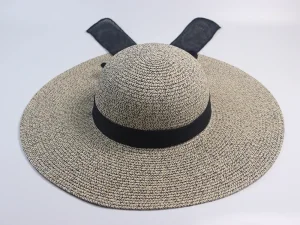
High-Quality Multi-Colors Lady Hat – Summer Hat Floppy with Big Brim Suppliers
View Product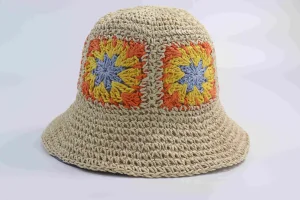
China Trendy Straw Bucket Hat – Perfect for Sun Protection! Supplier, Factories
View Product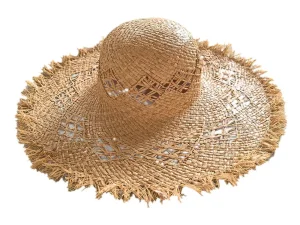
Wholesale 100% Natural Raffia Straw Wide Brim Cloche Hat - Custom OEM from China Suppliers
View Product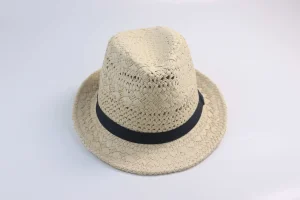
Wholesale Classic Straw Boater Hat for Stylish Summer Outings Suppliers, Factories
View Product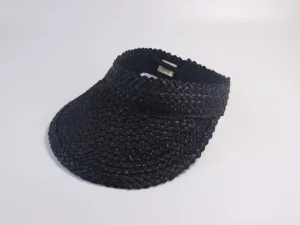
High-Quality Natural Wheat Straw Top Hat with Sawtooth Design - Customizable from China Suppliers
View Product
Material Science Deep-Dive
Choosing the Right Fibre for High End Straw Hats
The fibre choice drives hand-feel, shape retention, price point and shipping survivability. This is the decision framework used when advising premium buyers before sampling.
Raffia
Natural palm-leaf fibre with soft, flexible hand-feel. Highly dye-receptive for saturated colourways and packable brims. Best for floppy hats, buckets and premium resort lines.
Paper Straw
Twisted paper yarn woven into lightweight, uniform fabric. Delivers clean, consistent colours and competitive unit costs for volume programs in fedoras and Panama-style hats.
Natural Grass
Braided natural stems with inherent stiffness, producing crisp silhouettes and an authentic artisanal look. Best for boater hats, cowboy hats and lifeguard styles.
Fabric & Knit
Cotton, polyester and knitted constructions extend assortments beyond summer. Best for visors, winter hats, children's hats and toy hats — useful for year-round single-supplier programs.
Buyer FAQ
Frequently Asked Questions About China Straw Hat Suppliers
Straight answers on MOQ, customization, shipping, service and material choice for international buyers.
What is the minimum order quantity for custom straw hats?
Our starting quantity for small orders is 50 to 100 pieces per design, depending on material and craftsmanship. This allows boutiques, emerging brands and importers to test new styles before scaling up — an increasingly important capability as buyers prioritize low-risk pilot programs before committing to container volumes.
Can you produce private-label hats with our own logo?
Yes. OEM and ODM production is our core business. We customize shape, material, color, size and hat bands, and can add branding such as woven labels, patches and hang tags. Our in-house designers can also develop new styles from your mood board or reference samples — delivering brand-grade private-label output without you owning a factory.
Where is your factory located and how are orders shipped?
We are located in Linyi City, Shandong Province, China, close to Qingdao Port. Bulk orders are typically exported by sea freight as FCL or LCL shipments, while samples and urgent small orders can be sent by air or express courier. Qingdao Port proximity keeps transit planning predictable and freight costs competitive for North American, European and Australian buyers.
Which markets do you export high end straw hats to?
Most of our products are exported to the United States, Canada, Australia, Mexico, Western Europe and Japan. We serve customers in more than 60 countries and work with over 25 global distributors. This geographic distribution mirrors where premium straw hat demand is concentrated globally.
How quickly does your team respond to buyer requests?
We respond and take action within 8 hours, covering product questions, sampling, order follow-up and after-sales service. Responsiveness is a measurable competitive advantage for buyers running tight seasonal calendars where a missed sampling window disrupts an entire retail season.
What products do you manufacture besides straw hats?
In addition to straw hats, we manufacture paper hats, straw bags and paper bags, as well as children's straw hats, toy hats, lifeguard hats, sun visors, winter hats and other bags. This breadth supports single-supplier, year-round assortments for importers and brand owners.
How should buyers compare straw hat factories in China?
Evaluate factories on vertical integration (raw material through finishing), sampling quality and timeline, customization depth (band, patch, packaging), QC consistency across repeat orders, export experience and port proximity. A trading desk will often lack in-house weaving and blocking capability, which affects both quality and pricing stability.
Build Your Next High End Straw Hat Collection
Send us your style references, target quantity and destination market. Our team responds within 8 hours with material suggestions, a sampling plan and a production timeline — from initial brief to container loading via Qingdao Port.