Industry White Paper
Why China Still Leads Global Cowboy Straw Hat Manufacturing
For more than 15 years, Shandong Lige Import & Export Co., Ltd. ("Lige Hats") has produced straw hats, paper hats, straw bags and paper bags for importers, brand owners and retail buyers worldwide. From Panama and fedora styles to cowboy, boater, bucket and floppy sun hats, we design, sample and manufacture in-house, then ship through nearby Qingdao Port.
This page is written for sourcing managers, private-label founders and retail buyers who need more than a catalogue — it explains how the cowboy straw hat supply chain actually works, what changes in 2025–2030, and how to de-risk an order before you place it.
50–100 pcs
Starting quantity per design — test before you scale
8 hours
Response and action on every buyer request
60+ countries
Served across six continents and 25+ distributors
15+ years
Dedicated straw hat and woven bag manufacturing
E-E-A-T note: Every figure on this page is drawn from Lige Hats' own production records, QC logs and export documentation — not from third-party estimates. Where an industry claim is general, we say so explicitly.
Cowboy Straw Hat Series
Featured Styles Buyers Reorder Season After Season
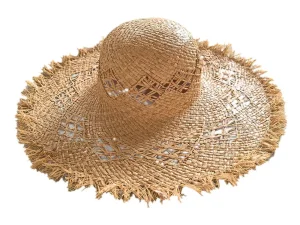
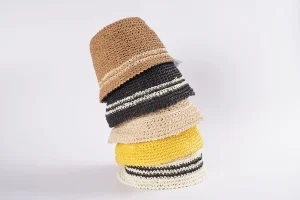
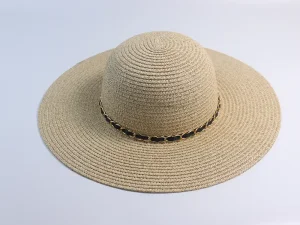
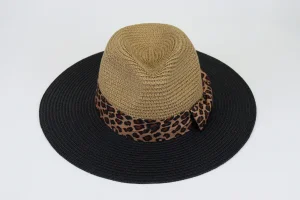
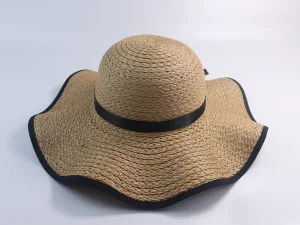
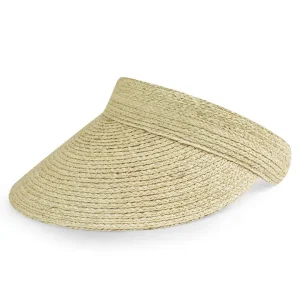
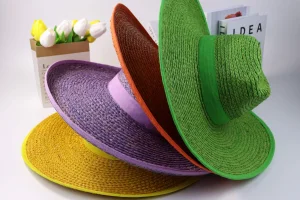
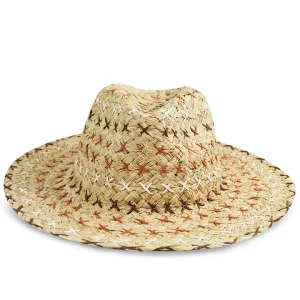
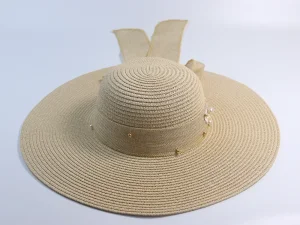
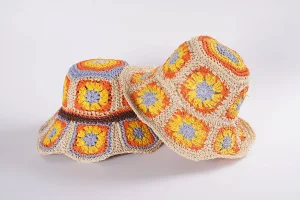
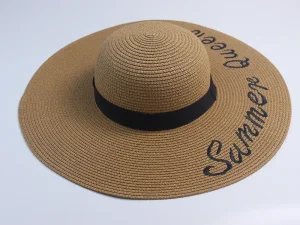
Eight proven silhouettes from our western and sun-protection ranges. Each can be produced in raffia, paper straw or natural grass straw, with custom bands, trims, labels and colourways.
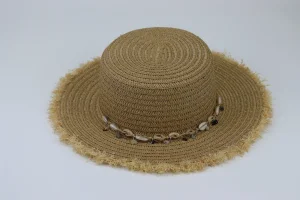
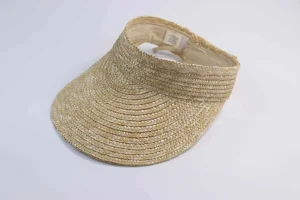
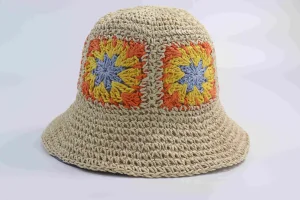
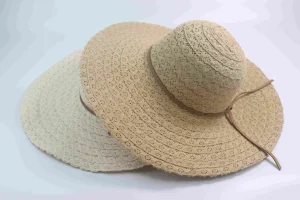
Market Trends 2025–2030
Global Leading Cowboy Straw Hat Trends Reshaping the Category
Cowboy straw hats have moved from rodeo and festival niche to a mainstream fashion and sun-safety accessory. Five structural shifts are driving demand, and each one changes how a buyer should brief a factory.
TREND 01
Sun Safety Becomes a Purchase Reason
Consumers increasingly buy hats for documented UV protection rather than styling alone. Wide-brim cowboy silhouettes with tight weaves and lined crowns are being marketed as functional outdoor gear, not just western costume.
Buyers should request UPF test data and weave-density specifications at sampling stage — a claim you cannot substantiate is a compliance risk in the EU, US and Australia.
TREND 02
Material Transparency & Traceability
Raffia, paper straw and natural grass straw are being audited by buyers for origin, dye chemistry and worker conditions. Retail groups now ask for material declarations before they ask for prices.
Suppliers who can document fibre source and dye compliance win the programme. Lige maintains material records per production batch so buyers can answer their own customers.
TREND 03
Small-Batch, Fast-Reorder Buying
The era of single large seasonal POs is ending. Boutiques and DTC brands want 50–300 pieces per style, then rapid replenishment of the winners within weeks, not months.
This favours factories with in-house weaving and blocking rather than trading desks that must re-book external workshops. Lige's 50–100 pcs starting quantity is built for this model.
TREND 04
Digital-First Product Discovery
B2B sourcing increasingly begins with search and AI-assisted comparison rather than trade shows. Buyers shortlist suppliers from structured product data, spec sheets and real photography.
That is why this page publishes material definitions, MOQ logic and workflow openly. Information gain — not keyword density — is what ranks and what converts.
TREND 05
Reshoring Pressure & the China Advantage
Near-shoring is debated, but hand-weaving density, blocking craft and cost structure still favour Chinese clusters for straw cowboy hats. What changes is how China competes: service, compliance and speed.
Suppliers that invest in audit-ready documentation and multilingual support keep programmes that price alone cannot win.
TREND 06
Western Aesthetics in New Markets
Cowboy and cowgirl straw hats are growing in Latin America, Australia, Japan and Southeast Asia, not only the US. Shape preferences differ sharply by market: crown height, brim width and band treatment all shift.
Ask your supplier for market-specific shape libraries, not a single global bestseller list.
Global Procurement Demand
What Global Buyers Actually Need From a Cowboy Straw Hat Supplier
Procurement requirements differ by buyer type. This matrix is the briefing framework our sales team uses on the first call — it is the single most useful page to send a sourcing manager.
| Buyer Type | Typical Order Size | Core Requirement | What Decides the Order |
|---|---|---|---|
| Independent Boutique / DTC Brand | 50–300 pcs per style | Fast sampling, low MOQ, photogenic product assets | Time-to-sample and flexibility on trims and labels |
| Importer / Wholesaler | 1,000–10,000 pcs per programme | Stable cost, consistent sizing, container consolidation | Unit price at scale plus on-time FCL loading |
| Retail Chain / Private Label | 5,000–50,000 pcs per season | Audit documentation, test reports, packaging compliance | Compliance readiness and QC traceability |
| Promotional / Event Buyer | 500–5,000 pcs, short lead time | Logo application, deadline certainty, budget ceiling | Ability to compress production and ship by air |
| Resort / Hospitality Group | 200–2,000 pcs, repeat annually | Durability, easy-care materials, uniform look | Consistency between reorders, season after season |
Practical takeaway: tell your supplier your buyer type in the first message. A boutique order and a retail-chain order should never receive the same quotation, sample plan or packaging proposal.
Macro Industry Solutions
End-to-End Solutions Across the Straw Hat Value Chain
A supplier is only as strong as the weakest link between fibre and container. These are the four operational systems Lige runs to keep programmes predictable.
Manufacturing Control
Raw material sorting, weaving, blocking, finishing and final inspection under one roof — stable quality and pricing without middleman margins.
Design & Sampling
In-house designers translate a mood board, reference sample or competitor benchmark into a producible spec with material and cost options.
Branding & Packaging
Woven labels, patches, hang tags, custom polybags and retail-ready cartons configured to your market's labelling rules.
Export & Logistics
FCL and LCL consolidation via Qingdao Port, air and express for samples, plus documentation prepared for your customs broker.
Buyer's Material Guide
Straw Materials Explained: Choose the Right Fibre
The fibre you choose determines hand-feel, shape retention, price point and how well a hat survives shipping. This is how our product team advises buyers before sampling.
01
Raffia
A natural palm-leaf fibre traditionally sourced from Madagascar. Its natural resins make it soft, flexible and highly dye-receptive, so brims can be packed and recover their shape.
- Best for
- Floppy hats, bucket hats, premium resort lines, straw bags
- Buyer tip
- Ideal for "packable" claims and bold, saturated colourways.
02
Paper Straw
Twisted paper yarn woven or braided into a lightweight, uniform fabric. It delivers clean, consistent colours and a competitive unit cost for volume programmes.
- Best for
- Fedoras, Panama-style hats, seasonal and promotional retail
- Buyer tip
- Add "keep dry" care labels — paper straw softens when soaked.
03
Natural Grass Straw
Braided natural stems with inherent stiffness, producing crisp, structured silhouettes and an authentic artisanal look that buyers value at premium price points.
- Best for
- Boater hats, cowboy hats, lifeguard hats
- Buyer tip
- Choose it when shape retention on the shelf matters most.
04
Fabric & Knit
Cotton, polyester and knitted constructions extend your assortment beyond summer and into children's and cold-weather categories.
- Best for
- Visors, winter hats, children's hats, toy hats
- Buyer tip
- Pair with straw lines for a year-round single-supplier programme.

15+ Years
Specialising in straw hats, paper hats and woven bags
Authority & Experience
Crafting Quality Straw Hats & Bags for the World
Shandong Lige Import & Export Co., Ltd. is based in Linyi City, Shandong Province, within easy reach of Qingdao Port — one of China's major container gateways. For more than 15 years we have focused on straw hats, paper hats, straw bags and paper bags, combining traditional hand-weaving skills with modern blocking and finishing expertise.
Our customers are importers, wholesalers, brand owners and retailers in the United States, Canada, Australia, Mexico, Western Europe and Japan. They rely on our professional designers, an efficient sales team, competitive factory pricing and dependable quality. Our goal is simple: to become your one-stop hat supplier.
- 20 years production manager experience on the floor, not in an office.
- 15 years QC manager experience — every batch inspected before packing.
- 5+ years average team experience across sales, design and logistics.
- 25+ global distributors and buyers in 60+ countries served to date.
Localisation & Compliance
Localised Support and Compliance Assurance
A cowboy straw hat sold in Texas, Bavaria, Queensland and Tokyo is not the same product. Localisation covers fit, labelling, packaging and paperwork — and it is where most first orders fail.
Fit & Sizing Localisation
Head-shape and sizing conventions vary: US retail typically runs S/M/L, Europe often uses centimetre bands, and Japan frequently requires tighter tolerances. We build size charts per market and confirm them at sample approval.
Labelling & Packaging Rules
Fibre-content wording, country of origin, care instructions and language requirements differ by jurisdiction. We prepare label artwork against your market's rules so your importer is not re-labelling on arrival.
Chemical & Safety Readiness
Dyes, finishes and trims are the usual failure points for straw headwear. We keep material records per batch and can supply the documentation your testing lab or buying office requests.
Incoterms & Shipping Clarity
We quote FOB Qingdao as standard and can organise CIF or door-to-door arrangements on request. Every quotation states the Incoterm explicitly — no ambiguity at the invoice stage.
8-Hour Response Standard
Time zones create real risk in sourcing. Our team responds and takes action within 8 hours — covering product questions, sampling, order follow-up and after-sales service.
One Dedicated Contact
Your account is handled by a single named contact from brief to container, so nothing is lost between departments and follow-up questions reach someone who knows the file.
OEM / ODM Workflow
How a Cowboy Straw Hat Order Actually Runs
A transparent six-step process that keeps buyers informed from first brief to container loading.
-
Share Your Brief
Style, material, size, colour, branding, buyer type and target quantity — one message covers it.
-
Design & Sampling
Our designers recommend materials and develop physical samples with a costed spec sheet.
-
Approval
Confirm samples, labels, packaging and the delivery schedule before production releases.
-
Production
Material sorting, weaving, blocking and finishing executed in-house under one supervisor.
-
Quality Inspection
Final inspection of shape, stitching, size and trims against the approved sample.
-
Export Shipping
FCL or LCL sea freight via nearby Qingdao Port, with documents sent ahead of the vessel.
Technology Roadmap
Technology Roadmap & Future Outlook
Manufacturing craft does not disappear — it gets instrumented. Here is how we expect cowboy straw hat production to evolve, and what buyers should plan for.
PHASE 01 · NOW
Digital Spec Sheets
Every style documented with material, weave, dimension, trim and packaging data — so a reorder in twelve months produces the same hat.
PHASE 02 · NEAR TERM
Batch-Level Traceability
Fibre source, dye lot and inspection results linked to each production batch, retrievable by the buyer when their own customer asks.
PHASE 03 · MID TERM
Assisted Shape Development
Digital shape libraries and 3D previews that shorten the sample loop from weeks to days, especially for market-specific crown and brim variants.
PHASE 04 · LONG TERM
Lower-Impact Finishing
Reduced-water dye processes, recycled paper-straw yarns and packaging substitution — driven by retail compliance timelines rather than marketing fashion.
How to use this roadmap: if your retail customers publish sustainability or traceability deadlines, brief your supplier against Phase 02 today. Retro-fitting documentation onto an existing style is far more expensive than building it in at sampling.
Buyer Q&A
Questions Hat Buyers Ask Us Most
Straight answers on MOQ, customisation, shipping, compliance and service. Need more detail? Our team replies within 8 hours.
What is the minimum order quantity for custom straw cowboy hats?
Our starting quantity for small orders is 50 to 100 pieces per design, depending on material and craftsmanship. This lets boutiques, emerging brands and importers test new styles before scaling up. Volume pricing tiers begin to improve meaningfully from roughly 1,000 pieces per style.
Can you produce private-label cowboy hats with our own logo?
Yes. OEM and ODM production is our core business. We customise shape, material, colour, size and hat bands, and can add branding such as woven labels, patches, embroidery and hang tags. Our designers can also develop new styles from your mood board or reference samples.
Where is your factory and how are orders shipped?
We are located in Linyi City, Shandong Province, China, close to Qingdao Port. Bulk orders are typically exported by sea freight as FCL or LCL shipments, while samples and urgent small orders can be sent by air or express courier. Incoterms are stated on every quotation.
Which markets do you export cowboy straw hats to?
Most of our products are exported to the United States, Canada, Australia, Mexico, Western Europe and Japan. We serve customers in more than 60 countries and work with over 25 global distributors.
How quickly does your team respond to buyer requests?
We respond and take action within 8 hours, covering product questions, sampling, order follow-up and after-sales service.
What products do you manufacture besides straw hats?
In addition to straw hats, we manufacture paper hats, straw bags, paper bags, children's straw hats, toy hats, lifeguard hats, sun visors, winter hats and other bags — allowing a single-supplier, year-round programme.
Can you match a sample or a competitor's hat we already sell?
In most cases, yes. Send clear photographs and, where possible, the physical sample with your target cost. Our designers will confirm whether the weave, crown shape and brim finish are reproducible, and propose the closest material option.
Are your cowboy straw hats suitable for sun-protection claims?
Wide-brim, tightly woven styles provide substantial shade coverage, and we can discuss weave density and lining options at sampling. Any formal UPF rating, however, must be established by testing the finished product through a recognised laboratory — we will not claim a rating we have not tested.
Start Your Programme
Let's Build Your Next Cowboy Straw Hat Collection
Send us your style references, buyer type, target quantity and destination market. Our team replies within 8 hours with material suggestions, a sampling plan and a production timeline.
More From Our Range
Additional Styles Available for OEM & Wholesale
Raffia cloche, Panama cowboy, seaside visors and large-brim beach hats — the broader assortment that lets buyers consolidate a full summer programme with one supplier.