
Rising Demand From Resort Markets
Coastal tourism in the US, Canada, Australia, Mexico, Spain, Italy and Japan keeps driving repeatable, sizeable orders for beach totes, crossbody straw bags and structured woven baskets each spring season.
Few accessories reveal the mechanics of global trade as cleanly as a straw beach bag. A single woven tote passes through fiber sorting, hand-braiding, blocking, sewing, finishing, quality control and container loading — a dozen specialized steps that determine whether a retail collection lands on shelf in April or misses the summer window entirely. Over the past two decades, China has consolidated that fragmented chain into vertically integrated factory clusters, most notably across Shandong, Zhejiang and Guangdong, allowing global importers to source an entire season's assortment from a single, accountable partner.
Straw, raffia and paper-straw beach bags sit at the intersection of three durable consumer currents: seasonal resort travel, sustainable-material preference, and the "social-ready" accessory economy. That convergence has made woven bags a high-growth, high-repeat purchase category rather than a discretionary impulse item.
Coastal tourism in the US, Canada, Australia, Mexico, Spain, Italy and Japan keeps driving repeatable, sizeable orders for beach totes, crossbody straw bags and structured woven baskets each spring season.
Raffia, natural grass straw and paper straw are being promoted as renewable, plant-based alternatives to synthetic bags — a positioning that resonates with the sustainability-driven retail narrative.
Fast-fashion and lifestyle brands now refresh woven assortments two to four times per year, pushing factories to offer rapid sampling, low MOQs and flexible colorways.
Retailers want differentiated, brand-owned woven accessories, so OEM and ODM capability — custom labels, linings, trims and hardware — is now a baseline expectation.
Buyers increasingly source via product imagery, video and data-rich spec sheets — favoring suppliers who present honest, detailed, verifiable product information online.
Post-pandemic sourcing strategies now favor suppliers with direct port access, consolidated QC and predictable production lead times over the lowest bid.
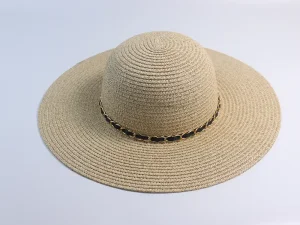
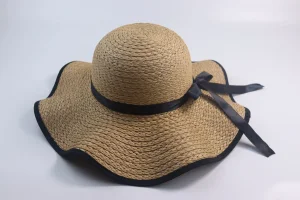
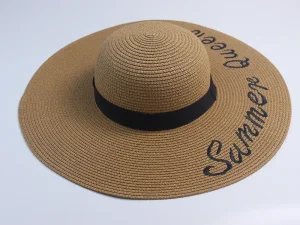
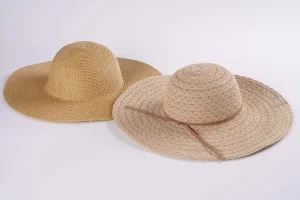
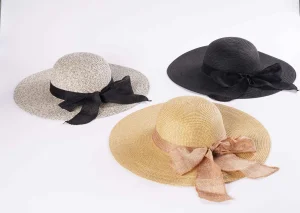
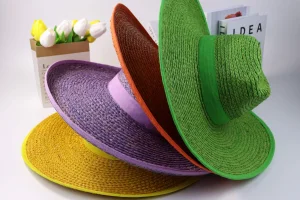
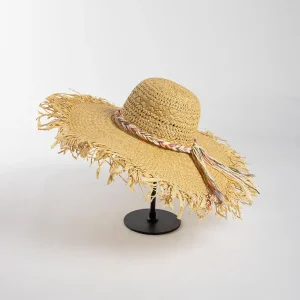
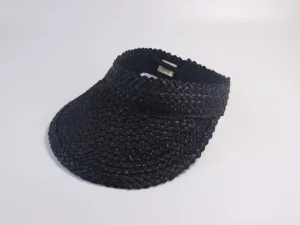
It is tempting to frame Chinese manufacturing as a labor-cost story. In practice, the durable advantage in straw beach bags is process integration — the ability to keep material sorting, weaving, blocking, stitching, trimming and inspection under one roof, under one quality system, and under one delivery commitment. Here is where that integration translates into measurable commercial value.
Fiber sorting, braiding, blocking, trimming, hardware attachment and packing all happen on-site. Buyers get one accountable production manager, not a chain of brokers.
Because materials and labs are in-house, a straw beach bag sample can move from brief to first proto in days rather than weeks, protecting tight development calendars.
Because shapes share the same weaving and finishing platform, a factory can run multiple styles per PO — helping boutiques and emerging brands test the market affordably.
Raffia, paper straw and natural grass behave differently under heat and humidity. Factories that handle the fibers directly can advise on dye, shrinkage and dyelot consistency.
Dedicated QC teams test shape retention, stitching, size accuracy and branding before the goods leave — reducing chargebacks and retail rejections.
Location near Qingdao Port supports FCL and LCL ocean freight with predictable transit times — critical for time-sensitive summer collections.
Straw beach bags are not a single global product; they are a set of regionally-specific retail archetypes. Understanding those archetypes is the difference between a supplier who can run your sample and a supplier who can serve your market.
US and Canadian buyers favor oversized straw totes for beach clubs, cruises and everyday weekend carry. Neutral raffia tones and clean silhouettes perform best; monogram and embroidery are strong private-label upsells.
France, Italy and Spain skew toward structured, small-batch woven bags with natural-tonal finishes and artisanal detail. Editorial-ready styling and green messaging outperform aggressive promotion.
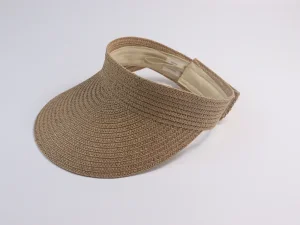
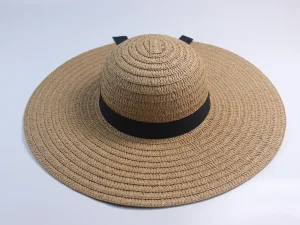
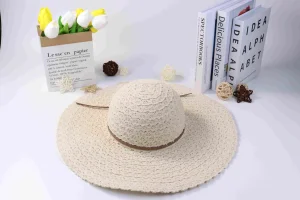
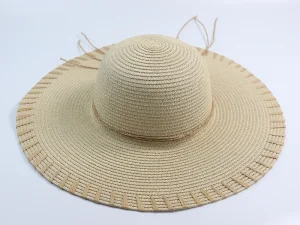
High-UV markets prioritize UPF-rated wide-brim straw hats paired with matching beach bags. Wide brims, packable construction and breathable weaves are strong drivers of repeat order.
Compact straw crossbody bags, small woven baskets and precise color palettes dominate. Tolerance for detail is high — buyers scrutinize stitching, symmetry and finishing.
Mexico and Brazil respond well to color-forward styles, bold trims and multi-size assortments, with strong impulse-driven wholesale channels in coastal regions.
Premium raffia bags with luxe hardware, lining and understated branding are trending in Gulf markets, especially during resort seasons and gifting events.
Buyer expectations have moved beyond price quotations. Across importers, retail chains and brand-owners, the procurement checklist has become noticeably broader — and suppliers are increasingly evaluated on service depth as much as on unit cost.
Buyers want the option to test a new silhouette with 50–100 pieces before committing to a full season — a practice that supports fast, low-risk experimentation.
Quotations, sampling plans and after-sales support are expected within a single business day. 8-hour response commitments are increasingly treated as a baseline.
Custom linings, bands, labels, hangtags and hardware are now standard requests. Buyers prefer partners who can develop private label in-house rather than outsourcing.
Color and texture consistency between reorders is a persistent pain point in natural-fiber categories. Buyers favor factories that can demonstrate documented dyelot matching.
FCL / LCL readiness, correct HS codes and inspection-ready packaging are expected by default. Port-adjacent factories reduce schedule risk significantly.
Buyers increasingly request QC records, AQL inspection standards and corrective-action logs as part of supplier onboarding — not just as an afterthought.
The fiber determines hand-feel, shape retention, price point and how well a bag survives shipping. Our product team uses the following framework when advising importers before sampling.
A natural palm-leaf fiber traditionally sourced from Madagascar. Natural resins make raffia soft, flexible and highly dye-receptive, ideal for vivid colorways and packable bags.
Twisted paper yarn woven into a lightweight, uniform fabric. It delivers clean color consistency and competitive unit cost for volume programs and seasonal replenishment.
Braided natural stems with inherent stiffness, producing crisp, structured silhouettes and an authentic artisanal look that supports premium price points.
Cotton, polyester and knit constructions extend the assortment beyond summer — useful for children's lines and cold-weather styling as well as beach accessories.
Whether you are an importer launching a seasonal beach bag line or a boutique brand testing a single silhouette, the workflow should feel predictable at every stage.
Style, material, size, color, branding and target volume.
Our designers recommend materials and build first samples.
Confirm samples, labels, packaging and delivery timeline.
Material sorting, weaving, blocking and finishing in-house.
Shape, stitching, sizing and trims checked before packing.
FCL or LCL freight through neighboring Qingdao Port.
Direct answers on MOQ, customization, shipping and after-sales service. Need more detail? Our team replies within 8 hours.
Contact Our Team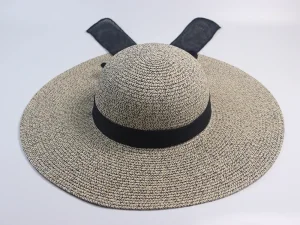
Send us your style references, target quantity and destination market. Our team replies within 8 hours with material suggestions, a sampling plan and a production timeline.
Contact Us