
Executive Overview
Why China's Leading Bucket Hat Bulk Factories Set the Benchmark
Bucket hats have moved from a niche festival accessory to a year-round core SKU in the sun-protection, resortwear, streetwear and children's categories. For importers and brand owners, that shift changes the sourcing question: it is no longer "who can make a bucket hat," but "which factory can deliver consistent bulk volume, repeatable quality and private-label flexibility at a competitive landed cost."
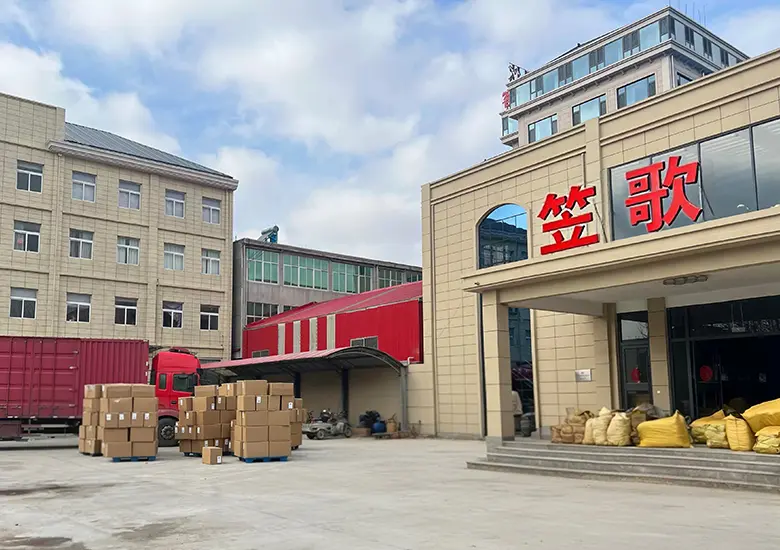
Shandong Lige Import & Export Co., Ltd. — trading as Lige Hats — has spent more than 15 years focused on exactly that problem. Based in Linyi City, Shandong Province, within easy reach of Qingdao Port, the company produces straw hats, paper hats, straw bags and paper bags for importers, wholesalers, brand owners and retail buyers across the United States, Canada, Australia, Mexico, Western Europe and Japan.
This white paper examines the global context for bucket hat bulk sourcing, the structural efficiency advantages of China's leading factories, the localized application scenarios that drive demand, and the procurement criteria global buyers now use to shortlist suppliers.
Our purpose here is not to publish a catalogue — it is to give buyers information gain: the operational detail, material knowledge and quality benchmarks that separate a dependable manufacturing partner from a trading intermediary.
Every claim below is grounded in the same production reality our team manages daily: raw material sorting, weaving, blocking, finishing and final inspection under one roof, supported by a production manager with 20 years of experience, a QC manager with 15 years, and a customer-facing team averaging 5+ years in export headwear.
15+Years manufacturing straw & bucket hats
60+Countries served across six continents
25+Global distributors partnered
8 hrsResponse and action on every request
Product Range · Part One
Sun Hats, Straw Floppies & Children's Styles
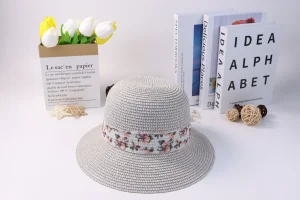
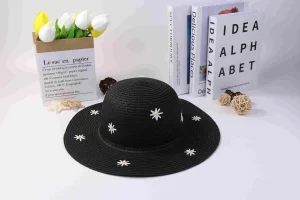
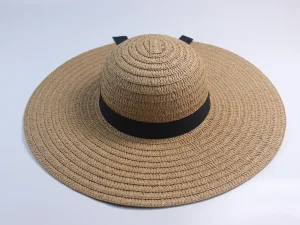
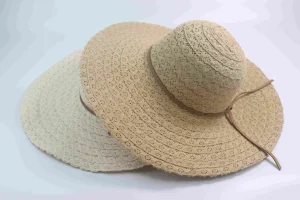
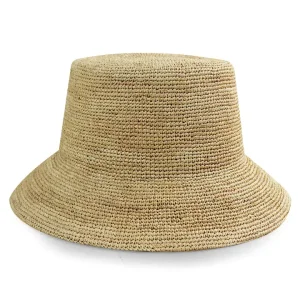
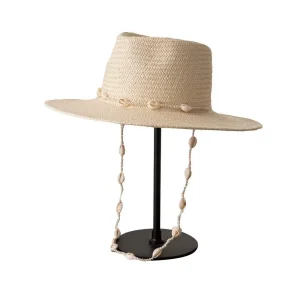
The eight references below represent the wide-brim and UV-protection families that anchor most bulk sun-hat programs, from women's beach hats to lightweight children's straw hats.
Global Market Context
The Commercial & Industrial Reality of Bucket Hat Bulk Sourcing
Demand Has Become Structural
UV-conscious consumers, outdoor-lifestyle retail and streetwear crossover have pushed bucket hats into a multi-season category. Bulk buyers now plan bucket hats in spring/summer resort programs and again in autumn/winter fabric and knit extensions — not as a single seasonal spike.
Order Fragmentation
Retail buyers increasingly place smaller, more frequent orders across more colorways. A factory that can accept 50–100 pieces per design and still hold unit economics is a strategic advantage, not a convenience.
Material Diversification
Buyers now specify raffia, paper straw, natural grass straw and knit constructions within one purchase order. Suppliers who control all four fiber families reduce hand-off risk and lead time.
Efficiency Advantage
China Factory Efficiency: Where the Advantage Actually Comes From
"China is cheap" is an outdated explanation. The durable advantage for leading bucket hat bulk factories is vertical integration plus process discipline — and it shows up in lead time, defect rates and repeat-order consistency.
| Efficiency Driver | What It Means Operationally | Buyer Benefit |
|---|---|---|
| Clustered supply chain | Shandong and neighboring provinces host yarn, braid, blocking and trims suppliers within short trucking distance of Linyi. | Shorter material lead times and faster sampling cycles. |
| In-house multi-step production | Raw material sorting, weaving, blocking, finishing and final inspection run under one roof. | Stable quality and pricing without middleman margins or hand-off delays. |
| Proximity to Qingdao Port | Major container gateway within reach for FCL and LCL consolidated export. | Reliable sailing schedules and lower inland freight cost per container. |
| Skilled labor continuity | Weaving and blocking are craft-adjacent skills refined over years, not weeks. | Consistent weave density, brim shapes and sizing across reorders. |
| Experienced management | A 20-year production manager and 15-year QC manager set the internal standard. | Fewer pre-shipment surprises and faster root-cause resolution. |
| Sampling infrastructure | Sample room dedicated to developing new shapes and colorways. | Faster approval cycles before a bulk order is committed. |
The practical takeaway for procurement teams: efficiency is not a single metric — it is the compound effect of material proximity, process continuity and management experience. A factory that can carry a style from first sample to fifth reorder without drift is worth more than a supplier quoting a marginally lower unit price with unpredictable consistency.
Localized Application Scenarios
Where Bucket Hats Actually Sell — Market by Market
Resort, Theme Park & Streetwear Retail
US and Canadian buyers typically split bucket hats across two channels: resort and beach retail favoring wide-brim soft straw and floppy silhouettes, and streetwear and campus retail favoring compact woven bucket shapes in bold colorways. Both channels reward rapid colorway turnover — a reason low MOQ per design matters more here than in many other markets.
Sun-Protection Compliance Culture
Australian retail is among the most UV-conscious in the world. Buyers scrutinize brim width, coverage geometry and labelling language closely. Suppliers must be able to produce UPF 50 wide-brim styles with consistent brim measurements across every unit in a shipment — measurement drift is a rejection risk, not a cosmetic issue.
Boutique & Sustainable Fashion
European boutiques and mid-market brands lean toward natural fibers, restrained palettes and traceable material stories. Raffia and natural grass straw perform strongly here, particularly when paired with clear material documentation and care labelling. Packability and travel-friendliness are decisive features for resort collections.
Precision Fit & Finish Standards
Japanese buyers are exacting on stitching tolerance, band alignment and inner-label placement. Programs often demand tightly controlled sizing and near-invisible finishing. This is where in-house QC — rather than third-party spot checks — separates qualified suppliers from aspirational ones.
Volume Promotional & Seasonal Retail
Mexican and broader Latin American buyers often combine volume promotional programs with seasonal resort orders. Competitive landed cost and dependable sailing schedules from Qingdao matter as much as design. Packaging efficiency and carton optimization directly affect landed cost per unit here.
Branding & Private Label Everywhere
Across all six markets, the common thread is private-label customization: woven labels, patches, hang tags, custom bands and dedicated colorways. Buyers are not purchasing generic stock — they are commissioning branded product, and expect the factory to treat their label standards as part of the specification.
Industry Development Trends
Five Trends Reshaping Bucket Hat Manufacturing
Material Pluralism
Raffia, paper straw, natural grass straw and knit constructions now coexist in a single buyer's range, pushing factories toward multi-fiber capability.
Sustainability as Specification
Natural and recyclable materials are increasingly written into purchase specifications rather than marketed as optional extras.
Small-Batch Testing
Brands test styles at 50–100 pieces before scaling winners — favoring suppliers who can hold unit economics at low volumes.
Compression & Packability
Travel retail demands foldable, shape-recovering construction, which directly influences fiber choice and blocking method.
Data-Driven Reordering
Buyers track sell-through by SKU and reorder only proven colorways, making consistency across reorders a commercial necessity.
Global Buyer Requirements
What Global Enterprises Actually Ask For
Across more than 60 countries and 25+ distributors, the procurement questions converge on a consistent set of requirements. Buyers want a supplier that can answer them specifically, not generically.
- Documented MOQ flexibility — a stated starting quantity per design, not a vague "negotiable."
- Sampling before commitment — physical samples that match the material, color and trim promised.
- Consistent sizing — measurement tolerances held across the full production run.
- Transparent shipping — FCL or LCL export planning with realistic timelines.
- Responsive after-sales — a named contact and a committed response window.
- Branding execution — labels, patches and hang tags applied correctly, every time.
Lige Hats addresses this with an 8-hour response and action commitment covering product questions, sampling, order follow-up and after-sales service — and a stated starting quantity of 50 to 100 pieces per design for small orders.
Buyer's Material Guide
Choose the Fiber Before You Choose the Style
Fiber determines hand-feel, shape retention, price point and how well a hat survives shipping. This is how our product team advises buyers before sampling begins.
Raffia
A natural palm-leaf fiber traditionally sourced from Madagascar. Natural resins make it soft, flexible and highly dye-receptive, so brims recover after packing.
Best for: floppy hats, bucket hats, premium resort lines, straw bags.
Paper Straw
Twisted paper yarn woven or braided into lightweight, uniform fabric. Delivers clean, consistent colors and competitive unit cost for volume programs.
Best for: fedoras, Panama-style hats, seasonal and promotional retail.
Natural Grass Straw
Braided natural stems with inherent stiffness, producing crisp, structured silhouettes and an authentic artisanal look at premium price points.
Best for: boater hats, cowboy hats, lifeguard hats.
Fabric & Knit
Cotton, polyester and knitted constructions extend the assortment beyond summer and into children's and cold-weather categories.
Best for: visors, winter hats, children's hats, toy hats.
OEM & ODM Workflow
A Six-Step Process Buyers Can Audit
Share Your Brief
Style, material, size, color, branding and target quantity.
Design & Sampling
Designers recommend materials and develop physical samples.
Approval
Confirm samples, labels, packaging and delivery schedule.
Production
Material sorting, weaving, blocking and finishing in-house.
Quality Inspection
Final inspection of shape, stitching, size and trims.
Export Shipping
FCL or LCL sea freight via nearby Qingdao Port.
Product Range · Part Two
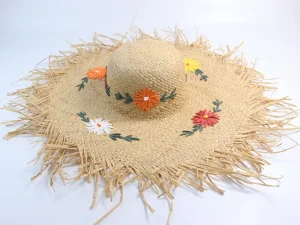
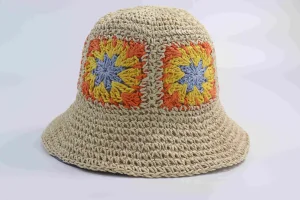
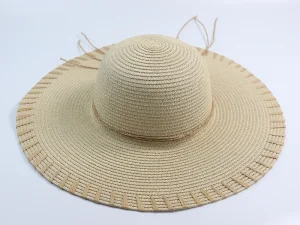
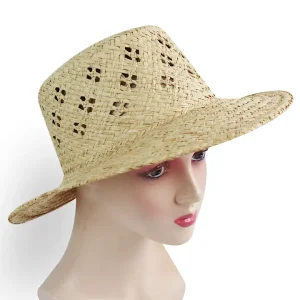
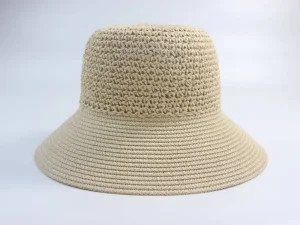
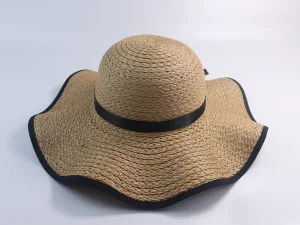
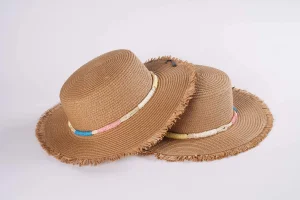
Raffia Floppies, Bucket Silhouettes & Packable Travel Hats
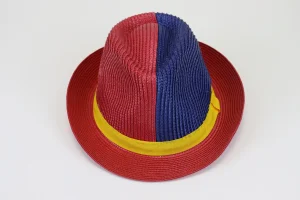
The second set covers the bucket, floppy and packable families — the styles most frequently reordered by resort, travel and streetwear buyers.
Credentials & Reliability
Experience, Expertise, Authority, Trust
Experience
More than 15 years focused exclusively on straw hats, paper hats, straw bags and paper bags — spanning shape development, blocking, finishing and export packaging.
Expertise
A production manager with 20 years of experience and a QC manager with 15 years, supported by a team averaging 5+ years in export headwear.
Authority
Customers in more than 60 countries, over 25 global distributors, and long-standing programs with importers and brand owners across six continents.
Trust
An 8-hour response and action commitment, in-house final inspection before export, and transparent FCL/LCL shipping via Qingdao Port.
Buyer FAQ
Questions Hat Buyers Ask Most
Straight answers on MOQ, customization, shipping, markets and service benchmarks.
What is the minimum order quantity for custom straw hats?
The starting quantity for small orders is 50 to 100 pieces per design, depending on the material and craftsmanship. This allows boutiques, emerging brands and importers to test new styles before scaling up.
Can Lige produce private-label hats with our own logo?
Yes. OEM and ODM production is the core business. Shape, material, color, size and hat band can all be customized, and branding elements such as woven labels, patches and hang tags added. In-house designers can also develop new styles from your mood board or reference samples.
Where is the factory located and how are orders shipped?
The factory is located in Linyi City, Shandong Province, China, close to Qingdao Port. Bulk orders are typically exported by sea freight as FCL or LCL shipments, while samples and urgent small orders can be sent by air or express courier.
Which markets do you export hats to?
Most products are exported to the United States, Canada, Australia, Mexico, Western Europe and Japan. Customers are served in more than 60 countries, in partnership with over 25 global distributors.
How quickly does the team respond to buyer requests?
The team responds and takes action within 8 hours, covering product questions, sampling, order follow-up and after-sales service.
What products are manufactured besides straw hats?
Alongside straw hats, the factory manufactures paper hats, straw bags and paper bags, as well as children's straw hats, toy hats, lifeguard hats, sun visors, winter hats and other bags.
How is quality controlled before export?
Production runs through raw material sorting, weaving, blocking and finishing under one roof, followed by a final inspection of shape, stitching, size and trims before export packing. A QC manager with 15 years of experience sets the internal standard.
Can a single order mix several styles and materials?
Yes. Buyers frequently combine raffia, paper straw, natural grass straw and knit families within one seasonal program. Because all four fiber families are handled in-house, mixing styles in one purchase order reduces hand-off risk and simplifies lead-time planning.
Build Your Next Bucket Hat Bulk Program
Send style references, target quantity and destination market. The team replies within 8 hours with material suggestions, a sampling plan and a production timeline — backed by more than 15 years of in-house bucket hat manufacturing in Linyi, Shandong.