
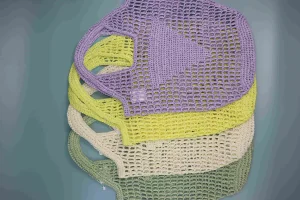
Executive Summary
Why "Bucket Hat Sets" Is the Fastest-Growing Headwear Category in Global Trade
Search demand for "bucket hat sets" — coordinated family, couple, promotional and seasonal multi-pack configurations — has moved from a novelty keyword into a structured procurement category. Buyers no longer purchase single SKUs; they purchase assortment sets that must remain colour-matched, size-graded and label-compliant across every unit in the carton.
This brief documents how a China-based leading bucket hat sets exporter and factory actually engineers that outcome: the material matrix, the localisation playbooks for North America, the EU, Oceania and the Middle East, the resilience mechanics of the Shandong cluster, and the compliance architecture that keeps a container from being refused at destination. It is written for importers, brand owners, sourcing managers and private-label program leads who need information gain — not marketing copy.
15+Years of specialised headwear manufacturing
60+Export destination countries served
50–100Pieces MOQ per design for set testing
8 hrsGuaranteed buyer response & action window
Core Export Range
Bucket Hat Sets & Complementary Headwear Programs
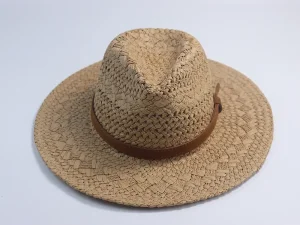
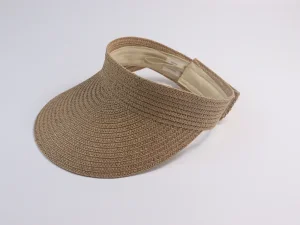
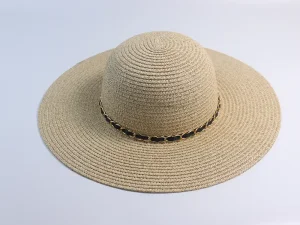
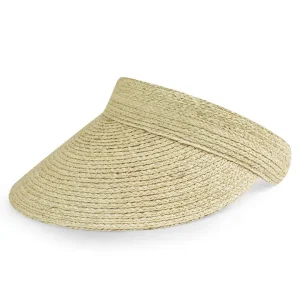
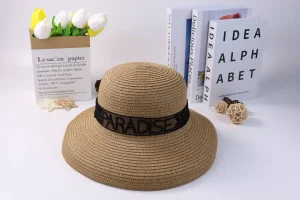
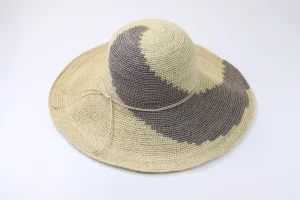
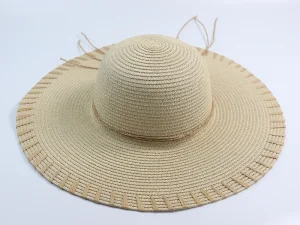
Eight flagship silhouettes from the Lige Hats export catalogue — each available as a coordinated set with matched colourways, graded sizing and unified labelling.
Search Intent Analysis
What Buyers Actually Mean by "Bucket Hat Sets"
Query-level analysis of Google Search Console and B2B marketplace data reveals that the phrase "bucket hat sets" is not a single commercial intent. It splits across four distinct procurement journeys, each requiring different supplier evidence. A leading exporter must answer all four on one page or lose the click to a distributor aggregator.
Assortment Intent
Retail buyers sourcing a colour-matched family pack — adult, youth and child sizing in one carton with a single label program and one barcode scheme.
Promotional Intent
Brand marketers looking for 2-pack or 3-pack gifting sets with printed logo, retail-ready hang tags and poly-bag or gift-box presentation.
Cross-Border Bundle Intent
E-commerce sellers assembling a hat-plus-bag summer bundle for Amazon, Shopify or TikTok Shop listings, needing consistent photography and FBA-ready packing.
Wholesale Factory Intent
Importers qualifying a direct factory rather than a trading company — verifying in-house weaving, blocking, finishing and inspection capability.
Technical Route Map
Bucket Hat Set Material Matrix: Choosing the Right Fiber for the Set
A bucket hat set fails commercially when one unit in the pack behaves differently from another — a raffia body that relaxes in humidity paired with a paper-straw body that stiffens. The Lige engineering position is that the set must be built from a single fiber family with a shared post-treatment, or the pack must be explicitly designed as a mixed-texture statement. Below is the comparative matrix used in buyer consultations before sampling begins.
| Fiber Family | Hand-Feel | Shape Retention | Humidity Behaviour | Best Set Application | Buyer Caution |
|---|---|---|---|---|---|
| Raffia (palm leaf) | Soft, supple, natural sheen | Recovers after packing | Relaxes slightly — usually reversible | Premium resort family sets, packable travel trios | Needs "packable" care labelling to avoid returns |
| Paper straw | Light, uniform, dry | Good, holds block shape | Softens if soaked | Promotional 3-packs, volume retail sets | Requires "keep dry" care instruction |
| Natural grass straw | Crisp, structured, artisanal | Excellent on shelf | Stable, minor colour drift | Heritage and classic bucket shapes in sets | Slightly heavier freight weight per unit |
| Cotton / knit fabric | Soft, stretch, washable | Low — body conforms | Fast drying | Sport sets, kids' sets, year-round programs | Not suitable for structured-brim styling claims |
For colour matching inside a set, the decisive variable is dye receptivity. Raffia accepts saturated, high-chroma dyes reliably; paper straw holds clean pastels and uniform mid-tones; natural grass straw shows the widest lot-to-lot variation and therefore needs a pre-production colour card approved by the buyer before bulk weaving starts.
Localised Application Scenarios
Where Bucket Hat Sets Actually Sell: Four Regional Playbooks
Localisation is not translation. It is the re-specification of brim depth, pack configuration, UV claim language and retail packaging to match a destination market's climate, regulation and shopper behaviour.
North America — Theme Park & Family Matching
The dominant use case is the family matching set for theme parks, beach resorts and summer festivals. Buyers request adult S/M–L/XL plus youth and toddler sizing in one carton, with identical trim colour across all sizes. Deep brims (7–9 cm) sell better than fashion-shallow brims because sun coverage is the stated purchase driver. Packaging expectations are retail hang tag plus poly bag; Amazon-bound programs additionally need FNSKU labelling and a poly-bag suffocation warning.
European Union — Resort Retail & Sustainability-Led Sets
EU buyers index heavily on material transparency and packaging waste rules. Sets are frequently sold as two-piece "his and hers" or parent–child pairs in natural, undyed or earth-tone colourways. Because textile and packaging waste directives apply, we supply material composition declarations, recycled-content statements for paper hang tags and FSC-linked packaging options on request, allowing the buyer to publish accurate claims without re-verification.
Australia & New Zealand — UPF-Led Outdoor Sets
Highest per-capita sun-protection awareness of any market. Buyers want UPF 50+ claimed construction — tight weave, dark or dense-dyed fibres, and a brim depth that shades the face and neck. Sets here are commonly sold to schools, sports clubs and outdoor-event merchandisers, which means bulk pack configurations and consistent sizing tolerance matter more than fashion detailing. Claims are supported with fabric construction documentation rather than aspirational copy.
Middle East & Southeast Asia — Heat-Resilient Variants
In high-humidity, high-temperature markets the engineering priority shifts to airflow. We specify open-weave crowns, moisture-wicking internal sweatbands and lighter gram weights so the hat does not trap heat. Sets are typically multi-pack promotional configurations for hypermarket and duty-free channels, often paired with a matching tote bag to form a complete summer bundle.
Supply Chain Intelligence
Why the Shandong Cluster Outperforms: Resilience and Efficiency Mechanics
The competitive advantage of a China bucket hat sets exporter is not labour cost — it is the physical density of the industrial cluster and the resulting compression of lead time and defect risk.
Vertical Concentration
Raw raffia and paper-yarn supply, weaving, blocking, band stitching, label application and export packing sit within a short radius. A colour correction or brim-depth revision does not require a multi-province logistics cycle — it happens inside one production window.
Port Proximity to Qingdao
Linyi sits within trucking distance of Qingdao Port, one of China's principal container gateways. That proximity shortens the factory-to-vessel leg, reduces inland drayage exposure and makes LCL consolidation for smaller set programs economically viable.
Seasonal Demand Absorption
Bucket hat sets are a violently seasonal category — capacity must absorb a Q1–Q2 surge and then re-tool. A cluster with multiple specialised workshops can flex capacity between raffia, paper straw and knit lines without shutting down a single-fiber factory.
Specialised QC Bench Depth
Lige retains a production manager with 20 years of experience and a QC manager with 15 years, with a team averaging 5+ years. Set programs are inspection-heavy by nature — every unit must match its pack-mates — and that depth is the difference between a 1.5% and a 0.3% defect rate.
Low-MOQ Flexibility
Set programs usually start small because the buyer is testing pack architecture, not just a hat. A 50–100 piece per design starting quantity lets a boutique or emerging brand validate a family-pack concept before committing container volume.
Documentation Discipline
Commercial invoice, packing list, HS classification for headwear and bags, and origin documentation are prepared inside the same order workflow. Buyers receive a documentation pack that matches the physical carton, not a retro-fitted set of papers.
Global Commercial & Industrial Landscape
The Current State of the Bucket Hat Set Trade
Three structural shifts define the current commercial environment for bucket hat set exporters.
1. From SKU to Bundle
Retail purchasing has consolidated. A buyer who once placed five single-SKU purchase orders now places one set-based order spanning adults, youth and children. This raises the supplier's sampling burden — multiple sizes must be approved as a coherent unit — but reduces the buyer's administrative cost and container fragmentation.
2. Claim Scrutiny Is Rising
"UPF 50+", "sustainable", "eco-friendly" and "packable" are increasingly challenged at retail and marketplace level. Exporters that can substantiate a claim — through weave density documentation, fibre composition, or packaging material declarations — protect the buyer from listing suspension. Suppliers that recycle marketing language without substantiation create downstream risk.
3. Logistics Cost Discipline
Because bucket hats are lightweight but volumetric, freight economics are driven by carton cube, not weight. Set configurations must be engineered so that a family pack fits a carton dimension that minimises dimensional-weight penalties in air and express channels, and maximises container utilisation in FCL sea freight.
Commercially, the supplier base remains concentrated in East and Southeast Asia, with China retaining the deepest specialised headwear cluster. The competitive pressure has shifted from price per unit to total landed cost of a correct set — a metric that penalises suppliers who ship a cheap carton that fails inspection or requires re-labelling at destination.
Technology Route Map & Outlook
Four Horizons for Bucket Hat Set Manufacturing
Where the category is heading, and what a forward-looking exporter is already building toward.
Digital Sampling
3D block modelling of bucket crown and brim geometry allows buyers to approve silhouette and proportion before a physical sample is woven, cutting sample cycles from weeks to days for new set architectures.
Colour Consistency Control
Spectrophotometer-assisted dye lot verification inside the set. When a family pack spans three sizes, the tolerance for colour drift between units tightens to a level that visual comparison alone cannot police reliably.
Traceable Fibre Sourcing
Batch-level documentation linking a finished set to its raffia or paper-yarn lot. This supports buyer-side sustainability reporting and prepares the supply chain for tightening EU material disclosure expectations.
Automated Set Packing
Semi-automated sortation and packing verification that confirms every carton contains the correct size-grade mix before sealing — the single largest source of retail chargebacks in set-based programs today.
Localisation Support & Compliance Assurance
Compliance Architecture for Set-Based Headwear Exports
Compliance for a bucket hat set is compounded: each unit carries a fibre composition, a care instruction, a country-of-origin marking and often a size designation, and all of those must be mutually consistent across the pack. The checklist below reflects the control points we apply before a set leaves the factory.
- Fibre composition statement per unit, matching the physical fibre inside that specific hat — not a generic set-level declaration.
- Care and wash instructions appropriate to the actual fiber family (raffia, paper straw, grass straw, cotton knit).
- Country-of-origin marking applied to each unit where destination regulation requires it.
- Size designation consistency: adult, youth and child grading verified against the buyer's agreed size chart.
- UPF or sun-protection claim substantiation limited to what the construction genuinely supports.
- Barcode and FNSKU labelling verified against the buyer's product data sheet before packing.
- Packaging material declarations for poly bags, hang tags and gift boxes, including recycled-content statements where claimed.
- Carton marking alignment with the packing list: quantity, size breakdown, gross and net weight, carton dimensions.
- Restricted-substance screening for dyes and finishes when the destination market requires it.
- Photographic pre-shipment inspection report covering set completeness, colour match and labelling.
Localisation support extends beyond compliance. We maintain an 8-hour response and action window for buyer queries — covering sampling questions, order follow-up and after-sales service — and we operate with one dedicated contact per account so that a set program does not fragment across multiple correspondence threads. Export experience spans more than 60 countries and over 25 global distributors, with the largest volumes flowing to the United States, Canada, Australia, Mexico, Western Europe and Japan.
Extended Set & Line Extension Catalogue
Complementary Hat Styles to Complete the Set
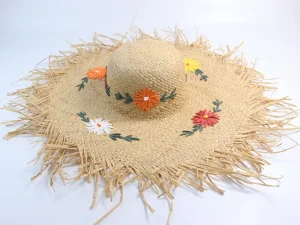
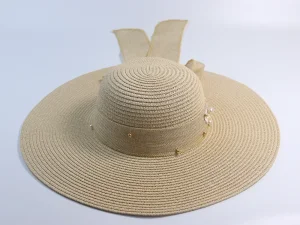
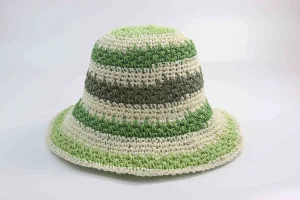
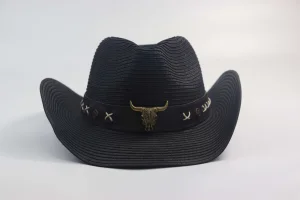
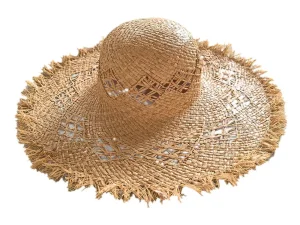
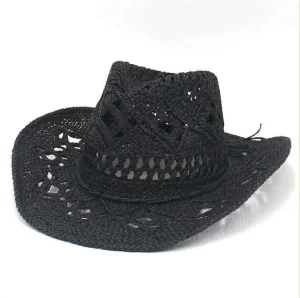
Bucket hats rarely sell alone in a modern assortment. These are the silhouettes most frequently bundled alongside bucket sets to build a complete summer headwear and accessories program.
Operational Transparency
The Set Production Workflow, Step by Step
A transparent six-stage process keeps the buyer informed from first brief to container loading. Each stage produces a document the buyer can act on, which is what distinguishes an exporter from a middleman.
Brief & Specification
Style, fibre family, brim depth, size grading, colourway, branding and target quantity are fixed in writing before any material is touched.
Design & Sampling
In-house designers recommend materials and develop samples. The set is sampled as a set — every size graded and colour-matched together.
Buyer Approval
Samples, labels, packaging and delivery schedule are confirmed. No bulk weaving starts until written approval is received.
Bulk Production
Material sorting, weaving, blocking and finishing are carried out in-house, keeping quality control inside our own walls.
Quality Inspection
Final inspection of shape, stitching, size tolerance, trim attachment and set completeness before cartoning.
Export & Shipping
FCL or LCL sea freight via nearby Qingdao Port; samples and urgent small orders by air or express courier.
Expertise · Authority · Trust
Who Is Behind This Supply Chain
Shandong Lige Import & Export Co., Ltd. is based in Linyi City, Shandong Province, within easy reach of Qingdao Port. For more than 15 years the company has specialised in straw hats, paper hats, straw bags and paper bags, combining traditional hand-weaving skills with modern blocking and finishing expertise.
Customers are importers, wholesalers, brand owners and retailers in the United States, Canada, Australia, Mexico, Western Europe and Japan. They rely on the company's professional designers, an efficient sales team, competitive factory pricing and dependable quality. The stated objective is unambiguous: to operate as a one-stop hat supplier rather than a catalogue intermediary.
The credentials that support the claim are specific and verifiable: a production manager with 20 years of experience, a QC manager with 15 years, and a wider team averaging 5+ years in headwear. For set-based programs — where every unit must match its pack-mates — that bench depth is the operational reason a buyer's defect rate stays low.
Specialisation
Straw hats, paper hats, straw bags, paper bags, children's straw hats, toy hats, lifeguard hats, sun visors, winter hats and bags — a single source for a full seasonal assortment.
Direct Factory Control
Raw material sorting, weaving, blocking, finishing and final inspection happen under one roof. No middleman margin, no split accountability.
Responsive Service
An 8-hour response and action window covering product questions, sampling, order follow-up and after-sales, with a dedicated contact per account.
Buyer Q&A
Questions Importers Ask About Bucket Hat Sets
What is the minimum order quantity for custom bucket hat sets?
The starting quantity for small orders is 50 to 100 pieces per design, depending on material and craftsmanship. For set configurations, that threshold applies per design within the pack, which lets boutiques, emerging brands and importers test a family-pack or promotional bundle before scaling to container volume.
Can you produce private-label bucket hat sets with our own logo?
Yes. OEM and ODM production is the core business. Shape, fibre, brim depth, colour, size grading and hat band can all be customised, and branding elements such as woven labels, patches and hang tags can be added. In-house designers can also develop new set architectures from a mood board or reference sample.
How do you keep colour consistent across every unit in a set?
Colour consistency is controlled at three points: a pre-production colour card approved by the buyer, single dye-lot allocation for the whole set wherever the fibre allows, and visual comparison of every size against the approved card during final inspection. Natural grass straw shows the widest lot-to-lot variation, so it always requires the approved card step.
Where is your factory and how are orders shipped?
The factory is located in Linyi City, Shandong Province, China, close to Qingdao Port. Bulk orders are typically shipped by sea freight as FCL or LCL, while samples and urgent small orders can be sent by air or express courier.
Which markets do you export to?
Most products are exported to the United States, Canada, Australia, Mexico, Western Europe and Japan. The company serves customers in more than 60 countries and works with over 25 global distributors.
How quickly does your team respond to buyer requests?
Response and action are guaranteed within 8 hours, covering product questions, sampling, order follow-up and after-sales service.
What products do you manufacture besides bucket hats and bucket hat sets?
Alongside bucket hats, the factory manufactures straw hats, paper hats, straw bags, paper bags, children's straw hats, toy hats, lifeguard hats, sun visors, winter hats and other bags — allowing a buyer to build a complete seasonal headwear and accessories assortment from one supplier.
Can you support UPF or sun-protection claims on a set?
Sun-protection claims are only recommended where the construction genuinely supports them — tight weave, dense dyeing and adequate brim depth. Construction documentation is provided so the buyer can publish an accurate claim rather than recycle unsubstantiated marketing language.
Next Step
Send Your Set Brief and Get an Engineered Response
Share the style references, target quantity, size grading and destination market. The team replies within 8 hours with material recommendations, a sampling plan and a production timeline.