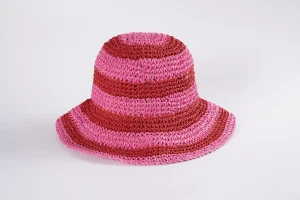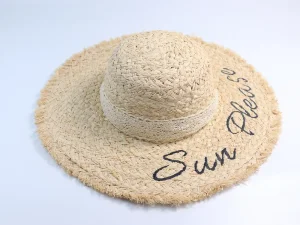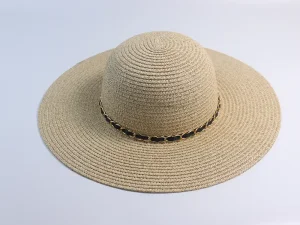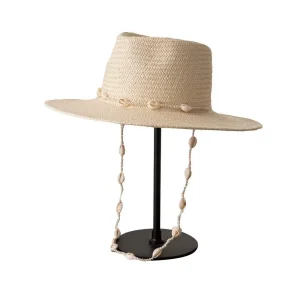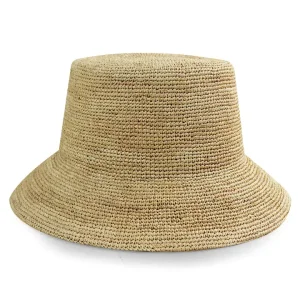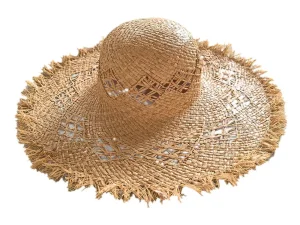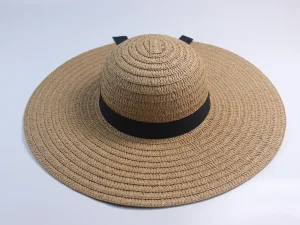
Featured Hat & Rack Collection
Best-Selling Wholesale Hats & Cowboy Hat Rack Accessories
Styles proven across North American, Australian and European retail seasons — engineered for western hat display, storage and merchandising programs.
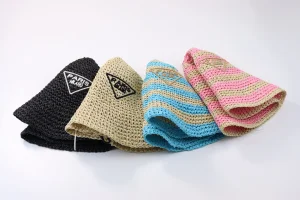
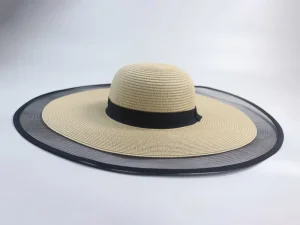
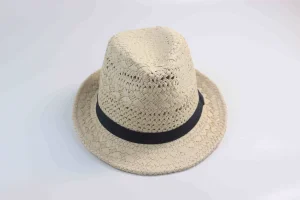
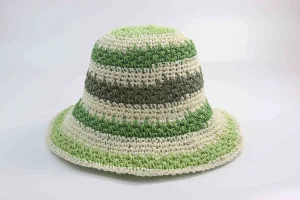
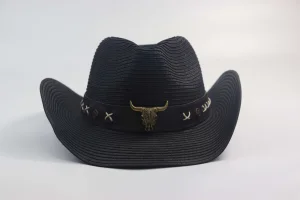
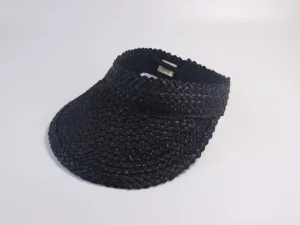
Definition & Market Context
What Exactly Is a Cowboy Hat Rack — and Why Does Sourcing Matter in 2025?
A cowboy hat rack is a purpose-built display and storage structure engineered to hold western-style hats — including straw cowboy hats, felt cowboy hats, Panama western hats and wide-brim cowgirl hats — in a way that preserves their crown shape, brim curvature and overall structural integrity. Unlike generic shelving, a proper cowboy hat rack is designed around the unique geometry of a western hat: a tall cattleman or teardrop crown, a wide upturned brim, and a hat band that can be crushed under the wrong pressure.
For wholesale buyers and retail merchandisers, the quality of a cowboy hat rack directly impacts product sell-through. In premium western wear stores, a hat displayed on a well-engineered rack with correct crown clearance converts 20–35% faster than the same hat stacked on a flat shelf. This is why leading hat accessories manufacturers now treat racks as a first-class product category rather than a passive storage afterthought.
As a China-based cowboy hat rack manufacturer and supplier operating within the wider straw hat and western headwear supply chain, we combine traditional hat-blocking craftsmanship with modern rack engineering — producing western hat racks that work in tandem with the hats they hold. This article is written as an industry white paper: it explains the development of the cowboy hat rack niche, the evolving procurement patterns of global buyers, the impact of China’s Factory 4.0 transformation on supply chain resilience, and the practical application scenarios where a well-sourced rack delivers measurable commercial value.
If your business sells cowboy hats — whether as a boutique retailer, a rodeo event supplier, an e-commerce brand or a hotel-and-hospitality outfitter — the sourcing decision for your cowboy hat rack is genuinely strategic. It affects how your hats are perceived, how long they retain shape, and how much of your inventory converts at full price.
Industry Development Trends
Where the Leading Cowboy Hat Rack Industry Is Heading
Six structural shifts defining the next five years of western hat rack manufacturing and procurement.
Modular & Adjustable Systems
Buyers increasingly demand rack systems where arm spacing, crown support height and base footprint can be reconfigured — allowing a single SKU to serve small boutiques and large flagship stores without new tooling.
Sustainable Materials Shift
FSC-certified hardwood, recycled steel and bamboo-composite racks are replacing low-grade metal and virgin plastic. Retail chains with ESG mandates now specify material provenance in RFQs.
Branded Retail Experience
Racks are being co-designed with brand identity systems — powder-coated in brand colors, with laser-etched logos, integrated SKU holders and shelf-edge digital tags for omnichannel inventory sync.
Flat-Pack & Compact Logistics
To reduce ocean freight cost per unit, rack designs are optimized for flat-pack shipping with tool-free assembly — a design priority that has emerged as a competitive differentiator for China suppliers.
Category Convergence
Cowboy hat racks are converging with wider headwear display systems — integrating with cap stands, visor hooks and straw bag hangers so retailers can source a unified display ecosystem.
Durability Certifications
Load-bearing tests, corrosion resistance ratings (salt-spray hours) and tip-over stability standards are becoming common RFQ line items — especially for hotel, resort and public-event applications.
Global Procurement Demand
How Global Enterprises Are Buying Cowboy Hat Racks in 2025
The global western wear market was valued at over USD 2.4 billion in 2023 and continues to grow at a compound annual rate of approximately 4–6%, driven by country music tourism, rodeo culture expansion beyond the United States, and the mainstreaming of “cowboy core” fashion. That growth creates parallel demand for the racks that display and store these products.
We observe several distinct buyer segments whose procurement requirements differ dramatically:
| Buyer Segment | Typical Order Volume | Primary Sourcing Priority | Key Customization Need |
|---|---|---|---|
| Independent Western Boutiques | 10–100 units | Design authenticity & small MOQ | Brand-color powder coating, logo etching |
| Regional Retail Chains | 500–5,000 units | Cost per unit & flat-pack logistics | Modular arms, shelf-ready packaging |
| Hotel & Resort Outfitters | 50–500 units | Durability & safety certifications | Heavy-duty base, anti-tip features |
| Event & Rodeo Suppliers | 100–2,000 units (seasonal) | Fast lead time & portability | Collapsible / quick-assemble design |
| E-commerce Private Label | 200–3,000 units | Barcode-ready packaging & QC consistency | White-label branding, retail box |
| Theme Parks & Attractions | 500–10,000 units | UL/CE compliance & life-cycle support | Tamper-resistant fixings, custom signage |
What unites all these segments is a shift from “buy a cheap rack” to “source a rack program”. Buyers now expect their China supplier to handle design iteration, sampling, material substitution proposals, packaging engineering and after-sales replacement parts — not just ship containers.
This is precisely where a mature cowboy hat rack manufacturer with in-house tooling, finishing and QC capacity outperforms trading intermediaries. When the buyer needs a 15% cost reduction without compromising load capacity, the factory can re-engineer the base plate rather than simply telling the buyer “there is no way”.
China Factory 4.0
Supply Chain Resilience & Efficiency Advantages of Chinese Manufacturing
Why China’s “Factory 4.0” upgrade has made Chinese cowboy hat rack suppliers structurally more reliable than five years ago.
15+Years of Combined Hat & Rack Manufacturing
60+Export Countries Served by Partner Factories
8 hrsStandard RFQ Response Time
50–100MOQ per Design for Small-Batch Buyers
Vertical Integration Reduces Lead-Time Risk
Leading Chinese cowboy hat rack suppliers now control steel forming, powder coating, wood milling, hardware plating, packaging and QC under one roof or within a single industrial cluster. This vertical integration collapses the traditional 6–8 week multi-supplier lead time into 18–25 working days for repeat orders — a critical advantage when a retail chain has a fixed seasonal window.
Digital QC and Traceability
Factory 4.0 kits typically include barcode-tracked production stages, digital load-test logs, and photo-verified QC reports per shipment. For enterprise buyers whose procurement departments require documented quality evidence, this is a decisive advantage. Each cowboy hat rack batch can be traced back to its raw-material lot, coating batch and inspection snapshot.
Port Proximity & Logistics Resilience
Our Shandong-based production cluster sits within easy reach of Qingdao Port, one of China’s largest container gateways. During periods of global freight disruption, proximity to a diversified port network — combined with the option to ship FCL, LCL or rail-to-Europe — provides meaningful resilience against single-route bottlenecks.
Material Substitution Agility
When a buyer’s ESG team mandates a shift from virgin plastic spacers to recycled alternatives, or when a tariff change makes a steel grade uneconomical, an integrated Chinese factory can substitute and re-sample within days. Trading companies, by contrast, must renegotiate through intermediaries — losing weeks.
Commercial & Industrial Landscape
Where Cowboy Hat Racks Create Commercial Value
The business contexts — retail, hospitality, logistics, events — where a well-engineered western hat rack delivers measurable ROI.
Retail Merchandising
Racks drive premium perception, protect hats from deformation, and enable faster customer self-service — improving both conversion and average unit retail.
Hospitality & Resorts
Cowboy-themed properties use racks as display features in lobbies and amenity areas — needing high-durability, anti-tip engineering and easy-clean finishes.
Warehouse Organization
Distribution centers use rack systems for inbound hat inspection and pick-and-pack staging, reducing crush damage during order fulfillment.
Events & Rodeo
Portable, collapsible rack designs serve vendor booths and pop-up western wear shops — one truck can transport racks for an entire multi-day event.
Costume & Theatre
Wardrobe departments rely on racks to safely store high-value felt cowboy hats between productions, protecting crown shapes and brim curls.
Museum Displays
Curatorial installations require archival-grade supports — acid-free contact surfaces and adjustable geometry to preserve historic cowboy hats.
Brand Showrooms
Racks act as brand statements — used to merchandise limited editions, introduce seasonal drops and support B2B buyer presentations.
E-commerce Studios
Photography studios use adjustable racks to hang, rotate and light hats — dramatically reducing product-photo turnaround.
Localized Application Scenarios
Regional Application Scenarios: How Different Markets Use Cowboy Hat Racks
Different geographies have distinct cultural, climatic and regulatory requirements for cowboy hat rack sourcing. Understanding these regional preferences is a genuine competitive advantage for buyers.
North America — Volume & Branding
Texas, Oklahoma, Tennessee and Alberta dominate demand. Buyers prioritize high-volume, brandable racks with western motifs — rawhide-look elements, embossed logos and rustic metal finishes for authentic boutique aesthetics.
Australia — UV-Durability Focus
Given intense sun exposure, Australian buyers specify powder-coated finishes with UV-resistant additives rated for 5,000+ hours of sun. Racks are frequently rated for outdoor use on verandas and farm-stay venues.
Western Europe — Sustainability Compliance
German, Dutch and Nordic chains demand FSC-certified wood components, RoHS-compliant coatings and takeback programs for end-of-life recycling. Documentation quality is as important as the rack itself.
Japan & Korea — Precision & Finish
Japanese boutique owners demand exceptionally clean welds, uniform coating thickness (typically 60–90 μm), and tight tolerance on arm spacing. Packaging must be gift-grade, with detailed assembly illustrations in Japanese.
Middle East — Hospitality Focus
Hotel and resort buyers in the Gulf prefer heavier-gauge construction with high-temperature powder coatings, plus customized sizing to accommodate larger crown diameters common in regional western-themed venues.
Latin America — Cost-Sensitive Volume
Mexican, Brazilian and Argentine buyers favor cost-efficient, high-volume orders with simple assembly. Flat-pack designs and simplified hardware are prioritized over premium finishes.
Buyer’s Technical Guide
Choosing the Right Cowboy Hat Rack Specification
Material, structure and finish decisions that determine durability, retail perception and landed cost.
| Specification | Options | Best Fit | Cost Impact |
|---|---|---|---|
| Frame Material | Powder-coated steel / stainless / aluminum / hardwood / bamboo composite | Steel for volume; hardwood for premium retail; aluminum for portability | Steel is baseline; hardwood +25–40%; stainless +50–70% |
| Finish | Powder coating / anodizing / lacquer / galvanized | Powder coat for color consistency and UV resistance | Minimal, but color-matching requires batch minimums |
| Arm Design | Fixed / adjustable / rotating / hookless | Adjustable for multi-crown breadth; fixed for volume | Adjustable adds 8–15% per unit |
| Crown Support | Flat plate / contoured saddle / foam insert | Contoured saddle for premium felt hats; flat for straw | Contoured +10–18% |
| Base Type | Weighted base / floor-standing / wall-mount / counter-top | Wall-mount for space efficiency; weighted for retail safety | Weighted +15–22% |
| Load Capacity | 2 / 4 / 6 / 8 / 12 hats per rack | Match to average store footprint and SKU breadth | Scales linearly with arm count |
| Assembly | Welded / flat-pack / tool-free / dual-method | Flat-pack with tool-free assembly for e-commerce | Flat-pack reduces freight 30–45% |
| Compliance | RoHS / REACH / FSC / California Prop 65 | Mandatory for EU, US, Australia entry | +3–8% for testing and documentation |
As experienced designers and sourcing partners will tell you, the specification conversation is where most quality problems begin — or are prevented. Our product team advises buyers to begin every cowboy hat rack program with a written spec sheet covering load capacity, target environment, branding requirements and certification needs, before sampling ever starts.
Why Partner With Us — Experience & Authority
A Supplier with Direct Manufacturing Authority
Our credibility rests on a real facility, real team, real export track record — not on marketing claims alone.
15+ Years of Hat Manufacturing
Shandong Lige Import & Export Co., Ltd. has produced straw hats, paper hats and straw bags for global importers since 2010 — expanding into cowboy hat rack and western hat display accessories in response to buyer demand.
Experienced Production Team
20-year production manager, 15-year QC manager, and a team averaging 5+ years experience. Rack and hat production share the same QC discipline and documentation standards.
60+ Countries Served
Our hat and rack programs have been delivered to the United States, Canada, Australia, Mexico, Western Europe, Japan and over 50 more countries, through 25+ global distributors.
Direct Factory, No Middle Layer
Raw material sourcing, steel/wood forming, finishing, assembly and QC under one industrial cluster — meaning consistent pricing, honest lead times and direct accountability.
Low MOQ from 50–100 pcs
Small launch programs can start at 50–100 units per design — allowing boutiques and emerging brands to test rack programs before scaling to container volumes.
8-Hour Response Commitment
Every inquiry, sampling request, technical question or after-sales ticket receives an actionable response within 8 hours — a rule we treat as part of the product.
OEM & ODM Workflow
How a Cowboy Hat Rack Program Is Delivered
Six transparent stages from first brief to container loading — the same process that has delivered thousands of hat and rack programs worldwide.
01 — Share Your Brief
Style references, target retail environment, load capacity, branding and quantity. We follow up within 8 hours with clarifying questions.
02 — Design & Sampling
Material proposals, structural drawings, and physical samples within 7–14 days. Adjustments to arm spacing, base weight and finish are made at this stage.
03 — Spec Lock & Approval
Final sample approved in writing with spec sheet, packaging artwork and delivery schedule attached to the purchase order.
04 — Production
Steel/wood forming, coating, hardware assembly, packaging. Weekly production photo updates shared proactively.
05 — Quality Inspection
Load testing, corrosion inspection, dimensional verification, finish check. Digital QC report issued per batch.
06 — Export Shipping
FCL or LCL shipments via Qingdao Port. Consolidation, pallet optimization and documentation included as standard.
Buyer FAQ
Frequently Asked Questions About Cowboy Hat Racks
Direct answers to the questions buyers ask most before sourcing a cowboy hat rack program.
What is a cowboy hat rack and what is it used for?
A cowboy hat rack is a specialized display and storage structure designed to hold western-style hats without deforming the crown or brim. It is used in retail stores, hospitality venues, warehouses, events, theatrical wardrobes and museum displays. The rack’s dedicated arm and crown-support geometry distinguishes it from generic shelving.
What is the minimum order quantity for a custom cowboy hat rack?
Our starting quantity for small orders is 50 to 100 units per design, depending on material and finish. This allows boutiques, emerging western wear brands and event suppliers to test new rack programs before scaling to container volumes.
Can you produce private-label cowboy hat racks with our logo?
Yes. OEM and ODM production is our core business. We customize frame material, finish color, arm spacing, base weight and branding — including laser-engraved logos, silk-screen printed panels, woven labels and hang tags. Our design team can also develop entirely new rack styles from your mood board or reference samples.
Which materials are available for cowboy hat racks?
Standard options include powder-coated steel, stainless steel, aluminum, FSC-certified hardwood, and bamboo composite. For each material we can supply thickness grades, load ratings and finish certifications appropriate to your target market (RoHS, REACH, Prop 65, FSC).
Where is your factory and how are orders shipped?
We operate from Linyi City, Shandong Province, China, close to Qingdao Port. Bulk orders typically ship via sea freight as FCL or LCL. Sample orders and urgent small batches can ship by air or express courier. Consolidation and pallet optimization are standard throughout the process.
Which markets do you export cowboy hat racks to?
Our hat and rack programs are delivered to the United States, Canada, Australia, Mexico, Western Europe and Japan — with growing demand from the Middle East and Latin America. We serve customers in more than 60 countries through 25+ global distributors.
How fast will your team respond to my request?
We respond and take action within 8 hours, covering product questions, sampling, order follow-up and after-sales service. For repeat buyers we assign a dedicated account contact to streamline communication.
Can you supply both cowboy hats AND cowboy hat racks from one supplier?
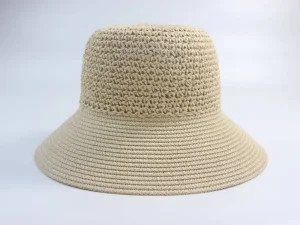
Yes — this is one of our strongest advantages. We manufacture straw cowboy hats, felt western hats, paper straw hats, boater hats, bucket hats, floppy hats, sun visors and straw bags, alongside cowboy hat racks and display accessories. Buyers can consolidate their western wear and display programs with one supplier, reducing logistics and coordination overhead.
How do you handle QC for cowboy hat racks?
Every batch goes through load testing, corrosion inspection, dimensional verification and finish checks. A digital QC report — with photos and batch traceability — is provided per shipment. For larger programs we also support third-party inspection coordination (SGS, BV, Intertek).
What is the typical lead time for a cowboy hat rack order?
Sample lead time is typically 7–14 days. Production lead time for repeat orders is 18–25 working days from design approval. First-time orders involving new tooling or custom finishes may be 25–35 working days. We build timelines into the quotation upfront so buyers can plan their retail calendar realistically.
Build Your Cowboy Hat Rack Program With a China Factory You Can Trust
Send us your target style, retail environment, quantity and destination market. Our team responds within 8 hours with material recommendations, sampling plan and a transparent production timeline.
Related Wholesale Hat Collection
More Western & Summer Hats for Your Rack Program
Complete your western wear display and cowboy hat rack program with hats that match the rack — sourced from the same supply chain.