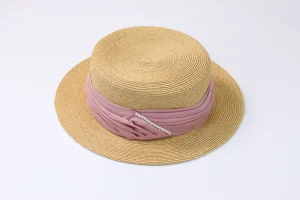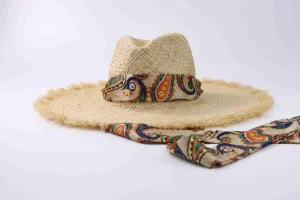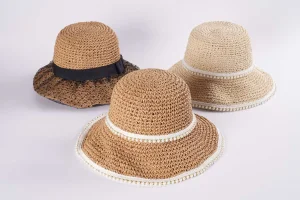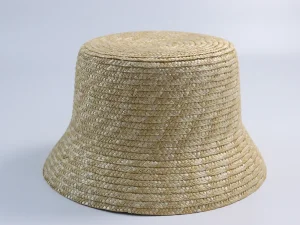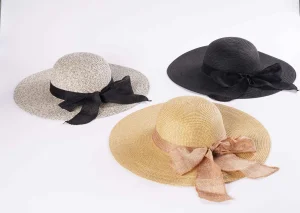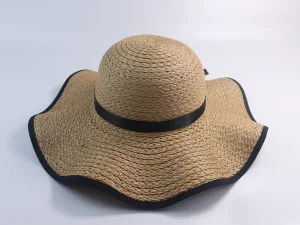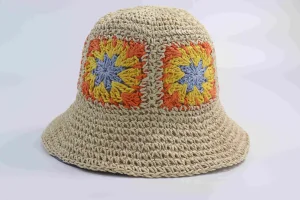
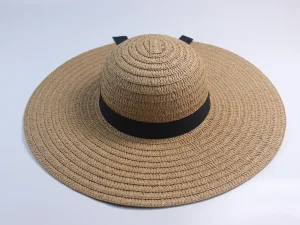
Featured Collection
Leading Straw Bags & Woven Headwear from China
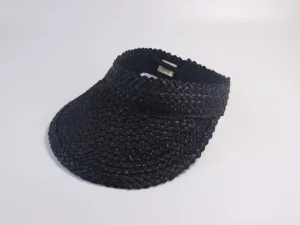
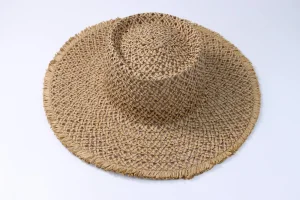
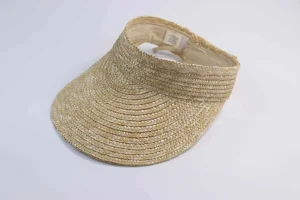
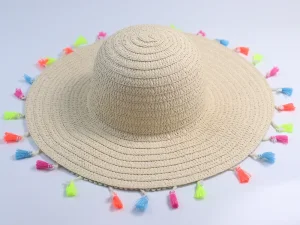
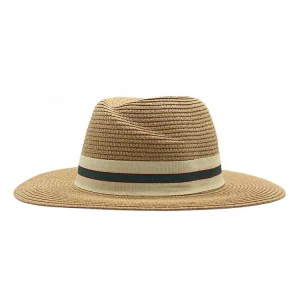
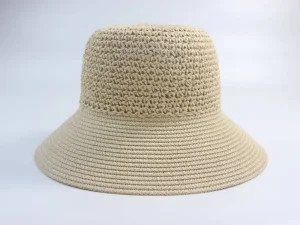
Hand-selected bestsellers that reflect the 2020 global sourcing catalog — from premium raffia beach bags and Panama hats to kids' summer sets, sport visors, and winter knits. Every product is OEM/ODM-ready with low MOQ.
Executive Summary
Why China-Led Straw Bag Manufacturing Defines the Global 2020 Sourcing Map
When sourcing managers open a seasonal catalog, the phrase "China leading straw bags 2020 manufacturers and supplier" describes more than a keyword — it defines an entire industrial ecosystem. This whitepaper documents that ecosystem from the perspective of a working OEM/ODM factory in Linyi, Shandong.
Global retail demand for natural-fiber bags and hats accelerated through 2019–2020, driven by three converging forces: an aesthetic shift toward "old money" resort style, sustainability commitments in fast fashion and mid-market retail, and a durable preference for packable, photogenic accessories that travel well. Straw bags — the woven tote, shopper, and crossbody silhouettes produced from raffia, paper straw, wheat straw, and blended natural fibers — moved from seasonal novelty to year-round revenue category in dozens of markets.
China, and specifically the Shandong manufacturing belt around Linyi, emerged as the anchor of this supply chain. Linyi sits within a few hours' truck of Qingdao Port, one of the busiest container gateways in northern China, and hosts dense clusters of weavers, blocking shops, trimmers, and export logistics partners. The result is a supplier ecosystem capable of producing low-MOQ private-label runs (50–100 pcs per design) and container-scale volumes on the same production floor.
This report is designed for importers, brand owners, boutique distributors, and sourcing directors who need more than a product list. It is a decision tool: it explains the 2020 material landscape, the procurement expectations of global buyers, the compliance scaffolding that protects both parties, the localization services a serious factory now provides, and the technology roadmap shaping 2021–2025 supply.
Our authority for writing it is direct. Shandong Lige Import & Export Co., Ltd. has manufactured straw hats, paper hats, straw bags, and paper bags for more than 15 years. Our production manager brings 20 years of experience, our QC manager 15, and our team averages 5+ years of service. We ship to 60+ countries and support more than 25 global distributors — customers in the United States, Canada, Australia, Mexico, Western Europe, and Japan. That is the experience base this whitepaper stands on. (E-E-A-T: Experience, Expertise, Authoritativeness, Trust.)
0
Years of Straw Manufacturing
0
Export Countries Served
0
Active Global Distributors
0
Hours Buyer Response SLA
Market Intelligence
Industry Trends Shaping Leading Straw Bags 2020
The straw bag category in 2020 was not a monolith. It fragmented into distinct commercial segments, each with its own materials, price architecture, and buyer profile. Understanding these segments is the first step toward building a range that sells through rather than marks down.
Sustainability as Standard
Natural, biodegradable fibers became a purchasing default. Retailers in the EU and North America increasingly demanded documentation tying bags to natural palm, wheat, or paper sources rather than synthetic look-alikes.
Packable, Instagrammable Design
Buyers prioritized silhouettes that fold flat, photograph well, and survive suitcase travel. Wide-brim floppy hats and soft raffia totes dominated social-driven retail assortments.
Seasonless Color Extension
Neutral naturals — sand, wheat, ecru, charcoal — extended straw bags beyond summer into resort wear, cruise lines, gift retail, and even winter-layer styling contexts in warm regions.
Small-Batch Private Label
The 2020 buyer no longer wanted 5,000 identical units up front. Demand shifted toward curated capsules of 50–100 pcs per design, validated in-market, then scaled — accelerating the low-MOQ model.
Buyer Demand Map
Global Enterprise Procurement Demand for Straw Bags in 2020
Procurement behavior in 2020 was shaped less by raw appetite than by risk management. Buyers wanted certainty: stable costs, predictable lead times, documented compliance, and the flexibility to shift quantities mid-season. Here is how demand expressed itself by region and channel.
| Region / Channel | Typical Order Volume | Buyer Priorities | Material Preference |
|---|---|---|---|
| United States — boutique & resort retail | 50–500 pcs / design | Speed to market, private label, low MOQ | Paper straw & raffia, pastel & neutral tones |
| Canada — mid-market department chains | 500–2,500 pcs / design | QC consistency, on-time FCL shipping | Natural wheat straw, structured shapes |
| Australia — surf & beach lifestyle brands | 300–1,200 pcs / design | UV coverage, packability, eco claims | Raffia, paper straw, blended weaves |
| Western Europe — EU distributors | 200–1,500 pcs / design | REACH awareness, documentation, traceability | Raffia & natural grass, certified trims |
| Japan — specialty accessory distributors | 100–800 pcs / design | Precision finishing, tight tolerance, packaging | Refined paper straw, subdued colorways |
| Mexico & LatAm — wholesale distributors | 1,000–5,000 pcs / design | Competitive FOB pricing, LCL flexibility | Economy paper straw, high-volume silhouettes |
What buyers told factories in 2020. Across these markets, the same three demands echoed. First, faster sampling — a design brief in Week 1 needed a physical sample by Week 3, not Week 6. Second, honest lead times — a quoted 35-day production window that slipped to 55 days destroyed seasonal windows and eroded trust faster than a marginal price difference. Third, single-source efficiency — buyers wanted one supplier capable of delivering hats, bags, visors, and children's sets so that a single container could carry a coherent assortment.
That third shift is why "one-stop hat and bag supplier" became a strategic phrase rather than a marketing slogan. Retailers consolidating supplier lists for pandemic-era resilience found that a factory able to deliver a curated, cross-category capsule — Panama hats, straw bags, boater hats, visors, and kids' sets together — reduced their administrative overhead and consolidated freight economics.
Macro Industry Solutions
Macro Solutions: Fiber Strategy, Cost Architecture & Program Design
Choosing a fiber is a commercial decision as much as an aesthetic one. It affects landed cost, breakage rate in transit, season length, and the marketing claims you can safely make. This section is the sourcing playbook we share with buyers before sampling.
Raffia
Natural palm fiber prized for softness, dye receptivity, and shape memory. Excellent for packable floppy hats, bucket bags, and premium resort lines.
Paper Straw
Twisted paper yarn delivering uniform color, clean finish, and competitive unit cost. Ideal for volume retail, promotional sets, and entry price points.
Wheat / Natural Grass
Braided natural stems with structural stiffness. Best when crisp shape retention matters — boater hats, structured totes, lifeguard and uniform programs.
Blended & Knit
Cotton, polyester, and knit constructions extend assortment into winter beanies, sport visors, children's lines, and gift sets to smooth seasonal gaps.
Cost Architecture Buyers Should Understand
Landed cost in straw bags is shaped by five levers, not one. The FOB quote is a starting point, but the total commercial cost depends on unit price × MOQ × freight efficiency × defect allowance × rework risk. A factory that quotes 8% higher but ships with under 2% defect allowance and packs 15% more units per CBM can easily deliver a lower landed cost than the cheapest quote on paper.
- Material grade: bleached, dyed, or natural-tone fibers change unit economics materially.
- Shape complexity: a flat shopper bag is cheaper to block and press than a structured trilby hat.
- Trims: leather straps, metal hardware, and embroidered patches introduce third-party cost layers.
- Packaging: poly bags, hang tags, and printed cartons must be specified in the initial brief to avoid late-stage cost surprises.
- Freight density: packability is a supply chain feature, not just a product feature.
At Lige Hats, we routinely model these variables jointly with buyers before accepting an order, because it prevents the most damaging failure mode in this category: a program that looks profitable at quote stage and loses money at arrival. Contact our team for a landed-cost worksheet tailored to your assortment.
Localization & Trust
Localization Support & Compliance Assurance
Compliance in 2020 stopped being a box to tick and became a relationship feature. Buyers wanted a supplier that understood their market's documentation, labeling, and chemical-safety expectations — and could respond in their language and time zone.
Multi-Market Documentation
We support buyers preparing documentation for EU, US, Canadian, and APAC customs, including material descriptions, origin statements, and packaging specifications aligned to destination-market requirements.
QC & Defect Protocol
Final inspection covers shape, stitching, size tolerance, trims, and packing. Buyers receive an inspection record with the shipment so there is a documented quality baseline before arrival.
Low-Risk OEM/ODM
Sampling before production, written specification approval, and staged order confirmation are standard. Our process gives the buyer a decision gate at every stage — brief, sample, pre-production, inspection, and handover to freight.
Localization Support in Practice
Buyers in each market ask different things. US boutique owners want private-label hang tags and fast re-stock. Canadian mid-market chains ask for consolidated FCL scheduling. Australian beach brands want UV-coverage claims and packable specifications. European distributors want fiber traceability and awareness of REACH-relevant chemistry in dyes and trims. Japanese accessory houses focus on finishing precision and packaging presentation.
Supporting all of these from a single factory requires an honest, structured process. At Lige Hats, our sales team responds and takes action within 8 hours of a buyer inquiry, and our sampling plan is explicitly documented: design intent, material, dimension, trim, and packaging. That documentation becomes contractual. This is the practical meaning of reliability in the E-E-A-T framework — buyers can verify that what they agreed to is what they received.
We also structure order fulfillment through Qingdao Port for FCL and LCL shipments, and via air or express for samples and urgent small orders. This geographic advantage is not decorative; it is the operational backbone that makes a 30–40 day production-to-port cycle realistic for seasonal retail.
Roadmap & Outlook
Technology Roadmap & Future Outlook (2021–2025)
Where is the China straw bag supply chain heading? Our internal roadmap, aligned with observed buyer behavior, outlines four evolutionary phases that we expect to shape factory competitiveness through the mid-decade.
Digital Order Visibility
Order tracking, digital spec sheets, and photo-based sampling become standard expectations. Buyers want to see production status without asking for it.
Traceability & Eco Docs
Fiber origin documentation, recycled packaging, and sustainability declarations move from premium requests to base requirements in EU and North American retail.
Design-Led Differentiation
Winning suppliers will compete on creative design and color forecasting, not just FOB price. In-house design studios become a differentiator for both brand and boutique buyers.
Smarter, Leaner Supply
AI-assisted demand planning, tighter small-batch economics, and channel-specific packaging are expected to reduce inventory risk while increasing design velocity.
Buyer Decision Guide
How to Evaluate a Leading Straw Bag Manufacturer
The gap between a "leading" supplier and a merely active one comes down to verifiable practice. Use the following checklist when auditing any China manufacturer — including us.
1. Production Capacity, Not Intermediation
Ask where blocking, trimming, and final inspection happen. A real factory can describe the floor. A trader can only describe a phone contact.
2. Material Honesty
Be suspicious of "raffia" priced like paper straw. Confirm the fiber, the weave, and the care requirements in writing before you commit to an order.
3. Response SLA
A factory's speed of response under normal conditions predicts its responsiveness when a container is delayed or a QC issue arises. We target 8 hours at every stage.
4. MOQ Flexibility
True low-MOQ flexibility means 50–100 pcs per design at the factory level, not a minimum of 3,000 pcs with a "trial allowance" of 500.
5. Documentation Discipline
A supplier that provides written spec sheets, QC records, and packaging instructions is lowering your operational risk more than any price concession can.
6. Cross-Category Range
Hats, bags, and accessories from one supplier consolidate freight, simplify supplier management, and increase the coherence of your retail assortment.
Frequently Asked Questions
Buyer Q&A — Straw Bags, Hats & Sourcing
Direct answers to the questions our team receives from importers and brand owners most often. For anything not covered here, our team responds within 8 hours.
What is the minimum order quantity for straw bags and straw hats?
Our starting quantity for small orders is 50 to 100 pieces per design, depending on the material and craftsmanship. This allows boutiques, emerging brands, and importers to test new styles before scaling up.
Can Lige produce private-label straw bags and hats with our logo?
Yes. OEM and ODM production is our core business. We customize shape, material, color, size, and trims, and add branding such as woven labels, patches, and hang tags. Our in-house designers can also develop new styles from your mood board or reference samples.
Where is your factory located, and how are orders shipped?
We are located in Linyi City, Shandong Province, China, close to Qingdao Port. Bulk orders are typically exported by sea freight as FCL or LCL shipments, while samples and urgent small orders can be sent by air or express courier.
Which global markets do you export to?
Most of our products are exported to the United States, Canada, Australia, Mexico, Western Europe, and Japan. We serve customers in more than 60 countries and work with over 25 global distributors.
How quickly does your team respond to buyer requests?
We respond and take action within 8 hours, covering product questions, sampling, order follow-up, and after-sales service.
What products do you manufacture besides straw bags?
In addition to straw bags, we manufacture straw bags and woven bags, straw hats, paper hats, paper bags, children's straw hats, toy hats, lifeguard hats, sun visors, winter hats, and other accessory programs.
How does Lige protect buyer quality in straw bag production?
Production runs through a documented six-step flow: brief intake, design and sampling, sample and specification approval, in-house production, final QC inspection (shape, stitching, tolerance, trims, packing), and export handover via Qingdao Port. Buyers receive inspection records alongside the shipment.
Build Your 2021 Straw Bag Collection With a Verified Factory
Send us your style references, target quantity, and destination market. Our team replies within 8 hours with material suggestions, a sampling plan, and a production timeline.
More Best-Sellers
Continue Browsing Our Woven Collections
Additional shapes from the same 2020 catalog, all available for OEM/ODM production with low MOQ and in-house design support.