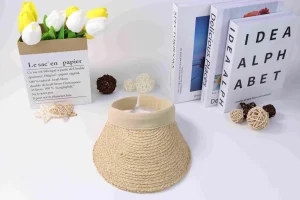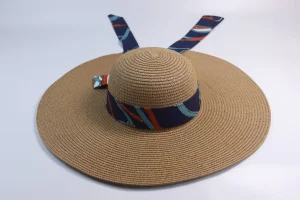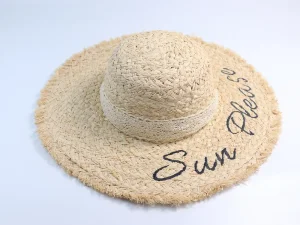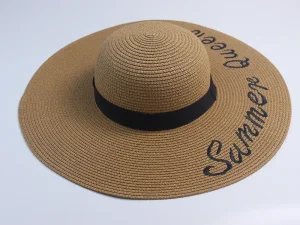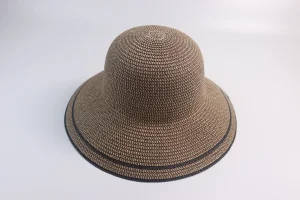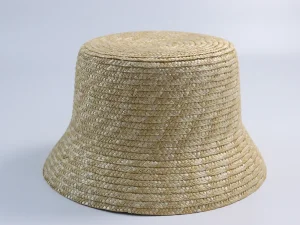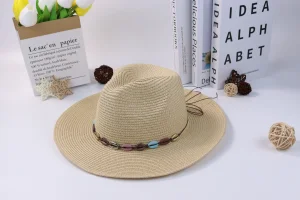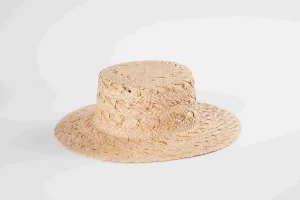
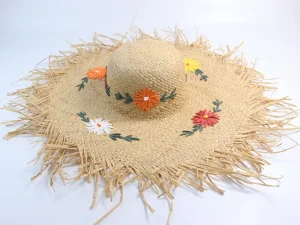
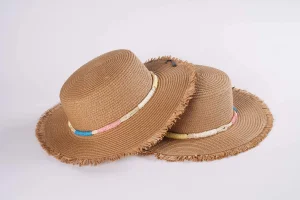
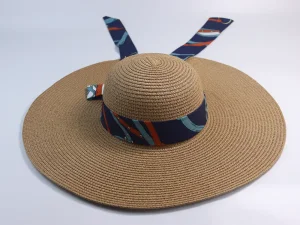
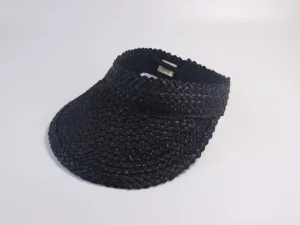
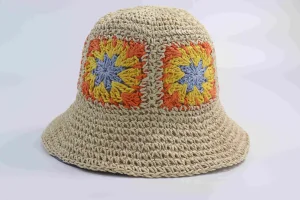
Featured Straw Hat & Bag Programs from the Lige Factory Floor
Factory-direct silhouettes buyers reorder season after season — each link opens the live product page on ligestrawhat.com.
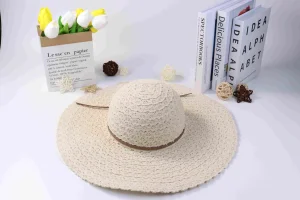
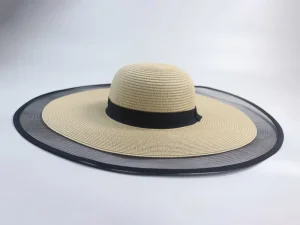
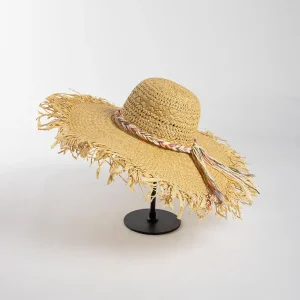
Executive Summary: Why China Still Leads Straw Bag Sourcing in the 2020s
From 2020 onward, the global straw bag and woven headwear category went through three simultaneous disruptions: an accelerated shift toward sustainable materials, a spike in direct-to-consumer private-label demand, and a re-routing of supply chains under port congestion and tariff uncertainty. China emerged not just as the surviving supplier base, but as the most operationally resilient one.
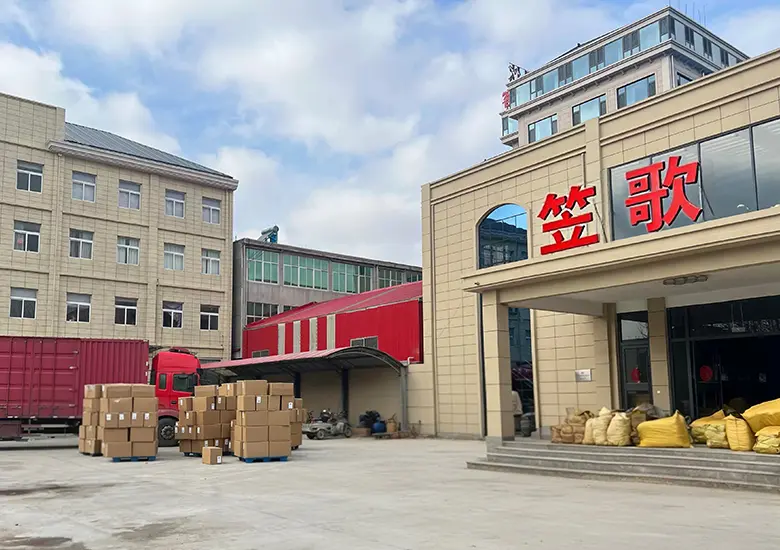
Shandong Lige Import & Export Co., Ltd. — trading as Lige Hats — has been producing straw hats, paper hats, straw bags and paper bags for more than 15 years from its base in Linyi City, Shandong Province. The factory sits within easy reach of Qingdao Port, one of China’s largest container gateways, which allows FCL and LCL straw bag programs to move from final inspection to vessel loading inside a single consolidated logistics window.
Our customers are importers, wholesalers, brand owners and retailers across the United States, Canada, Australia, Mexico, Western Europe and Japan. They rely on our professional designers, an efficient sales team, competitive factory pricing and dependable quality. The operating principle is simple: to become your one-stop hat and straw bag supplier, not a single-order middleman.
- Low MOQ: 50–100 pieces per design, so boutique brands can test silhouettes without overstocking.
- 8-hour response: product questions, sampling, order follow-up and after-sales handled inside one business cycle.
- 60+ countries served across six continents, supported by 25+ global distributors.
- In-house line: raw-material sorting, weaving, blocking, finishing and final QC under one roof.
Raffia
Paper Straw
Natural Grass
Fabric & Knit
OEM / ODM
FCL & LCL
15+Years of Manufacturing
25+Global Distributors
60+Countries Served
8hBuyer Response Commitment
Localised Application Scenarios for Leading Straw Bags in the 2020s
A single straw bag family behaves differently in Malibu, Mykonos, Sydney’s Northern Beaches and Cancún. The 2020s buyer expects the factory to understand not just the product, but the context in which it will be photographed, resold and reviewed.
Resort & Coastal Retail (Mediterranean, Caribbean, Hawaii)
Wide-brim floppy raffia hats and oversized woven totes are sold as coordinated “beach day” bundles. Bands, lining and drawstrings are colour-matched to swimwear palettes. Packability is the leading review metric.
City & “Old Money” Aesthetic (US, UK, France, Japan)
The 2020s revival of quiet-luxury styling pushed soft-woven floppy hats and structured boater silhouettes into urban retail. These programs demand tighter colour control, cleaner weaves and reinforced ribbon bands.
Travel & Airport Retail (Global Duty Free)
Packable, rollable and reversible straw bags suit in-flight retail because they occupy minimal shelf footprint. UV-protection labelled hats pair perfectly with sun-care SKUs during the summer peak.
Boutique Private Label (Australia, Mexico, Canada)
Small-run 50–100 piece programs with woven labels, patches and hang tags let independent boutiques ship differentiated SKUs without competing on price with mass retailers. Low MOQ is the unlock.
Festival & Music Culture (Coachella, Glastonbury, Fuji Rock)
Straw cowboy hats and bucket silhouettes dominate the summer festival cycle. These SKUs favour bold dye-receptive fibres like raffia, which hold saturated pigment while remaining breathable across multi-day wear.
Hospitality & Corporate Gifting (Hotels, Cruise Lines)
Branded straw visors and bucket bags are increasingly issued to guests at poolside. Embroidery, heat-transfer logos and custom packaging are produced inside the same factory floor cycle as the hats.
The Fibre Technology Roadmap: What Buyers Should Specify in 2025–2030
Fibre selection controls hand-feel, shape retention, price point and how well a straw bag survives container shipping. Our product team advises buyers on these four families before sampling begins.
| Fibre | Origin & Character | Best For | Buyer Tip |
|---|---|---|---|
| Raffia | Natural palm-leaf fibre traditionally sourced from Madagascar. Natural resins make it soft, flexible and highly dye-receptive. | Floppy hats, bucket hats, premium resort lines, straw bags. | Ideal for “packable” claims and bold, saturated colourways. |
| Paper Straw | Twisted paper yarn woven or braided into a lightweight, uniform fabric. Clean, consistent colour, competitive unit cost. | Fedoras, Panama-style hats, seasonal & promotional retail. | Add “keep dry” care labels — paper straw softens when soaked. |
| Natural Grass | Braided natural stems with inherent stiffness for crisp, structured silhouettes and artisanal authenticity. | Boater hats, cowboy hats, lifeguard hats. | Choose it when shelf shape-retention matters most. |
| Fabric & Knit | Cotton, polyester and knitted constructions extend assortments beyond summer into children’s and cold-weather categories. | Visors, winter hats, children’s hats, toy hats. | Pair with straw lines for a year-round single-supplier program. |
01
2024 — Material Traceability
Documented fibre origin and batch-level traceability from Madagascar raffia farms and Chinese paper-yarn mills.
02
2025 — Low-Impact Dyeing
Water-reduced pigment baths and low-temperature colour fixation to reduce effluent while preserving raffia vibrancy.
03
2026 — Recycled & Bio-Based Yarn
Recycled cotton blends and bio-based polymer-infused straw yarns extending durability for travel retail.
04
2027 — Shape Memory Finishing
Post-blocking treatments that reduce dent recovery time after container shipping and long-haul trucking.
05
2028–2030 — Verifiable CO₂ Data
Per-SKU cradle-to-port carbon data to support European retailer reporting requirements and eco-labelled packaging.
Roadmap shown reflects Lige’s ongoing internal material development; buyers should always confirm the fibre spec at sampling.
China Factory Supply-Chain Resilience & Efficiency Advantage
Why the 2020s buyer — jolted by port shutdowns, container shortages and freight spikes — keeps returning to Shandong-based factories like Lige Hats.
Vertical Integration
Material sorting, weaving, blocking, finishing and final QC all under one roof — no quality drift between subcontractors and no margin stacking through trading agents.
Qingdao Port Proximity
Short inland haul to a first-tier container gateway accelerates FCL and LCL loading cycles and reduces dependence on a single shipping lane during congestion events.
Documented QC
A QC manager with 15 years of hat and bag inspection experience runs shape, stitching, sizing and trim checks before export packing every shipment.
Low-MOQ Agility
50–100 piece runs give brands the ability to test new silhouettes before committing to container volumes — the operational flexibility emerging labels need most.
Forecast-Aligned Production
Seasonal capacity is planned around buyer pre-orders so factory floor time is reserved for confirmed programs, cutting production lead-time variance.
Multi-Lane Freight Options
Bulk orders ship FCL or LCL by sea from Qingdao, while samples and urgent small orders travel by air or express courier through alternative freight forwarders.
Consolidated SKU Pickup
Straw hats, paper hats, straw bags, paper bags, children’s hats, visors and winter hats can be manufactured in a single program — one factory, one invoice, one container.
The Global Commercial & Industrial Context (2020s)
Straw bags and woven headwear sit at the intersection of fashion, travel retail and eco-conscious consumer behaviour. Four structural forces define the 2020s market.
1. Sustainable Fibre Premium
Consumers overwhelmingly prefer natural, biodegradable fibres over synthetic alternatives. Raffia, wheat straw and paper straw are being repositioned by retailers as premium, planet-friendly options — and they command higher price points accordingly. Factories that can document fibre origin and dyeing methods become commercial partners, not just suppliers.
2. Direct-to-Consumer Private Label
The lowering of entry barriers through low MOQ, small-batch sampling and design support has created a new class of buyers: DTC brand founders who require 100–500 units per SKU but expect enterprise-grade QC. In 2020s sourcing, small-batch capability is not a weakness — it is the commercial advantage.
3. Freight Volatility & Near-Shore Pressure
Port congestion, container shortages and freight rate spikes after 2020 led many buyers to explore near-shore alternatives (Mexico, Turkey, Portugal). Cost comparisons consistently show that China-based factories remain the most efficient at scale — and factories near first-tier ports recover fastest when freight normalises.
4. Rule-of-Origin & Tariff Sensitivity
US, EU and UK tariff regimes keep shifting. Buyers increasingly require factories to provide HS classification support, commercial invoice documentation and material declarations so that landed-cost models can be re-run quickly without re-sourcing the product itself.
60+Export markets served by Lige Hats
50–100pcs starting quantity per design
FCL & LCLExport formats from Qingdao Port
25+Global distributor relationships
Localisation Support & Compliance Assurance
“Made in China” is only a competitive advantage when it ships with documentation localised to the destination market’s expectations.
Language & Communication Localisation
Sales and support handled in English, with product catalogues localised for United States, Canada, Australia and Western Europe. Documentation — packing lists, hang tags and care labels — can be produced in destination-market language.
Labeling & Compliance Packaging
Barcoding, GS1-style SKUs, care-and-content labels and FSC-friendly hang tags applied inside the factory before export. This eliminates re-labelling cost at destination and reduces compliance rejection risk.
B2B Documentation Ready
Commercial invoice, packing list, HS classification support and material declarations supplied alongside shipment. Where buyers require third-party lab testing (e.g. azo dye screening), the sampling cycle includes the lab coordination step.
Customs & Duty Modelling Support
Because tariffs on headwear and bags differ between US, EU, UK and Australia, our team works with buyer logistics partners to supply the material breakdown and origin documentation required for accurate landed-cost modelling.
Small-Batch Compliance Testing
Even 50-piece boutique runs can be routed through low-volume compliance channels when the destination market requires it, so emerging brands are not excluded by testing minimums.
After-Sales & Returns Support
Rapid response and action within 8 hours on quality queries and returns, with one dedicated account contact. Disputes are resolved with documentation and photographs from the packing stage.
A Transparent Six-Step OEM & ODM Workflow
From first brief to container loading, buyers stay informed at each gate.
Step 1 · Share Your Brief
Style, material, size, colour, branding and target quantity defined alongside your mood board or reference sample.
Step 2 · Design & Sampling
Our in-house designers recommend the right fibre family and develop a production-ready sample for approval.
Step 3 · Approval
Samples, labels, packaging and delivery schedule confirmed and locked before production begins.
Step 4 · Production
Material sorting, weaving, blocking and finishing run in-house — no subcontractor quality drift.
Step 5 · Quality Inspection
Shape, stitching, sizing and trims inspected before export packing. Defect rates documented per batch.
Step 6 · Export Shipping
FCL or LCL sea freight via nearby Qingdao Port; samples and urgent small orders via air or express courier.
Buyer FAQ — Straw Bags, Hats & China Factory Sourcing
The questions importers and brand owners ask most often. Need more detail? Our team replies within 8 hours.
What is the minimum order quantity for custom straw bags and hats?
Our starting quantity for small orders is 50 to 100 pieces per design, depending on the material and craftsmanship. This allows boutiques, emerging brands and importers to test new styles before scaling up into full container programs.
Can Lige produce private-label hats and bags with our own logo?
Yes. OEM and ODM production is our core business. We customise shape, material, colour, size and bag or hat bands, and can add branding elements such as woven labels, patches and hang tags. Our in-house designers can also develop new styles from your mood board or reference samples.
Where is your factory located and how are orders shipped?
We are located in Linyi City, Shandong Province, China, close to Qingdao Port. Bulk orders are typically exported by sea freight as FCL or LCL shipments, while samples and urgent small orders can be sent by air or express courier.
Which markets do you export straw bags and hats to?
Most of our products are exported to the United States, Canada, Australia, Mexico, Western Europe and Japan. We serve customers in more than 60 countries and work with over 25 global distributors.
How quickly does your team respond to buyer requests?
We respond and take action within 8 hours, covering product questions, sampling, order follow-up and after-sales service.
What products do you manufacture besides straw hats?
In addition to straw hats, we manufacture paper hats, straw bags, paper bags, children’s straw hats, toy hats, lifeguard hats, sun visors, winter hats and other bags.
Do you support mixed-material programs in one container?
Yes. Straw hats, paper hats, straw bags, paper bags, children’s hats, visors and winter hats can all be manufactured and packed as a single consolidated program — one factory, one invoice, one container.
What is your approach to fibre traceability and compliance documentation?
Our product team documents fibre origin at the batch level and supplies commercial invoice, packing list, HS classification support and material declarations alongside shipment. For buyers who require third-party lab testing, the sampling cycle can be extended to include lab coordination.
Build Your Next Straw Bag & Hat Program with Lige
Send us your style references, target quantity and destination market. Our team replies within 8 hours with material suggestions, a sampling plan and a production timeline.
More Factory-Direct Silhouettes Buyers Reorder
Each product link opens the live spec page — MOQ, customization options and freight notes are confirmed on the product page.