A buyer's deep-dive into straw beach bag sourcing from China — global procurement demand, material strategy, technical roadmaps, compliance, and why factory-direct partnership beats trading-desk margin.
Industry Whitepaper · 2026 Edition
Why China Still Sets the Benchmark for Straw Beach Bag Sourcing
Shandong Lige Import & Export Co., Ltd. ("Lige Hats") has spent more than fifteen years refining something deceptively simple: turning natural fibers into carry-ready formats that survive the container, the retail floor, and the consumer's summer. The straw beach bag — a category loosely defined by woven body, generous volume, and sun-ready aesthetics — sits squarely at the intersection of handcraft tradition, industrial consistency, and sustainable consumer demand.
This guide is written for the buying team that has already moved past the first keyword search. It is not a product catalog. It is a decision framework: what the global procurement landscape looks like today, which fibers solve which commercial problem, how a technical roadmap should be structured, and what "localized support" actually means when your supplier is 6,000 km away.
Bottom-up expertise: production and QC leadership averaging two decades on the floor.
Tiered MOQ from 50–100 pcs per design, letting emerging brands validate before scaling.
Qingdao Port adjacency — the practical difference between a 25-day and a 40-day replenishment cycle.
8-hour response commitment across sampling, order follow-up, and after-sales.
15+Years of woven-accessory manufacturing
60+
Countries served across 6 continents
25+
Active global distributor relationships
50–100
Pieces per design starting quantity
8h
Response & action on every request
Global Procurement Demand
What Enterprise Buyers Actually Need from Straw Beach Bag Suppliers
Across North America, Western Europe, Australia, and increasingly the Gulf and Japan, straw beach bags have shifted from a "seasonal filler" category to a planned program item. The reasons are consistent, and each one shapes what a supplier must be able to prove.
Program Planning, Not Spot Buying
Retail chains and brand owners now plan woven accessories 9–12 months ahead, aligning with resort season, festival calendars, and private-label drops. That requires suppliers who can hold a confirmed capacity slot rather than chase a stock lot.
Differentiation at Flat Price Points
Consumers compare a straw beach bag against fashion leather and synthetic totes at similar shelf prices. Buyers need visible craftsmanship — irregular weave texture, natural tone variance, hand-finished trims — to justify the price without holding a premium margin.
Sustainability as a Sourcing Criterion
Raffia, paper straw, and natural grass have clear advantages for brands building a "natural materials" narrative. But buyers have learned to ask hard questions about dye chemistry, worker safety, and traceability — and suppliers without answers are losing deals.
Freight Realities & Landed Cost
With container rates still volatile, importers are consolidating SKUs and looking for suppliers who can ship flexible quantities — LCL consolidation, mixed-style containers, and packaging that reduces volumetric weight without crushing the weave.
Customization as Standard
Logo patches, woven labels, custom linings, drawstring closures, multi-color weaves — buyers expect these to be available even at low volume. A supplier that only offers "one shape, three colors" is no longer competitive in this category.
Risk Diversification
After several years of supply shocks, procurement teams avoid single-source dependency. Suppliers who can dual-source raw fiber, maintain buffer stock of standard trims, and demonstrate contingency planning win the longer contract.
Material & Technical Roadmap
The Fiber Decision: Raffia, Paper Straw, Natural Grass, Fabric
Fiber choice is the single most consequential early decision in a straw beach bag program. It determines hand-feel, shape memory, dye behavior, unit cost, and how the product survives ocean freight. Here is the framework our product team uses with buyers before a single sample is blocked.
Raffia
A natural palm-leaf fiber, traditionally sourced from Madagascar. Its natural resins give it softness, flexibility, and exceptional dye receptivity — the reason raffia bags hold vivid, saturated colorways that survive repeated folding.
Best forPackable beach totes, premium resort lines, crossbody woven bags
Buyer tipIdeal when you need to support a "packable" or "travel-friendly" claim in retail copy.
Paper Straw
Twisted paper yarn woven or braided into a lightweight, uniform fabric. It delivers clean, consistent colors and a competitive unit cost for volume programs — the workhorse of promotional and seasonal retail.
Best forHigh-volume beach totes, promotional campaigns, entry price points
Buyer tipInclude "keep dry" care labeling — paper straw softens under prolonged moisture.
Natural Grass Straw
Braided natural stems with inherent stiffness, producing crisp, structured silhouettes and an authentic artisanal look that buyers value at premium price points.
Best forStructured beach baskets, market totes, heritage-style programs
Buyer tipChoose it when shape retention on the shelf matters more than foldability.
Fabric & Knit
Cotton, polyester, and knitted constructions extend the assortment beyond summer and into children's, travel, and cold-weather adjacency categories.
Best forLining integrations, hybrid straw-and-canvas programs, kids' lines
Buyer tipPair with straw lines for a year-round single-supplier accessory program.
Stage 01
Design & Brief Alignment
Convert a mood board into a physical spec: dimensions, weave density, handle drop, trim inventory, and target FOB. This is where landed-cost conversation begins.
Stage 02
Prototype & Fiber Trial
Block test pieces against each candidate fiber. Evaluate drape, dye penetration, and dimensional stability after simulated shipping compression.
Stage 03
Pre-Production Approval
Lock trims, labels, packaging, and final artwork. This gate protects both sides from mid-run change orders and unplanned freight cost.
Stage 04
Production & QC Exit
In-house weaving, finishing, and final inspection before export packing — with the QC sign-off documented for retailer compliance files.
In-HouseRaw material to final inspection
Global Commercial Landscape
The Current State of Woven Accessory Manufacturing and Where It Is Heading
The woven accessory industry has consolidated significantly over the last decade. High-volume hand-weaving has concentrated in a shrinking set of regional clusters — Shandong and Zhejiang in China, parts of Vietnam, Madagascar for raffia fiber, and Ecuador for genuine Panama straw. Buyers now face a two-tier landscape: high-consistency industrial suppliers with real capacity, and smaller artisan workshops unable to hold program quantities.
The next five years will be shaped by four forces:
Fiber traceability. Retail buyers increasingly require documentation of fiber origin for sustainable lines. Suppliers investing early in origin records will win contracts.
Low-MOQ digitization. Buyers expect online spec sheets, sample ordering, and digital approval cycles — not paper PDFs.
Hybrid formats. Straw + canvas, straw + leather trim, straw + recycled webbing. In-house capability to combine materials is now a competitive requirement.
Rapid replenishment. With container costs volatile, buyers want flexible quantity and consolidation — a supplier's port adjacency is now a buying factor.
For Lige Hats, this means continued investment in the Linyi facility (raw material sorting, in-house weaving, finishing, QC), expanded sample-range capacity, and tighter coordination with Qingdao Port forwarders to support FCL and LCL programs with predictable lead times.
Localized Support & Compliance
What "Reliable" Actually Means When Your Supplier Is 6,000 km Away
Trust in a sourcing relationship is built on specific, verifiable commitments — not marketing language. Below is what Lige Hats commits to as standard practice, and why each one matters for buyers in the US, Canada, Australia, Mexico, Western Europe, and Japan.
Dedicated Account Contact
One named contact per account — not a shared inbox. From first sampling to post-shipment follow-up, the same team stays on your file and knows the history of your program.
Multi-Market Export Experience
Documentation, labeling, and packaging experience across US, EU, AU, CA, MX, and JP retail requirements. We flag non-complying trims or labeling before production, not after.
Documented Quality Inspection
Final inspection covers shape, stitch integrity, weave density, size accuracy, trim attachment, and packaging alignment — with a written QC record for retailer compliance files.
Compliance-Ready Communication
English-language specs, certifications, and material statements available on request. Fiber composition and dye information supplied in formats that can be attached to your own sustainability disclosures.
Qingdao Port Logistics Coordination
Linyi sits within easy trucking distance of Qingdao Port. We work with buyer-nominated or our vetted forwarders to arrange FCL and LCL bookings with realistic lead times.
After-Sales Response in 8 Hours
Quality claims, replacement requests, and documentation follow-ups are addressed within one business day. We treat after-sales as part of the manufacturing relationship, not a separate service tier.
Factory & Team Depth
Direct Factory Manufacturing, Not a Trading Desk
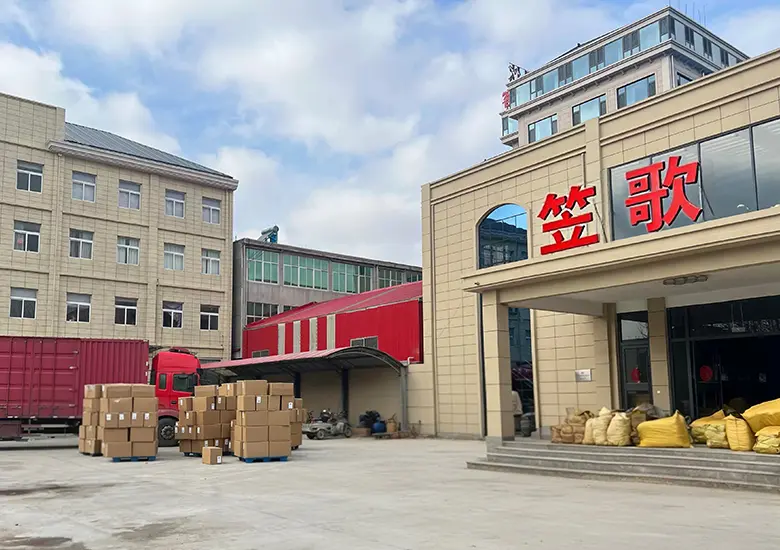
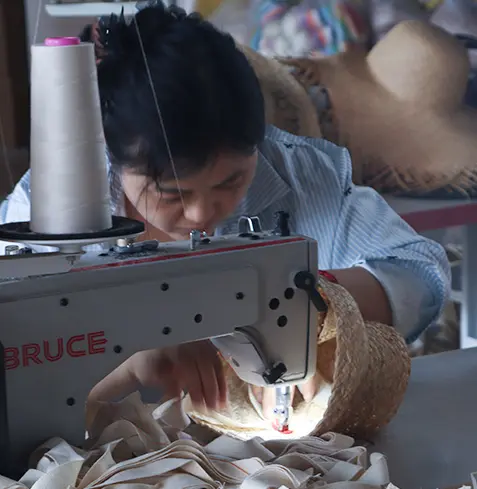
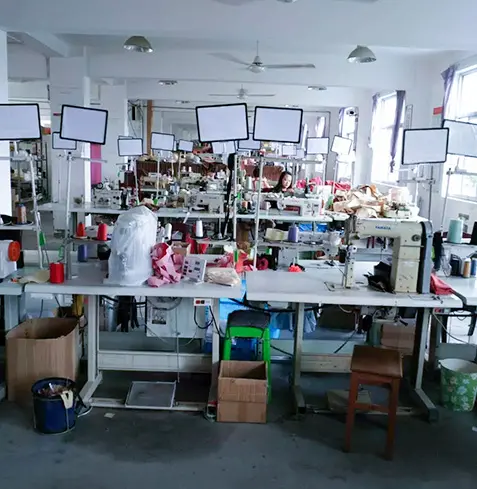
Buyers increasingly ask to see production — not just a catalog. Lige Hats operates as a direct manufacturer in Linyi City, Shandong Province, with raw material sorting, weaving, blocking, finishing, and final inspection under one roof. That structure is what allows us to hold quality and pricing without the margin stacking of intermediary layers.
Our experience profile is deliberately bottom-heavy. The production manager brings more than twenty years of floor experience; the QC manager has fifteen; the broader team averages over five years. That is the practical reason why weave consistency, sizing accuracy, and trim attachment stay stable across repeat orders — and why we can flag a technical problem in a prototype before it becomes a production cost.
20 years — production management experience
15 years — quality control management experience
5+ years — average team experience across sales and design
We serve importers, wholesalers, brand owners, and retailers across more than 60 countries, working with over 25 global distributors. The goal is straightforward: to be a one-stop hat and woven-accessory supplier for buyers who need both seasonal depth and reliable execution.
Woven Accessories Buyers Reorder Season After Season
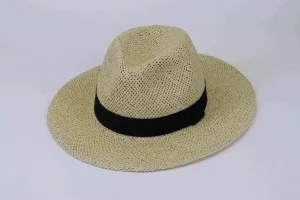
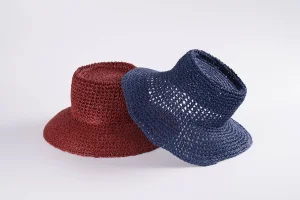
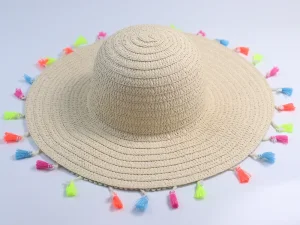
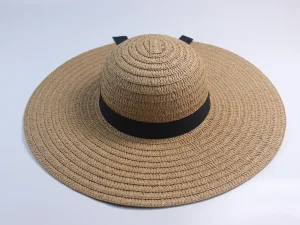
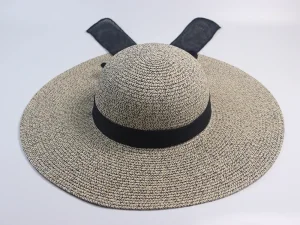
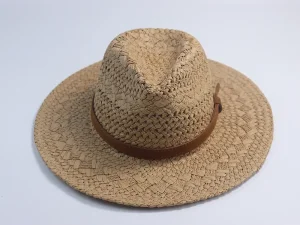
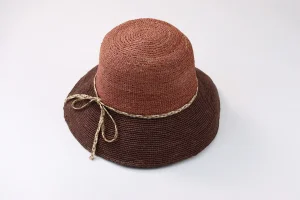
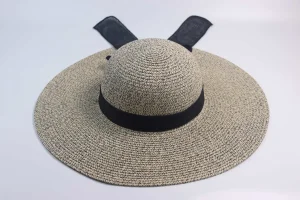
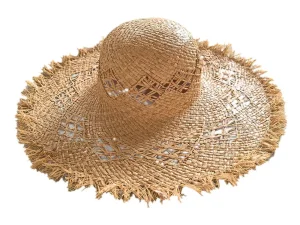
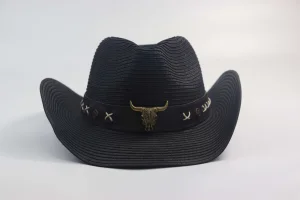
A cross-section of proven silhouettes — from packable raffia buckets to structured western brims — representing the range you can consolidate into a single supplier program.
Direct answers on MOQ, customization, shipping, compliance, and service. If your question isn't covered here, our team responds within 8 hours.
What is the minimum order quantity for custom straw beach bags?
Our starting quantity for small orders is 50 to 100 pieces per design, depending on the material and craftsmanship. This allows boutiques, emerging brands, and importers to test new styles before scaling up to larger program volumes.
Can Lige produce private-label bags with our own logo and branding?
Yes. OEM and ODM production is our core business. We can customize shape, material, color, size, and trim, and add branding elements such as woven labels, patches, and hang tags. Our in-house designers can also develop new styles from your mood board or reference samples.
Where is your factory located, and how are orders shipped?
We are located in Linyi City, Shandong Province, China, close to Qingdao Port. Bulk orders are typically exported by sea freight as FCL or LCL shipments, while samples and urgent small orders can be sent by air or express courier.
Which markets do you export straw beach bags to?
Most of our products are exported to the United States, Canada, Australia, Mexico, Western Europe, and Japan. We serve customers in more than 60 countries and work with over 25 global distributors.
How quickly does your team respond to buyer requests?
We respond and take action within 8 hours — covering product questions, sampling, order follow-up, and after-sales service.
What products do you manufacture besides straw beach bags?
Can you consolidate multiple styles into a single container?
Yes. Mixed-style FCL and LCL consolidation are both supported, and our proximity to Qingdao Port helps avoid the extra inland leg that adds cost and transit time for suppliers located further from a major gateway.
More Proven Silhouettes
Additional Program-Ready Styles from the Same Factory Floor
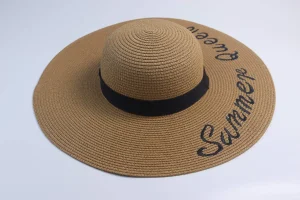
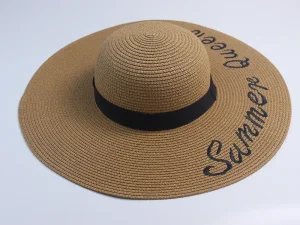
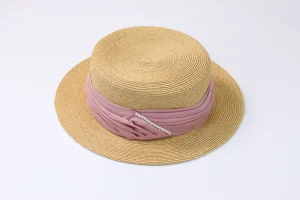
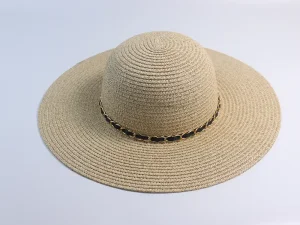
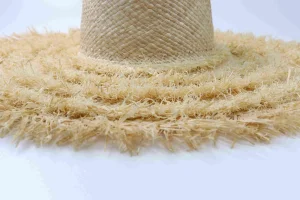
All of the styles below share the same material sourcing, in-house finishing, and QC exit standards — so a mixed-style program stays consistent across the container.
Send us your style references, target quantity, and destination market. Our team replies within 8 hours with material suggestions, a sampling plan, and a production timeline — no obligation, no trading-desk buffer.