
15+Years of Straw Hat Manufacturing
60+Countries Served
25+Global Distributors
50–100Piece MOQ per Design
Executive Summary
Why China Remains the Definitive Source for Straw Hat Programs
Global demand for natural-fiber headwear has shifted from seasonal novelty to a strategic year-round category. Retailers in North America, Australia and Western Europe now treat straw hats as a repeatable materials-and-craft story, not a single-summer impulse buy.
China — and specifically the Shandong belt anchored by Linyi City and Qingdao Port — has consolidated the entire value chain: raffia and paper-straw yarn twisting, hand-weaving, steam blocking, ribbon finishing, label application and export consolidation. This report examines how the leading factory clusters operate, where information advantage lies for global buyers, and what the next generation of "China factory 4.0" supply chains will deliver.
OEM & ODM
Raffia · Paper · Natural Grass
Low MOQ 50 pcs
Qingdao Port Logistics
Featured Summer Collection
Summertime Straw Formats Proven at Retail
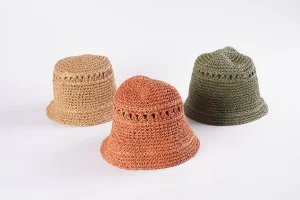
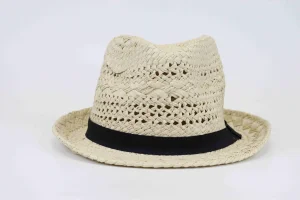
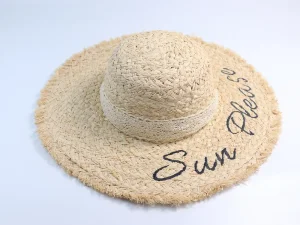
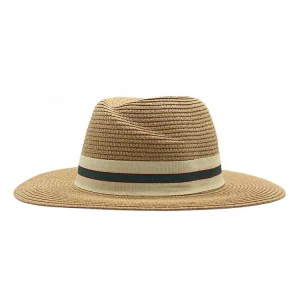
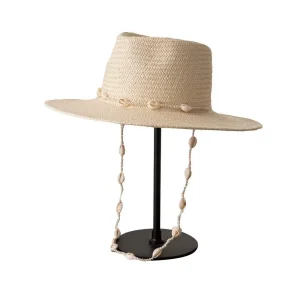
A curated cross-section of factory-ready silhouettes — from UV-protection women’s sun hats to kids’ hat-and-bag sets, raffia western hats, classic Panamas and crochet bucket styles. Every SKU below is available for OEM customization, private labelling and low-MOQ sampling.
Global Procurement Landscape
Global Buyers Are Rewriting Their Straw Hat Sourcing Briefs
Across North American, Australian and European markets, the straw hat category has moved from seasonal accessory to anchored summer assortment. Brand owners are asking three new questions of their suppliers — each of which reshapes how a "leading" factory is defined.
Traceable Materials
Retail buyers now require visibility into the raffia, paper-straw and natural-grass yarn origins. Leading Chinese factories maintain documented fiber intake and batch traceability to support sustainability claims.
Speed to Shelf
Compressed seasonal calendars mean sampling must run in 7–10 days, not months. Factories operating in-house sampling rooms near Qingdao Port compress the cycle from brief to container load.
Brand-Ready Finishing
Woven labels, patches, hangtags, custom ribbon bands and colorized packaging are no longer "extras." They are baseline requirements for private label programs — and a key differentiator among China factories.
China Factory 4.0
Supply Chain Resilience & Efficiency Advantages
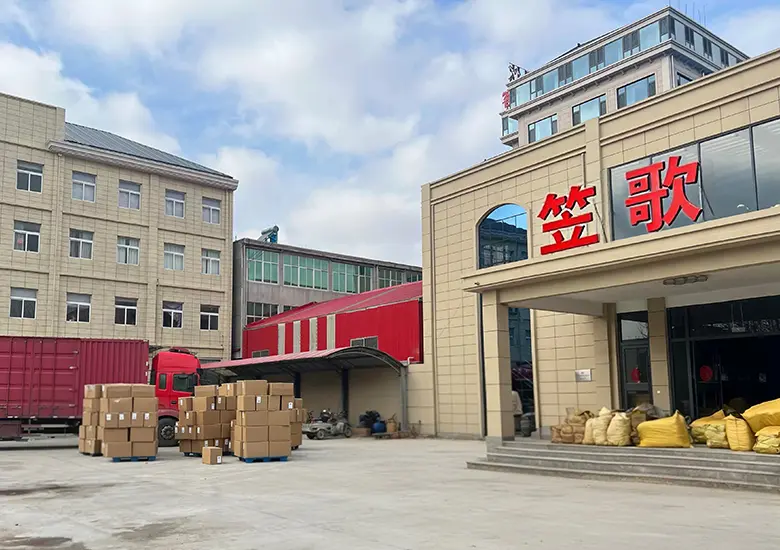
China’s straw hat factories have quietly upgraded over the last decade. Where a 2014 workshop might have been a single shed with 20 weavers, today’s leading factories run integrated vertical operations: yarn sorting, hand-weaving and machine-blocking under one management system, with centralized quality inspection.
The benefit for global buyers is three-fold. First, materials integration removes the multi-vendor margin stacking that pushes landed cost up. Second, single-site accountability means shape, stitching, brim diameter and label placement are inspected against one QC checklist. Third, geographic proximity to Qingdao Port shortens container lead-time and enables LCL consolidation for smaller buyers.
- Vertical integration from fiber to finished carton
- Documented QC checkpoints at weaving, blocking and finishing
- Port-adjacent warehousing enables rapid FCL and LCL release
- Dedicated English-speaking account management per buyer
Buyer’s Material Matrix
Choosing the Right Fiber for Retail Performance
Straw hat programs live or die by material choice. The table below compares the four fibers most commonly used in Chinese straw hat production, mapped to typical buyer objectives.
| Fiber | Hand-Feel | Shape Retention | Best-Fit Use Case | Buyer Watch-Out |
|---|---|---|---|---|
| Raffia | Soft, pliable | Recovers when steamed | Floppy, bucket, premium resort and straw bags | Natural tonal variation — disclose to retail |
| Paper Straw | Uniform, crisp | Moderate | Panama-style, fedora, promotional volume programs | Needs "keep dry" care labels |
| Natural Grass | Firm, artisanal | Excellent | Boater, cowboy, lifeguard formal shapes | Heavier hand-feel and shipping weight |
| Fabric / Knit | Stretch or woven | Stable | Visors, kids’ sets, winter and toy hats | Cross-category program design needed |
Technology Roadmap
The Next Four Years of Straw Hat Manufacturing
How China’s leading straw hat factories will evolve from today’s craft-plus-industry model into a fully digitised, sustainability-verified supply chain by 2028.
01
Digital Product Records
SKU-level data capture linking fiber batch, weaver team, blocking line and QC signature — enabling product-level traceability for retail sustainability audits.
02
Automated Blocking Cells
Semi-automatic steam blocking lines that reduce shape variance between units while preserving hand-woven crowns — a hybrid of craftsmanship and precision.
03
Low-Carbon Yarn
Shift toward regenerated paper-straw yarns and certified raffia sources, supporting EU and North American buyers’ Scope 3 reduction targets.
04
Buyer-Facing Digital Twin
Interactive 3D preview of custom hats before sampling — shortening approval cycles and reducing sample shipping footprint for global buyers.
Localization & Compliance
Delivering Trust Across Every Buyer Market
A factory is only "leading" if its output is contract-ready for the destination market. Leading Chinese straw hat factories coordinate documentation, labelling and packaging with destination-country requirements from the first sample.
US & Canada
CPSIA-compliant labeling, children’s product certificates where relevant, carton markings to retailer routing guides, and English care content.
European Union
REACH-compliant dyes, EU fiber composition labeling, and structured material disclosures supporting retailer transparency requirements.
Australia & NZ
AS/NZS sun-protection communication language (UPF statements checked against test data), plus tailoring for Southern Hemisphere seasonal calendars.
Middle East & Asia
Arabic and Japanese label variants, humidity-tolerant packaging for Gulf climates, and QC aligned to regional retail acceptance standards.
Macro Industry Solutions
From Single Order to Multi-Year Programs
Leading Chinese straw hat factories no longer sell boxes. They architect multi-season programs — reducing lead time, stabilising cost, and giving brands a repeatable factory relationship.
Seasonal Assortment Architecture
Four-tier designs (hero, carry-over, seasonal experiment, promotional) planned across Q1–Q4 with staggered sampling and production slots aligned to retailer buy windows.
Vendor-Managed Replenishment
Pre-agreed material buffers and semi-finished crowns allow the factory to re-cut, re-block and re-label bestsellers within days — protecting brands from mid-season stockouts.
Multi-Brand Consolidation
Factories supporting multi-brand programs consolidate fibre purchases and shipping cycles, translating into measurable per-unit savings without compromising brand separation.
Private-Label Product Development
In-house designers translate mood boards, competitor samples and shopper insight into factory-feasible specs with costed BOMs before the first sample is cut.
Retail-Ready Packaging Engineering
Hang-ready polybags, size-sorted inner packs, flat-pack crowns for direct-to-store delivery, and gift-box options for premium resort retail lines.
Full-Channel Distribution Support
Packaging and communications adapted for discounters, department stores, DTC e-commerce and boutique resort retail — from single-unit mailers to palletised bulk.
Why Leading Factories Win
The Four Pillars Behind China Factory Competitiveness
Beneath the marketing gloss, four operational pillars separate a "leading" factory from the long tail of intermediaries.
Low MOQ Without Sacrificing Margin
50–100 pieces per design lets boutiques and emerging brands validate the market before committing to volume, while the factory still achieves sustainable line efficiency.
Experience Density
Twenty-year production managers, fifteen-year QC leads and a team with 5+ years average tenure — the hidden engine behind consistent weaves, accurate sizing and fewer chargebacks.
Direct-Factory Economics
No middleman margin stacking. Materials, labour and QC sit on one P&L, which is why a direct factory quote frequently lands 8–15% below trading-company pricing at equivalent specification.
8-Hour Response Discipline
Structured SLA covering product questions, sampling approvals, order follow-up and after-sales — with one accountable contact from first enquiry to container release.
Localized Support & Assurance
Localized Support Without Losing Factory Proximity
Buyers frequently ask whether working directly with a China factory sacrifices service quality. In practice, the leading factories have absorbed the role of "local account team" for global buyers by structuring their overseas sales organisation around account managers, shipping coordinators and quality engineers — all working from the same production floor.
Logistics within Shandong offer another structural advantage. Factory facilities sit within a few hours’ trucking of Qingdao Port, one of China’s busiest container gateways. That proximity translates into predictable cut-off times, flexible LCL consolidation for smaller orders, and reduced risk of last-minute port congestion.
For buyers building multi-season programs, the combination of factory-direct contact, in-house English-language service, and port-adjacent logistics produces a supply chain that behaves more like a domestic partner than a distant overseas vendor.
OEM / ODM Workflow
A Six-Step Program from Brief to Container Release
Leading factories present transparent, time-boxed workflows. This is the standard cycle used by global buyers sourcing straw hats from China through direct factory relationships.
01 · Share the Brief
Style, material, size, color, branding and target quantity. Reference images and prior samples accelerate specification drafting.
02 · Design & Sampling
In-house designers recommend affordable material alternatives and produce physical samples in 7–10 working days.
03 · Buyer Approval
Sample confirmation covers shape, color, ribbon, labels and packaging — locked before production to eliminate rework.
04 · Production
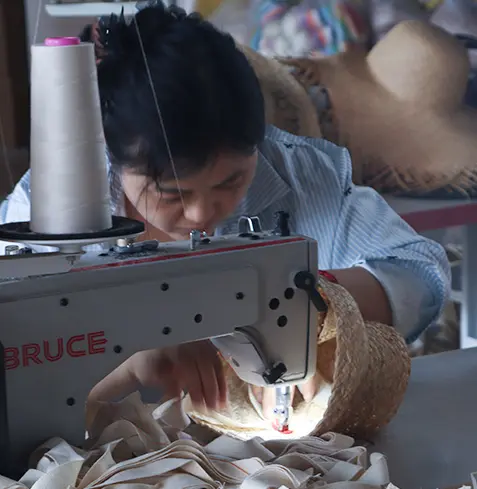
Material sorting, weaving, steam blocking, brim shaping and hand-finishing proceed under one factory roof.
05 · Quality Inspection
Final QC against a documented checklist: crown shape, brim diameter, stitching integrity, label placement, colour match.
06 · Export Shipping
FCL for volume programs and LCL for smaller orders, shipped through nearby Qingdao Port with full export documentation.
Buyer Q&A
Common Questions from Global Straw Hat Buyers
Straight answers drawn from thousands of enquiries handled by leading Chinese straw hat factories.
What is the minimum order quantity for custom straw hats?
Our starting quantity for small orders is 50 to 100 pieces per design, depending on material and craftsmanship. This lets boutiques, emerging brands and importers test new styles before scaling up.
Can Lige produce private-label hats with our logo?
Yes. OEM and ODM production is our core business. We customize shape, material, color, size and hat bands, and can add branding elements such as woven labels, patches and hang tags. Our in-house designers can also develop new styles from your mood board or reference samples.
Where is your factory located and how are orders shipped?
We are located in Linyi City, Shandong Province, China, close to Qingdao Port. Bulk orders are typically exported by sea freight as FCL or LCL shipments, while samples and urgent small orders can be sent by air or express courier.
Which markets do you export hats to?
Most of our products are exported to the United States, Canada, Australia, Mexico, Western Europe and Japan. We serve customers in more than 60 countries and work with over 25 global distributors.
How quickly does your team respond to buyer requests?
We respond and take action within 8 hours, covering product questions, sampling, order follow-up and after-sales service.
What products do you manufacture besides straw hats?
In addition to straw hats, we manufacture paper hats, straw bags and paper bags, as well as children’s straw hats, toy hats, lifeguard hats, sun visors, winter hats and other bags.
What documentation accompanies international shipments?
Standard export documentation includes commercial invoice, packing list, bill of lading, and certificate of origin where applicable. Destination-specific documents (CPSIA children’s product certificates, EU fiber composition, pre-shipment inspection reports) are prepared in advance of shipment upon buyer request.
How is quality controlled across a seasonal program?
Quality control combines pre-production material inspection, in-line checks at weaving and blocking stations, and a final AQL-based inspection before export packing. Every retained sample is archived for reorder reference, ensuring consistency across repeat seasons.
Program-Ready SKUs
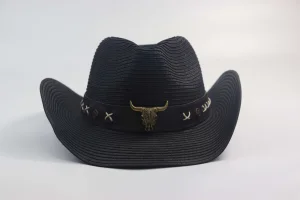
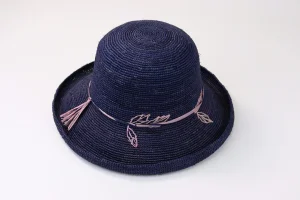
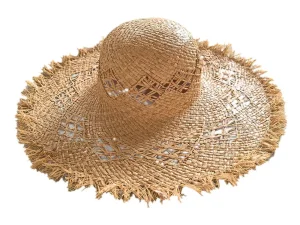
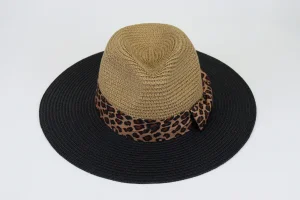
More Factory-Ready Styles for Global Buyers
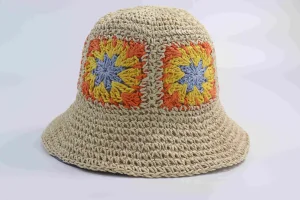
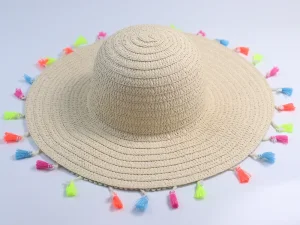
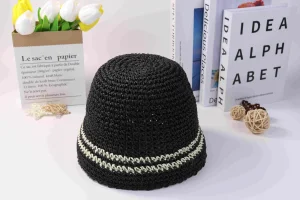
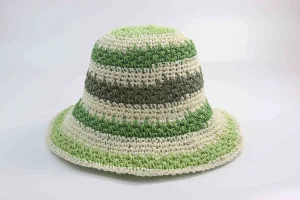
Additional formats from the same production line — ready for OEM customization, private labelling and multi-season reorders.
Ready to Brief Your Next Straw Hat Program?
Share your style references, target quantities and destination market. Our team responds within 8 hours with material recommendations, sampling plan and production timeline.