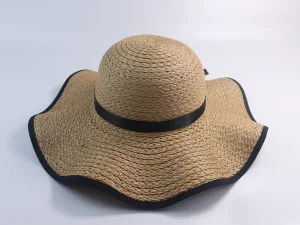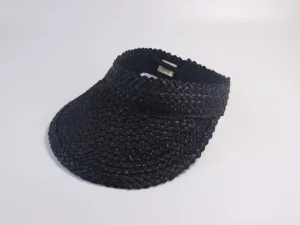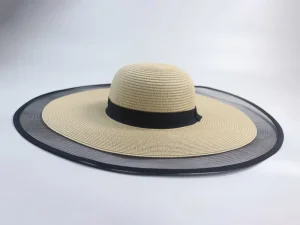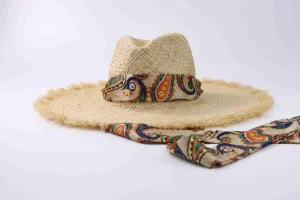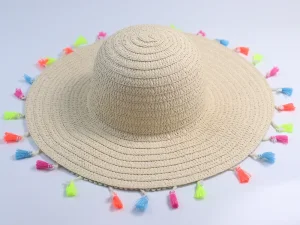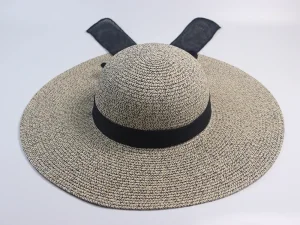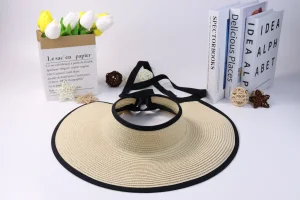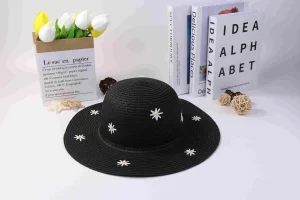
Factory Lookbook
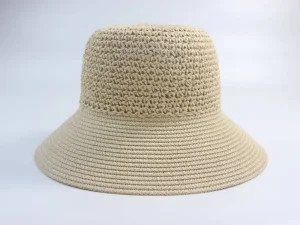
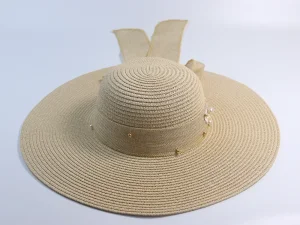
Straw Hat & Woven Bag Styles Buyers Reorder
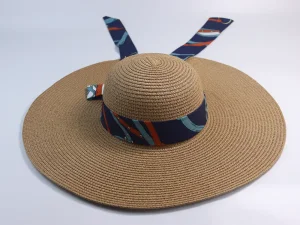
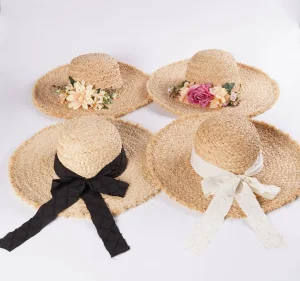
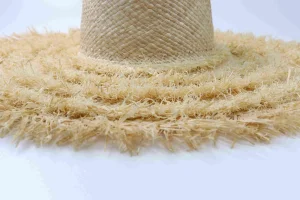
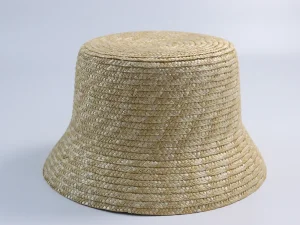
Every silhouette below can be developed in raffia, paper straw or natural grass straw, with custom bands, linings, labels and colorways. Tap a card to reach the product page.
Executive Summary
Why China Remains the Default Sourcing Base for Straw Tote Bags
A straw tote bag is deceptively simple: a woven body, a pair of handles, a lining. In practice, it is a multi-material engineered good whose cost, durability, color consistency and compliance profile are decided long before the first carton is sealed. That is precisely why China's woven accessory clusters — and Shandong's Linyi manufacturing belt in particular — continue to dominate global supply.
For more than 15 years, Lige Hats has produced straw hats, paper hats, straw bags and paper bags for importers, brand owners and retail buyers worldwide. Our position in the value chain is deliberately narrow: we are a factory, not a trading desk. Raw material sorting, weaving, blocking, finishing and final inspection sit under one roof, roughly one hour's drive from Qingdao Port.
The result for buyers is a shorter feedback loop between design intent and production reality. When a buyer asks whether a 32 cm raffia tote can hold shape with a 4 cm gusset after a 12-hour sea-freight compression cycle, the answer comes from the people who weave it — not from a sales inbox three time zones away.
- Integrated production: weaving, blocking, trimming and QC in a single facility, which stabilizes quality and pricing.
- Low entry MOQ: start from 50–100 pieces per design, so boutiques and emerging labels can validate a silhouette before scaling.
- Port adjacency: Qingdao Port enables both FCL and LCL export, which matters for mixed accessory containers.
- Service SLA: 8-hour response and action on requests, from sampling questions to after-sales follow-up.
- Market coverage: exports to 60+ countries and 25+ global distributors across North America, Australia, Mexico, Western Europe and Japan.
15+Years manufacturing straw hats & bags
60+Export countries served
25+Global distributor partners
8hResponse & action SLA
Material Science
Straw Materials Explained: Choosing the Right Fiber for Tote Bags
The fiber selection determines hand-feel, shape retention, price point and how well a bag survives shipping. This is how our product team advises buyers before sampling begins.
Raffia
A natural palm-leaf fiber traditionally sourced from Madagascar. Its natural resins make it soft, flexible and highly dye-receptive, so brims and bag bodies can be packed and recover their shape.
Paper Straw
Twisted paper yarn woven or braided into a lightweight, uniform fabric. It delivers clean, consistent colors and a competitive unit cost for volume programs.
Natural Grass Straw
Braided natural stems with inherent stiffness, producing crisp, structured silhouettes and an authentic artisanal look that buyers value at premium price points.
Fabric & Knit
Cotton, polyester and knitted constructions extend your assortment beyond summer and into children's and cold-weather categories — useful for year-round programs.
| Fiber | Hand-feel | Shape retention | Best-fit application |
|---|---|---|---|
| Raffia | Soft, supple, slightly glossy | High — recovers after packing | Floppy hats, tote bags, resort lines |
| Paper straw | Dry, uniform, crisp | Medium — crisp but moisture-sensitive | Fedoras, Panama-style hats, promotional retail |
| Natural grass straw | Firm, textured, artisanal | Very high — structured silhouettes | Boater hats, cowboy hats, lifeguard hats |
| Fabric & knit | Soft, stretchy or woven | Low to medium — dependent on knit | Visors, winter hats, children's and toy hats |
Factory Advantage
The Structural Advantages of China's Straw Tote Bag Factories
China's advantage in woven accessories is not a single cost line — it is a dense, interdependent ecosystem of fiber merchants, weavers, blockers, trimmers, label printers and freight consolidators within a tight geographic radius.
Skilled Labor Depth
Hand-weaving is a tacit skill built over years. In Linyi and the surrounding Shandong belt, weaving expertise is transmitted across generations, giving buyers access to consistent tension, density and finish quality.
Supply Chain Density
Fiber merchants, dye houses, ribbon and lining converters, label printers and packaging suppliers all cluster regionally. That density shortens lead times and makes small-batch customization economically viable.
Port & Logistics Access
Qingdao Port handles FCL and LCL with mature consolidation services. For accessory programs where a single container mixes hats, bags and paper goods, LCL flexibility is a material advantage.
OEM / ODM Maturity
Chinese accessory factories have absorbed decades of private-label demand, building design libraries, sampling workflows and compliance documentation that emerging sourcing regions still lack.
Cost Engineering
Material substitution is a design lever, not a compromise. Buyers can move a program from raffia to paper straw to hit a price point without abandoning the silhouette or the brand story.
Compliance Readiness
Export-experienced factories maintain documentation for fiber content, azo-free dyes, labeling and packaging. Buyers in the EU and US increasingly expect this as a baseline, not a premium.
Market Signals
Industry Trends Reshaping Straw Tote Bag Demand
Three structural shifts are changing how global buyers specify woven bags — and each of them favors factories able to move quickly from concept to sample to container.
Sustainability as a Spec Sheet Item
Natural fibers, plastic-free packaging and traceable dye processes are no longer marketing optionality — they appear in retailer onboarding documents. Raffia and paper straw are well positioned, but the burden of proof now sits with the factory's documentation.
Faster Seasonal Turnover
Retail drop cycles have compressed. Buyers who previously planned two summer collections now plan four microdrops. Low-MOQ sampling and in-house blocking capability become competitive necessities rather than conveniences.
Accessory Bundling
Hats, bags and small leather goods are increasingly bought as coordinated sets. Factories that can produce a hat-and-tote pairing in matched fiber and trim reduce vendor count for buyers and improve margin control across the assortment.
Localized Applications
Where Straw Tote Bags Actually Sell: Regional Use Cases
The same woven tote behaves differently across markets. Specification decisions — lining, handle drop, closure type — should follow the consumption context, not the catalog page.
North America
Beach and resort retail dominates. Buyers prioritize structure, a stable flat base and a neutral color assortment that sells across sun-care and swimwear categories.
Western Europe
Coastal towns and weekend markets favor smaller formats with leather-look handles. Buyers often request lined internals and branded woven labels for boutique price positioning.
Australia
High-UV outdoor lifestyles drive demand for wide-brim hat and tote sets. Buyers value raffia's packability and UV-friendly coverage in coordinated summer gifting programs.
Japan & APAC
Smaller, highly finished formats with precise stitching and clean trims. Buyers scrutinize edge binding and handle attachment, so QC discipline matters more than raw unit cost.
Macro Solutions
End-to-End Solutions for Global Enterprise Buyers
Large-scale apparel and lifestyle groups do not buy bags — they buy a reliable program. The factory's role expands from production to program management across design, compliance, logistics and replenishment.
- Design & development: our in-house designers build new styles from a mood board, reference sample or tech pack, recommending fiber, trim and hardware before costing.
- Sampling discipline: a clear sampling plan with material callouts and revision checkpoints, so buyers approve against a shared specification rather than a visual impression.
- Private-label execution: shape, material, color, size and hat band customization with woven labels, patches and hang tags applied in-line.
- Quality governance: final inspection covers shape, stitching, sizing and trims, supported by a QC manager with 15 years of experience.
- Packaging & labeling: retail-ready polybag alternatives, hangtag placement, barcode and care-label execution aligned with destination-market expectations.
- Export logistics: FCL or LCL sea freight via Qingdao Port, with air and express courier for samples and urgent small orders.
- Replenishment planning: repeat-order workflows that preserve weave, dye lot and trim consistency across seasonal reorders.
- Single-contact account management: one dedicated contact from brief to after-sales, backed by an 8-hour response commitment.
Brief & Spec
Style, fiber, size, color, branding and target quantity captured in a single shared specification.
Sample & Cost
Material recommendations, prototype development and transparent costing against the approved spec.
Produce & Inspect
In-house weaving, blocking, finishing and a final inspection pass before export packing.
Ship & Replenish
FCL or LCL via Qingdao Port, with replenishment planning for seasonal reorders.
Procurement Brief
What Global Buyers Need from a China Straw Tote Bag Supplier
Procurement expectations have hardened. Beyond unit price, buyers evaluate suppliers against six recurring criteria — and the strongest factories treat each as a documented, repeatable process rather than a promise.
Lead-Time Certainty
Buyers need realistic calendars that account for sampling rounds, material lead times, production windows and port congestion — not optimistic quotes.
Consistency Across Reorders
The second order must match the first in weave density, dye lot and trim color. Factories with integrated production control this better than sourcing agents.
Customization Without Chaos
Labels, hangtags, linings and handle materials should be configurable without derailing the production schedule or inflating MOQ.
Documentation Quality
Fiber claims, dye certificates, labeling and packaging documentation should be retrievable on request, not reconstructed after the fact.
Communication Reliability
A named contact, a predictable response window and proactive updates at sampling, production and shipping milestones.
Scalable MOQ
Start at 50–100 pieces per design, validate the market, then scale into volume pricing without changing suppliers or re-approving the specification.
Buyer FAQ
Questions Straw Tote Bag Buyers Ask Most
Straight answers on MOQ, customization, shipping and service. Need more detail? Our team replies within 8 hours.
What is the minimum order quantity for custom straw hats and tote bags?
Our starting quantity for small orders is 50 to 100 pieces per design, depending on material and craftsmanship. This lets boutiques, emerging brands and importers test new styles before scaling up.
Can you produce private-label hats and bags with our own logo?
Yes. OEM and ODM production is our core business. We customize shape, material, color, size and hat bands, and can add branding such as woven labels, patches and hang tags. Our designers can also develop new styles from your mood board or reference samples.
Where is your factory located and how are orders shipped?
We are located in Linyi City, Shandong Province, China, close to Qingdao Port. Bulk orders are typically exported by sea freight as FCL or LCL shipments, while samples and urgent small orders can be sent by air or express courier.
Which markets do you export hats and straw bags to?
Most of our products are exported to the United States, Canada, Australia, Mexico, Western Europe and Japan. We serve customers in more than 60 countries and work with over 25 global distributors.
How quickly does your team respond to buyer requests?
We respond and take action within 8 hours, covering product questions, sampling, order follow-up and after-sales service.
What products do you manufacture besides straw hats?
In addition to straw hats, we manufacture paper hats, straw bags, paper bags, children's straw hats, toy hats, lifeguard hats, sun visors, winter hats and other bags.
Contact Us
Let's Build Your Next Straw Tote & Hat Collection
Send us your style references, target quantity and destination market. Our team replies within 8 hours with material suggestions, a sampling plan and a production timeline.
More Styles
Additional Factory-Direct Woven Styles
Handcrafted wavy-edge sun hats, wheat straw top hats, organza floppies, raffia beach hats, kids' hat-and-bag sets and multi-color summer silhouettes.