Direct Factory Economics
Raw-material sorting, weaving, blocking, finishing and final inspection sit under one roof. Stable pricing without middleman margin stacking.
China has consolidated its position as the world's most complete straw hat manufacturing ecosystem — not because of labor cost alone, but because of vertical integration: raw straw sorting, hand-weaving, blocking, trimming, QC and export logistics operating within a 90-kilometre radius. For importers, brand owners and retail buyers, that density translates into faster sampling cycles, tighter tolerances and lower total landed cost.
This whitepaper is written by the team at Shandong Lige Import & Export Co., Ltd. (Lige Hats), a Linyi-based manufacturer with 15+ years of dedicated straw hat, paper hat, straw bag and paper bag production. It distils what we have learned serving importers, wholesalers and private-label brands across 60+ countries and 25+ global distributors — including the United States, Canada, Australia, Mexico, Western Europe and Japan.
Raw-material sorting, weaving, blocking, finishing and final inspection sit under one roof. Stable pricing without middleman margin stacking.
Low MOQ of 50–100 pcs per design plus rapid sampling lets seasonal collections launch weeks ahead of competitors.
A production manager with 20 years of experience, a QC manager with 15 years, and a team averaging 5+ years on the line.
Demand for straw and paper-straw headwear has shifted from a purely seasonal impulse category into a planned, programmatic buy. Retailers now place forward orders against 12-month calendars because consumers treat straw hats as repeat accessories rather than one-off souvenirs. Understanding how each market behaves is essential when specifying material, packability and price band.
Western wear and festival culture sustain straw cowboy demand; resort retail drives floppy and Panama silhouettes from March through August.
High-UV markets reward UPF-aware construction. Wide-brim ladies sun hats and packable styles dominate October–February programs.
Boater and fedora shapes serve destination weddings and regattas. Buyers prioritize raffia quality, ribbon finish and brand compliance labels.
Tight tolerance on sizing, refined trims and clean colorways. Small-batch, multi-SKU orders reward suppliers with strong sampling capability.
| Market | Dominant Shapes | Material Preference | Typical MOQ Pattern |
|---|---|---|---|
| United States | Cowboy, floppy, visor | Paper straw, natural grass | 100–500 pcs / SKU |
| Canada | Bucket, floppy, Panama | Raffia, paper straw | 100–300 pcs / SKU |
| Australia | Wide-brim sun hat, visor | Natural grass, raffia | 150–400 pcs / SKU |
| Mexico | Cowboy, Panama | Natural grass straw | 200–1,000 pcs / SKU |
| Western Europe | Boater, fedora, floppy | Raffia, premium paper | 50–250 pcs / SKU |
| Japan | Boater, bucket, tidy shapes | Refined raffia, paper | 50–150 pcs / SKU |
A straw hat is not a universal product. The same weave performs differently in a Queensland beach town, a Texas rodeo ground and a Positano resort boutique. These are the application scenarios our product team maps for buyers before a single sample is cut.
Wide-brim floppy hats and raffia Panamas built for packability. Buyers request fold-flat construction, removable bands and bright colorways for boutique merchandising.
Cattleman-crown straw cowboy hats with shapeable brims. Seasonal spikes around rodeo circuits and country music festivals reward fast replenishment.
Adjustable visor caps and lightweight bucket hats for running, tennis and golf. Moisture-wicking sweatbands and UV-blocking weaves are standard requirements.
Boater hats with grosgrain ribbon and structured crowns for weddings, regattas and garden parties. Premium trim quality is the primary specification.
Toy hats, children's straw hats and matched hat-and-bag sets. Chin straps, softened edges and non-toxic dyes are mandatory for this category.
Logo-ready paper straw styles for brand activations, hospitality and tourism. Fast turnaround on embroidery, patches and woven labels is critical.
Straw hat quality is decided long before weaving begins. Fiber length, moisture content, braid tension and blocking temperature each influence whether a hat survives a 40-foot container and six weeks of retail handling. Below is how our technical team sequences development, from raw fiber to a shelf-ready SKU.
Raffia, paper straw and natural grass are graded for length, flexibility and color consistency. Batches failing tensile or dye-uptake checks are rejected before weaving.
Braid width and tension are set against the target silhouette. Looser weaves suit floppy hats; denser braids support boater and cowboy crowns that must hold shape.
Crowns and brims are formed on heated blocks. Temperature and dwell time are calibrated per fiber so the shape sets without scorching or over-drying the straw.
Grosgrain ribbon, leather bands, woven labels, patches and hang tags are applied by hand. This is where private-label identity is physically built into the product.
Shape, stitching, sizing and trim alignment are inspected against the approved sample. Hats are packed to survive FCL or LCL sea freight via Qingdao Port.
Soft, flexible and highly dye-receptive. Best for floppy hats, bucket hats and premium resort lines where packability is a selling point.
Lightweight with uniform color and a competitive unit cost. Ideal for fedoras, Panama-style hats and volume retail programs.
Inherent stiffness for crisp silhouettes. Chosen for boater, cowboy and lifeguard hats where shelf shape retention matters most.
Extends assortments into visors, children's hats, toy hats and winter lines — enabling a year-round single-supplier program.
The phrase "China supply chain" hides enormous variance. Two factories can sit 50 kilometres apart and behave completely differently when a container is delayed, a fiber shipment is short, or a buyer changes a trim two days before production. Resilience is a set of structural choices — and here is how ours are made.
Material sorting, weaving, blocking, finishing and inspection are performed in-house. This removes the coordination lag that plagues trading-desk suppliers who must chase multiple subcontractors for every change order.
Core fibers are held in buffer quantities, and key materials are qualified with more than one upstream source. When a single supplier is disrupted, production does not stop.
Linyi sits within easy reach of Qingdao Port, a major container gateway. FCL and LCL shipments move quickly, and buyers get realistic sailing schedules instead of speculative ETAs.
Every request — product question, sampling update, order follow-up or after-sales issue — is answered and actioned within 8 hours. Speed of communication is itself a resilience asset.
Operational note. In our experience, buyers lose more margin to unclear communication and misaligned samples than to raw material cost. A direct factory with a documented QC sequence and a fixed response SLA removes most of that hidden cost before the purchase order is even signed.
Exporting headwear means navigating labeling rules, chemical restrictions and packaging expectations that differ by destination. Our approach is to build compliance into the production brief rather than treat it as a post-production obstacle.
The next five years will be defined less by new fiber inventions than by traceability, packability and assortment breadth. Buyers are already asking suppliers to consolidate straw hats, paper hats, straw bags and paper bags into a single program — reducing vendor count while widening category coverage.
Documented origin and processing for raffia, paper and grass fibers will shift from a premium claim to a baseline expectation in Western retail programs.
Consumers who travel carry fewer accessories. Rollable, foldable and crush-recoverable straw hats will outperform rigid shapes in resort and travel retail.
Single-supplier programs combining hats, bags and children's lines cut administrative overhead and improve MOQ flexibility per seasonal order.
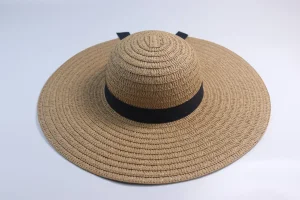
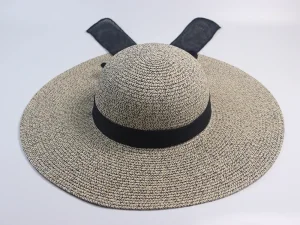
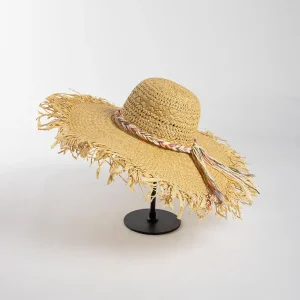
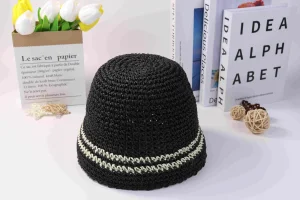
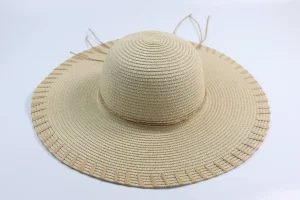
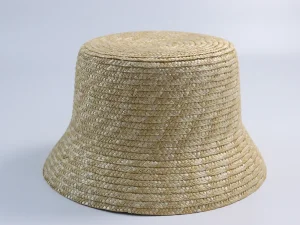
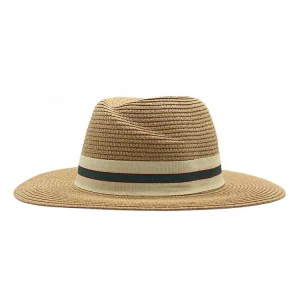
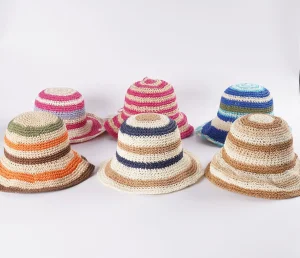
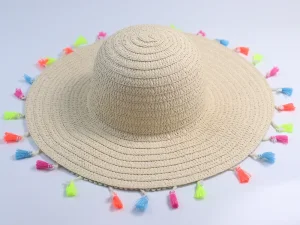
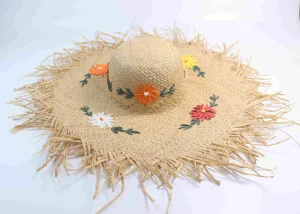
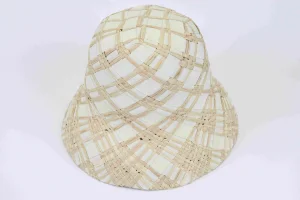
These are the silhouettes our buyers reorder most across North American, Australian and European retail seasons. Every style is available for OEM and ODM production from 50–100 pieces per design.
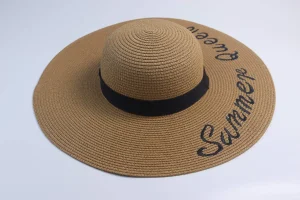
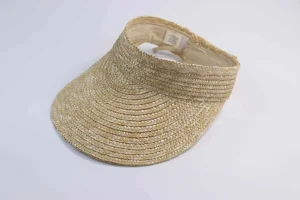
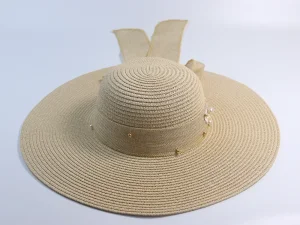
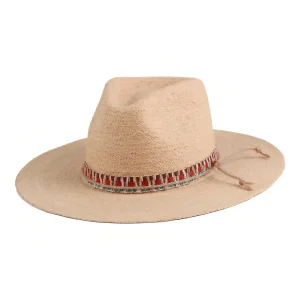
Straight answers on MOQ, customization, shipping and service. If your question is not covered here, our team replies within 8 hours.
Send us your style references, target quantity and destination market. Our team replies within 8 hours with material suggestions, a sampling plan and a production timeline.
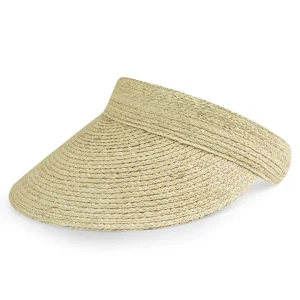
Contact Our TeamExplore the wider range — visors, ladies' sun hats, floppy brims, beach hats and unisex Panama styles — all available for private-label production and volume reorder.