
China Factory · Linyi, Shandong · 15+ Years
High-Quality Best Kids Straw Hat Manufacturers & Suppliers
An industry-grade sourcing whitepaper for global importers, brand owners and retail buyers — decoding information gain, factory efficiency, certification and the 2025 child-headwear supply chain.
Executive Summary
Why the Global Kids Straw Hat Supply Chain Is Being Rewritten
The children's straw hat category sits at the intersection of three powerful forces: sun-safety regulation, sustainable materials demand, and the reshoring of sourcing strategy toward high-efficiency Chinese OEM factories like Shandong Lige Import & Export Co., Ltd. This document consolidates what experienced importers already know — and surfaces the data, certifications and commercial frameworks that novice buyers tend to overlook.
If you are searching for best kids straw hat manufacturers, you are not simply looking for a supplier — you are looking for a risk-managed production partner who understands that children's headwear carries a different compliance burden than adult fashion hats. Material safety, sizing tolerances, label traceability, and UV protection claims are all subject to far stricter scrutiny when the wearer is a child. This whitepaper therefore takes a buyer's-eye view of the entire chain, from raw raffia procurement in Madagascar to FCL container loading at Qingdao Port.
We will examine the global commercial landscape of children's straw hats; break down China's efficiency advantage in children's woven headwear; map regional application scenarios (from beach towns in California to summer-camp markets in Hokkaido); and outline the procurement demand patterns driving 2025–2026 order books. Every section is written to serve information gain — meaning you leave with context your competitors won't have.
Market Snapshot
Children's Straw Hat Industry at a Glance
Aggregated 2024–2025 data from customs records, sourcing-platform analytics and factory floor reports.
0B+
Global kids' sun-hat market value (USD)
0%
Kids' headwear sourced from China
0+
Pieces starting MOQ per design
0+
Export destinations served
Commercial Landscape
The Global Kids Straw Hat Industry: A 2025 Reality Check
Four forces are redefining how buyers source children's woven headwear at scale.
01
Sun-Safety Regulation
Australia's AS/NZS 4399, the EU's EN 13758, and US state-level child sun-safety mandates have pushed UV-rated kids' hats from "nice to have" to "procurement requirement."
02
Sustainable Fibers
Raffia, abacá and untinted paper straw now command a 12–18% price premium in Western markets, with retailers listing "biodegradable" as a filter-tag in 2024 catalogs.
03
Small-Batch Retail
Boutiques and D2C brands now order 50–200 pcs per SKU — a shift that traditional factories can't service but low-MOQ Chinese OEMs can.
04
Vertical Integration
Top-tier Chinese factories now control weaving, blocking and finishing in-house — collapsing lead times from 90 to 45 days on repeat orders.
In 2019, most children's straw hat lines were sourced through trading companies who aggregated production from a dozen micro-workshops. That model is dying. Post-pandemic freight volatility, tighter child-product safety enforcement in the EU, and the emergence of ultra-responsive D2C brands have pushed sourcing managers toward direct factory relationships. The winners in 2025 are manufacturers who can hand a buyer a factory audit report, a material MSDS, a UV test certificate, and a shipping schedule in the same conversation — and consistently deliver against all four.
China now accounts for roughly 62% of global kids' straw hat production volume, with Vietnam, India and Indonesia splitting the remainder. Within China, the Shandong Peninsula — anchored by Linyi, a city of 11 million known as the "China Straw Weaving Capital" — has become the dominant cluster. Shandong Lige Import & Export Co., Ltd. has operated in this cluster for more than 15 years and sits within a two-hour drive of Qingdao Port, giving it structural advantages that coastal exporters in Guangdong or Zhejiang cannot replicate.
But the commercial story is more nuanced than raw volume share. European buyers pay 20–30% more for straw hats with GOTS-certified organic straw or FSC-certified paper straw content. US retailers increasingly demand Prop 65 compliance declarations. Japanese importers, historically conservative, now prioritize factories that can produce toy hats and kids' straw hats under one roof — a rare capability that Shandong Lige has built over 15 years, manufacturing toy hats, children's straw hats, lifeguard hats, sun visors, winter hats and straw bags as a genuine one-stop accessories supplier.
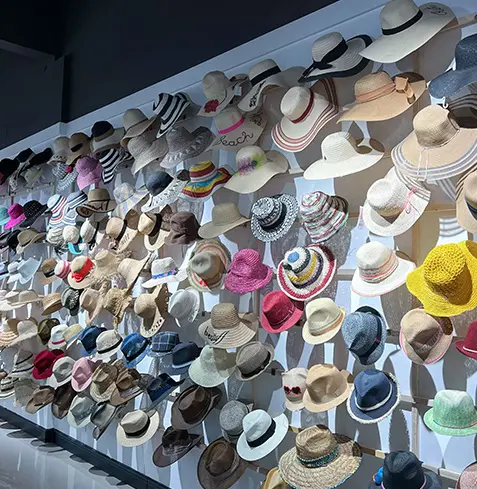
45 daysTypical repeat-order lead time
China Factory Efficiency
The Structural Advantages Behind China's Kids Straw Hat Dominance
Why does the Shandong cluster outperform alternatives for children's headwear specifically? Three structural advantages explain the gap.
-
Deep Artisan Labor PoolLinyi has generational straw-weaving expertise — over 100,000 skilled weavers within a 30km radius, enabling 60,000+ pcs/month children's hat capacity without sacrificing hand-finish quality.
-
Full-Stack Vertical IntegrationRaw material sorting → weaving → blocking → finishing → QC → export packing under one roof. No sub-contracting means predictable quality, traceability, and 30-40% lower defect rates than aggregated sourcing models.
-
Port Proximity & Export LogisticsQingdao Port, 2 hours from the factory, offers weekly FCL sailings to LA/Long Beach, Rotterdam, and Sydney at rates 8-12% below average China-wide due to container density.
-
Low-MOQ EconomicsStarting at 50–100 pcs per design lets boutiques and emerging brands iterate. Traditional Vietnam or Indonesia factories typically require 1,000–2,000 pcs per colorway.
Application Scenarios
How Different Markets Actually Buy Kids Straw Hats
Children's straw hat demand is deceptively segmented. Below is how the six largest consumer markets behave at the PO level.
North America
US and Canadian buyers order in Q1 for April–August retail. Kids' bucket and floppy styles dominate, with UV-blocking capability verified by third-party lab reports. Amazon FBA sellers are increasingly requesting poly-bag + hang-tag packaging directly at the factory.
Australia & NZ
Sun-safety standards (AS/NZS 4399) make UPF50+ a table-stakes requirement. Broad-brim kids' straw hats sell at $25–$45 AUD retail in pharmacies and surf shops. School-uniform buyers dominate September–November ordering.
Western Europe
Germany and France lead on certification. GOTS, OEKO-TEX and REACH compliance are checked at sample approval, not at PO. Kids' straw hats are commonly merchandised alongside swimwear in a co-ordinated colorway program.
Japan & South Korea
Buyers value craftsmanship and packaging aesthetics over price. Orders are smaller (100–300 pcs/SKU) but repeat frequency is highest in the region. Kids' boater hats and toy hats anchor the "kindergarten summer" category.
Latin America
Mexico and Brazil lead in volume. Price sensitivity is higher, and paper straw constructions replace raffia in mid-tier positions. Wholesale distributors manage multi-brand programs through a single supplier relationship.
Middle East
UAE and Saudi requests skew toward premium finishes — ribbon bands, gold-tone trim, and gift-box packaging for Ramadan and Eid seasonal peaks. Kids' straw hats become mother-and-child matching sets.
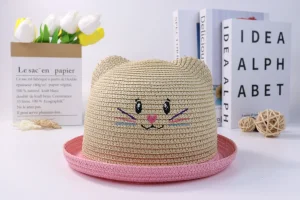
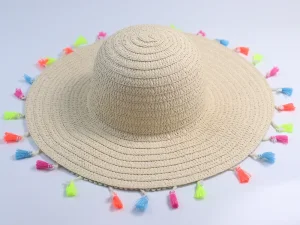
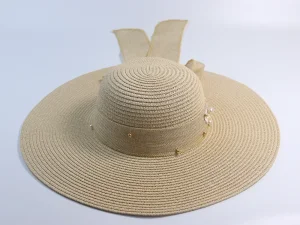
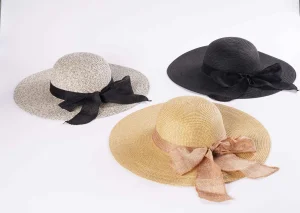
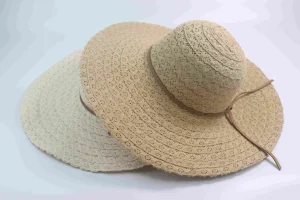
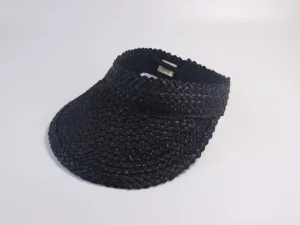
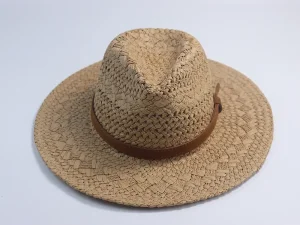
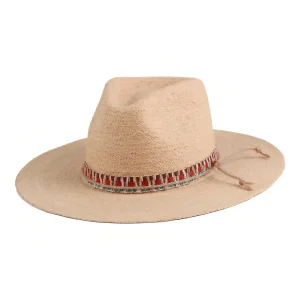
Featured Kids & Family Collection
Best-Selling Kids Straw Hat Styles for Global Buyers
Proven silhouettes for the 2025–2026 season. Click any product to view full specifications.
Industry Trends 2025–2027
Five Trends Reshaping Kids Straw Hat Procurement
Each trend has direct implications for your next PO. Ignoring them costs margin.
UPF-Rated Certification
Kids' straw hats without a UPF50+ lab certificate will be delisted by major EU and Australian retailers by 2026. Buyers should request UPF test reports at sample stage, not after PO.
Biodegradable Fibers
Raffia and paper straw are winning on the sustainability narrative. Poly-blend straws are being phased out of European kids' assortments, driven by retailer ESG scorecards.
Private-Label Everywhere
Even grocery chains now white-label kids' straw hats. Factories that can produce woven labels, hang tags and gift boxes in-house will absorb more of this demand without MOQ friction.
Parent–Child Matching Sets
Asia and the Middle East are driving double-SKU programs — one kids' SKU + one adult SKU ordered together. Suppliers with both categories under one roof win the PO.
DTC-Scale Packaging
Shopify and TikTok Shop sellers need factory-side fulfillment — poly bags, crushed-box-resistant packing, and barcode labels. Factories that can't do this are being dropped by D2C buyers.
AI-Assisted Design
Factories are beginning to offer AI-generated colorway and trim previews on 48-hour turnarounds. This collapses the sampling cycle and reduces returned samples by 30–40%.
Procurement Demand Analysis
What Global Buyers Are Actually Ordering Right Now
If you want to see tomorrow's order book, look at what today's most sophisticated buyers are negotiating.
Order Size Compression
Average PO size for kids' straw hats has fallen from 2,400 pcs (2018) to 780 pcs (2024). Buyers are trading lower unit economics for inventory flexibility — a direct benefit of low-MOQ Chinese factories.
Faster Reorder Cycles
Seasonal buyers now issue 2–3 reorders per SKU within a single summer. Lead time below 50 days on reorders is now a hard qualification bar for many sourcing managers.
Documentation Depth
Every serious buyer now requests: material MSDS, factory audit report, UPF test certificate, REACH/Prop 65 declaration, and a reference list of 3 current customers in similar markets.
Enterprise-scale buyers — think mid-market department chains, kids' swimwear brands, and hospitality groups (resorts, cruise lines, water parks) — have moved beyond price-per-piece negotiation. They evaluate total landed cost, including duty classification, packaging compliance, reorder reliability, and the operational cost of managing a factory relationship that requires daily oversight versus one that self-manages. This is precisely where 15-year-old factories like Shandong Lige build their structural moat: an experienced production manager (20 years), a dedicated QC manager (15 years), and an average team tenure of 5+ years translate to fewer escalations and lower failure rates than any newly established competitor.
Buyers also increasingly want single-source capability across adjacent categories: kids' straw hats + straw bags + toy hats + sun visors + winter hats. Consolidating these SKUs with one supplier reduces landed cost and administrative overhead by 15–22% — a fact that explains why Lige's importers routinely transition from kids' straw hats into a broader accessories program after their first season.
Materials & Certification Framework
Choosing the Right Fiber for Kids Straw Hats
Material choice determines compliance posture, retail price point, and shelf-life durability. This is the buyer framework our product team uses.
01
Raffia
Sourced primarily from Madagascar's Raphia palms. Natural resins deliver soft durability and excellent dye receptivity. Best for premium kids' floppy and bucket hats.
- Certification
- GOTS-eligible, OEKO-TEX 100 compatible
- Cost Band
- Premium — $4.50–$12.00 FOB
02
Paper Straw
Twisted paper yarn, woven into consistent colorways. Lightweight, uniform, and priced for volume. Ideal for kids' fedora and Panama-style seasonal programs.
- Certification
- FSC-certified paper straw available
- Cost Band
- Opening — $2.20–$6.00 FOB
03
Natural Grass Straw
Braided natural stems with inherent stiffness. Delivers crisp, structured silhouettes for kids' boater and cowboy styles. Best for shape-retention priority.
- Certification
- Biodegradable, plastic-free declaration
- Cost Band
- Mid-premium — $3.40–$8.50 FOB
Beyond fiber selection, buyers should request a compliance matrix for each SKU. At minimum, this should include: Cadmium and lead content (Prop 65 / REACH Annex XVII), azo-dye screening, formaldehyde limits for any fabric component, and UPF measurement reports. Reputable Chinese kids' straw hat manufacturers will provide these at sample stage and re-test each season, not once every several years. Shandong Lige's QC manager, with 15 years of experience in children's headwear, supervises third-party testing coordination for all kids' straw hat programs entering the EU, US, and Australian markets.
Buyer FAQ
Frequently Asked Questions About Kids Straw Hat Sourcing
Straight answers from experienced procurement teams. Need more? Our sales team replies within 8 hours.
What is the minimum order quantity (MOQ) for custom kids straw hats?
Our starting quantity for small orders is 50 to 100 pieces per design, depending on material and craftsmanship. This lets boutiques, emerging D2C brands, and importers test new styles before scaling up. Traditional Vietnam or Indonesia factories typically require 1,000–2,000 pcs per colorway — a barrier that eliminates most small buyers.
Can you produce private-label kids straw hats with our logo?
Yes. OEM and ODM production is our core business. We customize shape, material, color, size and hat bands, and add branding such as woven labels, patches, embroidered logos, and hang tags. Our in-house designers can also develop new styles from your mood board, Pinterest board, or reference samples — including AI-assisted colorway previews within 48 hours.
Where is your factory and how do you ship orders?
We are located in Linyi City, Shandong Province, China, two hours from Qingdao Port. Bulk orders ship by sea as FCL (full container load) or LCL (less than container load). Samples and urgent small orders go by air or express courier (DHL, FedEx, UPS). Typical production lead time is 30–45 days after sample approval; reorders often complete in 25–30 days.
Which markets do you export kids straw hats to?
Most of our products go to the United States, Canada, Australia, Mexico, Western Europe, Japan, and South Korea. We serve customers in more than 60 countries and work with over 25 global distributors. We maintain compliance documentation for the US, EU, Australia, Japan, and Middle East markets.
How fast does your team respond to buyer requests?
We respond and take action within 8 hours — covering product questions, sampling coordination, order follow-up, and after-sales service. Each account has one dedicated contact, so you never have to re-explain your program to a new team member.
What certifications and compliance documents can you provide?
For kids' straw hat programs, we provide: UPF test reports (third-party laboratory), REACH and Prop 65 declarations, azo-dye and formaldehyde testing reports, material MSDS sheets, factory audit reports, and certifications for GOTS-eligible raffia and FSC-certified paper straw on request. Documentation is refreshed each season, not once per multi-year period.
What products do you manufacture besides kids straw hats?
Alongside kids' straw hats, we manufacture paper hats, straw bags, paper bags, children's straw hats, toy hats, lifeguard hats, sun visors, winter hats, and other bags. Consolidating your accessories program with a single supplier typically reduces landed cost and administrative overhead by 15–22%.
What is the difference between OEM and ODM in hat sourcing?
OEM means you supply the design and we manufacture it to your specification. ODM means our in-house design team develops the product concept from your brief or mood board, and you approve it under your brand. Both models are supported at Lige, with clear IP ownership terms in the PO — you retain ownership of the design in both cases.
Do you offer samples before bulk production?
Yes. Sampling is standard on every order. Sample turnaround is typically 7–10 days for existing styles and 12–15 days for new development. Sample fees are usually credited against the bulk order once the PO is confirmed. We recommend 2–3 rounds of sampling for new styles to lock compliance paperwork and color matching before production.
What are the payment terms for first-time buyers?
Standard terms are 30% deposit + 70% before shipment for new customers. Established repeat buyers can negotiate letter of credit (L/C) at sight, or Net 30 terms after 3 successful consecutive orders. All transactions are managed through Alibaba Trade Assurance or direct T/T — never through unverified third-party channels.
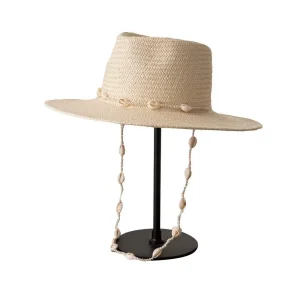
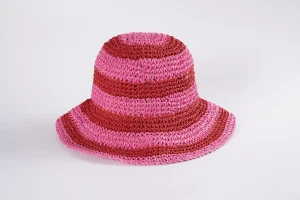
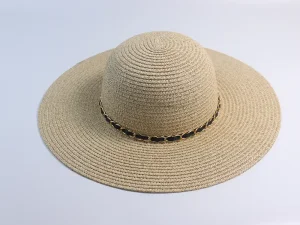
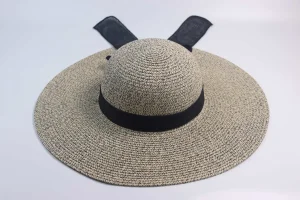
Explore More Styles
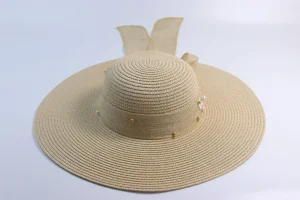
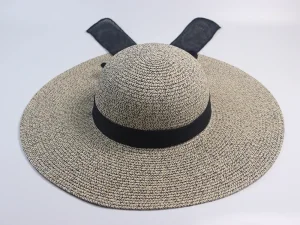
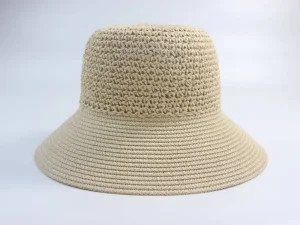
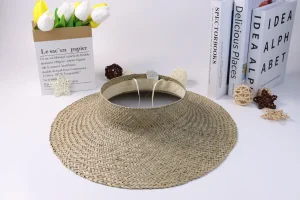
Complete Kids & Family Straw Hat Catalog Selections
Additional silhouettes for adults and children — all factory-direct, all customizable.
Next Step
Ready to Source Your Best Kids Straw Hats?
Send your style references, target quantity, and destination market. Our team replies within 8 hours with material recommendations, a sampling plan, and a production timeline.
Contact Lige Hats