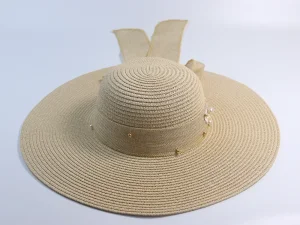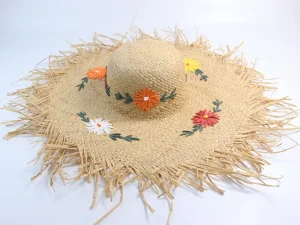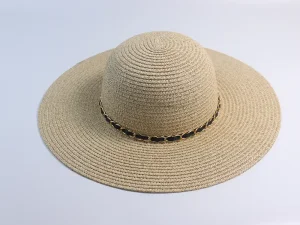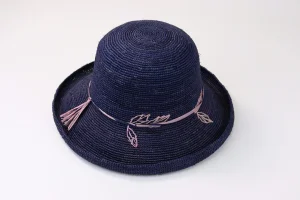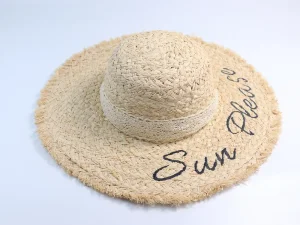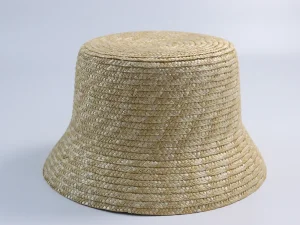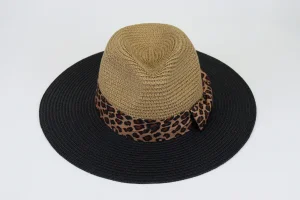
Sourceable Bucket & Sun Hat Range
Bucket Caps, Crochet Hats & Sun Protection Shapes Ready for Private Label
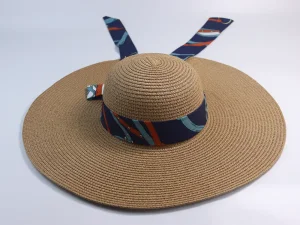
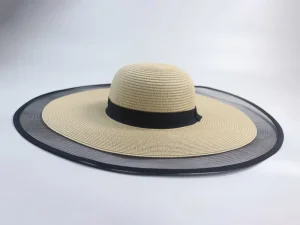
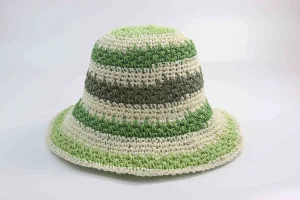
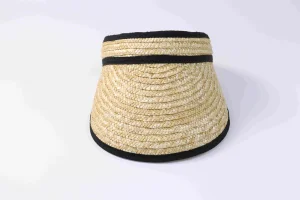
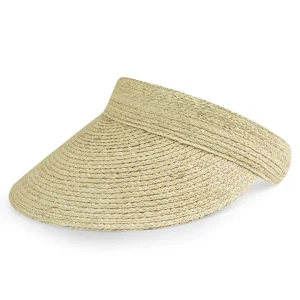
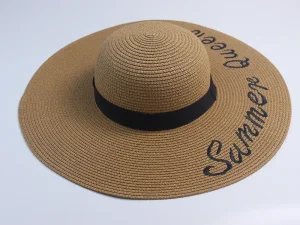
Every style below can be quoted in raffia, paper straw, natural grass or knit construction, with woven labels, patches, hang tags and custom colorways applied in-house. Use these references to build a shortlist before sampling.
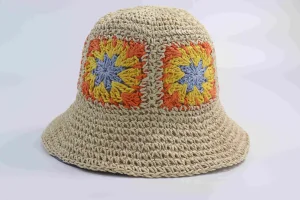
Procurement Whitepaper · 2026 Buyer Edition
Why a Specialised Bucket Cap Hat Exporter Beats a General Trading Company
Bucket caps look simple until a buyer opens a container and finds crown heights drift by 8 mm, brim wire is exposed, or the raffia arrived one shade off from the approved lab dip. The difference between a good and a bad season rarely comes down to the design — it comes down to the exporter behind it.
Predictable Lead Times
A dedicated bucket cap line runs on fixed weaving, blocking and finishing schedules. Buyers get 25–35 day production windows instead of quotes that depend on a third-party workshop's availability.
Spec-Level Consistency
Crown height, brim depth, stitch density, eyelet placement and band tension are documented in one tech pack that is re-used every reorder — narrowing tolerance drift to ±3 mm on key measures.
Verifiable Factory Base
Buyers can audit weaving rooms, blocking tables, QC benches and export packing under one roof — the traceability that marketplace sellers and trading desks can't provide.
Port-Proximate Logistics
Linyi sits within easy trucking distance of Qingdao Port, cutting inland freight and reducing the risk of late container cut-offs on FCL and LCL bookings alike.
Customisation Without Compromise
Labels, embroidered logos, jacquard bands, eyelet hardware, prints and packaging are coordinated by the same team that blocks the cap — not outsourced to four different suppliers.
Low MOQ for Test Orders
Starting from 50–100 pieces per design, buyers can validate a new crochet colour or wide-brim bucket silhouette on a real retail shelf before committing to a seasonal container.
Structural Advantages of the Chinese Bucket Cap Supply Chain
What Makes a China Bucket Cap Hat Exporter Hard to Replace
China's dominance in headwear is not simply a labour-cost story. It's a twenty-year-old ecosystem of natural-fibre weaving clusters, blocking-tool makers, label printers and finishing studios within a few hours of each other.
A headwear cluster, not a single factory
Linyi, Shandong is one of China's most dense headwear clusters. Within the province, a bucket cap exporter can source raffia braid, cotton canvas, polyester knit, grosgrain ribbon, woven labels and metal eyelets from separate specialised suppliers — all coordinated through one production manager. That means a buyer can get an all-in quote for a "raffia wide-brim bucket in a custom lab dip, with woven front label, hang tag and QR-linked care label" in one meeting, not five.
The result is speed without sprawl. When one element — say, a seasonal orange raffia — goes long on lead time, the factory pivots to a stocked alternative colorway rather than stalling the whole container. That flexibility is the practical advantage that importers only appreciate after their first season.
"A bucket cap is five parts: crown, brim, eyelets, band, label. In a mature Chinese cluster, all five come from specialists within 200 km of each other — that's what compresses lead time."
- Vertical integration. Weaving, blocking, trimming, labelling and inspection under one roof.
- Trained hand skills. Blocking and band-setting still rely on trained filigree operators who shape brims to spec.
- Material diversity. Raffia, paper straw, natural grass, cotton canvas, knit and recycled fibres in a single factory program.
- Export infrastructure. Qingdao Port, established customs brokerage, and FCL/LCL routines refined over 15+ years.
- Compliance readiness. Familiarity with US, EU, UK and Japanese labelling, fibre-content and care-tag rules.
Operational Snapshot
Numbers Buyers Can Plan Around
The metrics below reflect typical production behaviour seen across 15+ years of bucket cap and straw hat export programs. Use them as a planning baseline, not a marketing claim.
0Years in headwear manufacturing
0Countries served across 6 continents
0Active global distributor partners
0Hour response window on buyer requests
Industry Trends · 2025–2027 Outlook
Where the Bucket Cap Market Is Heading Next
Bucket caps have moved from a streetwear staple into a genuinely multi-channel product. Understanding the direction of travel helps buyers place the right bets on materials, trims and price bands.
01
Raffia and natural-fibre buckets are the new "quiet luxury" accessory
After several seasons of logo-heavy streetwear, buyers are shifting toward textured natural-fibre bucket caps that read as considered rather than loud. Raffia weaves, soft-structure crowns and grosgrain trim now sit alongside linen shirting and leather sandals in mid-market spring/summer assortments.
02
Crochet and knit buckets keep expanding past the festival window
Crochet bucket caps once felt seasonal — now they are appearing in travel retail, resort wear and childrenswear. Knit construction also lets brands deliver year-round programs (winter pom-pom buckets, summer open-weave versions) from the same factory relationship.
03
Functional UV claims are moving from niche to expected
Buyers increasingly request UPF-rated fabrics, wider brims and breathable eyelet placement so that a bucket cap can be marketed as sun-protection gear, not just a styling piece. This crosses over into golf, fishing, hiking and school-uniform channels.
04
Small-batch, quick-turn reorders are becoming the default
The 50–100 piece starting MOQ that once felt unusual is now an operating expectation for DTC and boutique buyers. A bucket cap exporter that can reorder a winning colourway in under six weeks has a measurable conversion advantage over one that only quotes full containers.
05
Circular and recycled inputs are entering mainstream briefs
Recycled polyester knit, paper-straw blends and raffia offcuts re-woven into braid are showing up in serious RFQs from EU and UK buyers. Expect to see "traceable inputs" queries become standard in bucket-cap sourcing within the next two seasons.
Localised Application Scenarios
Where Bucket Caps Actually Sell — Region by Region
The same factory can produce the same bucket cap silhouette for five different markets and it will read as five different products. Localising the material, trim and labelling to each channel is what separates a reorder program from a one-off order.
North America — Resort & Coastal Retail
Raffia and paper-straw buckets in natural, sand and ecru pair well with west-coast surf-shop and Florida resort accounts. Buyers request packable construction and a low crown so the cap folds flat into a tote.
Western Europe — Editorial & Boutique
Small-batch raffia and crochet buckets with grosgrain or jacquard ribbon. Buyers prioritise texture, stitch cleanliness and photography-ready finish over cost, and reorder 200–500 pieces per colorway.
Australia — Sun-Protection Channel
Wide-brim woven buckets and UV-rated visors for outdoor, school and sport accounts. Buyers request UPF-linked labelling, chin cords and eyelet ventilation, and prefer breathable natural grass over synthetic knit.
Japan — Precision & Packaging
Folded paper-straw buckets and crochet hats with meticulous packaging, hang tags and sizing consistency. Tolerances are tight; a ±3 mm crown drift is often treated as a reject, not a variance.
Middle East — Breathable Summer Fashion
Soft, breathable buckets in light neutrals and pastels, with interior sweatbands for comfort. Buyers often request slightly larger head circumferences and extra brim depth for shade coverage.
Latin America — Colour & Trend-Led
Bold raffia colourways, football-club colour palettes and lower price-point buckets for volume retail. Reorder patterns are fast and frequent, so factory turnaround on stocked colour lines is critical.
Macro-Level Sourcing Solutions
Four Sourcing Models, One Bucket Cap Supply Chain
Different buyers need different relationships with a factory. Below are the four models we operate most often — from boutique test orders to white-label retail programs — and how each shapes the production path.
Boutique & DTC Test Program
50–100 pieces per design, mixed colourways per carton, express sampling within 10 working days. Designed for brands that want to validate a new bucket silhouette or raffia colour before committing to a full production run. Reorders scale 3–10× once a style proves itself.
Private-Label Reorder Program
300–3,000 pieces per style, standardised tech pack, pre-approved stock colours and a dedicated account contact. Ideal for brands that want a reliable 4–6 reorder cycle per year without re-running sample rounds each season.
Retail & Distributor Volume
FCL shipments of 10,000+ pieces in a seasonal program, with pre-agreed production calendars, inline QC checkpoints and container loading at Qingdao Port. Pricing tiers reward forecast accuracy and consolidated colourways.
Full OEM & ODM Design Service
In-house designers transform mood boards, runway references or existing samples into a production-ready bucket cap. We handle drafting, blocking tooling, material sourcing, fit checks and lab dips before any production order is placed.
Global Procurement Demand
What Global Buyers Are Asking For in 2026
Procurement teams at retail chains, distributors and DTC brands now brief on bucket caps with far more granularity than they did three seasons ago. Here is what the RFQ inbox looks like in practice.
Shorter Production Cycles
Buyers want 30-day production and 6-week reorders on stocked colours, not 90-day seasonal turns.
Full Packaging Ownership
Hang tags, polybags, FBA-compliant labelling and carton markings are typically expected from the factory, not a packer.
Social-Compliance Paperwork
Buyers increasingly request BSCI-aligned documentation, factory-floor video and traceable fibre input certifications in RFQs.
Faster Sample Turnaround
Sample rounds now run in 7–10 days. Buyers won't wait two weeks to see a new crochet design or a custom-lab-dip raffia colourway.
Buyer Material Decision Matrix
Choosing the Right Fibre for a Bucket Cap Program
The fibre you pick determines hand-feel, shape memory, price band and how well a bucket cap survives freight. Our product team advises buyers on these trade-offs before sampling begins.
01
Raffia — soft, dye-receptive, premium hand-feel
A natural palm-leaf fibre from Madagascar, with natural resins that make brims packable and able to recover shape. Best for wide-brim buckets, editorial boutique programs and luxury resort lines. Ideal when the brand promise is "packable" or "bold colour".
02
Paper Straw — uniform colour, competitive cost
Twisted paper yarn woven into a clean, uniform fabric. Delivers consistent colours and the best per-unit economics for volume retail. Best for spring/summer promotional programs, tiered retail buckets and kids' lines. Pair with a "keep dry" care label.
03
Natural Grass Straw — crisp shape retention
Braided natural stems with inherent stiffness that keep structured bucket crowns and wide brims rigid on the shelf. Best for UV-protection programs, sun-protection channel buckets and outdoor retail. Choose it when shape matters more than softness.
04
Cotton, Polyester & Knit — year-round assortment
Knitted crochet buckets, recycled polyester knits and canvas constructions extend the assortment beyond summer and into children's, sport and cold-weather categories. Ideal for programs that want a single factory relationship across all four seasons.
Frequently Asked Questions
Bucket Cap Exporter & Factory — Buyer FAQ
Direct answers on MOQ, customisation, shipping and service. If your question is not covered, our team replies to new enquiries within 8 hours.
What is the minimum order quantity for a custom bucket cap?
The starting quantity for small orders is 50 to 100 pieces per design, depending on the material and the complexity of the finish. That range lets boutiques, emerging brands and importers test new bucket cap silhouettes, colourways and crochet patterns before scaling up to a full production run.
Can you produce private-label bucket caps with our own logo?
Yes. OEM and ODM production is our core business. We customise shape, crown height, brim depth, material, colour, size and hat band, and add branding such as woven front labels, embroidered logos, jacquard ribbons, patches and hang tags. Our in-house designers can also develop brand-new bucket cap styles from your mood board, sketch or reference sample.
Where is your factory located and how are orders shipped?
We are located in Linyi City, Shandong Province, China, within easy trucking distance of Qingdao Port. Bulk orders are typically exported by sea freight as FCL or LCL shipments. Samples and urgent small orders can be sent by air or international express courier, depending on the destination and the timeline.
Which markets do you export bucket caps to?
Most of our products go to the United States, Canada, Australia, Mexico, Western Europe and Japan. We serve customers in more than 60 countries and work with over 25 global distributors, covering importers, retail chains, DTC brands and boutique buyers.
How fast does your team respond to a new buyer enquiry?
We respond and take action within 8 hours, covering product questions, sampling requests, order follow-up and after-sales service. Each buyer gets one dedicated account contact so that technical questions do not bounce between multiple sales reps.
What products do you make besides bucket caps?
Alongside bucket caps, we manufacture straw hats, paper hats, Panama hats, fedora and trilby styles, cowboy hats, boater hats, floppy sun hats, sun visors, children's straw hats, toy hats, lifeguard hats, winter hats, plus straw bags and paper bags. This makes us a single-source supplier for buyers that want a coordinated headwear and accessories program.
How should I choose between raffia, paper straw and natural grass?
Choose raffia for premium, packable, colour-rich programs; paper straw for volume retail where uniform colour and lower cost per unit matter; natural grass straw when crisp shape retention is the priority (for example, UV-protection buckets or structured wide-brim styles). Our team is happy to send physical swatches of all three for your design team to review.
Can you support a reorder cycle after the first production run?
Yes. Reorder programs are designed around stored tech packs, pre-approved colours and stocked materials, so that a repeat order does not require a new sampling round. Buyers who plan a 4–6 cycle reorder calendar per year typically see shorter lead times and more consistent tolerances than buyers who start each season from scratch.
Extended Bucket, Straw & Sun Hat Range
More Styles for Your Bucket Cap Sourcing File
Browse eight more reference shapes that importers frequently shortlist alongside bucket caps — from raffia sun hats and crochet buckets to wide-brim UV straw styles and packable visors.