High-Quality Cow Bucket Hat Exporter Manufacturers & Factory
A sourcing-level guide for importers, brands and distributors: how Chinese cow bucket hat factories combine hand-weaving craft, supply-chain resilience, compliance documentation and OEM/ODM engineering to deliver reorderable sun-hat programs from 50 pieces per design.
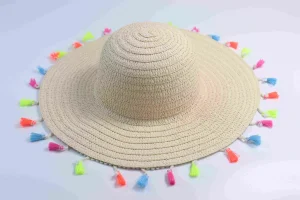
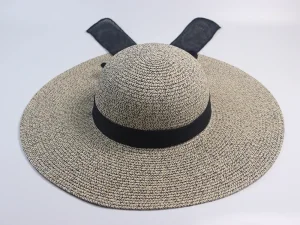
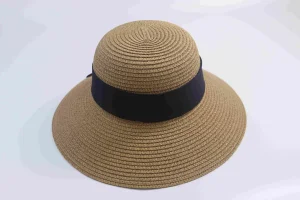
Every silhouette below is produced in-house — from raffia-style weave to paper straw and natural grass straw — with custom bands, labels, packing and colorways matched to your retail line. Tap any card to open the full spec sheet.
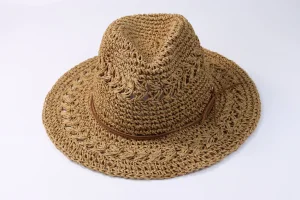
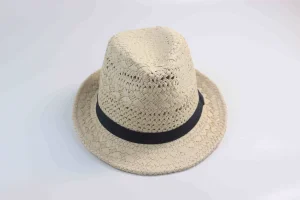
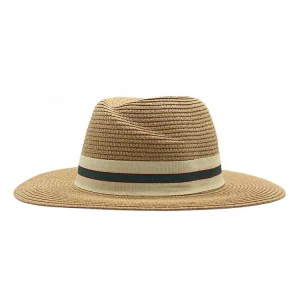
High-Quality Breathable Handwoven Panama Hat for Men, Adjustable Size Straw Sun Fedora for Wedding & Outdoor Activities
A Cow Bucket Hat Exporter Built for Reorderable Programs
A bucket hat looks simple on a shelf. Behind it sits a chain of decisions — fiber choice, weave density, crown blocking, brim memory, color fastness, carton compression strength and customs documentation. Those decisions are what separate a supplier who ships once from a supplier you keep for five seasons.
Shandong Lige Import & Export Co., Ltd. has spent more than 15 years making exactly those decisions for importers, wholesalers, brand owners and retailers in the United States, Canada, Australia, Mexico, Western Europe and Japan. From cow bucket hats and straw bucket hats to Panama, fedora, cowboy, boater, floppy, visor and children's styles, we design, sample and manufacture in-house, then ship through nearby Qingdao Port.
One roof, full control. Raw-material sorting, weaving, blocking, finishing and final inspection are managed under a single production plan — no split accountability between trading desk and workshop.
Testable before you commit. MOQ starts at 50–100 pieces per design, so a boutique or emerging label can validate shape, color and price before scaling to container volume.
Experienced eyes. A production manager with 20 years in headwear and a QC manager with 15 years review weave consistency, sizing tolerance and trim attachment on every run.
8-hour response. Sampling questions, order follow-up, documentation requests and after-sales issues are answered and actioned within 8 hours by one dedicated contact.
50–100 pcsStarting quantity per design
8 hoursResponse and action on every request
60+ countriesServed across six continents
Qingdao PortNearby gateway for FCL & LCL export
Localized Application Scenarios
Where Cow Bucket Hats Actually Sell: Region-by-Region Demand Signals
Semantic search behavior differs sharply by market. A buyer typing “cow bucket hat wholesale USA” wants different specs from one typing “bucket hat manufacturer Australia” — and the product must be engineered accordingly. These are the application scenarios our product team sees repeat across seasons.
North America
Festival, Rodeo & Western-Lifestyle Retail
Country music festivals, rodeo circuits and western-lifestyle apparel chains drive recurring demand for cow-print bucket hats and cattleman-adjacent silhouettes. Buyers prioritize shape memory after packing, bold print registration and size runs that fit both men's and women's heads.
Australia & NZ
Outdoor, Surf & Sun-Safety Channels
High-UV markets treat bucket hats as functional sun protection rather than a fashion add-on. Demand skews toward wider downward brims, breathable open weaves, chin straps for children's lines, and UPF-oriented fabric constructions for school and beach retail.
Western Europe
Resort, Cruise & Boutique Resort-Wear
European buyers tend to combine smaller order quantities with tighter color stories and premium trims — grosgrain bands, woven labels, hang tags and recycled polybag packing. Cow-print bucket hats sit well in capsule summer collections where print novelty matters more than unit cost.
Japan & Korea
Precision Fit & Detail-Led Fashion
Buyers in these markets scrutinize stitch density, brim wire straightness, label placement and head-size tolerance. Consistent sizing at 56–58 cm and exact color matching against submitted swatches are common acceptance conditions before a reorder is issued.
Latin America
Beach Resort, Promotional & Event Merch
Coastal resort retail and large promotional programs favor high-volume, cost-efficient paper straw bucket hats with printed logos. Fast sampling and predictable carton packing matter more than premium finishing, which makes material discipline the deciding factor.
Cross-Market
Private-Label Capsules & DTC Test Runs
Direct-to-consumer brands run 50–200 piece capsule drops to test a print or silhouette before committing to a full seasonal buy. Low-MOQ production with per-design labeling lets them publish a product page, measure sell-through and reorder the winners.
Technology Roadmap & Outlook
A Four-Horizon Roadmap for Bucket Hat Manufacturing
Headwear is a craft industry moving toward a measurable one. The roadmap below reflects the sequence we use when discussing capability upgrades with buyers — each horizon is judged by whether it produces verifiable information a buyer can act on.
Material Traceability & Lot Records
Linking each production lot to its fiber batch, dye batch and weaving shift turns a verbal quality claim into a retrievable record. Buyers can then audit consistency across seasons instead of relying on sample memory.
Digital Color & Size Libraries
Standardized color references and head-size tolerance bands reduce back-and-forth during sampling. A buyer reviewing a digital swatch set can approve a colorway faster and with fewer physical rounds.
Packaging Compression Engineering
Bucket hats fail in transit more often from brim deformation than from stitching. Carton stacking tests, brim inserts and compression limits are negotiated per shape so the hat that leaves the factory arrives in the same silhouette.
Compliance-Ready Documentation Flow
Material declarations, fiber composition statements and packing lists built into the order flow at the sampling stage — so documentation does not become the bottleneck the week a container must sail.
Why this roadmap matters for search and sourcing
Google's Search Quality Rater Guidelines reward content that demonstrates first-hand experience and verifiable expertise rather than generic marketing language. For a sourcing page, that means describing how a factory controls quality — the material decisions, the inspection points, the documentation path and the shipping logic — instead of repeating the phrase “high quality” without evidence. The roadmap above is written to answer the follow-up question a serious buyer asks after reading a product title: “What happens between my sample approval and my container?”
Supply Chain Resilience
China Factory Supply-Chain Resilience & Efficiency Advantages
“China factory” is not a single advantage — it is a cluster of advantages that only compound when the factory is located inside a mature export ecosystem. Linyi, in Shandong Province, sits inside one of the densest light-manufacturing and port-logistics corridors in the world.
Clustered Raw-Material Access
Raffia-style fiber, paper straw yarn, natural grass braid, grosgrain ribbon and cartons are sourced within a short radius, shortening replenishment time when a reorder lands late in the season.
Short Lead-Time Buffer
Being close to Qingdao Port reduces inland transit time versus factories far inland. That buffer absorbs the small delays — trim arrival, label printing — that otherwise push a sailing date.
Flexible Order Structures
Mixed-material and mixed-shape orders can be built within one PO — bucket hats alongside floppy hats, visors and straw bags — reducing the number of suppliers a buyer must coordinate.
Consolidated Export Logic
FCL for full-season programs and LCL for smaller replenishments, with export packing designed for the actual container plan rather than a generic carton standard.
Resilience Factor
What It Means Operationally
Buyer Benefit
Material proximity
Fiber and trim suppliers within a short logistics radius
Faster replenishment on late reorders
Port access
Linyi to Qingdao Port corridor
Shorter inland leg, more sailing options
In-house finishing
Bands, labels and trims applied internally
Fewer subcontractors to audit
Mixed-shape production
Multiple silhouettes in one purchase order
Simplified supplier management
Low MOQ capability
50–100 pcs per design
Market testing without overstock
Global Commercial & Industrial Context
The Bucket Hat Market: What Buyers Are Actually Competing On
Bucket hats have moved out of the novelty category. Across the last several seasons they have appeared simultaneously in streetwear drops, resort collections, outdoor sun-protection ranges, children's school retail and promotional merchandise — a rare position that makes them a cross-category staple rather than a seasonal trend item.
The commercial consequence is that competition has shifted. When a silhouette is available everywhere, buyers stop comparing on shape alone and start comparing on reliability of the reorder: does the second shipment match the first, does the brim still hold shape after cartoning, does the label placement stay consistent, does the documentation arrive before the container.
At the industrial level, the category is still labor-influenced at the finishing stage — banding, trim attachment, label sewing and spot inspection remain hand-intensive — while weaving and blocking are increasingly consistent and repeatable. That mix favors factories that can hold craft quality at volume rather than factories that chase only unit cost.
Demand is multi-category. Fashion, outdoor, children's and promotional channels buy the same silhouette with different spec priorities.
Print novelty drives first orders. Animal print, cow print and seasonal graphic treatments pull buyers in; construction quality drives the reorder.
Smaller runs, more often. Brands increasingly buy in smaller batches across more drops, which rewards low-MOQ production.
Sun protection is a spec, not a slogan. Brim width, weave density and fabric construction are now discussed as measurable attributes.
Compliance literacy is rising. Retail chains increasingly request material and packing declarations at the inquiry stage.
15+Years of hat manufacturing
25+Global distributors served
60+Export countries
8hResponse and action window
Buyer's Material Guide
Straw Materials Explained: Choosing the Right Fiber for a Bucket Hat
Fiber choice determines hand-feel, shape retention, unit cost and how well a hat survives export cartoning. This is the guidance our product team gives buyers before a single sample is made.
Raffia
Natural palm-leaf fiber with inherent resins that make it soft, flexible and highly dye-receptive. Brims can be packed and recover their shape.
Best for: floppy hats, bucket hats, premium resort lines, straw bags. Tip: ideal for packable claims and saturated colorways.
Paper Straw
Twisted paper yarn woven or braided into a lightweight, uniform fabric. Clean, consistent colors at a competitive unit cost for volume programs.
Best for: fedoras, Panama-style hats, promotional retail. Tip: add “keep dry” care labels — paper straw softens when soaked.
Natural Grass Straw
Braided natural stems with inherent stiffness, producing crisp structured silhouettes and an authentic artisanal look at premium price points.
Best for: boater, cowboy and lifeguard hats. Tip: choose it when shelf shape retention matters most.
Fabric & Knit
Cotton, polyester and knitted constructions extend an assortment beyond summer into children's and cold-weather categories.
Best for: visors, winter hats, children's and toy hats. Tip: pair with straw lines for a year-round single-supplier program.
Localization Support & Compliance Assurance
Export Documentation, Labeling & Market-Specific Support
Compliance failures rarely look dramatic. They look like a missing fiber composition statement, a care label in the wrong language, or a hang tag that does not match the retail partner's requirement. These are preventable when they are designed into the order rather than discovered at inspection.
Labeling & Language Localization
Care labels, fiber composition and hang tags prepared in the language and format required by the destination market, agreed at the sampling stage so production does not stall on artwork.
Export Documentation Flow
Packing lists, commercial invoices and shipping marks coordinated with the freight forwarder, so documentation readiness keeps pace with the production schedule rather than trailing it.
Retail-Ready Packing Formats
Polybag, hangtag, size sticker and carton labeling configured to the retail channel — from individual e-commerce packing to bulk cartons for a distributor's own distribution center.
Sampling Before Commitment
Physical samples approved against agreed specifications, so the acceptance criteria for the bulk order are defined in advance rather than negotiated after inspection.
Market-Specific Fit Adaptation
Head-size ranges, brim widths and strap requirements adjusted for regional preferences — for example broader sun coverage for high-UV markets and tighter detail tolerances for fashion-led buyers.
8-Hour Communication Standard
One dedicated contact for quotations, sampling, production updates and after-sales follow-up, with response and action inside 8 hours across time zones.
OEM & ODM Workflow
From Brief to Container: A Transparent Six-Step Process
Buyers lose time when the process is opaque. Each step below has a defined output, so you always know what you are approving and what comes next.
Step 01
Share Your Brief
Style direction, fiber preference, head size, colorway, branding assets and target quantity. Reference images or an existing sample accelerate this stage considerably.
Step 02
Design & Sampling
Our designers recommend materials and construction, then develop a physical sample reflecting your brief and the intended retail price band.
Step 03
Approval
Confirm sample, labels, packaging format and delivery schedule. These become the acceptance criteria for the bulk production run.
Step 04
Production
Material sorting, weaving, blocking, banding and finishing executed in-house against the approved specification.
Step 05
Quality Inspection
Final inspection of shape, brim symmetry, stitching, head-size tolerance and trim attachment before packing.
Step 06
Export Shipping
FCL or LCL sea freight via Qingdao Port, with samples and urgent small orders sent by air or express courier.
Buyer Q&A
Questions Cow Bucket Hat Buyers Ask Most
Straight answers on MOQ, customization, materials, shipping and service for importers evaluating a China hat factory.
What is the minimum order quantity for custom cow bucket hats?
Our starting quantity for small orders is 50 to 100 pieces per design, depending on the material and craftsmanship involved. This allows boutiques, emerging brands and importers to test new styles before scaling up to container volume.
Can Lige produce private-label hats with our own logo and trims?
Yes. OEM and ODM production is our core business. We customize shape, material, color, size and hat band, and can add woven labels, patches and hang tags. Our in-house designers can also develop new styles from your mood board or reference samples.
Where is your factory located and how are orders shipped?
We are located in Linyi City, Shandong Province, China, close to Qingdao Port. Bulk orders are typically exported by sea freight as FCL or LCL shipments, while samples and urgent small orders can be sent by air or express courier.
Which markets do you export hats to?
Most of our products are exported to the United States, Canada, Australia, Mexico, Western Europe and Japan. We serve customers in more than 60 countries and work with over 25 global distributors.
How quickly does your team respond to buyer requests?
We respond and take action within 8 hours, covering product questions, sampling, order follow-up and after-sales service.
What products do you manufacture besides straw hats?
In addition to straw hats, we manufacture paper hats, straw bags, paper bags, children's straw hats, toy hats, lifeguard hats, sun visors, winter hats and other bags. Exploring the full bucket hats collection is the fastest route to comparing silhouettes.
How do you protect brim shape during export packing?
Packing is engineered per silhouette. Brim inserts, stacking limits and carton compression assumptions are agreed against the specific shape, because a soft raffia brim and a stiff natural-grass brim fail differently in transit. Where relevant, we recommend fiber choices that recover shape after unpacking.
Can we combine multiple hat styles in one order?
Yes. Mixed-material and mixed-shape purchase orders can be produced within a single program — cow bucket hats alongside floppy hats, visor hats, Panama hats or straw bags — which reduces the number of suppliers a buyer must coordinate across a season.
Start Your Program
Build Your Next Cow Bucket Hat Collection
Send style references, target quantity and destination market. Our team replies within 8 hours with material recommendations, a sampling plan and a production timeline — plus the packing and documentation approach for your specific channel.
Straw Bucket Hats, Visors, Wide-Brim & Classic Panama
Production capacity under one roof means one purchase order can carry multiple silhouettes. These are the shapes most often ordered alongside a cow bucket hat program.
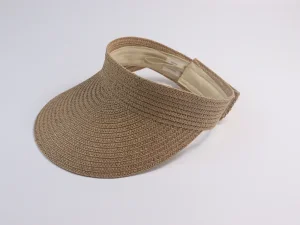
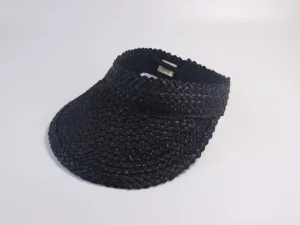
High-Quality China Factory Suppliers Popular Straw Visor Hat for Women and Men – Breathable Sun Protection Summer Accessory