Integrated Material Sourcing
Raffia, paper straw, natural grass straw, cotton, polyester and knit streams are sourced, sorted and graded under one roof — eliminating the quality variance that multi-vendor sourcing creates.
Women's western headwear has graduated from a seasonal novelty into a durable, high-margin retail category across North America, Australia and Northern Europe. This whitepaper consolidates what qualified Chinese factories actually deliver — and how global buyers should evaluate them.
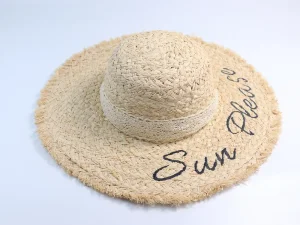
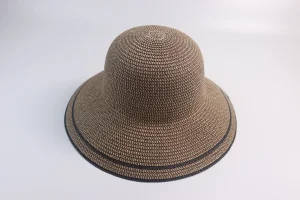
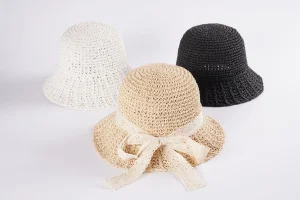
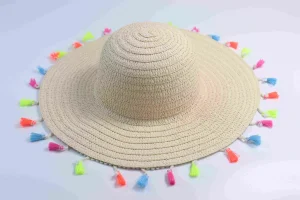
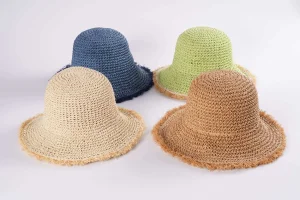
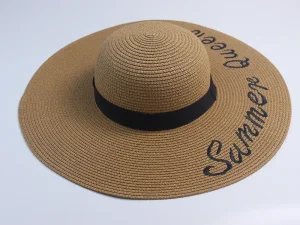
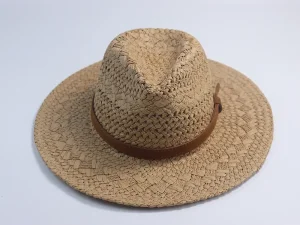
For more than 15 years, qualified manufacturers in Linyi, Shandong have produced straw hats, paper hats, straw bags and paper bags for importers, brand owners and retail buyers worldwide. From Panama and fedora styles to cowboy, boater, bucket and floppy sun hats, top-tier factories design, sample and manufacture entire collections in-house, then ship through nearby Qingdao Port.
What separates a genuine factory from a trading intermediary is not the catalog size — it is the ability to hold tolerance across weave density, brim wire gauge, brim stiffness and sweatband stitching while scaling from a 50-piece test run to a 50,000-piece seasonal program. That capability is what this document maps in detail.
The category's rise is reinforced by a structural shift in consumer demand: women's cowboy hats are now bought as fashion accessories, festival essentials, resort wear and sun-protection product simultaneously. That multi-intent demand means buyers need suppliers who can serve five different use cases from one production line.
China's western headwear cluster concentrates four capabilities that few alternative sourcing regions can match simultaneously: material breadth, hand-finishing labor depth, blocking tooling density and export logistics maturity.
Raffia, paper straw, natural grass straw, cotton, polyester and knit streams are sourced, sorted and graded under one roof — eliminating the quality variance that multi-vendor sourcing creates.
Cattleman crown blocking, teardrop shaping, brim wire insertion and grosgrain band application remain skilled manual operations. Cluster concentration keeps that labor available at scale.
Dense availability of hat blocks, brim presses and wire formers means new silhouettes can be tooled quickly — shortening the design-to-sample cycle for seasonal collections.
Facilities positioned near Qingdao Port enable competitive FCL/LCL sailing frequency to US, Canadian, Australian and EU gateways with predictable transit windows.
Entry at 50–100 pieces per design lets emerging brands validate a SKU before committing capital — a structural advantage over high-MOQ alternative regions.
Woven labels, patches, hang tags, care labels, polybag printing and carton marking are coordinated within the cluster, compressing the branded-program lead time.
Factories with a QC manager holding 15 years of experience and a production manager with 20 years institutionalize inspection discipline rather than relying on ad-hoc checks.
In-house designers translate mood boards and reference samples into production-ready specs — covering crown height, brim width, wire gauge, band width and trim placement.
Fiber selection determines hand-feel, shape retention, sustainability positioning, landed cost and how well a hat survives compression in transit. This is the decision framework our product team applies before sampling.
| Fiber | Core Properties | Best For | Buyer Consideration |
|---|---|---|---|
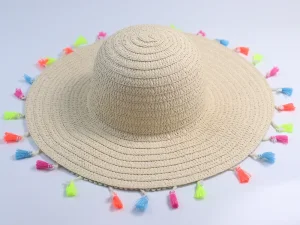
| Raffia | Natural palm-leaf fiber with inherent resins; soft, flexible, highly dye-receptive | Floppy hats, bucket hats, premium resort lines, straw bags | Ideal for "packable" claims and saturated, bold colorways |
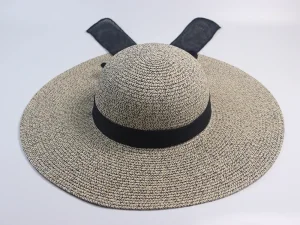
| Paper Straw | Twisted paper yarn woven or braided into lightweight, uniform fabric | Fedoras, Panama-style hats, seasonal and promotional retail | Add "keep dry" care labels — paper straw softens when soaked |
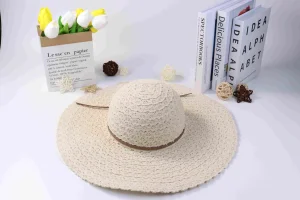
| Natural Grass Straw | Braided natural stems with inherent stiffness and artisanal character | Boater hats, cowboy hats, lifeguard hats | Choose when shelf shape retention matters most |
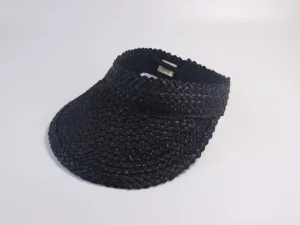
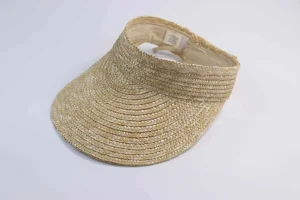
| Fabric & Knit | Cotton, polyester and knitted constructions for extended seasonality | Visors, winter hats, children's hats, toy hats | Pair with straw lines for a year-round single-supplier program |
Fiber choice should be validated against a compression test and a 48-hour humidity exposure test before scale production.
Five structural shifts are driving the category's expansion — and each one changes what buyers should specify in a purchase order.
Festival-driven apparel purchasing has converted the cowboy hat from occasional western wear into a repeat-purchase fashion accessory with strong year-over-year sell-through in the US and Australia.
Consumers increasingly prioritize planet-friendly choices. Artisanal natural-fiber straw hats merge timeless style with eco-conscious appeal — and international orders of raffia-based lines have risen in response.
Low-MOQ manufacturing has enabled a wave of direct-to-consumer brands that test five to eight silhouettes per season and reorder winners — a model that rewards fast sampling over bulk inventory.
Retailers are merchandising cowboy silhouettes beyond summer into spring and autumn transitions by specifying darker colorways, tighter weaves and lined sweatbands.
UV-protection messaging has shifted from marketing phrasing to specification: brim width minimums, weave density targets and UPF-relevant coverage now appear in buyer tech packs.
Cattleman crowns and breathable weaves are increasingly offered as unisex SKUs, reducing SKU count while widening addressable demand — a catalog efficiency gain for importers.
"The winning buyers in this category are not the ones who commit to the largest first order — they are the ones who run the fastest, most disciplined sampling loop and then scale the proven silhouette."
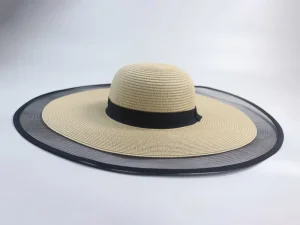
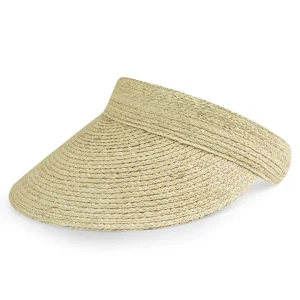
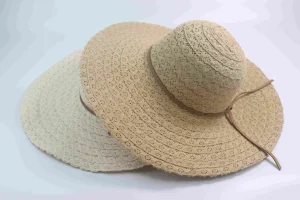
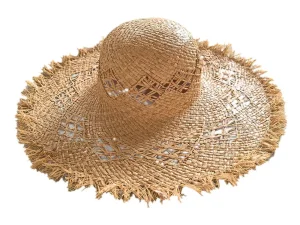
Production-validated silhouettes from the current catalog. Each reference links directly to its specification page for sampling review.
The same silhouette performs differently by market. Buyers who localize specification — brim dimension, color story, band treatment and care labeling — achieve materially higher sell-through.
Demand concentrates around cattleman crowns, teardrop shaping, wider brims (9–11 cm) and darker band treatments. Rodeo, country-concert and festival channels favor breathable weaves with packable construction for travel.
Function leads form. Buyers specify tighter weave density, wider 360° brim coverage and ventilated crowns, with UV-protection messaging supported by documented construction rather than unsupported claims.
Raffia-based, soft-structured silhouettes with minimal trims dominate resort and premium fashion channels. Neutral, natural and earth-tone colorways outperform saturated palettes; band detailing stays restrained.
Buyers scrutinize stitching consistency, sweatband finishing, size grading accuracy (56–58 cm core range) and packaging presentation. Tolerance discipline matters more than price point.
Shorter summer windows push buyers toward tri-season assortments: straw programs paired with fabric and knit styles sourced from the same supplier to consolidate container loading.
Digital-first brands prioritize speed to sample, low MOQ, plain packaging with private labels, and reliable reorder lead times — often across three to five mini-collections per year.
Enterprise buyers need more than a product list — they need a repeatable operating model. The six-stage workflow below is the documented process qualified factories run from first brief to container loading.
Style references, material preference, size range, colorway, branding elements and target quantity parameters.
Designers recommend fibers, construction and trim specifications, then develop physical samples for review.
Confirm samples, labels, packaging format and delivery schedule before committing production capacity.
In-house material sorting, weaving, blocking and finishing executed against the approved tech pack.
Final QC covering crown shape, brim symmetry, stitching integrity, size grading and trim attachment.
FCL or LCL sea freight via nearby Qingdao Port, or air and express for samples and urgent replenishment.
Aggregated from buyer behavior across importers, wholesalers, brand owners and retailers in the United States, Canada, Australia, Mexico, Western Europe and Japan.
Buyers want to launch at 50–100 pieces per design, validate sell-through, then scale proven winners without renegotiating terms or re-qualifying the supplier.
Enterprise procurement requires measurable specs: crown height, brim width, wire gauge, sweatband material, band width and packing ratio per carton.
An 8-hour response and action window is now a baseline expectation — not a differentiator — for sampling questions, order follow-up and after-sales resolution.
Buyers consolidate straw hats, bags, children's lines and visors into single shipments to reduce landed cost and simplify customs handling.
Natural fiber provenance, hand-weaving narratives and reduced synthetic content are increasingly requested in supplier questionnaires and buyer brand guidelines.
Importers are reducing vendor count — preferring one qualified factory that covers straw hats, paper hats, straw bags and paper bags rather than four specialist vendors.
Every silhouette can be produced in raffia, paper straw or natural grass straw, with custom bands, trims, labels and colorways to match your brand architecture.
Google's Search Quality Rater Guidelines reward demonstrable experience, expertise, authoritativeness and trust. The same framework applies to supplier due diligence — a factory should be able to evidence each dimension.
15+ years of manufacturing tenure, a production manager with 20 years in role and a QC manager with 15 years — verifiable institutional knowledge rather than claimed capability.
In-house design teams, material grading protocols, blocking tooling depth and documented construction standards — the technical foundation behind consistent output.
Export relationships across 60+ countries, collaboration with 25+ global distributors, and a customer base spanning importers, wholesalers, brand owners and retailers.
An 8-hour response and action commitment, transparent specification sheets, honest material limitations and consistent reorder performance across seasons.
Shandong Lige Import & Export Co., Ltd. is based in Linyi City, Shandong Province, within easy reach of Qingdao Port — one of China's major container gateways. The company reports 15+ years specializing in straw hats, paper hats, straw bags and paper bags, serving the United States, Canada, Australia, Mexico, Western Europe and Japan.
Straight answers on MOQ, customization, materials, shipping and service. Our team replies within 8 hours.