
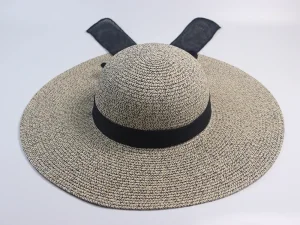
Featured Floppy & Beach Hat Range
Order-Ready Styles From Our Factory Line
Each silhouette below is produced in-house — from raw material sorting and weaving to blocking, finishing and final inspection — and can be customized in material, colorway, brim width, band and branding.
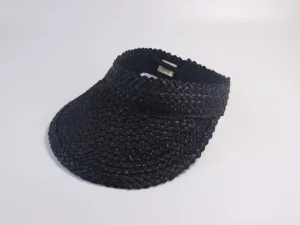
Wholesale Natural Wheat Straw Empty Top Hat With Sawtooth Manufacturer, Factory
View Product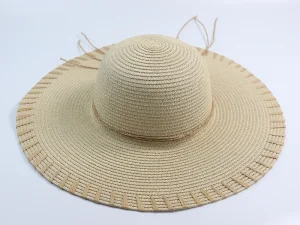
Wholesale China Suppliers Factory Women's Sun Straw Hat Wide Brim UPF 50 Foldable Beach Hat – Customizable Summer Fashion Accessories
View Product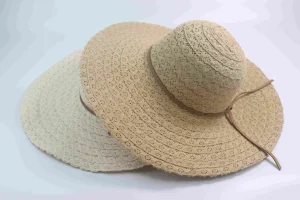
China Stylish Women's Straw Hats for Sun Protection & Fashion Manufacturers, Suppliers
View Product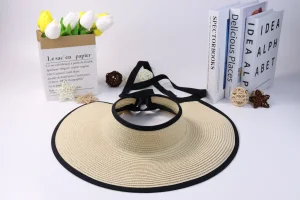
China Women Straw Visor, Foldable Summer Outdoor Sun Protection Hat Manufacturers, Factories
View Product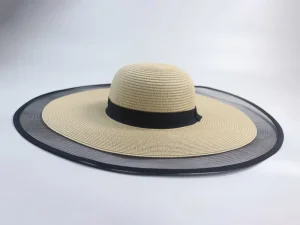
High-Quality Large Brim Temperament Organza Floppy Hats for Women Suppliers, Factory
View Product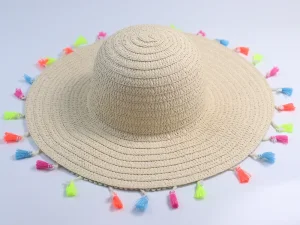
China Summer Hat & Bag for Kids – Cute Beach Handbag and Hat Set Manufacturer, Factory
View Product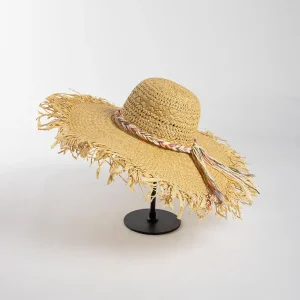
High-Quality Stylish Sun Protection Beach Hat for Women and Men Factories, Factory
View Product
Category Intelligence Brief
Why Floppy Beach Hats Became a Global Procurement Priority
The floppy beach hat sits at the intersection of three commercial forces: sun-protection regulation, seasonal resort retail, and the rising cost of ocean freight. Understanding how those forces interact is what separates a buyer who stocks shelves from a buyer who sells out seasons.
Floppy beach hats — unstructured wide-brim sun hats in raffia, paper straw or natural grass — have moved from a niche resort accessory into a core SKU for department stores, beachwear chains, gift shops, cruise operators and online-first brands. The commercial logic is simple: a floppy hat delivers a visible wide-brim sun protection story, photographs well for e-commerce, folds flat for low-cost shipping, and carries a retail margin that survives discounting.
From the factory side, this product family is also unusually forgiving to manufacture at scale. Because the brim is soft and unsupported rather than blocked and wired, a single weaving line can output multiple brim widths, colorways and band treatments with limited tooling changeover. That flexibility is precisely what lets importers test 20–40 styles per season at low minimum order quantities instead of committing to large single-SKU bets.
Lige Hats has manufactured straw hats, paper hats, straw bags and paper bags in Linyi, Shandong for more than 15 years. Our buyers are importers, wholesalers, brand owners and retailers in the United States, Canada, Australia, Mexico, Western Europe and Japan — markets where sun-protection labeling, packaging compliance and on-time delivery are non-negotiable. This brief summarizes what we have learned shipping to those markets, and what we recommend before you place a first floppy hat order.
UPF 50+ Demand
Sun-protection claims now drive purchase decisions in AU, US and EU resort retail.
Packable = Cheaper Freight
Flat-fold construction reduces carton volume and per-unit landed cost.
Low MOQ Test Cycles
50–100 pcs per design lets brands validate trends before scaling.
Resort & Cruise Channels
Gift shops and onboard retail need fast replenishment of proven shapes.
0+Years Manufacturing
0+Countries Served
0+Global Distributors
0hResponse & Action Time
Supply Chain Deep Dive
The China Factory Advantage in Floppy Hat Manufacturing
China's dominance in woven headwear is not a single advantage but a stack of them — material proximity, weaving labor depth, finishing capability and port logistics. Here is how each layer translates into your delivered unit cost.
Material Cluster Depth
Shandong and neighbouring provinces supply paper straw yarn, raffia imports, natural grass braid and cotton knit fabric within a short logistics radius. Buyers benefit from competitive material pricing, fast sample iteration and the ability to switch fiber without re-sourcing a supplier.
Specialized Weaving Labor
Hand-weaving, crochet and hand-block finishing are skills that take years to build. Our production manager brings 20 years of experience and our QC manager 15 years; team average tenure exceeds 5 years. That continuity is what keeps brim drape and crown height consistent across reorders.
One-Roof Production
Material sorting, weaving, blocking, banding, labeling and final inspection all run under one roof in Linyi. That removes the margin stacking of multi-vendor trading and shortens the feedback loop between sampling and mass production.
Direct Factory Pricing
No intermediary margin means the same brim width, band and packaging that a trading company quotes at a premium is achievable at factory-direct cost — which is exactly the headroom you need when your retail channel pushes for promotional price points.
Qingdao Port Access
Linyi sits within reach of Qingdao Port, one of China's major container gateways. Bulk orders move as FCL or LCL sea freight; samples and urgent replenishments ship by air or express courier. Port proximity reduces inland trucking cost and cut-off risk.
Export Documentation Maturity
With 60+ destination countries and more than 25 global distributors served, our export workflow — commercial invoice, packing list, HS classification, carton marks and shipping documents — is routine rather than experimental.
Localization & Compliance
Localization Support and Compliance Confidence
A hat that sells in Sydney may require different labeling, sizing and packaging to sell in Los Angeles or Hamburg. Below is how we structure localization and compliance support across the major destination markets.
| Market | Typical Buyer Priority | Localization We Support |
|---|---|---|
| United States | Retail-ready labeling, hang tags, UPC/barcode placement | Private label, woven labels, patches, hang tags, polybag and carton marking per buyer spec |
| Canada | Seasonal window discipline, bilingual packaging needs | English/French label layout, seasonal assortment planning and reorder scheduling |
| Australia & NZ | Strong sun-protection messaging, UPF expectations | UPF 50+ construction options, wide-brim styles, neck-cord and chin-strap variants |
| Western Europe | Material transparency, sustainable fiber preference | Raffia and natural grass programs, material specification sheets, eco-positioning copy support |
| Japan | Precise sizing, neat finishing, compact packaging | Tight tolerance control on brim and crown, refined trim finishing, compact carton configurations |
| Mexico & LATAM | Color vibrancy, price-point tiers, festival assortments | Bold dye-receptive raffia colorways, multi-tier price architecture, holiday and festival timing |
Label & Tag Localization
Woven labels, printed care labels, size tags, patch badges and hang tags are applied in-line, so the carton that leaves our floor is already shelf-ready for your market.
Packing Configuration
Flat-fold packing, nested packing or pre-shaped packing — each configuration changes carton volume, and therefore freight cost per unit. We quote the trade-off before production.
Inspection Discipline
Final inspection covers shape retention, stitch density, brim symmetry, size accuracy and trim attachment — the specific defects that trigger retail chargebacks.
Global Enterprise Procurement
What Global Buyers Actually Need From a Supplier
Across the markets we serve, enterprise buyers repeat the same six requirements. Meeting them is less about marketing and more about process design — a supplier either has the workflow or does not.
- Predictable lead time. Sampling, production and shipping windows must be committed in writing, because retail floor-set dates do not move.
- Low-risk first order. 50–100 pcs per design lets a buying team validate sell-through before committing to a container.
- Brandable output. Private label, woven labels, patches, hang tags and custom banding — not a stock product with a sticker added.
- Material documentation. Fiber type, care guidance and construction notes so buyers can write compliant product copy.
- Reorder consistency. The second order must match the first in brim width, crown height and colorway. This is where factory QC matters most.
- Responsive communication. Questions answered in the same working day, with a single accountable contact rather than a rotating inbox.
Our Commitment to Buyers
8-hour response and action on every request — product questions, sampling, order follow-up and after-sales service.
50–100 pcs starting quantity per design, so boutiques, emerging brands and importers can test new styles before scaling up.
OEM and ODM as core business — shape, material, color, size and hat band customization, plus in-house designers who can develop new styles from your mood board or reference samples.
One-roof production with 15+ years of export experience to the US, Canada, Australia, Mexico, Western Europe and Japan.
Market Outlook
Five Trends Reshaping the Floppy Beach Hat Industry
These are the shifts our product team is designing around for upcoming seasons — each one changes what buyers should be specifying now.
Sustainability as Spec
Natural raffia and grass straw are moving from marketing claim to line-sheet requirement in EU and AU retail.
UPF Verification
Wider brims and denser weaves are being specified explicitly, with UPF 50+ becoming a default expectation.
Online-First Photography
Product imagery drives conversion, so buyers prioritize shapes with a strong 360° silhouette and clean brim edge.
Packability Premium
Foldable construction commands higher perceived value and materially reduces freight cost per unit.
Small-Batch Assortments
Buyers are shifting from few large SKUs to many smaller ones, which favors low-MOQ factory partners.
Application Scenarios
Where Floppy Beach Hats Sell Fastest
The same hat performs differently across channels. These are the localized scenarios our buyers build assortments around.
Resort & Hotel Retail
Premium raffia finishes, tonal banding and discreet branded labels for poolside and boutique shop-in-shop displays.
Cruise Line Onboard Shops
Compact packing, fast replenishment and multi-colorway depth to match itineraries across warm-weather routes.
E-Commerce & DTC
Silhouette clarity for photography, packable construction for last-mile shipping, and easy size guidance.
Events, Weddings & Festivals
Boater-adjacent and floppy silhouettes with organza or ribbon finishes for coordinated group purchases.
Outdoor & Sports Retail
Visor and wide-brim hybrid styles with chin straps and UPF positioning for running, tennis and hiking.
Kids & Family Sets
Matched hat-and-bag sets and smaller crown sizing for family resort collections and gift channels.
Gift & Souvenir Shops
Attractive price tiers, regional color themes and packaging that supports tourist impulse purchase.
Seasonal Pop-Ups
Rapid replenishment of proven styles with short lead-time repeats as sell-through data comes in.
Material Selection Guide
Choosing the Right Fiber for Floppy Beach Hats
The fiber you choose determines hand-feel, shape retention, price point and how well a hat survives shipping. This is how our product team advises buyers before sampling.
Raffia
A natural palm-leaf fiber traditionally sourced from Madagascar. Natural resins make it soft, flexible and highly dye-receptive, so brims can be packed and recover their shape. Best for floppy hats, bucket hats, premium resort lines and straw bags.
Paper Straw
Twisted paper yarn woven or braided into a lightweight, uniform fabric. It delivers clean, consistent colors and a competitive unit cost for volume programs. Best for fedoras, Panama-style hats and promotional retail — add a "keep dry" care note.
Natural Grass Straw
Braided natural stems with inherent stiffness, producing crisp, structured silhouettes and an authentic artisanal look. Best for boater hats, cowboy hats and lifeguard hats where shelf shape retention matters most.
Fabric & Knit
Cotton, polyester and knitted constructions extend your assortment beyond summer into children's and cold-weather categories. Best for visors, winter hats, children's hats and toy hats — pair with straw lines for a year-round program.
OEM & ODM Workflow
A Transparent Six-Step Production Process
Buyers should know exactly where their order sits at any moment. This is the workflow we run on every floppy beach hat program.
Share Your Brief
Style reference, material preference, brim width, size range, colorway, branding and target quantity.
Design & Sampling
Our designers recommend materials and construction, then develop samples for your approval.
Approval & Sign-Off
Confirm samples, labels, packaging configuration and delivery schedule in writing.
Mass Production
Material sorting, weaving, blocking and finishing run in-house on a scheduled line.
Quality Inspection
Final inspection of shape, stitching, size accuracy, brim symmetry and trims.
Export Shipping
FCL or LCL sea freight via nearby Qingdao Port; samples and urgent orders by air or express.
Buyer FAQ
Floppy Beach Hat Questions Buyers Ask Most
Straight answers on MOQ, customization, shipping, materials and compliance. Need more detail? Our team replies within 8 hours.
What is the minimum order quantity for custom floppy beach hats?
Our starting quantity for small orders is 50 to 100 pieces per design, depending on material and craftsmanship. This lets boutiques, emerging brands and importers test new styles before scaling up.
Can you produce private-label floppy hats with our own logo?
Yes. OEM and ODM production is our core business. We customize shape, material, color, size and hat bands, and can add branding such as woven labels, patches and hang tags. Our designers can also develop new styles from your mood board or reference samples.
Where is your factory located and how are orders shipped?
We are located in Linyi City, Shandong Province, China, close to Qingdao Port. Bulk orders are typically exported by sea freight as FCL or LCL shipments, while samples and urgent small orders can be sent by air or express courier.
Which markets do you export hats to?
Most of our products are exported to the United States, Canada, Australia, Mexico, Western Europe and Japan. We serve customers in more than 60 countries and work with over 25 global distributors.
How quickly does your team respond to buyer requests?
We respond and take action within 8 hours, covering product questions, sampling, order follow-up and after-sales service.
What products do you manufacture besides floppy beach hats?
In addition to straw hats, we manufacture paper hats, straw bags, paper bags, children's straw hats, toy hats, lifeguard hats, sun visors, winter hats and other bags.
Which fiber should I specify for UPF 50+ sun protection claims?
Coverage depends on weave density and brim width more than fiber alone. For UPF-focused assortments we typically recommend tighter-woven natural grass straw or densely braided paper straw with a brim of at least 10 cm, and we can supply construction notes so your team can write accurate product copy.
How do you keep reorders consistent with the first shipment?
Approved samples are retained as the reference standard. Our QC manager, with 15 years of experience, checks brim width, crown height, stitch density and colorway against that standard at final inspection, which is what keeps later shipments matching the first.
Can you support sustainable or eco-positioned programs?
Yes. Raffia and natural grass straw are plant-derived fibers well suited to eco-positioned collections, and we can provide material specification sheets to support your product claims. As with any natural fiber, we recommend verifying claims against the specific regulations of your destination market.
Do you supply straw bags and accessories alongside hats?
Yes — straw bags, raffia crossbody bags, paper bags and matched hat-and-bag sets are all produced in-house, which lets buyers build a coordinated resort accessory assortment from a single supplier.
Factory Facts at a Glance
Linyi, Shandong
Near Qingdao Port
15+ Years
Straw hat manufacturing
50–100 pcs
Starting quantity per design
FCL & LCL
Sea, air and express options
More From the Collection
Related Hats, Bags & Seasonal Accessories
Complete your assortment with matched bags, visors and year-round headwear — all available under the same OEM/ODM terms.
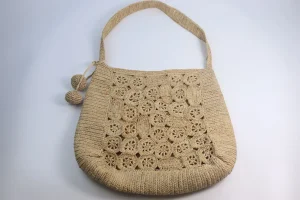
High-Quality Handmade Raffia Straw Bag, Lightweight Woven Crossbody Bag for Summer Holiday Suppliers, Factories
View Product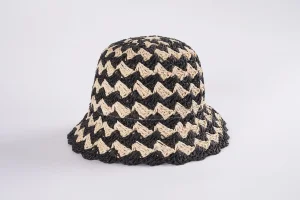
High-Quality Stylish UV Protection Sun Hats for Outdoor Adventures Manufacturers, Factories
View Product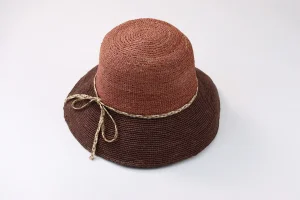
China Packable Raffia Bucket Hats, Foldable Handwoven Raffia Straw Bucket Hat, UPF50+ Sun Hat for Beach, Picnic, Photoshoot Supplier, Factories
View Product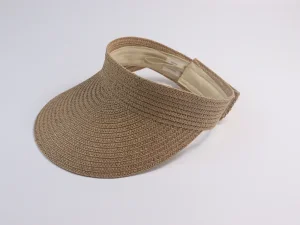
High-Quality China Factory Suppliers Wholesale Lightweight Unisex Straw Sun Visor Hat for Summer Sports – Customizable Designs Available Manufacturer, Supplier
View Product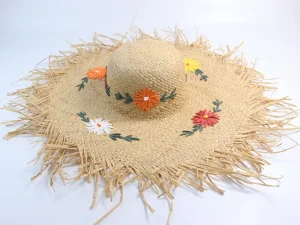
Wholesale Handmade Raffia Straw Lady Floppy Hat – Customizable Summer Hat from China Suppliers | Factory Direct Manufacturers, Suppliers
View Product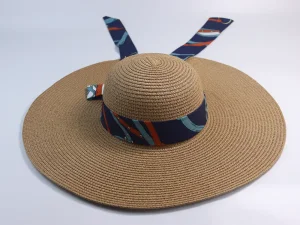
China Wholesale Fashion Female Summer Hats Big Brim Hat Sunshine Hat Manufacturer, Supplier
View Product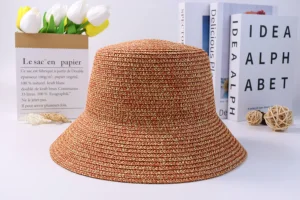
High-Quality Stylish Wide Brim Sun Hats for Women – UV Protection Manufacturers, Factory
View Product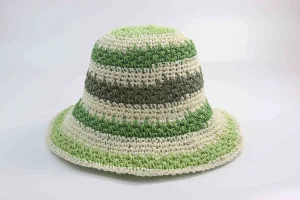
China Trendy Fashion Bucket Hat for Stylish Summer Looks Manufacturer, Suppliers
View ProductLet's Build Your Next Floppy Beach Hat Collection
Send us your style references, target quantity and destination market. Our team replies within 8 hours with material suggestions, a sampling plan and a production timeline.