
UV Protection Drives Demand
Skin-health messaging and UPF labeling have repositioned wide-brim straw hats from fashion to functional sun care.
Giant straw hats have moved from a novelty beach accessory to a mainstream, high-velocity retail category. The reasons are structural rather than seasonal: consumers treat large-brim sun protection as a wellness purchase, brands treat it as a high-margin accessory, and buyers treat it as a repeatable SKU with reliable container economics. Lige Hats — Shandong Lige Import & Export Co., Ltd. — has produced these programs in Linyi, Shandong, for more than 15 years, closer to Qingdao Port than most competing clusters.
For a sourcing manager, the category presents a real challenge: giant brims amplify every manufacturing weakness. A one-centimeter asymmetry in a small hat is invisible; in a 20 cm floppy brim, it becomes a return reason. A fiber that sags in a bucket hat becomes a shape-loss complaint in a large floppy hat. That is why the supply base has quietly consolidated around a smaller group of factories that can control weave density, brim stiffening and blocking tolerances end-to-end — and why factory selection, not unit price, has become the real decision.
Skin-health messaging and UPF labeling have repositioned wide-brim straw hats from fashion to functional sun care.
Reliable giant-brim programs require in-house weaving, blocking and QC, not trading-desk assembly.
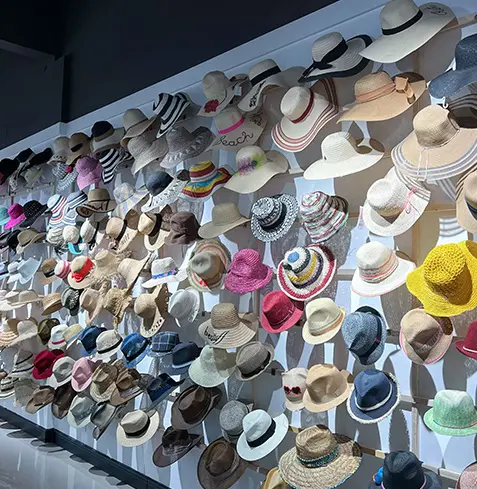
Resort, festival, rodeo, travel retail and e-commerce all buy the same shape families — lowering inventory risk.
Packable, stackable construction keeps big brims from destroying freight economics — a critical buyer metric.
When you evaluate a giant straw hat supplier, the numbers that matter are not marketing claims — they are the operational thresholds that determine whether your seasonal program ships on time.
“Factory 4.0” is often used loosely, but inside a specialized straw hat operation it has a concrete meaning. It means raw-material sorting is standardized rather than ad hoc; blocking and shaping tolerances are measured rather than eyeballed; and final inspection is documented per production batch rather than described in a brochure. At Lige Hats, that structure is enforced by a production manager with 20 years of experience, a QC manager with 15 years, and a team averaging 5+ years on the line.
This is also the model that protects buyers when a season shifts late. A vertically integrated factory can re-block, re-trim or re-band a run without outsourcing mid-season — where a trading desk usually cannot.
Style, material, size, color, branding and target quantity.
Recommended materials and development samples.
Samples, labels, packaging and delivery schedule.
Sorting, weaving, blocking and finishing in-house.
Final QC, then FCL or LCL via Qingdao Port.
The fiber you choose determines hand-feel, shape retention, price point and how well a hat survives shipping. This is how the product team advises buyers before sampling.
A natural palm-leaf fiber traditionally sourced from Madagascar. Its natural resins make it soft, flexible and highly dye-receptive.
Twisted paper yarn woven into a lightweight, uniform fabric. Clean, consistent colors and competitive unit cost.
Braided natural stems with inherent stiffness, producing crisp, structured silhouettes and an authentic artisanal look.
Cotton, polyester and knitted constructions extend your assortment beyond summer and into additional categories.
Export demand for giant straw hats is concentrated in the United States, Canada, Australia, Mexico, Western Europe and Japan — the same markets Lige has served for over a decade. What differs between those markets is not the shape, but the order of priorities in the buying specification.
Driven by resort retail, western wear and festival commerce. Buyers emphasize UPS-ready packaging, consistent labeling and short replenishment cycles.
Weighted toward premium resort and boutique channels. Material transparency, raffia sourcing stories and cleaner packaging gain measurable shelf value.
UV intensity makes broad-brim coverage the primary purchase driver. UPF claims and anti-glare messaging convert far better than pure fashion copy.
Finishing quality and size consistency carry outsized weight. Slight deviations in band alignment or sizing are far less forgiving here.
Where these markets converge is on the phrase “consistent reorderability” — a hat that looks the same in season three as it did in season one. That standard is what separates a genuine source factory from a broker quoting on spare capacity.
“Giant straw hat” is not one product. It is a shape family with distinct use-case clusters that need different material, brim stiffness and trim choices. Understanding the cluster first is the fastest way to get a good sample on the first attempt.
Soft, packable floppy brims in raffia. Prioritize foldability and recovery over stiffness.
Cowboy-style crowns with shapeable brims; visual impact matters more than foldability.
Branded, embroidered and logo-patched builds with premium hangtags and retail-ready polybagging.
Single or two-color branding, large-brim uniformity and aggressive volume pricing tiers.
Scaled-down giant brims with reinforced stitching, softer edges and stretch-fit sizing.
A curated selection of the shapes buyers reorder most — from floppy and bucket to boater, cowboy and visor programs.
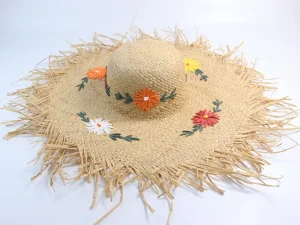
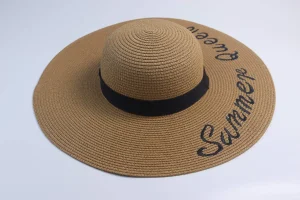
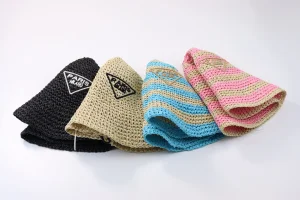
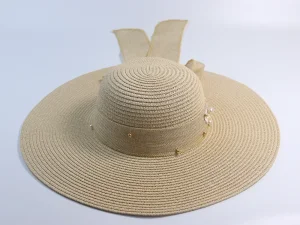
The commercial landscape around giant straw hats has shifted in four durable ways. None of them are cyclical, and each one changes how a sourcing team should structure a program.
Starting at 50–100 pcs per design is now the competitive baseline, letting buyers validate a giant-brim silhouette before a volume commitment.
Material documentation, consistent labeling and packaging specs now determine whether a supplier reaches the shortlist, not just the price sheet.
An 8-hour response standard has become a practical filter: buyers test it during first contact, then assume everything after will move at the same pace.
The practical implication is straightforward. A buyer should shortlist fewer suppliers, but demand more from each one: verifiable in-house process, documented inspection, and a working sample before a purchase order — the exact model Lige Hats has refined for over 15 years.
Straight answers on MOQ, customization, shipping and service — the questions buyers ask most often before sampling.
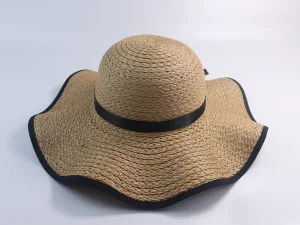
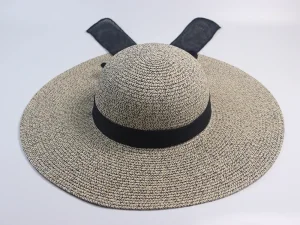
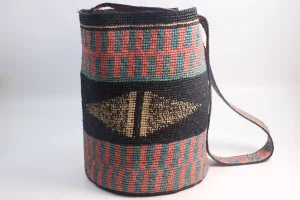
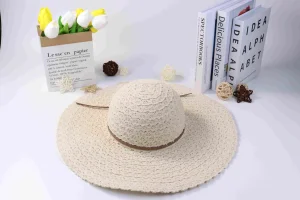
Beyond the featured lines, these styles round out a complete seasonal assortment — from embroidered wide brims to raffia straw bags.
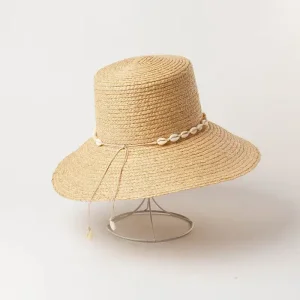
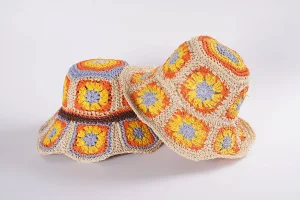
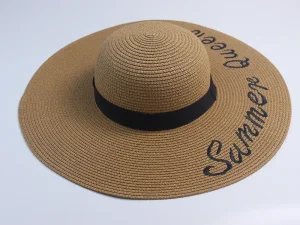
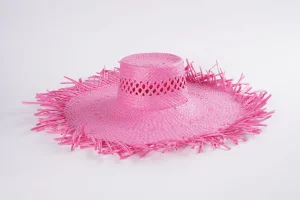
E-E-A-T in sourcing is not a credential list — it is the ability to show a buyer exactly how a claim is produced, tested and repeated. Here is the verification framework a sourcing manager can apply on a first call.
Ask for the specific stage where blocking and finishing occur. If the answer is “a partner workshop,” shape consistency is a variable, not a guarantee.
Request a dated sampling-to-export timeline. A supplier with real capacity answers in hours, not business days.
Material specification, size grading and inspection records are the three documents that separate a factory from a broker.
The single strongest signal: ask how many buyers reordered the same giant-brim SKU across two or more seasons.
Applied consistently, this framework turns supplier selection from a price comparison into a capacity comparison. For a category where a 1 cm brim deviation becomes a return, that shift is the whole point.