
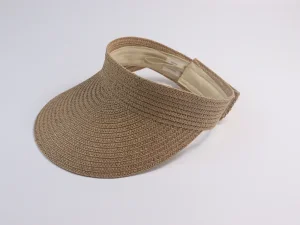
Signature Collection
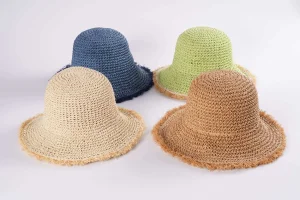
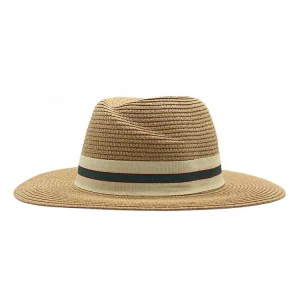
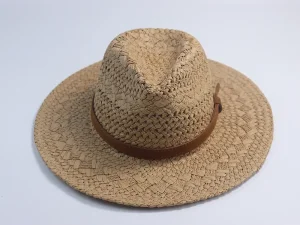
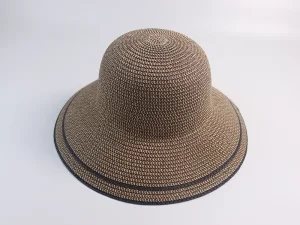
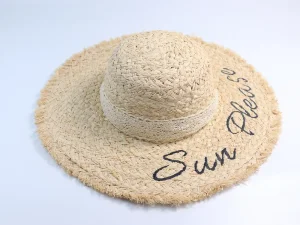
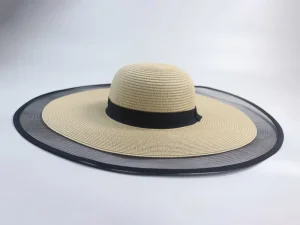
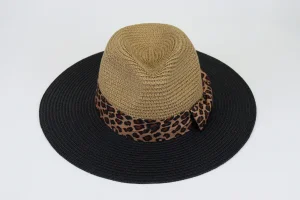
Straw Bags & Handbags Built to Reorder
Proven silhouettes across tote, bucket, crossbody and embroidered western families — each producible in raffia, paper straw or natural grass to match your brand price-point and packing requirements.
Who We Are
A Straw Bag & Handbag Factory With Verifiable Depth
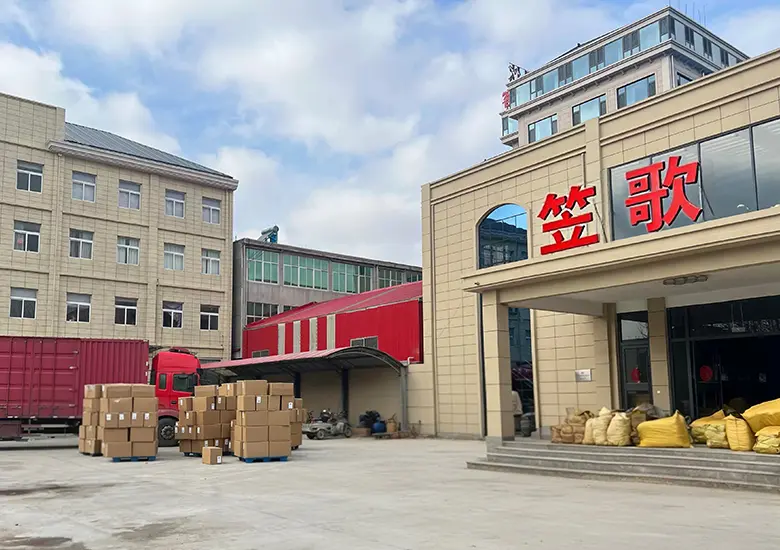
Shandong Lige Import & Export Co., Ltd. operates from Linyi City, Shandong Province — within easy reach of Qingdao Port, one of China's major container gateways. For more than 15 years the company has specialised in straw hats, paper hats, straw bags and paper bags, pairing traditional hand-weaving skills with modern blocking, finishing and quality-control expertise.
Our buyer base spans importers, wholesalers, private-label brand owners and retailers across the United States, Canada, Australia, Mexico, Western Europe and Japan. They rely on professional in-house designers, an efficient sales team, competitive factory pricing and dependable quality — with a stated goal of acting as a one-stop hat and bag supplier. For the straw bag and handbag line specifically, this translates into a single accountable partner from fibre selection to container loading, instead of a chain of trading intermediaries.
Experience signals underpinning our E-E-A-T posture: a production manager with 20 years of experience, a QC manager with 15 years, and a wider team averaging 5+ years. Those numbers matter to buyers because bag construction — handle anchoring, lining insertion, base reinforcement — is where most quality failures originate.
15+ years manufacturing
20-yr production manager
15-yr QC manager
60+ countries served
25+ global distributors
15+Years of Manufacturing
25+Global Distributors
60+Countries Served
8hResponse & Action Window
Buyer's Material Guide
Fibre Selection Determines Margin, Feel & Freight Survival
The fibre you choose controls hand-feel, shape retention, price point and how well a bag survives ocean freight. This is how our product team advises buyers before sampling begins.
Raffia
A natural palm-leaf fibre traditionally sourced from Madagascar. Natural resins keep it soft and flexible with strong dye receptivity, so bags hold bold colourways and recover shape after packing.
- Best for: tote bags, embroidered western styles, premium resort lines
- Buyer tip: supports genuine "packable" claims
Paper Straw
Twisted paper yarn woven or braided into a lightweight, uniform fabric. Delivers clean, consistent colour and a competitive unit cost for volume programmes and promotional retail.
- Best for: bucket bags, crossbody lines, seasonal retail
- Buyer tip: add "keep dry" care labels
Natural Grass Straw
Braided natural stems with inherent stiffness, producing crisp, structured silhouettes and an authentic artisanal look that supports premium positioning and higher AOV.
- Best for: structured handbags, market baskets, heritage styles
- Buyer tip: choose when shelf shape retention is critical
Fabric & Knit
Cotton, polyester and knitted constructions extend assortments beyond summer and into children's and cold-weather categories — useful for year-round single-supplier programmes.
- Best for: lined interiors, straps, trims, gift sets
- Buyer tip: pair with straw lines to consolidate POs
Localised Application Scenarios
Where Straw Bags Win Market by Market
Straw bags are not a single product — they are a platform. Demand signals, compliance expectations and aesthetic preferences differ sharply between regions, and production must adapt per market rather than ship one universal SKU.
North America — Resort & Coastal Retail
Florida, California and Hawaii resort corridors plus national park gift channels drive tote and crossbody demand from March to August. Buyers prioritise generous capacity, reinforced bases and neutral natural tones that photograph well for e-commerce. Reorders cluster around Memorial Day and Independence Day windows, so production must lock 8–10 weeks ahead.
Western Europe — Sustainable Fashion
France, Italy, Spain and Germany lead on material traceability and natural-fibre storytelling. Buyers here often request raffia over paper straw, favour hand-finished embroidery and expect fibre-origin documentation. Smaller drop quantities with higher unit values reward a low-MOQ model — 50 to 100 pieces per design fits neatly.
Australia & New Zealand — Sun Protection
High-UV markets treat straw bags as functional accessories. Wide-brim co-ordination, UPF-aware construction messaging and durable handle anchoring matter more than trend colour. Demand is counter-seasonal to the Northern Hemisphere, which lets buyers use the same factory line across two selling seasons.
Japan & South Korea — Precision & Finish
The most exacting finish standards in our export mix. Tolerance for weave irregularity is low; handle stitching, lining alignment and label placement are inspected closely. Buyers accept longer sampling cycles in exchange for specification fidelity, and consolidate straw bags with sun hats in a single shipment to control landed cost.
Latin America — Volume & Value
Mexico, Colombia and Brazil favour larger bag formats and bolder colour blocking at sharper price points. Paper straw and blended constructions dominate, with FCL shipments via Qingdao to Manzanillo or Santos. Carton optimisation and container cube efficiency directly determine competitiveness here.
Hospitality, Resorts & Promotional
Hotel amenity kits, destination weddings, cruise lines and branded corporate gifting represent a high-margin B2B channel. Custom embroidery, woven labels and hang tags convert a commodity bag into a branded keepsake — and repeat annual orders make this segment unusually stable.
Technology Roadmap & Future Outlook
From Hand-Weaving to Hybrid Digital Manufacturing
Straw bag production is at an inflection point: artisanal weaving skill remains the differentiator, but the surrounding process — sampling, costing, QC and traceability — is being digitised. Our roadmap runs in five overlapping phases.
PHASE 01
Digital Sampling
3D bag modelling and virtual colourway renders to compress sample cycles from weeks to days.
PHASE 02
Fibre Traceability
Batch-level material records supporting natural-fibre claims for European and North American buyers.
PHASE 03
Automated Pre-Finishing
Semi-automated base reinforcement and handle anchoring to stabilise tolerance across volume runs.
PHASE 04
Inline QC Sensing
Measurement and stitch-density checks captured at station level rather than only at final inspection.
PHASE 05
Low-Impact Finishing
Water-based dyes, reduced-waste cutting layouts and recyclable export packaging as default options.
Looking further ahead, three forces will shape the category. First, material substitution: as EU and North American packaging and textile rules tighten, buyers will request documented natural-fibre content and lower-impact finishing — pushing factories to formalise what was previously informal knowledge. Second, near-season replenishment: instead of one annual container, brands increasingly run two to four smaller drops per year, which rewards suppliers with low MOQ and fast sampling rather than only the lowest unit price. Third, design collaboration: ODM input at concept stage — fibre recommendation, structure engineering, cost-to-target modelling — will separate strategic suppliers from transactional ones.
Supply-Chain Resilience & Efficiency
Why a Shandong Cluster Outperforms a Trading Desk
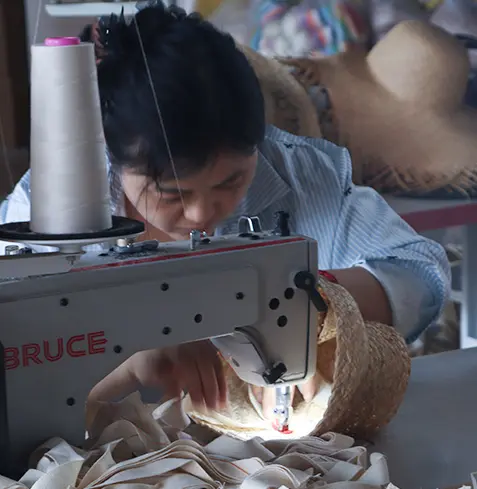
Linyi and its surrounding counties form one of China's densest concentrations of woven-fibre craft production. Raw material sorting, weaving, blocking, finishing and inspection sit within a short radius, which produces three durable advantages for overseas buyers.
Resilience through redundancy. When one weaving workshop is capacity-constrained during peak season, adjacent capacity can absorb overflow without changing specification or QC standards. A trading intermediary has no such lever.
Efficiency through proximity. Fibre sourcing, hand-weaving, blocking, trimming and packing are geographically compressed. Fewer hand-offs mean shorter lead times, lower damage risk and the ability to hold a firm production calendar through Q1–Q3.
Logistics through Qingdao Port. Bulk orders ship as FCL or LCL via a major container gateway, while samples and urgent small orders move by air or express courier. Consolidated hat-and-bag shipments reduce per-unit freight and simplify customs documentation.
In-house weaving & blocking
FCL & LCL export
Consolidated hat + bag POs
Stable peak-season capacity
Global Commercial Landscape
The Straw Bag Category in 2025 and Beyond
The commercial picture is shaped by three converging trends: a structural shift toward natural materials, the fragmentation of retail into smaller and more frequent drops, and rising documentation expectations from regulators and retailers alike.
Natural-Material Shift
Consumer preference has moved decisively toward visible natural fibres. Straw, raffia and paper constructions now appear in mainstream seasonal assortments rather than only resort niches — raising baseline order volumes for specialist factories.
Retail Fragmentation
Annual container programmes are giving way to multi-drop calendars. Buyers want 50–100 piece test runs, fast sampling and the ability to scale winners — a structural advantage for low-MOQ factory-direct suppliers.
Documentation Pressure
Retail compliance teams increasingly request material declarations alongside test reports. Factories that can produce fibre-origin records and finishing disclosures early will shorten buyer onboarding cycles considerably.
Competitively, the category splits into three tiers. Tier one is volume commodity supply from large integrated plants, competing almost entirely on unit price. Tier two — where Lige operates — is specification-flexible factory-direct manufacturing: low MOQ, genuine ODM design input, transparent QC and dependable delivery. Tier three is branded designer production, which values artisanal finish and story above cost. The durable opportunity sits in tier two, because it serves both emerging brands testing the market and established importers de-risking their supply base.
Localised Support & Compliance
Buyer Support That Travels With the Order
Exporting to 60+ countries means accommodating different documentation, labelling, packaging and communication expectations. Support is structured around the buyer's market, not the factory's convenience.
8-Hour Response
Product questions, sampling requests, order follow-up and after-sales issues are answered and actioned within 8 hours by a dedicated account contact.
Label & Packaging Compliance
Care labels, fibre content wording, country-of-origin marking, barcode and hang-tag placement configured per destination market requirement.
Documentation Support
Commercial invoice, packing list, bill of lading and certificate-of-origin coordination handled in-house, with consolidation for mixed hat-and-bag containers.
Quality Accountability
Final inspection covering shape, stitching, size, hardware and trims before export packing — with photographic records shared before shipment release.
For buyers managing multiple destination markets, the practical benefit is consolidation: one supplier, one production calendar, one documentation set, with market-specific labelling applied at packing stage. This materially reduces the administrative load on small and mid-sized importers who lack dedicated compliance staff.
OEM & ODM Workflow
Six Transparent Steps From Brief to Container
1. Share Your Brief
Style, fibre, dimensions, colourway, branding and target quantity — plus your destination market and price target.
2. Design & Sampling
Our designers recommend fibre and construction, then develop physical samples for approval.
3. Approval
Confirm samples, labels, packaging specification and delivery schedule before production release.
4. Production
Fibre sorting, weaving, blocking, handle and base reinforcement, lining and finishing in-house.
5. Quality Inspection
Final inspection of shape, stitch density, hardware, dimensions and trim placement.
6. Export Shipping
FCL or LCL sea freight via Qingdao Port, or air and express for samples and urgent orders.
Buyer FAQ
Questions Straw Bag Buyers Ask Us Most
Straight answers on MOQ, customisation, shipping and service. Need more detail? Our team replies within 8 hours.
QWhat is the minimum order quantity for custom straw bags?
Our starting quantity for small orders is 50 to 100 pieces per design, depending on the fibre and craftsmanship involved. This allows boutiques, emerging brands and importers to test new styles before scaling up — a model that suits multi-drop retail calendars better than a single annual container.
QCan you produce private-label bags with our own logo?
Yes. OEM and ODM production is our core business. We customise shape, fibre, colour, size, lining and handle configuration, and can add branding such as woven labels, patches, embroidery and hang tags. Our in-house designers can also develop new styles from your mood board or reference samples.
QWhere is your factory located and how are orders shipped?
We are located in Linyi City, Shandong Province, China, close to Qingdao Port. Bulk orders are typically exported by sea freight as FCL or LCL shipments, while samples and urgent small orders can be sent by air or express courier. Hat and bag orders can be consolidated into a single shipment.
QWhich markets do you export to?
Most of our products are exported to the United States, Canada, Australia, Mexico, Western Europe and Japan. We serve customers in more than 60 countries and work with over 25 global distributors.
QHow quickly does your team respond to buyer requests?
We respond and take action within 8 hours, covering product questions, sampling, order follow-up and after-sales service. Each account is assigned a dedicated contact so continuity is maintained through the production cycle.
QWhat products do you manufacture besides straw bags?
Alongside straw bags, we manufacture straw bags, paper bags, straw hats, paper hats, children's straw hats, toy hats, lifeguard hats, sun visors, winter hats and other bags — allowing single-supplier consolidation across categories.
Explore More Styles
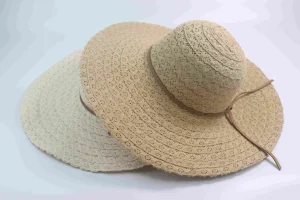
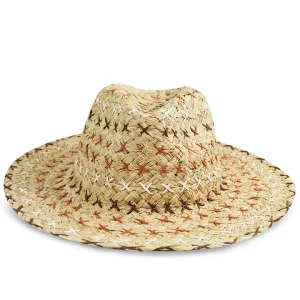
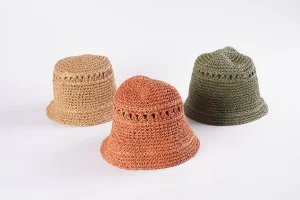
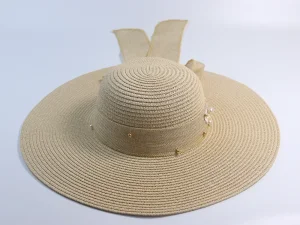
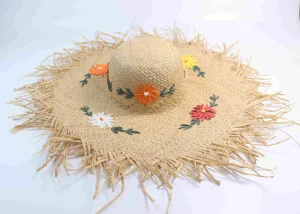
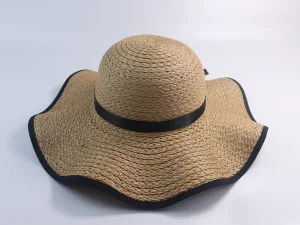
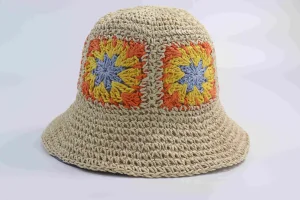
More Straw Hats & Bags From the Same Factory Line
Consolidate your accessory programme: the same production calendar, QC process and documentation set can cover hats, bags and seasonal accessories in a single shipment.