
The Leading Straw Bag Large Segment: A Sourcing Whitepaper
Large-format straw bags — oversized tote bags, market baskets, beach carryalls and multi-purpose woven hampers — have shifted from a niche seasonal accessory into a structurally significant retail category. For importers, brand owners, and private-label buyers, this evolution creates both an opportunity and a qualification problem: the number of factories claiming capacity has grown faster than the number with verifiable weaving consistency, dimensional control, and export documentation.
This whitepaper is written from the perspective of an experienced manufacturer. It is not a product catalog. Its purpose is to define what "leading" actually means in the large straw bag segment, and to give procurement teams a defensible framework for supplier selection.
Shandong Lige Import & Export Co., Ltd. is a 15+ year straw hat and straw bag manufacturer in Linyi City, Shandong Province, China, close to Qingdao Port. Our experience covers OEM and ODM production of Panama hats, fedora/trilby hats, cowboy hats, boater hats, bucket hats, floppy hats, visor hats, children's straw hats, toy hats, winter hats, straw bags, paper bags and other bags.
- Verified Manufacturing DepthIn-house weaving, blocking, finishing and final inspection — not a trading-desk pass-through.
- Experienced Human CapitalA 20-year production manager, a 15-year QC manager, and a team averaging 5+ years in headwear and bags.
- Export Track Record60+ countries served, 25+ global distributors, and shipping through Qingdao Port for FCL and LCL consolidation.
- 8-Hour Response DisciplineA measurable service SLA — response and action on every request, from sampling to after-sales.
Styles Buyers Reorder, Season After Season
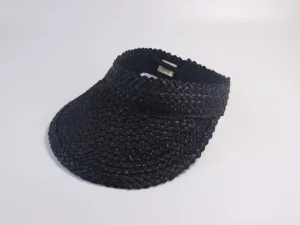
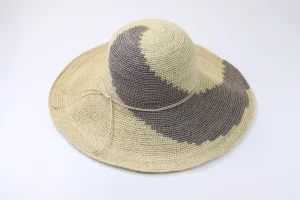
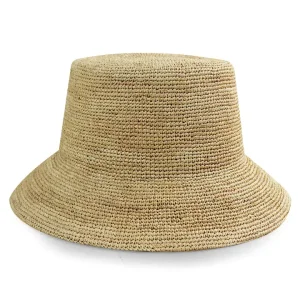
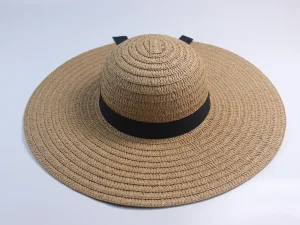
Each reference below can be produced in raffia, paper straw, natural grass straw, fabric or knit — with custom bands, trims, woven labels and hang tags to match your brand identity.
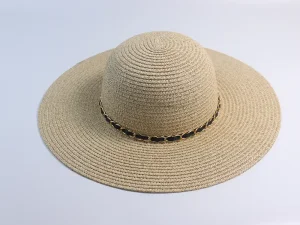
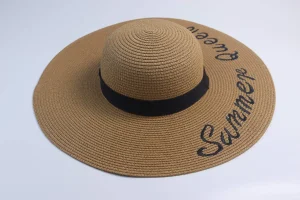
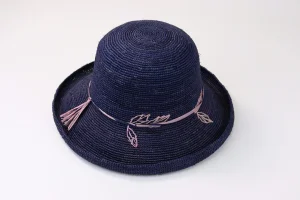
Why the Macro Environment Now Favors Woven Straw
Three structural forces are reshaping demand for large-format straw goods. Understanding them helps procurement teams time their programs and justify specification decisions to internal stakeholders.
Material Substitution Toward Natural Fibers
Retail buyers and their customers are actively shifting away from virgin synthetic carry goods toward natural, plant-derived fibers. Raffia, paper straw, wheat straw and grass braid meet this demand while remaining cost-competitive at volume — a rare combination of sustainability credibility and margin protection.
Resort & Experience Retail Expansion
Hotel gift shops, cruise lines, festival merchandisers and destination boutiques are building their own private-label accessory lines. Large straw totes and oversized carryalls sell exceptionally well in these environments because they combine functional volume with a strong, photogenic shelf presence.
Buyer Expectations of Factory Transparency
Modern importers demand traceable production — from raw fiber sourcing to final inspection. A factory that can show in-house weaving, documented quality control and clear production timelines has a decisive commercial advantage over intermediaries that cannot.
| Market Region | Dominant Demand Profile | Primary Product Focus | Buyer Priority |
|---|---|---|---|
| United States | Private-label resort and boutiques | Large floppy hats, oversized totes | Packability, brand-ready labeling |
| Canada | Seasonal retail and outdoor | Wide-brim sun hats, winter knits | Durability, dual-season assortment |
| Australia | High-UV protection mandates | UPF-focused hats, broad brims | Certified UV coverage |
| Western Europe | Fashion-forward and sustainable | Raffia bucket hats, straw bags | Material provenance, finish quality |
| Mexico | Tourism and resort gifting | Beach hats, visors, totes | Price-per-unit at volume |
| Japan | Premium craftsmanship appreciation | Boater, Panama, fine weaves | Weave consistency, refinement |
A Four-Layer Sourcing Framework for Large Straw Programs
Buyers often approach straw bag and hat sourcing as a single question — "can you make this style?" A more resilient approach treats sourcing as a four-layer system: material, construction, branding, and logistics. Each layer has distinct failure modes and distinct cost drivers.
When we onboard a new program, our product team works through these four layers with the buyer in sequence, because decisions made at the material layer constrain what is achievable downstream at the construction and branding layers.
- Layer 1 — Fiber SelectionRaffia, paper straw, natural grass straw, fabric or knit; each determines shape retention, cost ceiling and care labeling.
- Layer 2 — Construction & BlockingCrown shape, brim rigidity, stitch density, lining, and interior reinforcement for oversized formats that must hold form.
- Layer 3 — Branding & ComplianceWoven labels, patches, hang tags, care content, fiber composition statements and destination-market labeling rules.
- Layer 4 — Logistics & ConsolidationCarton optimization, FCL vs LCL decision, Qingdao Port routing, and realistic lead-time buffers.
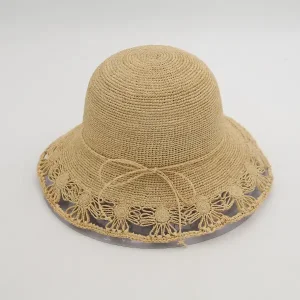
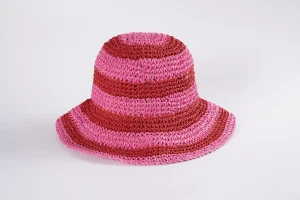
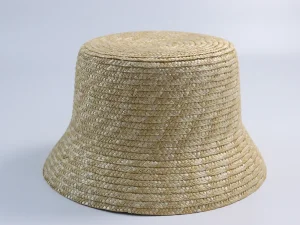
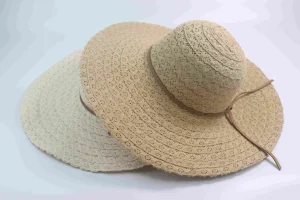
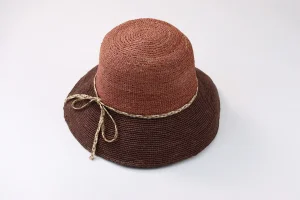
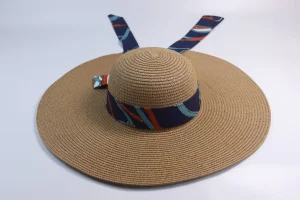
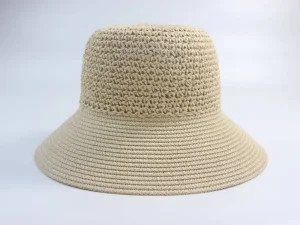
More Shapes Available for OEM & ODM Production
All styles are supported with sampling, material substitution, colorway development and full branding customization from 50-100 pieces per design.

Comparative Material Matrix: Choosing the Right Fiber
For large straw bags, fiber choice determines not only appearance but structural behavior under load. This matrix compares the four primary fiber families we work with.
Localized Support with Compliance Confidence
Exporters that treat compliance as an afterthought create avoidable risk for their buyers. Customs holds, labeling rejections and material disclosures are commercial events, not administrative trivia. Our approach builds compliance into the production brief rather than bolting it on at the shipping stage.
Because we ship predominantly through nearby Qingdao Port, we align documentation and labeling with the specific destination market — United States, Canada, Australia, Mexico, Western Europe and Japan — before production begins.
- Fiber Composition StatementsAccurate natural-fiber content declarations prepared at the specification stage.
- Care & Use LabelingInstruction content matched to moisture sensitivity of the chosen fiber.
- Pre-Shipment TimingDocumentation and final QC scheduled before container cut-off to avoid port delays.
- Destination-Market AwarenessLabeling and packaging conventions aligned to each major export region.
Where Large Straw Bags & Hats Actually Sell
Different selling environments place different demands on the same fiber. These are the scenarios where our buyers most frequently deploy large-format straw assortments.
Resort & Hotel Gift Shops
High-touch environments where product photographs well and carries a strong "destination memory" value. Large floppy hats and oversized totes dominate; packaging and hang-tag quality matter as much as weave.
Cruise Line Merchandising
Space-efficient but visible displays favor packable formats. Visors, foldable raffia buckets and collapsible totes reduce storage burden while presenting a wide assortment in narrow retail space.
Festival & Outdoor Events
Durability under active use is primary. Natural grass straw cowboy hats and structured brims survive repeated wear; color stability under sun exposure is a critical specification point.
Boutique Fashion Retail
Trend responsiveness and finish quality drive selection. Raffia bucket hats and old-money-style silhouettes with ribbon detailing perform best where the buyer curates tightly.
Kids & Family Categories
Children's straw hats and toy hats benefit from softer fibers, rounded brims and lighter construction — often paired with adult lines to create family-bundle retail sets.
Winter & Dual-Season Programs
Knitted beanies and winter hats let a buyer consolidate suppliers. Straw in summer, knit in winter — one factory contact, two seasonal programs, lower administrative overhead.
Promotional & Gifting
Branded straw bags and hats serve as high-perceived-value giveaways. Low MOQ from 50-100 pieces per design supports limited promotional runs without inventory risk.
Sustainable Concept Stores
Buyers in this segment scrutinize fiber provenance. Raffia's plant origin and paper straw's recyclability story are strong differentiators when documented accurately.
What This Whitepaper Adds That Standard Supplier Pages Don't
Most factory pages restate capabilities. This resource instead contributes grounded, buyer-relevant insight drawn from operating an actual production line.
Specification-to-Cost Reasoning
We explain why fiber choice constrains cost and shape outcomes, rather than only listing fiber names. This lets buyers make defensible trade-offs between price points and durability.
Realistic Lead-Time Framing
Sourcing guidance usually omits the gap between sample approval and container cut-off. We map the six-step workflow so timelines reflect actual production constraints.
Regional Demand Differentiation
We break down how demand profiles differ across the United States, Canada, Australia, Mexico, Western Europe and Japan — rather than presenting a single undifferentiated export market.
Manufacturing & Material Roadmap Toward 2030
Continuous improvement is not a slogan in woven-goods manufacturing — it is measured in weave consistency, blocking accuracy, packing efficiency and material traceability. This is our roadmap.
Standardize Weave Grades
Formalize internal fiber and weave grading so a buyer receives a repeatable specification across repeat orders.
Traceability Records
Document fiber sourcing and batch history to support buyer due-diligence and destination-market declarations.
Natural-Fiber Expansion
Extend raffia, paper straw and natural grass programs to cover a larger share of seasonal assortments worldwide.
Buyer Self-Service Tools
Digital specification sheets and sampling-plan templates so importers can brief faster and reduce revision cycles.
The Full Leading Straw Bag Large s Catalog Footprint
Every referenced product can be quoted, sampled and customized. Click through for technical detail and to request a sampling plan.
What Leading Straw Bag Large Programs Will Require Next
Looking forward, three requirements are becoming baseline expectations rather than differentiators. Suppliers who can address them today will be the nominated factories of the next decade; those who cannot will be displaced by buyers consolidating vendor lists.
First, documented traceability: buyers increasingly need to state fiber origin and processing history for their own compliance and marketing purposes. Second, specification reproducibility: a repeat order must match the original sample within a defined tolerance, which requires internal grading standards. Third, year-round assortment capability: buyers prefer fewer suppliers, so the ability to supply straw in summer and knit in winter under one account is commercially valuable.
Our roadmap is deliberately aligned to these three requirements, because we believe supplier selection in this segment will increasingly reward reliability over novelty.
Supplier Evaluation Checklist
- In-house weaving & blockingConfirms capacity and consistency, not just trading capability.
- Named QC ownershipAn identifiable quality manager with documented tenure.
- Labeling compliance processFiber and care content prepared before production, not after.
- Realistic MOQ & lead timeA stated starting quantity and a defensible production calendar.
- Documented service SLAA measurable response commitment for sampling and after-sales.
Leading Straw Bag Large s: Practical Questions Answered
These are the questions procurement teams most frequently raise when evaluating a large-format straw supplier. If your question is not here, our team responds within 8 hours.
What is the minimum order quantity for custom straw hats and large straw bags?
Can Lige produce private-label hats and bags with our own logo?
How does fiber choice affect durability of oversized straw bags?
Where is your factory located and how are orders shipped?
Which markets do you export hats and bags to?
How quickly does your team respond to buyer requests?
What products do you manufacture besides straw hats?
Do you handle labeling and care-content compliance for destination markets?
How do you keep repeat orders consistent with the original sample?
What does your OEM and ODM production workflow look like?
Build Your Next Large Straw Collection With a Factory You Can Audit
Send us your style references, target quantity and destination market. Our team replies within 8 hours with material suggestions, a sampling plan and a production timeline built around Qingdao Port shipping.