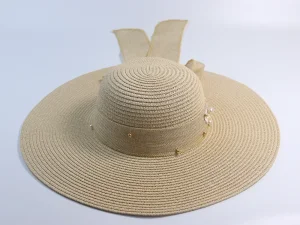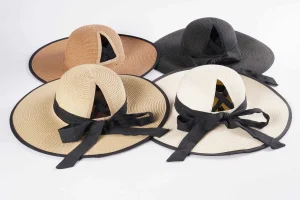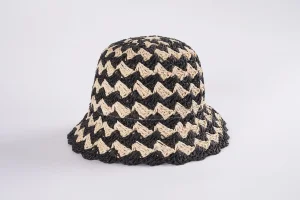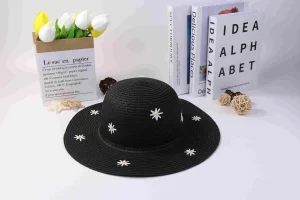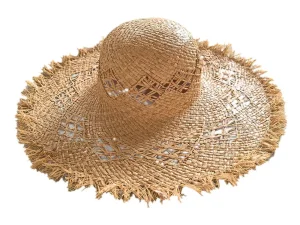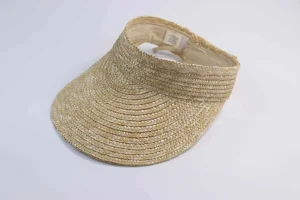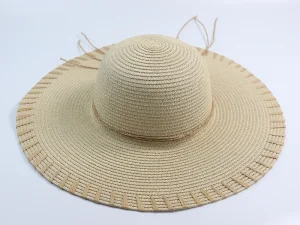
Featured Straw Bag & Sun Hat Line
Signature Women's Straw Bag & Matching Headwear
Eight best-selling SKUs trusted across North American, Australian and European retail seasons — each ready for OEM color, trim and label customization from 50–100 pieces per design.
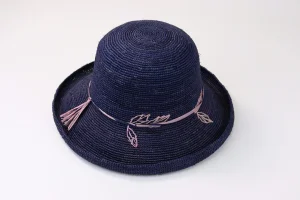
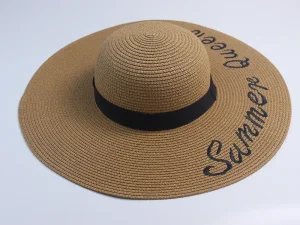
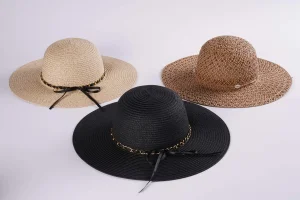
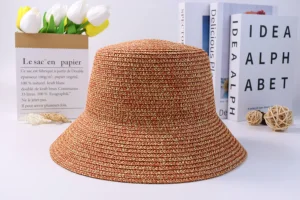
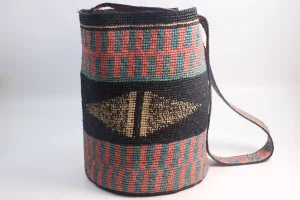
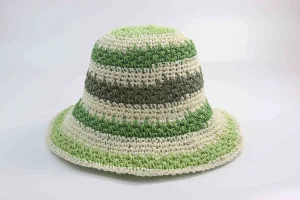
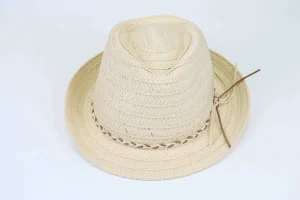
Factory-Direct · Linyi, Shandong, China
A Straw Bag Women Manufacturer Built Around Buyer Reality
For more than 15 years, Lige Hats — operated by Shandong Lige Import & Export Co., Ltd. — has produced straw bags, straw hats, paper hats and paper bags for importers, brand owners and retail buyers worldwide. Our Straw Bag Women line applies the same in-house design, sampling, blocking and finishing discipline that built our reputation in headwear, then translates it into raffia totes, shoulder bags and holiday handbags.
Because we sit minutes from Qingdao Port, one of China's major container gateways, our buyers gain a supply chain advantage that trading companies cannot match: material sourcing, weaving, quality inspection and export consolidation under one accountable roof.
- Starting quantity 50–100 pieces per design — test the market before scaling.
- Dedicated point of contact with 8-hour response and action on every request.
- Customers served across 60+ countries and 25+ global distributors.
- FCL and LCL sea freight through Qingdao, with air and courier for urgent sampling.
Why Buyers Reorder From Lige
Every claim below is verifiable through a sampling order — the lowest-risk way to audit a new supplier before committing to a seasonal program.
20 YearsProduction manager experience
15 YearsQC manager experience
5+ YearsAverage team tenure
60+ MarketsUS, EU, AU, MX, JP
50–100 pcsLow MOQ per design
8-Hour SLAReply and action
OEM & ODMIn-house design team
Direct FactoryNo middleman margin
8-Hour ResponseSampling to after-sales
Qingdao PortFCL & LCL gateway
Buyer's Material & Specification Guide
Straw Bag Women: Fiber Selection Drives Margin, Feel & Returns
The fiber you choose determines hand-feel, shape retention, landed cost and how well a bag survives e-commerce shipping. This is how our product team advises buyers before sampling — the same logic that governs our straw hat program.
Raffia
A natural palm-leaf fiber traditionally sourced from Madagascar. Natural resins make it soft, flexible and highly dye-receptive — brims and bodies pack flat and recover shape.
- Best for
- Totes, shoulder bags, floppy hats, premium resort lines
- Buyer tip
- Ideal for "packable" claims and bold, saturated colorways.
Paper Straw
Twisted paper yarn woven or braided into a lightweight, uniform fabric. Clean, consistent colors and a competitive unit cost for volume programs.
- Best for
- Fedoras, Panama styles, seasonal promotional retail
- Buyer tip
- Add "keep dry" care labels — paper straw softens when soaked.
Natural Grass Straw
Braided natural stems with inherent stiffness, producing crisp, structured silhouettes and an authentic artisanal look that supports premium price points.
- Best for
- Boater hats, cowboy hats, structured baskets
- Buyer tip
- Choose it when shelf shape retention matters most.
Fabric & Knit
Cotton, polyester and knitted constructions extend your assortment beyond summer into children's and cold-weather categories — one supplier, year-round.
- Best for
- Visors, winter hats, children's hats, toy hats
- Buyer tip
- Pair with straw lines to consolidate your vendor base.
Global Enterprise Procurement Demand
What Global Buyers Actually Require From a Straw Bag Women Factory
Enterprise procurement teams in North America, the EU, Australia, Mexico and Japan evaluate straw bag suppliers against a consistent set of filters. Understanding each filter shortens your qualification cycle and prevents costly re-sourcing mid-season.
Compliance-Ready Documentation
Buyers expect material declarations, dye and finish disclosures, and packaging specifications aligned with destination-market rules — not generic certificates that name no SKU.
Repeatable Spec Sheets
Consistent dimensions, weave density, handle drop and lining weight across reorders. A great first sample that cannot be reproduced is a liability — not a selling point.
Landing Cost Predictability
Transparent FOB pricing, packing density that reduces CBM per unit, and freight planning through Qingdao Port so landed cost survives currency and rate volatility.
Branding Flexibility at Low Volume
Woven labels, leather patches, hang tags, embroidery and custom trims — available from the 50–100 piece tier so emerging brands can launch without overstock risk.
Responsive Sampling Cycles
Buyers now expect sampling feedback in days, not weeks. Our 8-hour response discipline keeps development timelines inside seasonal calendar windows.
Consolidated Sourcing
Bags, hats, paper bags and accessories from one factory reduces audit burden, container consolidation cost and vendor management overhead.
15+Years Manufacturing
25+Global Distributors
60+Countries Served
8hResponse SLA
China Factory 4.0
Supply Chain Resilience & Efficiency: The Factory 4.0 Advantage
The term "Factory 4.0" is often used loosely. In the straw bag and headwear category, it translates into practical capabilities that buyers can feel in lead times, defect rates and container fill. For a women's straw bag program, three structural advantages matter most.
- Vertical integration: raw material sorting, weaving, blocking, finishing and final inspection happen under one roof — no cross-vendor blame when a weave or lining is wrong.
- In-house sample room: new shapes and colorways are developed against your mood board or reference sample, shortening the feedback loop between design intent and production reality.
- Export-proximate logistics: located in Linyi, Shandong, close to Qingdao Port, enabling FCL or LCL consolidation with predictable sailing schedules.
Because a large share of our volume goes to the United States, Canada, Australia, Mexico, Western Europe and Japan, our production planning already accounts for the freight and retail calendars those markets demand — Chinese New Year cut-offs, Golden Week, peak-season booking windows and end-of-season markdown timing.
Efficiency, Measured
One RoofMaterial → weaving → QC
Qingdao PortFCL & LCL export gateway
Pack-Flat DesignLower CBM per unit
Sample RoomFast shape & color dev
60+ MarketsCalendar-aware planning
8-Hour SLALive order follow-up
For buyers, resilience is not abstract: it is the difference between a container that ships on schedule and one that stalls on a mid-chain quality dispute. Vertical control removes that risk.
Technical Roadmap & Future Outlook
Where Straw Bag Women Manufacturing Is Heading
Buyer expectations are shifting from "good enough and cheap" to "traceable, durable and design-led." Our roadmap reflects that shift across four horizons.
Vertical Craft & Low MOQ
In-house weaving, blocking and finishing with 50–100 piece starting quantities so emerging brands can launch without inventory risk.
Enhanced Traceability
Batch-level material records, dye and finish documentation aligned to destination-market requirements, reviewable at sampling stage.
Digital Design Handoff
Structured spec sheets and digital reference file access to shorten the gap between a brand's concept and a factory-ready tech pack.
Circular & Lower-Impact Fiber
Continued evaluation of natural, recyclable and lower-impact fiber options that preserve the hand-feel and packability buyers value.
Macro Industry Solutions
Integrated Industry-Level Solutions for Straw Bag Programs
Single-style purchasing is rarely the right answer at scale. The following solution patterns reflect how our most stable long-term accounts structure their straw bag and headwear programs.
Seasonal Collection Architecture
Structure a season as hero styles, volume drivers and entry price-points across one consistent material family, so your assortment reads as a collection rather than unrelated SKUs.
Cross-Category Consolidation
Combine straw bags, sun hats, paper bags and children's hats in one purchase order to reduce audit overhead, container consolidation cost and vendor management time.
Private-Label Program Design
From woven labels and patches to custom bands, trims and packaging, our team maps your brand guidelines onto production-ready specifications before sampling begins.
Multi-Market Adaptation
Different climates and retail calendars in the US, EU, Australia, Mexico and Japan call for adjusted materials, sizing and packaging — planned from the first brief, not retrofitted late.
Packability & E-Commerce Ready
Unstructured, pack-flat constructions reduce dimensional weight and shipping damage — a decisive advantage for direct-to-consumer and marketplace sellers.
Scaled Reorder Management
Once a style proves itself, our team scales volume while holding weave, size and trim specifications stable across reorders — the essence of a dependable seasonal supplier.
Localization Support & Compliance Assurance
Support That Matches Your Market, Not Ours
Buyers rarely fail because a factory cannot weave. They fail because a supplier cannot adapt to the destination market's labeling, packaging, documentation or freight reality. Our support model is built around that gap.
- Market-specific labeling: fiber content wording, care instructions and origin marking prepared for your destination market's retail requirements.
- Packaging localization: polybag, hangtag and carton specifications adapted to your retailer's receiving standards and sustainability guidelines.
- Documentation support: commercial invoice, packing list and origin documentation prepared consistently for customs clearance.
- Freight planning: FCL and LCL options through Qingdao Port, with air and express courier for samples and urgent small orders.
- Language and time-zone coverage: English-language communication with a dedicated contact and 8-hour response commitment.
Compliance, Practically Understood
Compliance in natural-fiber accessories is primarily about transparency and consistency — knowing what a bag is made of, how it was finished, and being able to prove it on reorder. That means:
- Recorded material sourcing for raffia, paper straw and natural grass.
- Dye and finish records retained at batch level, not just style level.
- Acceptance criteria for shape, stitching, sizing and trims at final inspection.
- Consistent labeling across the full production run — no drift between first and last carton.
If your compliance team needs a specific document set before qualifying a new supplier, raise it during the sampling stage. Our team responds within 8 hours and can align the paperwork with your sampling plan rather than after purchase-order confirmation.
OEM & ODM Workflow
A Transparent Six-Step Process From Brief to Container
Every stage below exists to eliminate the most common points of failure between a buyer's concept and a delivered straw bag order.
Share Your Brief
Style, material, size, color, branding and target quantity.
Design & Sampling
Our team recommends materials and develops samples.
Approval
Confirm samples, labels, packaging and delivery schedule.
Production
Material sorting, weaving, blocking and finishing in-house.
Quality Inspection
Final inspection of shape, stitching, size and trims.
Export Shipping
FCL or LCL sea freight via nearby Qingdao Port.
Buyer FAQ
Questions Straw Bag Buyers Ask Most
Straight answers on MOQ, customization, shipping and service. Need more detail? Our team replies within 8 hours.
What is the minimum order quantity for custom straw bags and hats?
Our starting quantity for small orders is 50 to 100 pieces per design, depending on material and craftsmanship. This lets boutiques, emerging brands and importers test new styles before scaling up.
Can you produce private-label straw bags with our own logo?
Yes. OEM and ODM production is our core business. We customize shape, material, color, size and trim, and can add branding such as woven labels, patches and hang tags. Our in-house designers can also develop new styles from your mood board or reference samples.
Where is your factory and how do you ship orders?
We are located in Linyi City, Shandong Province, China, close to Qingdao Port. Bulk orders are typically shipped by sea as FCL or LCL, while samples and urgent small orders can go by air or express courier.
Which markets do you export to?
Most of our products go to the United States, Canada, Australia, Mexico, Western Europe and Japan. We serve customers in more than 60 countries and work with over 25 global distributors.
How fast will your team respond to my request?
We respond and take action within 8 hours — covering product questions, sampling, order follow-up and after-sales service.
What do you manufacture besides straw bags?
Alongside straw bags, we manufacture straw hats, paper hats, paper bags, children's straw hats, toy hats, lifeguard hats, sun visors, winter hats and other bags — allowing buyers to consolidate seasonal accessories with one supplier.
Start Your Program
Let's Build Your Next Straw Bag Women Collection
Send us your style references, target quantity and destination market. Our team replies within 8 hours with material suggestions, a sampling plan and a production timeline — no obligation.
More Best-Sellers
Additional Straw Bags & Sun Hats for Wholesale Programs
From structured cloche hats to lightweight kids' sun protection — each style is available for OEM color, trim and label customization with the same 50–100 piece starting quantity.