
Woven Headwear & Beach Accessories Buyers Reorder
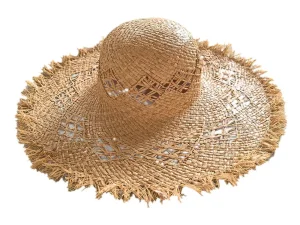
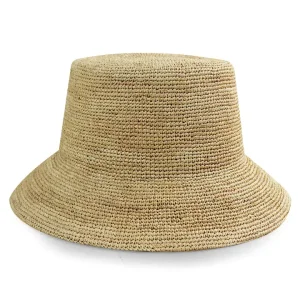
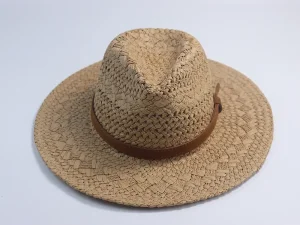
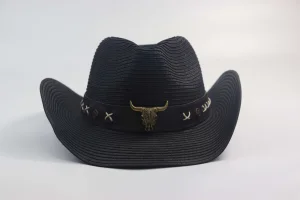
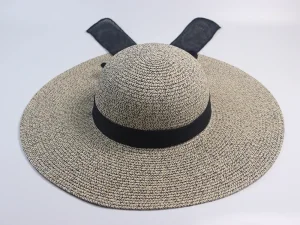
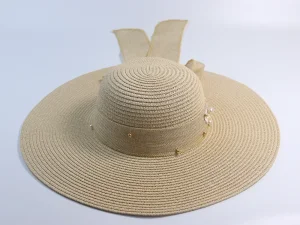
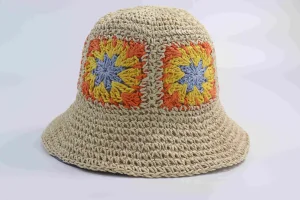
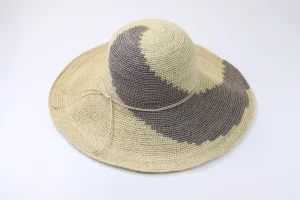
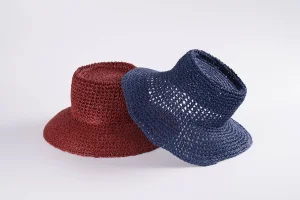
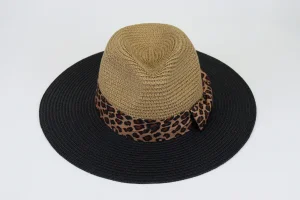
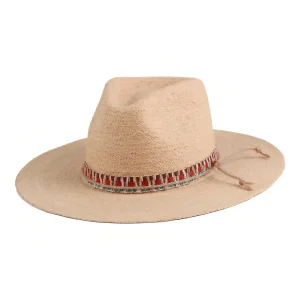
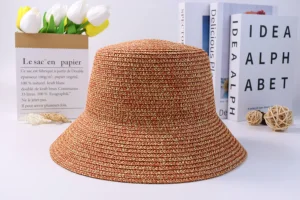
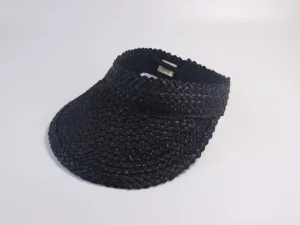
Straw beach bags and beach hats are frequently sourced as a coordinated summer capsule. The factory item set below shows the headwear platforms our weaving lines already run — each silhouette shares raffia sorting, blocking and finishing capacity with our bag construction cells.
What "High-Quality" Actually Means in a Straw Beach Bag Factory
In global sourcing, the phrase high-quality straw beach bag factory is rarely about marketing adjectives. It is a specification: consistent fiber grading, predictable weave density, calibrated handle attachment strength, controlled moisture content at packing, and documented inspection at the carton level.
Buyers searching for a straw beach bag factory are usually not searching for a website — they are searching for de-risked production capacity. The intent behind the query is almost always commercial and comparative: can this supplier hold tolerance across a repeat order, and can they carry the compliance paperwork my retail channel requires?
This report consolidates the operational knowledge of Shandong Lige Import & Export Co., Ltd. (Lige Hats), based in Linyi City, Shandong Province, China — a woven-accessory manufacturer with more than 15 years of experience producing straw hats, paper hats, straw bags and paper bags for importers, wholesalers and brand owners across the United States, Canada, Australia, Mexico, Western Europe and Japan.
- Fiber-first quality model — raffia, paper straw, natural grass and knitted constructions each have distinct tolerances.
- Low MOQ launch model — 50–100 pieces per design lets brands test silhouettes before committing volume.
- Integrated hat + bag programs — one supplier, one quality standard, one shipment schedule.
- Near Qingdao Port — FCL and LCL export from one of China's major container gateways.
Years of Manufacturing
Global Distributors
Countries Served
Response & Action Window
Who Buys Straw Beach Bags at Enterprise Scale — and Why
Large-scale straw beach bag demand is not a single market; it is five distinct buying behaviors, each with its own MOQ logic, compliance burden and calendar. Understanding which buyer you are determines the factory profile you should qualify.
Seasonal Program Buyers
Mass and mid-tier retailers buy woven beach bags as a defined summer program: fixed unit counts, fixed delivery windows, and mandatory vendor manuals covering labeling, barcode placement and packing configuration. Priority on the factory side is repeatable tolerance and the ability to hold a colorway across a multi-SKU order.
- Priority
- Consistency + on-time delivery
- Risk
- Color drift between production lots
Brand & Capsule Buyers
Independent and emerging brands order smaller quantities per style but demand a higher design input: custom handles, lining fabrics, interior pockets, embroidered logos, branded hang tags and custom packaging. Their qualifying question is rarely price per unit — it is can the factory sample quickly without losing shape fidelity?
- Priority
- Customization depth + sampling speed
- Risk
- Sample-production mismatch
Hotel, Cruise & Spa Buyers
Hospitality procurement buys woven beach bags as an amenity or retail-corner product. Orders tend to be moderate in volume but highly repetitive across seasons, with strong preference for neutral colorways, embroidery or screen-printed property logos, and packing that survives multi-warehouse distribution.
- Priority
- Replenishment stability
- Risk
- Handle failure under guest load
Wholesale Channel Buyers
Importers and distributors buy across multiple categories and need one supplier who can consolidate hats, bags, paper bags and accessory lines into a single container. Their decision driver is assortment breadth plus documentation completeness — commercial invoice accuracy, packing list structure and HS code consistency.
- Priority
- Consolidation + documentation
- Risk
- Mixed-SKU quality variance
Gifting & Event Buyers
Promotional distributors and corporate gifting programs order against a hard deadline. They require compressed lead times, logo application methods that survive transit, and often a polybag-plus-insert packaging standard. Volume is moderate and repeatability is tied to a calendar event rather than a retail season.
- Priority
- Lead-time certainty
- Risk
- Branding application quality
Online-First Buyers
Direct-to-consumer sellers optimize for dimensional weight and returns rate. Their requirements center on packability, crush resistance, and honest product photography support — a bag that arrives folded flat and recovers its form without creasing is worth more than a marginally lower FOB.
- Priority
- Packability + returns reduction
- Risk
- Deformation in parcel transit
A Structural Solution Set for Woven Bag Programs
Beyond individual orders, enterprise buyers increasingly request a structural solution: one manufacturing partner capable of aligning material sourcing, weave construction, hardware attachment, branding and export logistics. This is where factory selection becomes a supply-chain design decision.
Single-Fiber-Lot Sourcing
Raffia, paper straw and natural grass behave differently under humidity and compression. Consolidating a program onto a single graded fiber lot per colorway removes the most common cause of batch-to-batch visual drift — a problem that surfaces only after the second or third reorder, when the buyer has already scaled distribution.
Lige Hats sorts raw material on arrival and assigns lots per production run, so a reorder references the same fiber grade rather than a supplier's general stock.
Hat + Bag Capsule Manufacturing
Summer retail programs almost always pair a woven headwear silhouette with a matching bag. Producing both under one roof means shared colorways, shared trim inventory and a single inspection standard — and it eliminates the color mismatch that occurs when a hat factory and a bag factory interpret the same Pantone reference independently.
Our range spans hot sales, Panama hats, fedora and trilby hats, cowboy hats, boater hats, bucket hats, floppy hats, visor hats, children's straw hats, toy hats, winter hats, straw bags, other bags and lifeguard hats.
Inspection at the Failure Point
Most woven bag defects do not appear at final carton inspection — they originate at handle attachment, base gusset stitching and rim finishing. A defensible QC architecture therefore inspects at those three failure points during production, then performs a final AQL check on shape, stitching, size and trims before export packing.
Our QC function is led by a manager with 15 years of experience, supported by a production manager with 20 years in woven accessory manufacturing.
MOQ as a Risk Instrument
Low MOQ is not a discount mechanism — it is risk allocation. A starting quantity of 50–100 pieces per design allows a brand to validate sell-through, photography performance and returns rate on a new silhouette before committing to container-scale volume. The factory absorbs the setup cost; the buyer avoids dead inventory.
This structure is why boutiques, emerging brands and importers can test new styles before scaling up rather than committing capital to unvalidated designs.
Where Woven Bag Manufacturing Is Heading
The next competitive advantage in woven accessories will not come from cheaper labor — it will come from fiber traceability, moisture control engineering, and digital product data that plugs directly into a buyer's PIM system.
| Horizon | Technical Direction | Buyer Impact | Readiness |
|---|---|---|---|
| Near term | Standardized fiber grading sheets issued per production lot | Removes ambiguity in reorder color matching | Active |
| Near term | Moisture content verification before export packing | Reduces mold and odor claims in humid destinations | Active |
| Mid term | Digital sample library with 360° imagery and dimension data | Faster buyer approval cycles without physical sampling | In development |
| Mid term | Reinforced handle attachment specification tiers (light / medium / heavy load) | Explicit load ratings for hospitality and retail channels | In development |
| Long term | Fiber-origin documentation aligned to emerging sustainability disclosure rules | Protects buyers against green-claim audit exposure | Planning |
| Long term | Packaging optimization modeled on dimensional weight for DTC sellers | Lower parcel cost and reduced transit deformation | Planning |
For buyers, the practical implication is that factory selection should weigh documentation maturity as heavily as unit price. A supplier who can produce a consistent fiber grading sheet and a moisture record is materially easier to onboard into a regulated retail channel than one who cannot — regardless of FOB difference.
Fiber Choice Determines Price Point, Packability and Claim Risk
Four material families dominate woven beach bag and headwear production. Each carries a different cost structure, care requirement and marketing claim ceiling — and choosing the wrong one for a channel is a common, expensive sourcing error.
Raffia
A natural palm-leaf fiber traditionally sourced from Madagascar. Its natural resins make it soft, flexible and highly dye-receptive, so brims and bag bodies can be packed and recover their shape after transit.
- Best for
- Floppy hats, bucket hats, premium resort bags, beach totes
- Buyer tip
- Strongest basis for "packable" and saturated-color claims
Paper Straw
Twisted paper yarn woven or braided into a lightweight, uniform fabric. It delivers clean, consistent colors and a competitive unit cost for volume programs.
- Best for
- Fedoras, Panama-style hats, promotional and volume retail
- Buyer tip
- Specify "keep dry" care labeling — paper straw softens when soaked
Natural Grass Straw
Braided natural stems with inherent stiffness, producing crisp, structured silhouettes and an authentic artisanal appearance that supports premium price positioning.
- Best for
- Boater hats, cowboy hats, lifeguard hats, structured totes
- Buyer tip
- Choose when shelf shape retention matters more than softness
Fabric & Knit
Cotton, polyester and knitted constructions extend an assortment beyond summer and into children's and cold-weather categories — useful for year-round single-supplier programs.
- Best for
- Visors, winter hats, children's hats, toy hats, linings
- Buyer tip
- Pair with straw lines for a twelve-month supply relationship
Regional Buying Patterns That Shape Factory Allocation
The same woven bag specification is rarely optimal across all destination markets. Seasonality, retail format, labeling regulation and climate all shift what "high-quality" needs to mean for a given buyer.
United States & Canada
Compressed spring-to-summer windows, strong DTC and department-channel split, high sensitivity to fiber-content labeling accuracy and prop 65-style disclosure.
Australia & New Zealand
Counter-seasonal to the northern hemisphere, intense UV protection demand, strong preference for genuine raffia and structured brims with real coverage.
Western Europe
Fragmented specialist retail, elevated material expectations, growing documentation requests tied to sustainability claims and packaging reduction.
Mexico & Latin America
Extended selling seasons, price-band sensitivity, strong demand for bright colorways and volume-appropriate paper straw constructions.
Japan
Extremely tight tolerance on finish, stitching symmetry and packaging presentation; lower unit volumes but very high repeat-order reliability.
Emerging Online Markets
Parcel-first economics, photorealism demands, and a preference for styles that fold flat and recover quickly — with lower per-unit tolerance for creasing.
Compliance Is a Sourcing Specification, Not an Afterthought
For enterprise buyers, the compliance surface of a woven bag extends well beyond the product itself: labeling language, fiber content declaration, care instructions, packaging materials, and — increasingly — fiber-origin claims.
- Labeling localisation — multilingual fiber content, care and origin labeling configured per destination market.
- Branding application control — woven labels, patches, hang tags and embroidery applied to a documented standard.
- Export documentation alignment — commercial invoice, packing list and HS classification consistency across consolidated shipments.
- Packaging configuration — polybag, insert card, hangtag placement and carton marking per buyer manual.
- Logistics gateway — Linyi-based production with access to Qingdao Port for FCL and LCL sea freight, plus air and express options for samples and urgent small orders.
Our team responds and takes action within 8 hours across product questions, sampling, order follow-up and after-sales service — because compliance questions rarely wait for a business-day cycle.
| Compliance Area | Buyer Concern | Factory Control |
|---|---|---|
| Fiber content | Accurate material % declaration | Lot grading sheet per run |
| Care labeling | Seasonal durability claims | Material-appropriate care text |
| Branding | Logo fidelity and placement | Approved artwork standard |
| Packaging | Retail and parcel requirements | Per-buyer packing manual |
| Moisture | Mold and odor in humid markets | Verification before packing |
| Load safety | Handle failure claims | Attachment point inspection |
A Transparent Six-Step Path from Brief to Container
Predictability is the product. Each step below has a defined deliverable and a defined approval gate, so a buyer always knows what is being decided and when.
Share the Brief
Style, material, size, color, branding, target quantity and destination market.
Design & Sampling
Designers recommend the correct fiber and develop physical samples.
Approval
Confirm samples, labels, packaging configuration and delivery schedule.
Production
Material sorting, weaving, blocking and finishing all handled in-house.
Quality Inspection
Final check on shape, stitching, size, trims and handle attachment.
Export Shipping
FCL or LCL sea freight via nearby Qingdao Port, or air/express if urgent.
Why Buyers Keep Seasonal Programs With Lige Hats
Shandong Lige Import & Export Co., Ltd. is based in Linyi City, Shandong Province, within easy reach of Qingdao Port. For more than 15 years we have focused on straw hats, paper hats, straw bags and paper bags — combining traditional hand-weaving skill with modern blocking and finishing expertise.
Low MOQ: 50–100 pcs
Start with 50 to 100 pieces per design, test the market, then scale the winners — private-label launches without overstock exposure.
Experienced Team
A production manager with 20 years, a QC manager with 15 years, and a team averaging 5+ years — reflected in consistent weaves and accurate sizing.
Direct Factory
Raw material sorting, weaving, blocking, finishing and final inspection under one roof — stable quality and pricing without middleman margin.
8-Hour After-Sales Response
Rapid response and action within 8 hours — from sampling questions to after-sales follow-up, with one dedicated contact per account.
Questions Sourcing Teams Ask Most
Straight answers on MOQ, customisation, shipping, markets and service scope. If a question is not covered here, our team replies within 8 hours.
Contact Our TeamWhat is the minimum order quantity for custom straw bags and hats?
Our starting quantity for small orders is 50 to 100 pieces per design, depending on material and craftsmanship. This lets boutiques, emerging brands and importers test new styles before scaling up.
Can Lige produce private-label bags with our own logo?
Yes. OEM and ODM production is our core business. We customize shape, material, color, size and hat bands, and can add branding elements such as woven labels, patches and hang tags. Our in-house designers can also develop new styles from your mood board or reference samples.
Where is your factory located and how are orders shipped?
We are located in Linyi City, Shandong Province, China, close to Qingdao Port. Bulk orders are typically exported by sea freight as FCL or LCL shipments, while samples and urgent small orders can be sent by air or express courier.
Which markets do you export to?
Most of our products are exported to the United States, Canada, Australia, Mexico, Western Europe and Japan. We serve customers in more than 60 countries and work with over 25 global distributors.
How quickly does your team respond to buyer requests?
We respond and take action within 8 hours, covering product questions, sampling, order follow-up and after-sales service.
What products do you manufacture besides straw bags?
In addition to straw hats, we manufacture paper hats, straw bags and paper bags, as well as children's straw hats, toy hats, lifeguard hats, sun visors, winter hats and other bags. Explore our straw bags range, children's straw hats and winter hats.
How are straw beach bags inspected before export?
Inspection targets the three highest-risk failure points — handle attachment, base gusset stitching and rim finishing — before a final AQL check of shape, stitching, size and trims ahead of export packing.
Can we combine straw hats and straw bags in one order?
Yes. Producing both categories in-house allows shared colorways, shared trim inventory and a single inspection standard — and it removes the color mismatch that occurs when separate factories interpret the same Pantone reference independently.
Extend the Program Across the Woven Range
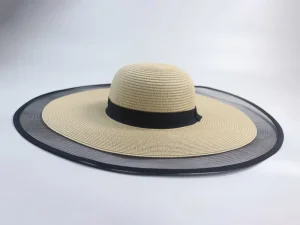
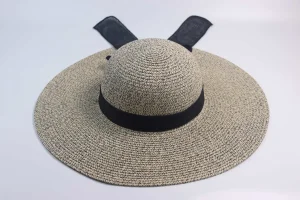
Western, wide-brim and classic silhouettes that share trim, fiber and finishing capacity with our beach bag lines — useful when building a coordinated summer capsule.
Build Your Next Straw Beach Bag Collection
Send your style references, target quantity and destination market. Our team replies within 8 hours with material recommendations, a sampling plan and a production timeline.