Category Context & Search Intent
Why Buyers Search for a Top Beach Bag Straw Tote Exporter — and What They Actually Need
A search for “high-quality top beach bag straw tote exporter manufacturers” is rarely a browsing query. Behind the phrase sits a professional buyer — an importer, private-label brand owner, resort-chain merchandiser or retail sourcing manager — who has a season to fill, a margin to protect and a container to load. These buyers are not comparing pretty photos; they are evaluating supply-chain reliability, specification precision, compliance documentation and reorder consistency.
This whitepaper is written from the manufacturer's side of that conversation. It is structured to deliver information gain: the fibre-level knowledge, factory workflow, compliance framework and roadmap detail that a generic product page cannot provide. All reference products in this article — beach totes, straw hats, sun visors, children's sun hats and western silhouettes — are produced by the same in-house line, which is precisely why a single exporter can serve an entire summer accessories plan.
0
Years in straw & woven production0
Export destinations worldwide0
Active global distributors0
Minimum pieces per design
Reference Range · Tote, Hat & Visor Programme
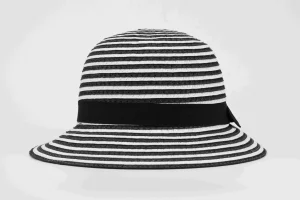
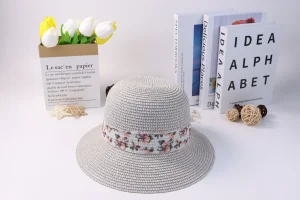
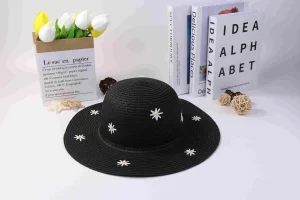
The Beach & Sun Accessories Reference Catalogue
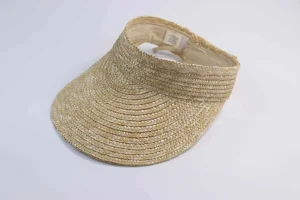
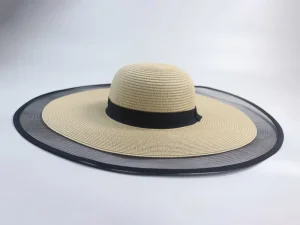
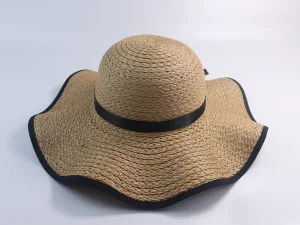
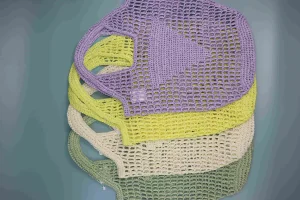
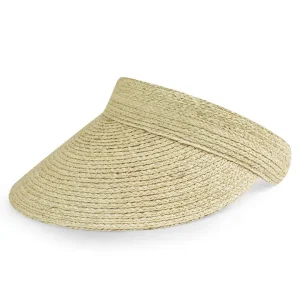
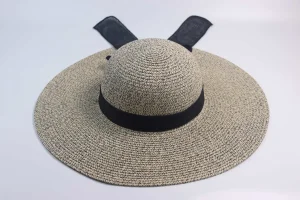
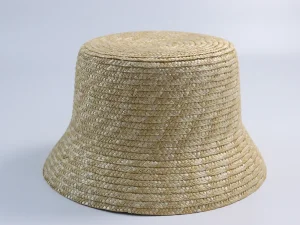
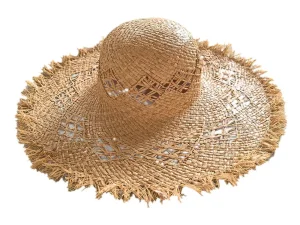
Each reference below can be produced in raffia, paper straw or natural grass, with custom bands, sizes, colourways and private-label trims. Request a physical sample set to evaluate hand-feel and shape retention before committing to a season.
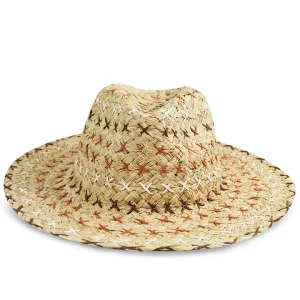
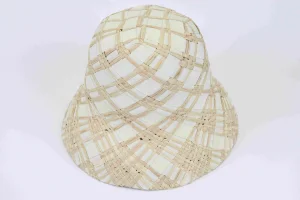
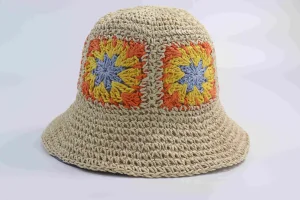
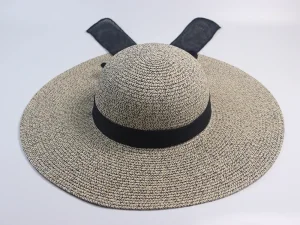
Trends in the Straw Tote & Beach Bag Export Industry
Six Structural Shifts Reshaping Global Straw Tote Supply
The straw tote category has moved from a seasonal novelty to a repeat-purchase accessory with its own material science, compliance burden and merchandising logic. Buyers who understand these shifts source better and negotiate with more leverage.
01
Natural-Fibre Preference Becomes a Purchasing KPI
Retail buyers increasingly request fibre provenance — raffia from Madagascar, paper straw yarn, natural grass braid — as part of sustainability scoring. Exporters that can document fibre origin and processing steps win programmes that generic trading companies cannot quote.
02
Low-MOQ Testing Before Seasonal Commitments
Boutiques, DTC brands and resort chains now test silhouettes at 50–100 pieces per design before committing to container volume. Flexible MOQ has become a competitive weapon for exporters who can absorb small-batch setup costs across a broad style library.
03
Tote and Hat Become a Paired Set
Merchandising data from resort and beachwear retail shows matched sets — a raffia beach tote with a coordinated floppy or bucket hat — lift average basket value. Buyers now prefer a single supplier who can produce both categories with consistent colour and hand-feel.
04
Packability and Shape Recovery as a Product Spec
E-commerce fulfilment punishes rigid accessories. “Packable” and “shape-recovery” are now measurable specifications that exporters must validate, not marketing adjectives. Raffia's natural resins and proper blocking technique directly influence this performance.
05
Compliance Documentation Moves Upstream
Retail compliance teams now request material declarations, dye information and packaging data before sampling. Exporters who maintain documentation as a standard workflow reduce friction at the PO stage and shorten the path from approval to shipment.
06
Near-Qingdao Logistics as a Cost Advantage
Linyi-based producers that are within a short road-haul of Qingdao Port can consolidate FCL and LCL shipments efficiently. For the buyer, freight timing and damage risk in transit improve when the factory and the container gateway are geographically close.
Global Procurement Demand
What International Buyers Actually Ask For Before They Place a PO
Buyer requirements differ by market, but the questions converge. Below is a practical map of regional procurement emphasis, drawn from our export experience across North America, Oceania, Europe and Japan.
| Market | Primary Buyer Type | Typical Emphasis | What Wins the Order |
|---|---|---|---|
| United States | Importer, DTC brand, resort retail | Packability, colour depth, low-MOQ testing | Fast sampling and consistent reorder quality |
| Canada | Wholesaler, boutique chain | Seasonal window precision, shipping reliability | Clear production calendar and shipping buffers |
| Australia | Surf & beachwear retailer | UV protection messaging, sun-hat pairing | Matched tote and hat sets from one factory |
| Mexico | Distributor, resort group | Volume pricing, colour variety | Broad style library and stable unit cost |
| Western Europe | Brand owner, department store | Fibre documentation, label compliance | Workflow that treats compliance as standard |
| Japan | Specialty importer | Tight tolerances, finishing detail | In-house QC and precise specification control |
Macro Industry Solutions
From Single Style to Full-Season Programme
The most efficient buyers stop treating beach totes as a one-off purchase. They build a season-level programme with a single exporter — sharing fibre choices across categories, consolidating shipments and reusing colour standards. This is what a full-programme approach looks like.
Category Consolidation
One factory producing straw totes, floppy hats, bucket hats, visors and children's sun hats keeps colour, fibre and branding consistent across the whole summer assortment.
Fibre Strategy Selection
Raffia for premium packable lines, paper straw for volume programmes, natural grass for structured silhouettes — chosen by price point rather than by supplier default.
Private-Label Integration
Woven labels, patches, hang tags and hat bands applied in-house — so branding is consistent from the tote body to the trim, without a third-party finishing step.
Assortment Planning Support
Our design team proposes style mixes by market and season, tightening the range so the buyer does not over-buy variants that cannibalise each other at retail.
Shipment Consolidation
Multi-category orders consolidated into one container reduces per-unit freight and simplifies customs documentation for the importer.
Repeat-Season Continuity
Retaining material and colour records between seasons lets a buyer reorder a proven tote quickly without re-sampling from zero.
Fibre Technical Reference
Material Science: Choosing the Right Fibre for a Beach Tote Programme
Fibre choice drives hand-feel, shape retention, price point and how a tote survives shipping. Buyers should decide fibre strategy before reviewing style libraries — not after.
Raffia
A natural palm-leaf fibre traditionally sourced from Madagascar. Its natural resins make it soft, flexible and highly dye-receptive.
- Best for
- Beach totes, floppy hats, premium resort lines
- Buyer tip
- Supports strong “packable” claims and saturated colourways.
Paper Straw
Twisted paper yarn woven into a lightweight, uniform fabric. Delivers clean, consistent colours at a competitive unit cost.
- Best for
- High-volume totes, fedoras, seasonal retail
- Buyer tip
- Include “keep dry” care labels — paper straw softens when soaked.
Natural Grass Straw
Braided natural stems with inherent stiffness, producing crisp silhouettes and an authentic artisanal look.
- Best for
- Boater hats, cowboy hats, structured totes
- Buyer tip
- Choose when shelf shape retention matters most.
Fabric & Knit
Cotton, polyester and knitted constructions extend a supplier relationship beyond summer into children's and cold-weather categories.
- Best for
- Visors, winter hats, children's hats, toy hats
- Buyer tip
- Pair with straw lines for a year-round single-supplier programme.
Localisation Support & Compliance Assurance
Serving Buyers in 60+ Countries Without Losing Specification Control
A straw tote that sells in Sydney may breach labelling rules in Berlin, or fail a size tolerance in Tokyo. Our role as an exporter is not only to weave the product but to align it with the destination market's expectations before it leaves Linyi.
A
Label & Marking Alignment
Fibre composition labels, care instructions and origin marking are planned at sampling stage so that approved samples already reflect the final legal labelling for the destination market.
B
Colour Standards and Tolerance
Pantone references are set at approval, and finishing batches are checked against them so reorders match the original season's shade — a common failure point in natural-fibre accessories.
C
Documentation Workflow
Material declarations, packaging notes and shipping documents are prepared as a standard workflow rather than an afterthought, shortening the path from approval to container loading.
D
Language & Commercial Support
English-language commercial communication with buyers across North America, Europe, Oceania and Asia, with one dedicated contact covering sampling, production and after-sales follow-up.
Fibre Composition Documentation
Care & Origin Marking
Pantone Colour Approval
In-House Final QC
FCL & LCL via Qingdao Port
8-Hour Response Commitment
Technical Roadmap
The Six-Stage Workflow Behind Every Straw Tote Programme
A transparent process is a competitive advantage. Buyers who can see each stage know exactly where their order stands, and where to intervene before cost or delay accumulates.
Share the Brief
Style references, fibre preference, dimensions, branding, target quantity and destination market are captured in one brief.
Design & Sampling
Our designers recommend material and construction, then develop a physical sample set for hand-feel and shape review.
Approval & Lock
Samples, labels, colour references, packaging and delivery schedule confirmed and locked before production begins.
Production
Material sorting, weaving, blocking, banding and finishing carried out in-house to keep quality and timing under one roof.
Quality Inspection
Final QC on shape, stitching, sizing, trims and colour consistency against the approved standard.
Export & Shipping
FCL or LCL sea freight through nearby Qingdao Port, with samples and urgent small orders by air or courier.
Future Outlook
Where Straw Tote Manufacturing Is Heading Next
Buyers planning multi-year programmes need a view beyond the next season. These are the directions that will shape the next three to five years of natural-fibre beach accessory sourcing.
Fibre Traceability
Expect buyer requests for documented fibre origin to become routine rather than exceptional, pushing exporters to formalise their material records.
Digital Sampling
Rendering and digital review shorten the approval loop for remote buyers, with physical samples reserved for final confirmation rather than first-round discussion.
Set-Based Merchandising
Tote-and-hat sets, coordinated colourways and multi-category capsules will continue to lift basket value, rewarding suppliers who can serve both lines.
Freight-Intelligent Design
Flattening, nesting and packability will be designed into totes from the start, reducing per-unit freight and damage rates in e-commerce fulfilment.
Craft-Led Differentiation
Hand-weaving skill remains a defensible advantage against low-cost imitation, particularly for premium resort and boutique programmes.
Faster Reorder Cycles
Retained specifications and material records will allow proven styles to re-enter production quickly when a season outperforms forecast.
Buyer Q&A
Questions Buyers Ask Before Committing
Direct answers on MOQ, customisation, shipping, markets and service. Our team replies within 8 hours.
What is the minimum order quantity for custom straw beach totes?
Our starting quantity for small orders is 50 to 100 pieces per design, depending on the material and craftsmanship. This allows boutiques, emerging brands and importers to test new styles before scaling up to container volume.
Can Lige produce private-label totes and hats with our own logo?
Yes. OEM and ODM production is our core business. We can customise the shape, material, colour, size and trims, and add branding elements such as woven labels, patches and hang tags. Our in-house designers can also develop new styles from your mood board or reference samples.
Where is your factory located and how are orders shipped?
We are located in Linyi City, Shandong Province, China, close to Qingdao Port. Bulk orders are typically exported by sea freight as FCL or LCL shipments, while samples and urgent small orders can be sent by air or express courier.
Which markets do you export straw totes and hats to?
Most of our products are exported to the United States, Canada, Australia, Mexico, Western Europe and Japan. We serve customers in more than 60 countries and work with over 25 global distributors.
How quickly does your team respond to buyer requests?
We respond and take action within 8 hours, covering product questions, sampling, order follow-up and after-sales service.
What products do you manufacture besides straw totes and beach bags?
In addition to straw bags, we manufacture straw hats, paper hats, paper bags, children's straw hats, toy hats, lifeguard hats, sun visors, winter hats and other bags — supporting a full summer and year-round accessories programme from one supplier.
How do you keep colour consistent between reorders?
Colour references are approved at sampling stage and retained in the material record. Finishing batches are checked against the approved reference so that a reorder matches the original season's shade, which is a common failure point in natural-fibre accessories.
Start the Conversation
Build Your Next Straw Tote Programme
Send your style references, fibre preference, target quantity and destination market. Our team replies within 8 hours with material suggestions, a sampling plan and a production timeline.
Extended Reference Range
Sun Visors, Floppy Hats & Custom OEM Styles
Additional references from the same in-house production line — totes, floppy hats, visors, western silhouettes and custom-logo Panama styles.