
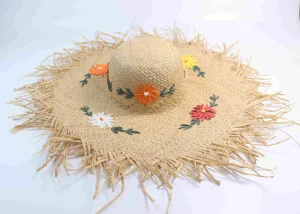
2025 B2B Sourcing Whitepaper · Semantic Buying Guide
Wholesale Floppy Wool Hat Manufacturer & Factory: The Complete Procurement Whitepaper for Global Buyers
How importers, private-label brands and retail groups evaluate floppy wool hat factories in China — covering material engineering, sourcing economics, regional compliance, application scenarios and the 2025–2030 market outlook.
Executive Summary
Why the Floppy Wool Hat Became a Structural Sourcing Category
For more than fifteen years, Shandong Lige Import & Export Co., Ltd. — trading as Lige Hats with an in-house line in Linyi City, Shandong Province — has produced straw hats, paper hats, straw bags and paper bags for importers, brand owners and retail buyers worldwide. From Panama and fedora styles to cowboy, boater, bucket and floppy sun hats, we design, sample and manufacture collections in-house and ship them through the nearby Qingdao Port.
The floppy wool hat occupies a unique position in the global headwear market. Unlike its straw and paper-straw cousins, which are largely seasonal accessories, a floppy wool hat sits at the intersection of cold-weather apparel, fashion accessory and streetwear styling. That is why procurement teams are no longer buying it as a one-off seasonal add-on, but as a recurring, multi-season program category with its own material specs, MOQ logic and compliance requirements.
This whitepaper is written for buyers who need information gain — not generic marketing copy. It explains what a floppy wool hat actually is in manufacturing terms, why China remains the dominant production base for wool felt headwear, how factory-run OEM/ODM programs operate at 50–100 pieces per design, and where global demand is shifting between 2025 and 2030. Where relevant, we map the floppy wool hat against adjacent categories in the Lige lineup — floppy straw hats, bucket hats, boater hats, sun visors and straw bags — so sourcing managers can plan a consolidated, one-stop order book.
What Buyers Will Learn
- Material architecture of a floppy wool hat — wool felt, wool blend and knit constructions
- China factory efficiency advantages versus near-shore and European felt mills
- Localisation: climate zones, retail channels and styling scenarios by region
- Global procurement demand drivers, compliance signals and 2025–2030 trends
- OEM/ODM workflow, MOQ economics and QC checkpoints inside a 15-year factory
- FAQ answers mirrored from our published buyer service standards
15+Years of manufacturing experience
60+Countries served
25+Global distributors
8 hrsResponse and action on every request
Factory Catalog · Floppy & Sun Hat Range
Floppy Wool Hat Programs Sit Inside a Broader Woven & Felt Headwear Catalog
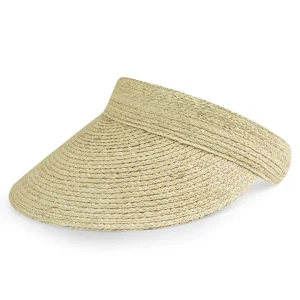
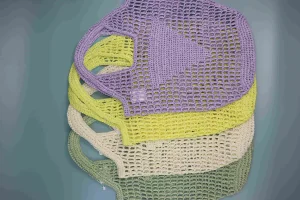
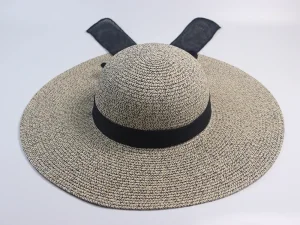
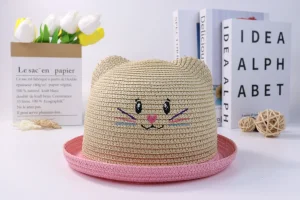
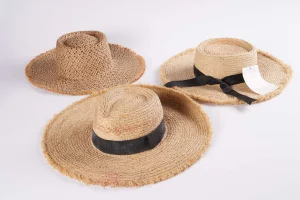
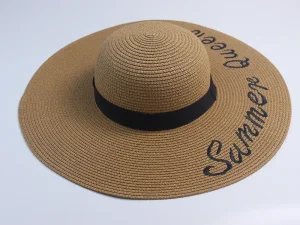
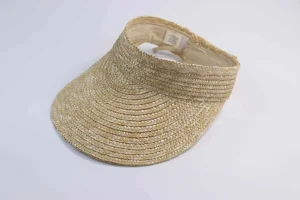
Buyers consolidating suppliers frequently add floppy wool felt styles alongside the sun, straw and visor silhouettes below. Every reference links to its live product page in the Lige Hats range, where sizing (typically 56–58 cm), material options and customization are documented.
Material & Construction
What Exactly Is a Floppy Wool Hat in Manufacturing Terms?
In sourcing language, "floppy" describes the brim behaviour, not the material. A floppy hat is defined by an unstructured, wide, downward-drooping brim that can be folded, rolled or packed flat without a rigid wire or buckram core. "Wool" describes the felt or knit body. Together, the term maps to a specific engineering brief that factory teams execute differently from straw or paper-straw floppy hats.
Wool Felt Bodies
The premium construction. Wool felt is formed by felting and blocking wool fibres into a single, seamless shell. Buyers typically specify a wool percentage (100% wool, 70/30 wool-poly, or lower wool blends) because the wool content drives hand-feel, shape memory and unit cost simultaneously.
Felt bodies accept steam blocking, so a factory can reproduce a buyer's crown profile — pinch-front, centre-dent, telescope or round — with far tighter repeatability than knitted styles.
Wool-Blend & Knit
Knit floppy hats — often described as wool slouch beanies with a soft brim — sit in the value and mid-tier. They are lighter, packable and highly elastic in sizing, which makes them attractive for e-commerce and gifting programs where a single SKU must fit a broad customer range.
Blends are also the compliance lever: a 50/50 wool-acrylic body can hit a target price point while still qualifying for "wool" merchandising claims when the label is drafted correctly.
Brim & Trim Engineering
Floppy brims typically run 8–13 cm, with a soft roll rather than a rigid edge. The finishing details — grosgrain band, leather strap, scarf tie, metal eyelet, chin cord, custom woven label, embroidered patch — are where private-label differentiation is won at low per-unit cost.
Sizing is usually standardised at 56–58 cm, with an internal drawstring or elastic sweatband to accommodate 55–59 cm heads.
| Construction | Brim Behaviour | Shape Memory | Best-Fit Program | MOQ Reality |
|---|---|---|---|---|
| 100% Wool Felt | Soft roll, steamable | High | Premium private label, boutique | 50–100 pcs / design |
| Wool-Poly Felt | Soft roll, slightly firmer | Medium-High | Mid-market retail, promotional | 100 pcs / design |
| Wool Knit / Slouch | Elastic, minimal brim | Low-Medium | E-commerce, gifting, mass | 100–300 pcs / design |
| Floppy Straw / Paper Straw | Wide, drooping, packable | Medium | Resort, beachwear, summer | 50–100 pcs / design |
Global Market Context
The Global Business & Industrial Status of the Floppy Wool Hat
Headwear is one of the more resilient apparel sub-sectors because it tolerates sizing ambiguity, ships at high value density and supports almost unlimited SKU variation at low tooling cost. Within that sector, wool felt headwear has moved from a heritage niche into a mainstream fashion and streetwear staple — driven by three structural forces buyers should understand before setting next year's assortment.
Fashion Cyclicality
Wool felt hats re-entered trend cycles through "old money" and quiet-luxury styling, then widened into festival, western and streetwear channels. That cross-channel spread is commercially important: a single felt body shape can be merchandised as a resort accessory, a winter fashion item and a music-festival product with only band and colour changes.
Supply Concentration
Felt hat production remains concentrated in a small number of regions. Traditional European felt mills serve luxury houses at high minimums and long lead times. Chinese and Southeast Asian factories serve the enormous mid-market with faster sampling, lower MOQs and far broader trim libraries. Most global volume sits in the second group.
Channel Fragmentation
DTC brands, marketplace sellers, boutique chains and promotional distributors now each order at different volumes. That fragmentation favours factories able to run small-batch production efficiently without sacrificing industrial discipline in QC — precisely the model Lige Hats operates from 50–100 pieces per design upward.
Analyst framing: treat the floppy wool hat not as a single product but as a shape platform. The platform is the blocked felt body; the SKU is the trim, colour and label. Platforms amortise tooling; SKUs capture margin.
China Factory Efficiency Advantage
Why Chinese Floppy Wool Hat Factories Win on Speed, Cost & Range
The efficiency advantage of a Chinese hat factory is frequently mis-described as "cheap labour". For a felt or straw headwear program, labour is only one input. The real advantage is vertical density: raw material sorting, weaving or felt blocking, finishing, trimming, labelling, inspection and export packing are typically within a few kilometres of one another, and often inside one building.
Lige Hats illustrates the model. The company is based in Linyi City, Shandong Province, within easy reach of Qingdao Port — one of China's major container gateways. Production covers raw material sorting, weaving, blocking, finishing and final inspection under one roof. The result is stable quality and pricing without middleman margins, and a supply chain that can respond to a buyer's brief in days rather than weeks.
Team depth reinforces process depth: a production manager with 20 years of experience, a QC manager with 15 years, and a team averaging 5+ years in the category. In practice, that means fewer "interpretation errors" between a buyer's tech pack and the finished hat — the single most expensive failure mode in private-label headwear.
- Low MOQ from 50–100 pieces per design, so boutiques and emerging brands can test styles before scaling.
- 8-hour response and action on product questions, sampling, order follow-up and after-sales service.
- Direct factory pricing with no trading-company layer between buyer and production floor.
- Nearby Qingdao Port for FCL and LCL sea freight, with air and express for samples and urgent reorders.
- One-stop assortment: straw hats, paper hats, straw bags, paper bags, children's hats, toy hats, lifeguard hats, visors, winter hats and other bags.
Lead-Time Comparison Logic
Sampling: days, not weeks, when the factory owns the blocking and trim process.
Bulk: predictable production windows because materials are sorted in-house rather than bought per order from third parties.
Reorders: fastest of all, since the blocked felt body pattern is retained and only trim or colour changes.
Localised Application Scenarios
Where Each Market Actually Wears a Floppy Wool Hat
The same blocked felt body performs differently across climate zones, retail channels and cultural styling codes. Buyers who localise material weight, brim width and trim will see materially better sell-through than buyers who ship one global SKU.
North America
Western & Festival
Wide brims, cattleman-adjacent crowns and leather or concho trim. Demand peaks around country music events and autumn/winter retail. Buyers here usually want felt with a firmer hand so the brim holds a shaped curve.
Western Europe
Quiet Luxury & Boutique
Softer 100% wool felt, narrower 8–10 cm brims, grosgrain bands, muted colourways. Boutique chains and department concessions dominate. Smaller runs per colourway reward factories with true low-MOQ capability.
Australia & NZ
Outdoor & Sun
Functional briefs: packability, chin cords, breathable sweatbands, UPF-aware merchandising. Wool felt pairs with the same retail floor as straw floppy hats and wide brim sun hats, letting a buyer build one coherent summer/winter accessory wall.
Japan & Korea
Refined Minimalism
Tight tolerance on sizing (56–58 cm), clean internal finishing, precise label placement. Buyers inspect stitch density and sweatband attachment closely — a QC discipline that a 15-year QC manager directly supports.
Latin America
Colour-Led Retail
Bold colourways, contrast bands, playful trims. Volume leans mid-tier felt blends; buyers value fast colour-change cycles and consolidated shipping through Qingdao Port for mixed containers that include straw bags and visors.
Middle East
Coverage & Comfort
Generous brims for sun coverage, lightweight blends for heat tolerance, and neutral palettes. Buyers frequently combine wool-light felts with the straw and paper-straw ranges in a single seasonal order.
Buyer Demand Signals
What Global Enterprise Buyers Are Actually Asking For in 2025
Across the RFQs our team receives from importers, wholesalers, brand owners and retailers in the United States, Canada, Australia, Mexico, Western Europe and Japan — a market footprint covering more than 60 countries and 25+ global distributors — the requirements cluster into a small number of recurring themes.
Smaller Runs
Buyers want 50–100 pcs per design to test colourways and shapes before committing. Lige's published starting quantity is exactly that range, depending on material and craftsmanship.
Factory Transparency
RFQs increasingly ask for a video walkthrough of weaving, blocking and QC stations. Factory-owned production is a qualification criterion, not a bonus.
Private Label Depth
Beyond a logo: woven labels, patches, hang tags, custom bands, packaging and size grading. OEM/ODM is core business at Lige, including design development from mood boards and reference samples.
Consolidated Assortments
One supplier, many categories — felt hats plus floppy straw hats, boater hats, bucket hats, visors, children's hats and straw bags. Fewer vendors, simpler compliance, lower freight cost per unit.
| Criterion | What Buyers Score | Evidence a Factory Should Provide | Weight (typical) |
|---|---|---|---|
| Sampling speed | Days from brief to courier | Sample room photos, revision log | High |
| MOQ flexibility | Per-design minimum | Written MOQ policy by material | High |
| QC discipline | Shape, stitch, sizing consistency | QC manager tenure, inspection checklist | High |
| Trim capability | Band, label, patch, packaging | Trim library, branding samples | Medium |
| Logistics | FCL/LCL capability, port proximity | Qingdao Port routing, export docs | Medium |
| Service SLA | Response time, single point of contact | 8-hour response commitment | Medium |
2025–2030 Outlook
Industry Trends Reshaping Floppy Wool Hat Manufacturing
Demand growth alone does not define a category; the way it is produced does. Five trends are visible across the orders and briefs our team processes, and each has a direct implication for buyers planning programmes beyond next season.
Material Traceability
Buyers increasingly request fibre origin and blend documentation for wool content, plus clear care labelling. Suppliers that can document what goes into the felt body win qualification rounds.
Micro-Batch Production
The 50–100 piece band is becoming the industry norm rather than an accommodation. Factories that industrialise micro-batches — rather than tolerating them — will absorb the DTC and marketplace demand wave.
Consolidated Supplier Programs
Retail groups are cutting vendor counts. A supplier able to deliver felt headwear alongside straw hats, paper hats, visors, children's hats and straw bags in a single container is structurally advantaged.
Season-Blurring Assortments
Wool felt and straw are increasingly merchandised on the same accessory wall. Buyers want a supplier whose material range spans both, so the seasonal calendar can be smoothed without switching factories.
Trim-Led Differentiation
Because the felt body is a shared platform, brands compete on trim. Expect more demand for custom bands, embroidered patches, metal hardware, detachable scarves and branded packaging at low MOQ.
Digital Sourcing Norms
Video sampling approvals, digital tech packs and structured QC reporting are now expected. A factory's ability to communicate in this format compresses lead time as much as its machines do.
OEM & ODM Workflow
How a Floppy Wool Hat Order Runs Through a 15-Year Factory
The six-step process below is the workflow Lige Hats runs for importers, wholesalers, brand owners and retailers. It is deliberately transparent: buyers should know where their order is at every stage, and what decision they are being asked to make.
Share Your Brief
Style, material, size, colour, branding and target quantity. Reference samples or a mood board accelerate this step.
Design & Sampling
Our designers recommend materials and develop samples, including crown profile, brim roll and trim placement.
Approval
Confirm samples, labels, packaging and delivery schedule before bulk materials are committed.
Production
Material sorting, weaving or felt blocking, finishing and trim application — all in-house.
Quality Inspection
Final inspection of shape, stitching, size and trims by a QC manager with 15 years of experience.
Export Shipping
FCL or LCL sea freight via nearby Qingdao Port; samples and urgent orders by air or express.
Buyers who need a shorter path can start from an existing platform: select a blocked body from the floppy hats collection, then customise band, label and colourway. This is the fastest route to a private-label floppy wool hat at 50–100 pieces per design.
Buyer Q&A
Frequently Asked Questions About Wholesale Floppy Wool Hats
These answers mirror the service standards our team applies to every enquiry. If a question is not covered here, our team replies within 8 hours.
What is the minimum order quantity for custom floppy wool hats?
Our starting quantity for small orders is 50 to 100 pieces per design, depending on the material and craftsmanship. This lets boutiques, emerging brands and importers test new styles before scaling up. Felt constructions typically sit at the upper end of that range because blocking setups are shared across a run.
Can you produce private-label floppy hats with our own logo?
Yes. OEM and ODM production is our core business. We customise the shape, material, colour, size and hat band, and add branding elements such as woven labels, patches and hang tags. Our in-house designers can also develop new styles from your mood board or reference samples.
Where is your factory located and how are orders shipped?
We are located in Linyi City, Shandong Province, China, close to Qingdao Port. Bulk orders are typically exported by sea freight as FCL or LCL shipments, while samples and urgent small orders can be sent by air or express courier.
Which markets do you export hats to?
Most of our products are exported to the United States, Canada, Australia, Mexico, Western Europe and Japan. We serve customers in more than 60 countries and work with over 25 global distributors.
How quickly does your team respond to buyer requests?
We respond and take action within 8 hours, covering product questions, sampling, order follow-up and after-sales service.
What products do you manufacture besides floppy wool hats?
In addition to floppy and straw hats, we manufacture paper hats, straw bags, paper bags, children's straw hats, toy hats, lifeguard hats, sun visors, winter hats and other bags. This one-stop range is why many buyers consolidate their seasonal accessory order with a single factory.
Can I mix floppy wool hats with straw hats in one shipment?
Yes. Because both categories run through the same finishing and inspection line, mixed assortments can be packed into a single FCL or LCL shipment through Qingdao Port. This is common for buyers who need a year-round accessory wall rather than a single-season order.
What sizes do you produce, and can the sweatband be adjusted?
Standard production runs at 56–58 cm, matching the sizing published across our catalog. Felt bodies can be blocked to additional sizes on request, and an internal drawstring or elastic sweatband can accommodate a broader 55–59 cm range for e-commerce programs.
Extended Range · Sun, Straw & Structured Hats
Round Out the Order Book With Adjacent Hat Categories
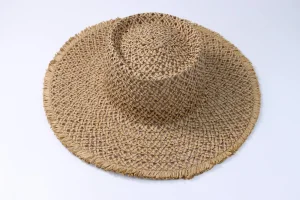
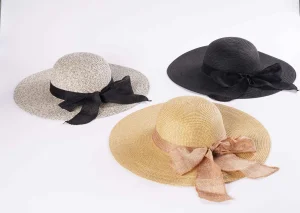
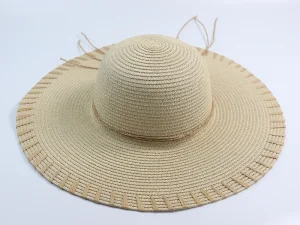
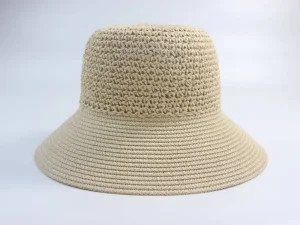
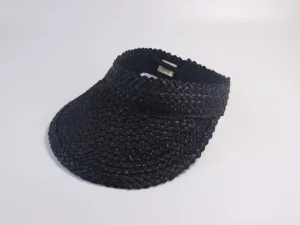
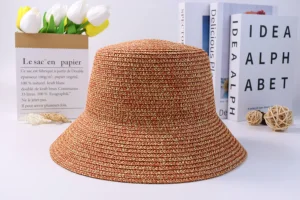
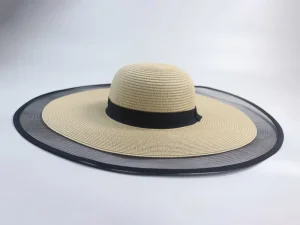
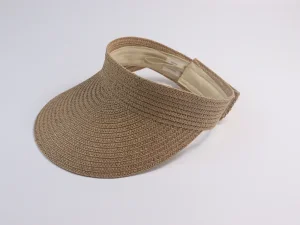
Floppy wool felt is one platform in a wider headwear programme. The references below cover structured straw, boater, bucket and visor shapes that frequently ship alongside felt styles in the same buyer container.
Start Your Program
Build Your Next Floppy Wool Hat Collection With a Factory, Not a Middleman
Send us your style references, target quantity and destination market. Our team replies within 8 hours with material suggestions, a sampling plan and a production timeline. Shandong Lige Import & Export Co., Ltd. is based in Linyi City, Shandong Province, China, with 15+ years of experience in straw hats, paper hats, straw bags and paper bags for importers, brand owners and retail buyers worldwide.