15+Years Manufacturing
25+Global Distributors
60+Export Countries
50–100pcs Starting MOQ
Market Definition
What Defines a Beach Straw Bag in the Wholesale Market?
A beach straw bag is a woven tote, market basket or slouch bag built from raffia, paper straw, seagrass, jute or natural grass, designed for resort, coastal and everyday use. In this whitepaper we examine the global sourcing dynamics behind the category, and how the right supplier partner turns a seasonal trend into a repeatable revenue engine.
Sourcing Is Strategy — Not Just Procurement
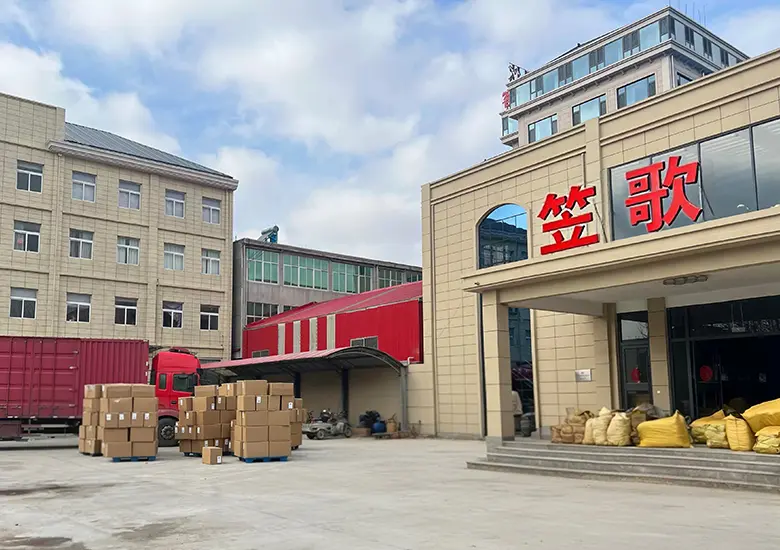
For global importers, the beach straw bag category is deceptively complex. A tender, hand-woven raffia bag on a hotel-lobby display and a bulk-packed container destined for a North American retail chain share a name — but not a supply chain. Understanding the difference is the first step in a resilient buying program.
- Woven fibers determine hand-feel, shape memory, and packaging density
- Private-label branding transforms commodity bags into margin products
- Nearby port logistics (Qingdao) reduce landed cost and lead time risk
Industry Trends
Global Development Trends Shaping Beach Straw Bags
Five macro forces are reshaping how the beach straw bag category is designed, sourced and sold across borders.
Sustainability as a Purchase Driver
Buyers increasingly request traceable natural fibers, plastic-free packaging and OEKO-TEX®-style certifications. Raffia and seagrass offer strong eco-narratives that brands market in-store and on-pack.
Resort & Cruise Revitalization
Post-pandemic resort and cruise retail is rebounding strongly in EMEA and the Caribbean. Matching hat-and-bag sets have become a high-margin accessory bundle in coastal boutiques, driving B2B double sourcing.
Digital-First Branding
Instagram and TikTok category discovery means visual differentiation (embroidery, woven labels, custom colorways) becomes a purchase-driver. Small runs (50–100 pcs) enable fast testing.
Faster Fashion Cycles
Retailers now want mini-season drops — four to six bites at trend window instead of two. Agile factories respond with 15–25 day sampling and modular SKU architecture for EU and US buyers.
Natural Grass & Jute Diversification
Beyond raffia, seagrass, jute and paper straw take share as budgets tighten. Each fiber comes with distinct compliance cadence — our buyers get material roadmaps per retail tier.
Regional Near-Shoring Pressures
While brands test Vietnam, Turkey and Morocco, China-based factories with vertically integrated weaving, finishing and QC maintain a cost-competitiveness advantage — especially for high-volume programs.
Buyer Demand
Global Purchasing Requirements Across Markets
Every market has a distinct compliance envelope, pricing ceiling and design preference. Below is how global buyers typically structure beach straw bag programs.
| Market | Typical MOQ | Key Requirement | Design Preference |
|---|---|---|---|
| United States | 100–500 pcs | Prop 65 labeling, FTC fiber disclosure | Oversized totes, monogram patches |
| Canada | 100–300 pcs | Bilingual packaging, Health Canada textile rules | Earth-tone raffia, quiet-luxury styling |
| Western Europe (EU) | 150–500 pcs | REACH, Textile Regulation 1007/2011, GPSR | Refined crochet, dual-use crossbody |
| United Kingdom | 100–300 pcs | UKCA + textile labeling | Small-scale artisan look |
| Australia | 50–200 pcs | ACCC consumer law, sun-safe claims | Wide brim + beach bundle sets |
| Japan & South Korea | 50–200 pcs | Precision stitching, JIS / KC label rules | Compact woven handle tote |
- Volume purchasers benchmark landed cost per unit against sea freight LCL efficiency.
- Regional compliance differences make a dual-factory / dual-logistics strategy valuable near major ports.
- Sample-to-bulk consistency is the number-one reason repurchasing programs succeed or fail.
Macro Solutions
Industry-Wide Supply Chain Solutions
Beyond individual orders, wholesalers benefit from structural solutions — programs that scale across seasons, skus and consumer segments.
Program-Based Sourcing
Pre-qualified material libraries and modular SKUs let you roll out matched hat-and-bag sets across seasons without re-negotiating contracts.
Rapid Prototyping
15–25 day sample cycles with photo + video approval for social-ready hero SKUs. Buyer gets a factory-ready bill-of-materials after sign-off.
Consolidated Load Building
Pair bags with hats and accessories in a single container. Reduce freight cost per unit and simplify 3PL inbound at destination warehouses.
After-Sales Incident Management
8-hour first response window for claims and QC issues, with photographic evidence and replacement protocols written into the contract.
Localization & Compliance
Localization Support & Compliance Guarantees
Complex regulation, divergent labeling requirements and strict port-of-entry inspection make localization a strategic function. How top suppliers manage it:
EU REACH & GPSR
Material declarations on dyes, azo-free colors and heavy metal content. Bags shipped to EU markets with product safety information.
US Prop 65 & FTC
Federal fiber content disclosure, country-of-origin labeling, and Prop 65 warning attachment where applicable — avoiding costly import delays.
UKCA / Bilingual Labels
UK + Canada bilingual packaging prepared from click-fit label templates, signed off in one round, avoiding reprints.
Japan & Korea Accuracy
High-accuracy stitching dimensions and JIS/KC labeling handled in factory. Small-batch runs (50 pcs) fit local merchandising.
Port-of-Entry Documentation
Commercial invoice, packing list, certificates of origin and inspection reports are prepared in coordination with buyer forwarder.
Social Compliance Audits
Factory maintains social compliance documentation on working hours, wage data and safety — for buyer supply chain review.
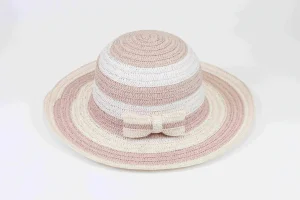
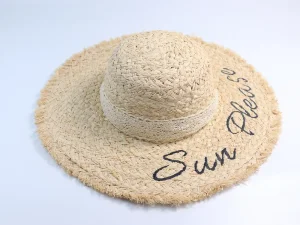
Featured Beach Straw Bags & Sun Hats
Popular Wholesale Beach & Resort Styles
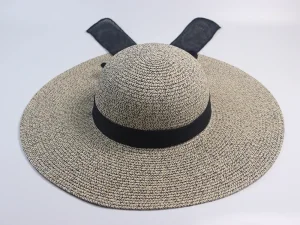
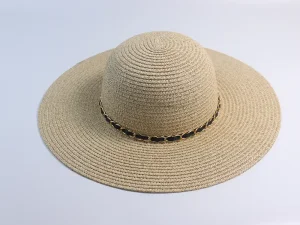
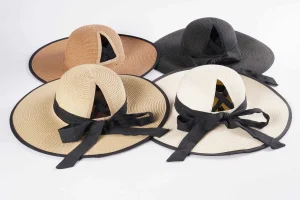
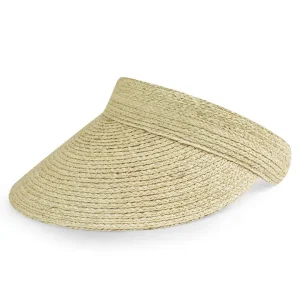
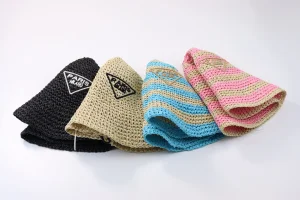
Eight buyer-favorite silhouettes for beach and resort programs. All styles available in raffia, paper straw or natural grass with private-label branding.
Material Guide
Fibers That Define a Beach Straw Bag
The fiber you choose determines hand-feel, shape retention, price point and how well a bag survives shipping. Here is how our product team advises buyers before sampling.
Raffia
A natural palm-leaf fiber traditionally sourced from Madagascar. Its natural resins make it soft, flexible and highly dye-receptive, so bags can be packed and recover their shape.
- Best for
- Market totes, slouch bags, premium resort lines
- Buyer tip
- Ideal for "packable" claims and bold, saturated colorways.
Paper Straw
Twisted paper yarn woven or braided into a lightweight, uniform fabric. It delivers clean, consistent colors and a competitive unit cost for volume programs.
- Best for
- Everyday totes, promotional lines
- Buyer tip
- Add "keep dry" care labels — paper straw softens when soaked.
Natural Grass Straw
Braided natural stems with inherent stiffness, producing crisp, structured silhouettes and an authentic artisanal look at premium price points.
- Best for
- Structured baskets, statement tote bags
- Buyer tip
- Choose it when shelf-ready shape retention matters most.
Seagrass / Jute
Robust, structured fibers suited to larger market baskets and everyday grooming bags. Earthy colorways pair well with sustainable-narrative retail.
- Best for
- Market baskets, storage totes, eco-lines
- Buyer tip
- Pair with paper straw bags for a full natural-fiber assortment.
OEM / ODM Workflow
Six-Step Process to Your First Container
A transparent workflow that keeps buyers informed from brief to container loading — no hidden hand-offs, no last-minute surprises.
Share Your Brief
Style, material, size, color, branding and target quantity in a single line-item brief.
Design & Sampling
Designers recommend fiber, weave and trims, then produce sample sets.
Approval
Confirm sample, labels, packaging and production schedule in writing.
Production
Material sorting, weaving, blocking and finishing run under one roof.
Quality Inspection
AQL inspections before packing; final visual check against approved samples.
Export Shipping
FCL or LCL sea freight via nearby Qingdao Port; DDP available on request.
Technology Roadmap
Where the Beach Straw Bag Industry Is Heading
A forward-looking view of the innovations and supply-chain shifts a professional sourcing strategy should plan for in the next three to five years.
Digital Product Passports
EU traceability regulations will require digital product passports (DPP) on textile accessories. Suppliers with material-level data capture will be ready first.
Smart Dye & Color Stability
New low-water dyeing technology improves color stability for raffia and paper-derived fibers, reducing uneven lots that fail retail QC.
Near-Shored Finishing
Weaving may stay near raw material sources, while stitching/labeling shifts into buyer-country neighborhoods for faster turnaround and last-mile localization.
Automated QC Vision
Computer-vision inspection of weave pattern, defects and stitch line consistency is entering production — reducing human error and increasing predictability.
Circular Design
Design-for-deconstruction (unstitched handles, monomaterial construction) enables weave-to-recycle programs for premium eco-brands.
Direct-to-Brand eCommerce
B2B portals and API-order flows let brands replenish hero SKUs without many rounds of back-and-forth — an efficiency shift now standard among top suppliers.
Supplier Advantages
Why Global Buyers Choose Lige Hats
Four pillars that make Lige a long-term supplier partner — not just a seasonal negotiating partner.
Low MOQ: 50–100 pcs
Start with 50 to 100 pieces per design, test the market, and scale winners without overstock risk.
Experienced Team
20-year production manager, 15-year QC manager, team averaging 5+ years — visible in weave consistency and accurate sizing.
Direct Factory
Material sorting, weaving, blocking, finishing and final inspection under one roof — no middleman margin.
8-Hour Response
After-sales response and action within 8 hours, from sampling questions to shipping follow-up, with one dedicated contact.
Faq — Buying a Beach Straw Bag Program
Questions Global Wholesale Buyers Ask Most
Straight answers on MOQ, customization, compliance, shipping and service. Need more detail? Our team replies within 8 hours.
What is the minimum order quantity for beach straw bags?
Our starting quantity for small orders is 50 to 100 pieces per design, depending on material and craftsmanship. This lets boutiques, emerging brands and importers test new styles before scaling up.
Can Lige produce private-label bags with our own logo?
Yes. OEM and ODM production is our core business. We customize shape, material, color, size and handles, and add branding such as woven labels, patches and hang tags. Our designers can also develop new styles from your mood board or reference samples.
Where is your factory located and how are orders shipped?
We are located in Linyi City, Shandong Province, China, close to Qingdao Port. Bulk orders are typically shipped by sea as FCL or LCL, while samples and urgent small orders go by air or express courier.
Which markets do you export beach straw bags to?
Most of our products go to the United States, Canada, Australia, Mexico, Western Europe and Japan. We serve customers in more than 60 countries and work with over 25 global distributors.
How fast will your team respond to my request?
We respond and take action within 8 hours — covering product questions, sampling, order follow-up and after-sales service.
What compliance documentation can you provide for my market?
We support EU REACH, GPSR, US Prop 65 and FTC fiber disclosure, UKCA and bilingual labeling on request. Documentation is prepared per destination market alongside shipping paperwork so buyers can verify compliance before the container is sealed.
Can I combine bags and hats in a single order?
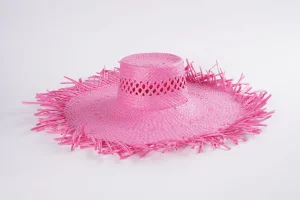
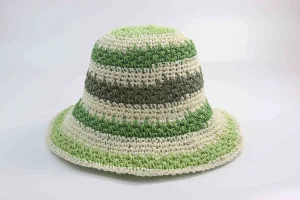
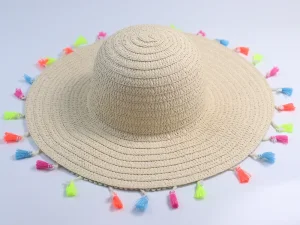
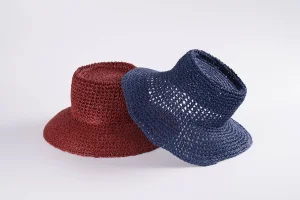
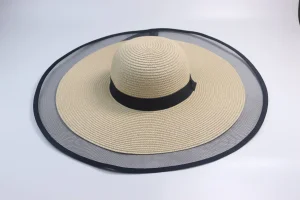
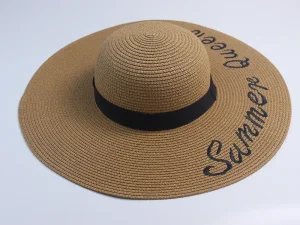
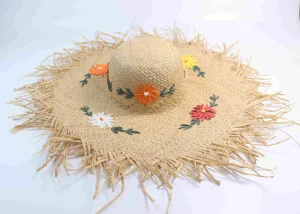
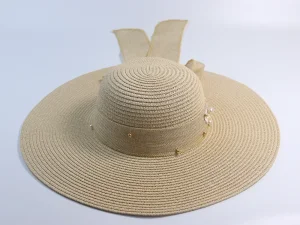
Yes. We are a one-stop supplier of beach straw bags, straw hats (Panama, fedora, cowboy, boater, bucket, floppy), sun visors, children's hats and paper bags. Combining into one container improves freight efficiency and simplifies 3PL inbound at destination.
What do you make besides straw hats?
Alongside straw hats, we manufacture paper hats, straw bags, paper bags, children's straw hats, toy hats, lifeguard hats, sun visors, winter hats and other bags. Visit our straw bags collection for the current catalog.
Ready to Build Your Next Beach Straw Bag Program?
Send your style references, target quantity and destination market. Our team replies within 8 hours with material suggestions, a sampling plan and a production timeline.
More Wholesale Beach & Straw Accessories
Discover More Beach Straw Bag & Hat Styles
Complement your beach program with these silhouettes — each available for private-label branding with low MOQ.