
Export Collection
Hats & Accessories Aligned with Rack Programs
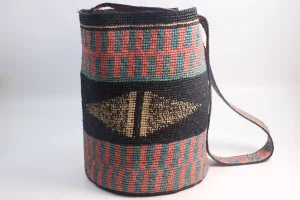
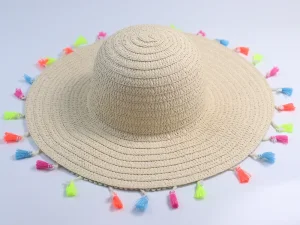
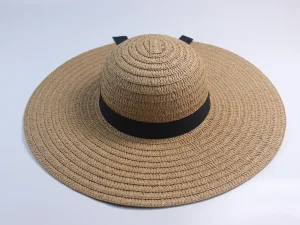
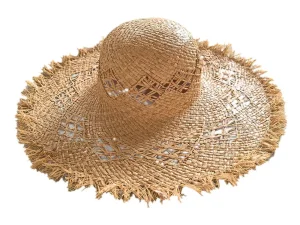
The displays buyers invest in are only as strong as the merchandise they hold. These product lines pair directly with our rack, stand and fixture programs for a single-source western headwear assortment.
Authority & Trust
Why “Cowboy Hat Rack” Is a Global Procurement Category, Not a Niche Accessory
A cowboy hat is a shaped object: its crown holds a crease, its brim holds a curl, and both are permanently deformed by improper storage. That single material reality is why cowboy hat racks have moved from tack-room carpentry and gift-shop afterthoughts into a structured, spec-driven purchasing category across retail, hospitality, venues and e-commerce.
Buyers in 2026 are no longer ordering “a stand that holds hats.” They are briefing on crown-preservation geometry, brim contact avoidance, load ratings, retail-planogram fit, knockdown freight volume, and finish consistency under fluorescent store lighting. This guide is written from the production floor outward, by the team that has manufactured straw hats, paper hats, raffia bags and western headwear for importers in more than 60 countries for over 15 years.
- Experience: 15+ years of woven headwear manufacturing, plus in-house display-tooling for retail buyers.
- Expertise: dedicated production manager with 20 years, QC manager with 15 years, average team tenure 5+ years.
- Authority: serving the US, Canada, Australia, Mexico, Western Europe and Japan; 25+ global distributors.
- Trust: 8-hour response commitment, inspection before shipment, and transparent MOQ from 50–100 pcs per design.
At a Glance: Lige Hats
Shandong Lige Import & Export Co., Ltd. — Linyi City, Shandong Province, China, close to Qingdao Port.
15+Years manufacturing
60+Export countries
25+Global distributors
50–100pcs starting qty / design
8 hrsResponse & action
OEM/ODMFull private label
Global Purchase Demand
Where Wholesale Cowboy Hat Rack Demand Is Actually Generated
Understanding the buying trigger behind each channel shortens your sales cycle and lets us ship a fixture that fits the planogram, the freight budget and the installation crew on the other end.
Western & Rodeo Retail
Independent western stores and chain ranch-supply retailers require freestanding floor racks with a 40–60 hat capacity, casters for seasonal resets and a finish that matches saddle-leather store design.
Rodeo, Fair & Event Operators
Portable, knockdown racks that travel in a single van, assemble in under ten minutes and survive repeated load-in/load-out across state fair circuits and country music festival grounds.
Hospitality & Guest Ranches
Dude ranches, boutique resorts and themed hotels specify wall-mounted and freestanding racks as both an amenity and a decorative statement, often with custom branding on the header plate.
E-commerce Fulfilment & Studios
DTC western brands need studio-grade display racks for catalog photography plus compact back-of-house storage racks to keep shaped brims saleable between drops.
Macro Solutions
Industry-Grade Solutions: From Theta-Stack Retail to Wall-Mount Hospitality
Every program below is available in OEM (your design) or ODM (our engineered design, your branding). All share the same base engineering: crown-support geometry, non-marring finish and freight-optimised knockdown construction.
Freestanding Retail Displays
Vertical multi-tier racks with 4–6 hat positions per tier. Sized to hold 40–60 shaped straw cowboy hats, with casters, adjustable tiers and integrated header signage for in-store brand blocks.
Knockdown Portable Racks
Bolt-together or pin-fit assemblies engineered for flat-pack export, low CBM per unit and repeated assembly without tooling — the standard choice for event vendors and trade-show exhibitors.
Wall-Mounted & Slatwall Systems
Slim-profile brackets and rails that convert wasted wall space into sellable display area — preferred by hospitality buyers and compact boutique stores where floor space is premium.
Stacked Column Racks
Space-efficient vertical stacking for back-of-house storage. Keeps brims unloaded and crowns uncreased during the slow season, with clear visual inventory at a glance.
Hat & Accessory Combo Racks
Combination fixtures with hat tiers plus hooks for bandanas, belts and bags — a single-SKU solution for cross-merchandising western accessories in one footprint.
Custom Branding Programs
Powder-coat Pantone matching, laser-etch or silk-screened logos on header plates, and custom sizing to match your exact hat dimensions — verified against a physical sample before mass production.
Material & Specification Matrix
A Buyer's Specification Table for Rack Materials
Material choice drives load rating, finish feel, freight weight and unit cost. Use this matrix to align your rack program with the hat program it will carry.
| Material | Best Channel | Typical Finish | Key Buying Note |
|---|---|---|---|
| Powder-Coated Steel | Western retail, permanent displays | Matte black, satin bronze, Pantone match | Highest load rating and the cleanest Pantone colour accuracy; heavier freight cost per unit. |
| Wrought Iron / Tube | Rodeo events, hospitality accent racks | Rustic blackened, antique copper | Premium artisanal appearance; confirm weld finish and paint adhesion before reorder. |
| Aluminium | Knockdown portable and travel racks | Anodised clear, brushed, matte black | Best strength-to-weight for repeated load-in/load-out; check fastener grade. |
| Solid Hardwood | Boutique and guest-ranch interiors | Oiled oak, walnut stain, natural lacquer | Warmest finish; requires kiln-dried stock and clear moisture and care instructions for humid climates. |
| Bamboo & MDF | Cost-driven retail, subscription boxes | Laminated, painted, natural grain | Strong sustainability narrative; confirm edge-banding and screw pull-out strength. |
| Wire & Mesh | Back-of-house storage, storage rooms | Galvanised, epoxy-coated | Lightest and most stackable; less premium for customer-facing display areas. |
| Recycled / RPET | Eco-positioned DTC brands | Textured matte, natural tones | Supports a circular-economy claim; verify UV stability for window and outdoor use. |
Technology Roadmap
Where Cowboy Hat Rack Engineering Is Heading (2026–2030)
This roadmap is a planning tool, not a sales promise: each phase reflects buyer questions we are already answering in sampling and tooling.
1
Modular Standardisation
Shared post-and-bracket systems let one fixture be reconfigured from floor to wall to counter without new tooling, reducing your SKU count while keeping planogram flexibility.
2
Crown-Safe Geometry
Contoured saddle profiles and brim-relief notches that spread load across the sweatband rather than the brim edge — the single largest driver of reduced return-due-to-deformation.
3
Smart & Sensored Fixtures
Optional RFID or low-power sensor tags embedded in the rack footer for stock visibility, high-theft SKU monitoring and merchandising analytics in larger chain deployments.
4
Circular Material Design
Single-material fixtures designed for disassembly and recycling, plus take-back agreements — increasingly requested in European retail procurement and ESG reporting frameworks.
Commercial & Industrial Snapshot
USLargest western retail base; casters & planogram fit priority
AUStrong rodeo circuit; UV-resistance finish critical
EUESG & recyclability requirements in retail procurement
MX / CAGrowing boutique western channel; bilingual care-label demand
JPPrecision finish, tight tolerance, sample-first workflow
GCCHospitality-led growth; heat and humidity stable coatings
Industry Status
The Commercial Reality: A Category Maturing Fast
The hat rack category has historically been dominated by regional furniture and metal-shop suppliers, with little standardisation across borders. Buyers now want the same discipline applied to fixtures that they apply to headwear: consistent specifications, a documented inspection step and a reorder experience that does not depend on a single artisan's availability.
At the same time, freight economics have reordered priorities. A rack that ships flat, assembles without tools and weighs less than a conventional steel fixture often saves more in landed cost than a lower FOB unit price ever could. That is why knockdown design is now a specification requirement, not a discount tactic.
On the merchandise side, buyers increasingly pair racks with a matched hat program — and that is where our core 15+ years of straw hat and western headwear production becomes a practical advantage rather than a marketing line.
Localisation & Compliance
Localisation Support and Compliance Safeguards for Export Buyers
Cross-border sourcing fails at the details: labels, documents, packaging standards and the person who answers when something is wrong. Here is how we structure that for rack programs.
Localised Packaging & Inserts
Assembly instructions, care guidance and warning text prepared in your target market's language, with carton marking aligned to your retail receiving requirements.
Material Documentation
Material declarations and finish information available on request to support your internal compliance and ESG reporting, including recyclability notes for single-material fixtures.
Export & Shipping Support
FCL and LCL sea freight through nearby Qingdao Port, with air or express options for samples and urgent small orders. Shipping documents coordinated with your forwarder.
8-Hour Response Commitment
One dedicated contact for your account across sampling, order follow-up and after-sales. Requests are answered and actioned within 8 hours, seven days a week.
Pre-Shipment Inspection
Shape, weld integrity, finish adhesion, hardware torque, size tolerance and packing accuracy verified before container loading, with photographic records on request.
Sample-First Approvals
Physical samples are produced and approved before mass production. Nothing ships until you sign off the exact finish, geometry and packaging.
Six-Step Workflow
How an OEM / ODM Hat Rack Order Actually Runs
1
Share Your Brief
Channel, hat dimensions, capacity, finish, branding and target quantity.
2
Design & Sampling
Our team proposes geometry, material and finish, then develops physical samples.
3
Approval
Confirm sample, labels, packaging and delivery schedule in writing.
4
Production
Cutting, welding, forming and finishing in-house with staged QC checks.
5
Inspection
Finish, hardware, tolerances and carton accuracy verified before loading.
6
Export Shipping
FCL or LCL via Qingdao Port; air and express for samples and urgent runs.
Request a Rack Specification & Catalog
Send us your hat dimensions, capacity target and destination market. Our team replies within 8 hours with material recommendations, a sampling plan and a production timeline.
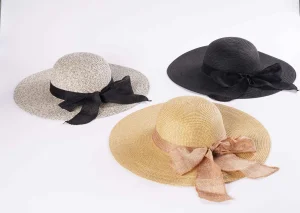
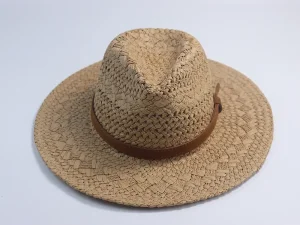
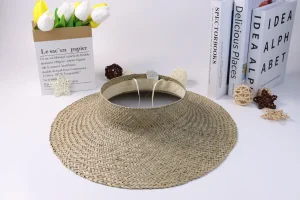
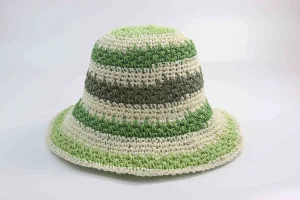
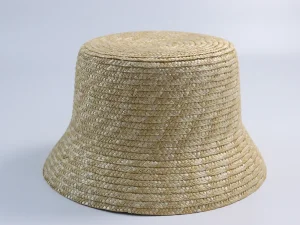
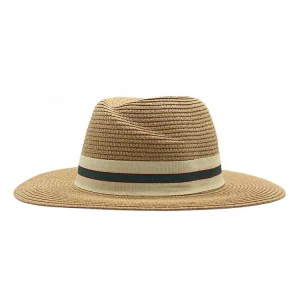
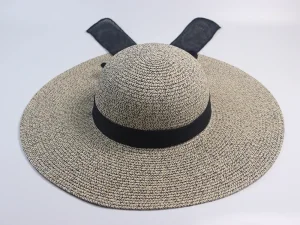
Merchandise Ready to Display
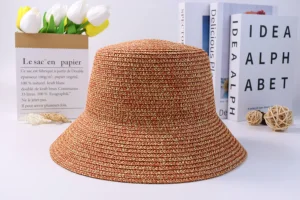
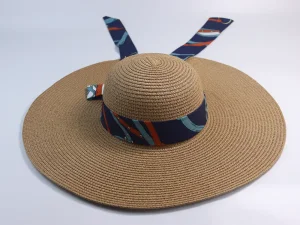
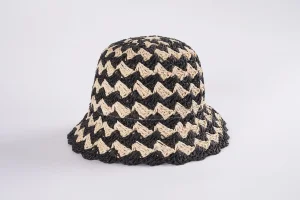
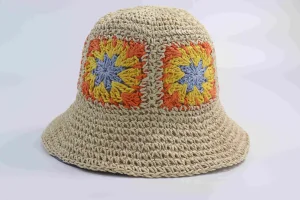
Western & Sun Hat Lines That Sell Off the Rack
Pair your fixture program with hats already proven across North American, Australian and European retail seasons.
Buyer Q&A
Frequently Asked Questions
Written for sourcing managers comparing suppliers — not for general browsing.
What is the minimum order quantity for custom straw hats and rack programs?
Our starting quantity for small orders is 50 to 100 pieces per design, depending on material and craftsmanship. This lets boutiques, emerging brands and importers test new styles before scaling up. Rack programs are quoted per project and aligned to your hat order and channel requirements.
Can Lige produce private-label hats with our own logo?
Yes. OEM and ODM production is our core business. We customize shape, material, color, size and hat bands, and can add branding such as woven labels, patches and hang tags. Our in-house designers can also develop new styles from your mood board or reference samples.
Does a cowboy hat rack actually prevent brim deformation?
It does when the geometry is correct. The rack should support the hat from the inside of the crown or across the sweatband, so the brim hangs free of contact. Flat shelving and narrow hooks concentrate load on the brim edge and accelerate curling and cracking — the core reason buyers now specify crown-support racks instead of generic stands.
Where is your factory located and how are orders shipped?
We are located in Linyi City, Shandong Province, China, close to Qingdao Port. Bulk orders are typically shipped by sea as FCL or LCL, while samples and urgent small orders can go by air or express courier.
Which markets do you export to?
Most of our products go to the United States, Canada, Australia, Mexico, Western Europe and Japan. We serve customers in more than 60 countries and work with over 25 global distributors.
How quickly does your team respond to buyer requests?
We respond and take action within 8 hours, covering product questions, sampling, order follow-up and after-sales service.
What do you manufacture besides straw hats?
Alongside straw hats, we manufacture paper hats, straw bags, paper bags, children's straw hats, toy hats, lifeguard hats, sun visors, winter hats and other bags.
Can you combine rack and hat supply in one shipment?
Yes. Because our core business is straw hat, paper hat and western headwear production, we can consolidate rack fixtures and merchandise into a single container program. This reduces freight cost, simplifies customs handling and ensures the fixture geometry matches the exact hats it is designed to hold.