
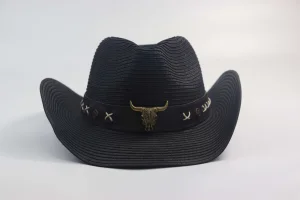
Buyer Shortlist
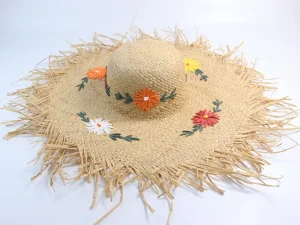
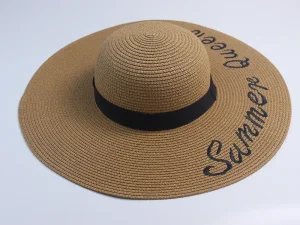
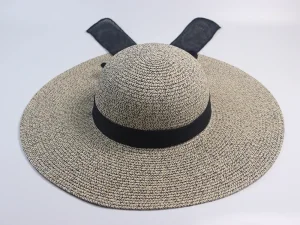
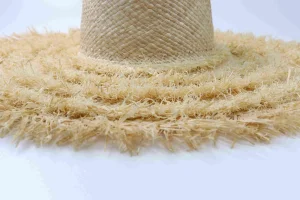
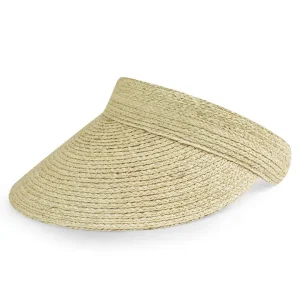
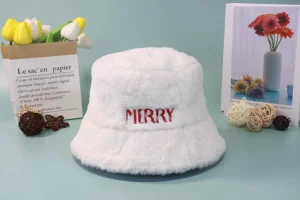
Wholesale Floppy & Woven Hat Styles Ready to Order
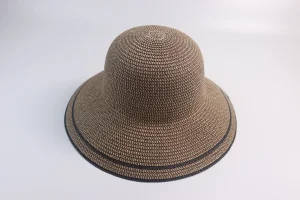
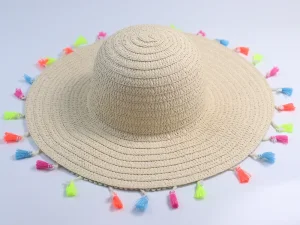
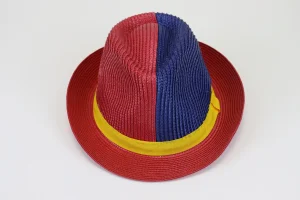
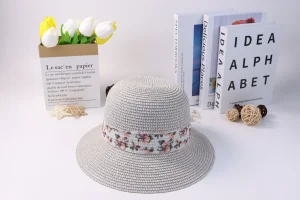
These are the silhouettes our global buyers reorder season after season. Every style can be produced in raffia, paper straw or natural grass straw, with private-label bands, labels and trims.
Industry Whitepaper
The Global Floppy Wool Hat & Woven Headwear Market in 2025 and Beyond
Floppy wool hats occupy a distinct and rapidly commercializing position in the global headwear market. Unlike rigid structured felts, the floppy wool hat relies on an unstructured, draping brim and a soft, foldable crown — characteristics that make it ideal for travel retail, resort collections, festival merchandising and private-label winter lines sold in the Northern Hemisphere.
In the wholesale supply chain, the category has shifted from a niche artisanal item to an industrial-scale product family. Buyers now source floppy wool hats alongside raffia and paper straw versions under a single supplier relationship, requiring factories to maintain dual capability: wool felting and blocking on one line, and straw weaving and finishing on another. This whitepaper maps the commercial landscape, the technical route map and the localization scenarios that drive demand.
60+Export markets served by leading Chinese hat factories
15+ yrsTypical OEM/ODM experience of top-tier suppliers
50–100 pcsStarting MOQ per design for low-risk market testing
8 hrsBenchmark response time for buyer enquiries
Travel & ResortPackable floppy hats dominate cruise, beach and hotel retail assortments.
Festival & EventCoachella-style floppy silhouettes drive seasonal spikes in Q1–Q2 ordering.
Winter FashionWool floppy hats extend the category into AW collections and gift programs.
Commercial & Industrial Status Worldwide
The wholesale floppy wool hat business is shaped by three structural forces. First, seasonality is flattening: as brands localize collections for both hemispheres, factories receive wool floppy orders in the same production windows as straw orders, smoothing utilization across the year. Second, category blurring is accelerating: a "floppy hat" today can be wool felt, raffia, paper straw or a blend, and buyers expect a single supplier to quote across all substrates. Third, compliance and traceability requirements from EU and North American retailers now extend to wool sourcing, dye chemistry and packaging waste.
Factory consolidation
Buyers are consolidating hat suppliers to reduce audit overhead. Factories that can run wool felting, straw weaving and knit lines under one roof win multi-category programs.
Dual-hemisphere demand
Australian and Southern European buyers order wool floppy hats counter-seasonally to Northern brands, giving factories year-round order books.
Compliance pressure
Retailer audits now cover wool traceability, azo-free dyes and recycled packaging — suppliers with documented QC systems hold a clear advantage.
Growth Signals
Industry Trends Reshaping Floppy Hat Sourcing
Natural fibre revival
Wool, raffia and paper straw are repositioned as low-impact alternatives to synthetic blends, driving premium framing in retail.
Packability as a feature
Foldable, resilient brims are now a merchandising claim on hang tags, pushing factories toward wool and raffia blends.
Logo-first customization
Woven labels, engraved eyelets and embroidered bands are becoming the primary brand differentiator on unbranded silhouettes.
Near-shoring debate
While some buyers explore regional production, cost and craft depth keep China the dominant source for woven and felted headwear.
DTC brand proliferation
Direct-to-consumer hat labels launch with 100-piece test runs, expanding the low-MOQ segment of the market.
Certification demand
RWS-aligned wool, recycled trims and plastic-free packaging are appearing in RFQs from European and Australian retailers.
Colorway velocity
Fast-fashion buyers request 8–12 colorways per silhouette, stressing dye-house capacity and lab-dip turnaround.
Digital sourcing
Buyers increasingly shortlist suppliers from product-page data, generating demand for accurate imagery and specification depth.
Localized Application Scenarios
Where Floppy Hats Sell: Region-by-Region Use Cases
Floppy hats are not a single market. The same silhouette is merchandised differently across climates and cultures, and the material spec follows the climate. Below are the primary localization scenarios our buyers work with.
North America
Festival & Resort Retail
US and Canadian buyers focus on raffia and paper straw floppy hats for Q1–Q2 festival and spring-break assortments, with wool floppy hats entering AW gift and fashion programs. Large-brim silhouettes sell best; packable claims drive repeat orders.
Australia & NZ
Sun-Smart Outdoor Culture
Australian demand is driven by UV-protection expectations. Wide-brim raffia and straw floppy hats with UPF-labelled fabrics perform strongly, alongside wool floppy hats for winter coastal markets.
Western Europe
Fashion & Boutique Channels
German, French and Italian buyers prioritize refined colorways, refined banding and wool felt quality. Floppy wool hats in camel, charcoal and ivory anchor AW accessory capsules.
Japan & Korea
Precision & Detail Markets
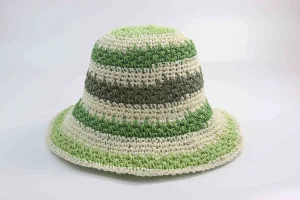
These markets demand tight size grading, clean stitching and subtle branding. Crochet and paper hats with custom labels are frequently ordered in multi-color small runs.
Latin America
Beach & Holiday Trade
Mexican, Colombian and Caribbean resort buyers order floppy straw and raffia hats in high volumes for the northern winter travel season, with bright colorways and embroidered bands.
Middle East
Modest Fashion & Travel
Wide-brim floppy hats are adopted in modest styling and luxury travel retail, favoring opaque weaves, neutral tones and premium band finishes.
Technology Roadmap
From Fibre to Container: A Six-Stage Production Route Map
Whether the substrate is wool felt, raffia or paper straw, industrial production follows a documented sequence. Buyers who understand the route map can plan sampling lead times and inspection points more accurately.
1
Fibre Selection
Wool tops, raffia palm or paper yarn sorted by fineness, color consistency and moisture level.
2
Weaving / Felting
Straw braiding or wool felting creates the base body of the hat with controlled density.
3
Blocking
Steam and heat shape the crown and brim on wooden or aluminium blocks for size accuracy.
4
Finishing
Band application, label stitching, eyelets, edge binding and color fastness checks.
5
Quality Control
Dimensional grading, stitch density, dye consistency and defect screening before packing.
6
Export Packing
Stackable cartons, moisture barriers and FCL/LCL loading via nearby Qingdao Port.
Future Outlook: Where the Category Is Heading
Blended substrates
Wool-raffia and wool-paper blends are being developed to combine warmth, packability and dye performance in a single hat.
Digital customization
On-demand embroidery and small-batch dyeing are lowering the threshold for personalized wholesale programs.
Traceable supply
Fibre-to-finish documentation will become a standard attachment in RFQs, favoring vertically integrated factories.
Macro Industry Solutions
End-to-End Wholesale Programs for Importers and Brands
Leading suppliers now position themselves as program partners rather than order takers. The macro solution set typically includes four components: design support, low-MOQ sampling, documented QC and consolidated logistics.
OEM & ODM Development
In-house designers convert mood boards, reference samples or tech packs into producible specs, advising on fibre choice, brim width and band construction before sampling begins.
Low-MOQ Market Testing
Starting at 50–100 pieces per design, buyers can validate a new floppy silhouette or colorway before committing to a full container program.
Documented Quality Control
Dimensional grading, stitch inspection and dye consistency checks are recorded, giving buyers a verifiable QC trail for retailer audits.
Consolidated Export Logistics
FCL and LCL shipments leave via Qingdao Port, with samples and urgent reorders routed by air or express courier as required.
Why Information Gain Matters for Buyers
In a market where most supplier pages repeat the same claims, the differentiating information is specific: which fibre suits which climate, how blocking affects size stability, and where inspection points sit in the production flow. Factories that publish this level of detail reduce buyer risk and shorten the sampling cycle — a measurable commercial advantage in a competitive sourcing landscape.
Buyer Q&A
Frequently Asked Questions from Global Floppy Hat Buyers
What is the minimum order quantity for custom floppy wool hats and straw hats?
Our starting quantity for small orders is 50 to 100 pieces per design, depending on material and craftsmanship. This allows boutiques, emerging brands and importers to test new styles before scaling up to full container volumes.
Can Lige produce private-label floppy hats with our own logo?
Yes. OEM and ODM production is our core business. We customize shape, material, color, size and hat bands, and add branding elements such as woven labels, patches and hang tags. Our in-house designers can also develop new styles from your mood board or reference samples.
Where is your factory located and how are orders shipped?
We are located in Linyi City, Shandong Province, China, close to Qingdao Port. Bulk orders are typically exported by sea freight as FCL or LCL shipments, while samples and urgent small orders can be sent by air or express courier.
Which markets do you export floppy hats and woven headwear to?
Most of our products are exported to the United States, Canada, Australia, Mexico, Western Europe and Japan. We serve customers in more than 60 countries and work with over 25 global distributors.
How quickly does your team respond to buyer requests?
We respond and take action within 8 hours, covering product questions, sampling, order follow-up and after-sales service.
What products do you manufacture besides floppy wool hats?
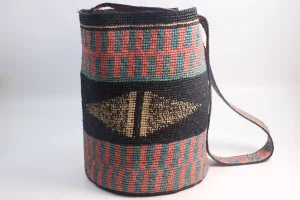
In addition to floppy hats, we manufacture Panama hats, fedora and trilby hats, straw cowboy hats, boater hats, bucket hats, sun visors, children's straw hats, toy hats, winter hats, straw bags and other bags.
What is the difference between floppy wool hats and floppy straw hats?
Floppy wool hats use felted animal fibre for warmth and a soft, dense hand-feel, making them suitable for autumn/winter collections and colder climates. Floppy straw hats use raffia, paper yarn or natural grass for breathability and UV protection, making them a summer and resort staple. Many buyers stock both to cover the full calendar year.
Experience & Authority
Why Global Buyers Trust Our Floppy Hat Program
Shandong Lige Import & Export Co., Ltd. is based in Linyi City, Shandong Province, within easy reach of Qingdao Port — one of China's major container gateways. For more than 15 years we have focused on straw hats, paper hats, straw bags and paper bags, combining traditional hand-weaving skills with modern blocking and finishing expertise.
Our production manager brings 20 years of experience, our QC manager 15 years, and our team averages 5+ years. That depth shows up in consistent weaves, accurate size grading and fewer claims after shipment.
20 yrsProduction manager
15 yrsQC manager
25+Global distributors

More Wholesale Styles
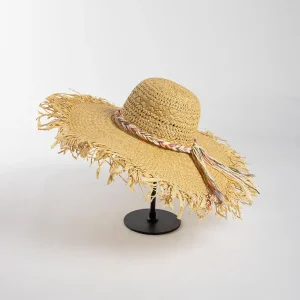
Explore the Full Floppy, Straw & Bag Range