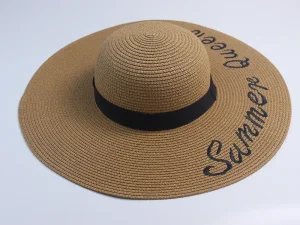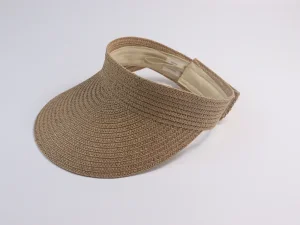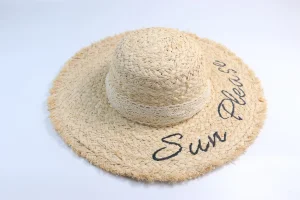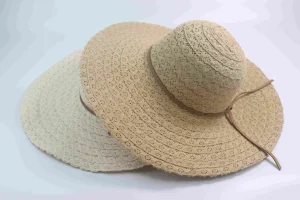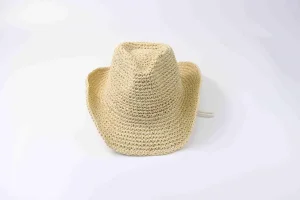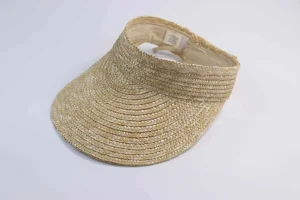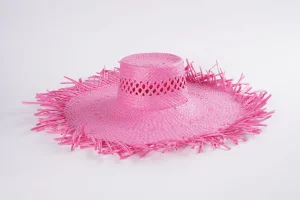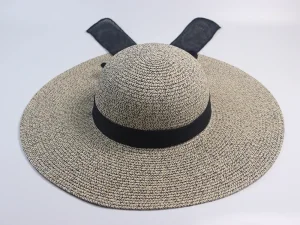
Featured Wholesale Products — Straw Bags, Hats & Sun Accessories
Executive Summary
Why “Large Exporter” Is Now a Procurement Criterion, Not Just a Label
Global buyers searching for a wholesale global leading straw bag large exporter are no longer comparing unit prices in isolation. They are evaluating supply chain resilience, compliance documentation, localization support and the vendor's ability to convert a seasonal trend into a repeatable, audit-ready production program. This whitepaper translates that shift into practical sourcing intelligence for importers, distributors and private-label brands.
0Years of specialized straw manufacturing experience
0Export markets served across six continents
0Active global distributors and channel partners
0Hour response and action commitment for buyers
China Factory & Supply Chain Advantage
The Structural Advantages of China’s Straw Bag Supply Chain
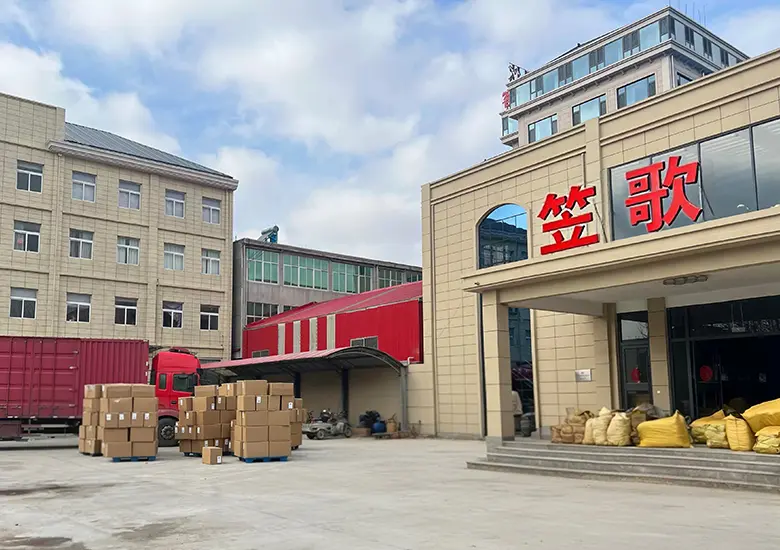
China’s woven-accessory cluster — anchored by Shandong, Zhejiang and Guangdong — concentrates raw material processing, hand-weaving labor, blocking equipment, trims and packaging within a few hundred kilometres. For a large exporter, that density converts into measurable commercial advantages that a trading intermediary cannot replicate.
-
Vertical integration of weaving and finishingRaw material sorting, weaving, blocking, trimming and final inspection run under one roof, reducing lead-time variance and protecting shape consistency across repeat orders.
-
Port proximity and freight flexibilityFacilities in Linyi sit within easy reach of Qingdao Port, enabling FCL and LCL sea freight, plus air and express options for samples and urgent replenishment.
-
Deep artisan labor poolGenerations of hand-weaving expertise support the intricate raffia, paper-straw and natural-grass constructions that machine production cannot authentically reproduce.
-
Cost structure without middleman marginDirect factory pricing removes trading-company markups while preserving the quality controls that large retail programs demand.
Localization Support & Compliance Assurance
Localization and Compliance: The Two Filters That Eliminate Weak Suppliers
A large exporter is judged less on the first container and more on the fifth. Localization support and compliance assurance are the operational systems that make repeatable export possible — and they are the first things sophisticated buyers audit.
Market-Specific Sizing & Labeling
Head circumference grading, care labels, fiber-content statements and hang-tag copy adapted to US, EU, AU and JP retail expectations — reducing rejection risk at the warehouse door.
Material & Chemical Documentation
Support for fiber declaration, azo-dye and formaldehyde control, plus testing coordination for buyers who require third-party laboratory reports before shipment release.
Export Documentation Readiness
Commercial invoice, packing list, HS code guidance, certificate of origin coordination and FCL/LCL booking support through Qingdao Port — a single accountable export desk.
Timezone-Aware Communication
Response and action within 8 hours, aligned to buyer working hours across North America, Europe and Asia-Pacific — with a single dedicated account contact.
The Compliance Mindset That Separates a Partner from a Vendor
Compliance is not a certificate on a wall — it is a workflow. Documented material sourcing, in-line inspection checkpoints and pre-shipment QC are what allow a large exporter to absorb seasonal volume spikes without quality drift. Buyers who audit these systems before signing a seasonal program consistently report fewer chargebacks and faster retail sell-through.
Global Enterprise Procurement Requirements
What Global Buyers Actually Require From a Large Straw Bag Exporter
Procurement teams at retail chains, department stores and DTC brands evaluate suppliers against a structured scorecard. Understanding that scorecard is the fastest route to a signed seasonal program.
Capacity With Predictability
Program buyers need a supplier who can commit to a delivery calendar, not just a unit price. Volume capacity must be matched by documented QC gates and production planning discipline.
Low MOQ for Market Testing
Start at 50–100 pieces per design to validate a silhouette, colorway or price point, then scale the winners — private-label launches without overstock exposure.
Design & ODM Alignment
In-house designers translate mood boards, competitor references and trend reports into production-ready specs — shape, weave, trim, band and branding.
Branding & Private Label
Woven labels, patches, hang tags, custom bands and packaging — applied in-house so the brand experience is consistent from sample to final shipment.
Consolidated Assortment
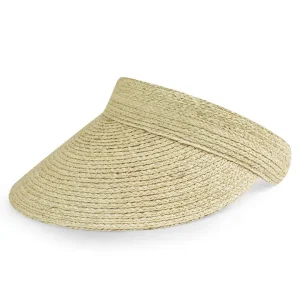
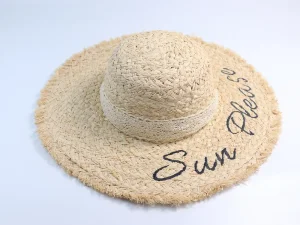
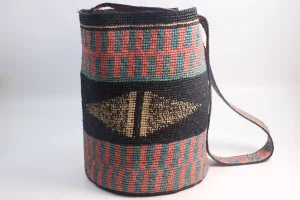
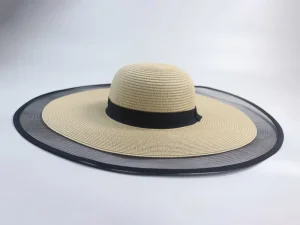
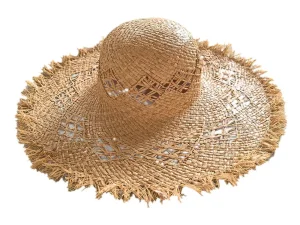
Straw bags, straw hats, paper hats, visors, children’s hats and winter hats from one partner — simplifying vendor management and freight consolidation.
Sustainability Evidence
Natural raffia, paper straw and grass fibers with traceable sourcing narratives that support eco-positioned marketing and retail sustainability questionnaires.
| Evaluation Criterion | What Buyers Inspect | Why It Decides the Order |
|---|---|---|
| Production capacity | Monthly output, line count, peak-season headroom | Determines whether a program can be filled without split sourcing |
| Quality consistency | In-line and final QC documentation, AQL sampling | Directly linked to chargeback and return rates |
| Compliance readiness | Fiber declaration, testing reports, labeling accuracy | Prevents customs holds and retail rejection |
| MOQ flexibility | Per-design minimums, mixed-color tolerance | Enables low-risk trend testing |
| Communication speed | Response time, single point of contact | Shortens sampling cycles and decision lag |
| Logistics reliability | Port access, FCL/LCL options, packing standards | Protects retail launch dates |
Industry Development Trends
Five Structural Trends Reshaping Straw Bag & Hat Sourcing
Demand for woven accessories is shifting from pure seasonal volume toward value-added, story-driven assortments. For exporters, these five trends define where margin and differentiation will sit through the next several seasons.
Eco-Chic Is Becoming the Default
Consumers increasingly read natural fiber as a sustainability signal. Raffia and paper-straw constructions backed by traceable sourcing narratives now outperform synthetic alternatives in eco-positioned retail.
Assortment Consolidation
Buyers are reducing vendor count and consolidating hats, bags and seasonal accessories with fewer, more capable exporters — rewarding suppliers who can span multiple categories.
Personalization at Retail
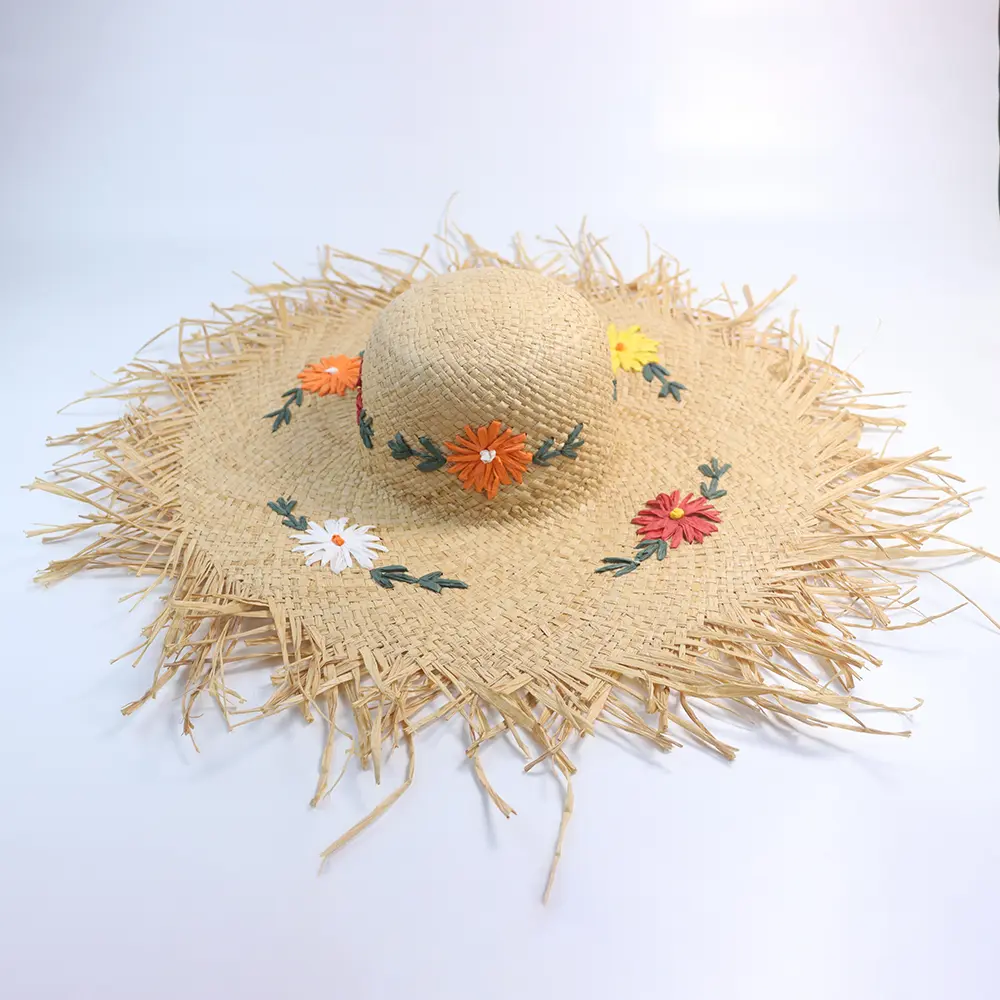
Embroidery, custom bands, monogram patches and color-matched trims are moving from niche to expected — pushing exporters to build flexible customization cells rather than rigid lines.
Localized Application Scenarios
How Different Markets Actually Use Straw Bags and Straw Hats
Application context shapes specification. A beach tote sold in California and a structured boater sold in the UK require different weave density, trim and packaging. These are the dominant localized use cases buyers brief us on.
Beach, Resort & Cruise Retail
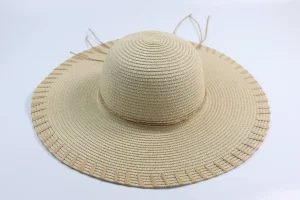
Oversized raffia totes, floppy sun hats and packable visors for North America, the Caribbean and the Mediterranean. Buyers prioritize packability, color vibrancy and photography-friendly silhouettes.
Festival & Western Wear
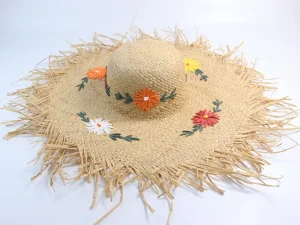
Straw cowboy hats and embroidered raffia western styles for US, Canadian and Australian festival and country-music channels. Structured crowns and shape-retaining brims dominate.
Premium Resort & “Old Money” Aesthetic
Hand-woven raffia shoulder totes and structured boaters for Western Europe and Japan, where finish quality, lining detail and understated trim carry the price point.
Outdoor Sports & Sun Protection
Breathable straw visors and UV-oriented wide-brim hats for golf, tennis, running and lifeguard programs — lightweight, adjustable and logo-customizable.
Children’s & Family Collections
Scaled-down straw hats, toy hats and mini totes for family-resort and gift channels, with softer edges, elastic sizing and child-safe trims.
Promotional & Corporate Gifting
Logo-embroidered visors and compact straw totes for hospitality, travel and event gifting programs, where consistent branding and repeatable lead times matter most.
Technical Reference: Fiber Selection
Material Choice Determines Shape Retention, Cost and Claim Risk
Before sampling, the fiber decision sets the price architecture. This is the reference our product team uses when advising buyers on straw bag and straw hat specifications.
Raffia
Natural palm-leaf fiber with high flexibility and excellent dye uptake. Recoverable after packing — ideal for packable claims and saturated colorways in premium resort lines and straw bags.
Paper Straw
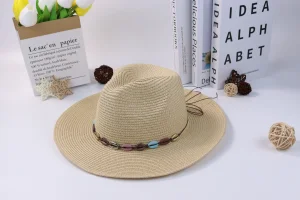
Twisted paper yarn with uniform color and competitive unit cost. The volume workhorse for fedoras, Panama-style hats and promotional retail — requires moisture-care labeling.
Natural Grass Straw
Braided natural stems with inherent stiffness for crisp, structured silhouettes — the choice where shelf shape retention matters most, such as boaters, cowboy hats and lifeguard hats.
Fabric & Knit
Cotton, polyester and knitted constructions extend assortments beyond summer into children’s, visor and cold-weather categories — enabling a single-supplier, year-round program.
Export Workflow: Brief to Container
A Transparent Six-Stage OEM & ODM Process
Predictability is a process outcome. This is the workflow that keeps buyers informed from first brief to container loading.
Share Your Brief
Style, material, size, color, branding, target quantity and destination market.
Design & Sampling
Designers recommend fibers and constructions, then develop physical samples for review.
Approval
Confirm samples, labels, packaging specification and delivery schedule in writing.
Production
Raw material sorting, weaving, blocking and finishing handled in-house under one quality system.
Quality Inspection
Final inspection of shape, stitching, sizing, trims and packing integrity before shipment release.
Export Shipping
FCL or LCL sea freight via nearby Qingdao Port, with air and express options for urgent volumes.
Buyer FAQ
Frequently Asked Questions From Wholesale Buyers
Direct answers on MOQ, pricing architecture, customization, logistics and compliance for global straw bag and straw hat sourcing.
What makes a “global leading straw bag large exporter” different from a trading company?
A genuine large exporter controls production internally — raw material sorting, weaving, blocking, finishing and final inspection — rather than outsourcing each stage. That vertical control is what produces consistent shape retention and predictable lead times on repeat seasonal orders, while removing trading-company margin from the landed cost.
What is the minimum order quantity for custom straw bags and straw hats?
Our starting quantity for small orders is 50 to 100 pieces per design, depending on material and craftsmanship. This lets boutiques, emerging brands and importers test new styles and colorways before committing to larger seasonal volumes.
Can you produce private-label straw bags with our own logo and packaging?
Yes. OEM and ODM production is our core business. We customize shape, material, color, size, lining and trims, and add branding such as woven labels, patches, embroidery and hang tags. Our in-house designers can also develop entirely new styles from your mood board, competitor references or physical samples.
Where is the factory located and how are orders shipped?
We are located in Linyi City, Shandong Province, China, close to Qingdao Port. Bulk orders are typically exported by sea freight as FCL or LCL shipments, while samples and urgent small orders can be sent by air or express courier.
Which export markets do you serve?
Most of our products are exported to the United States, Canada, Australia, Mexico, Western Europe and Japan. We serve customers in more than 60 countries and work with over 25 global distributors.
What compliance and documentation support do you provide?
We support fiber-content declarations, market-specific labeling, coordination of third-party testing where buyers require it, and standard export documentation including commercial invoice, packing list, HS code guidance and certificate of origin coordination.
How quickly does your team respond to buyer requests?
We respond and take action within 8 hours, covering product questions, sampling, order follow-up and after-sales service, with one dedicated contact for your account.
What products do you manufacture besides straw bags and straw hats?
Alongside straw bags and straw hats, we manufacture paper hats, paper bags, children’s straw hats, toy hats, lifeguard hats, sun visors, winter hats and other woven bags.
How should a first-time buyer approach a seasonal straw program?
Start with a small, trend-testing order across three to five silhouettes, request physical samples in the intended fibers, confirm labeling requirements for your market, and align the production calendar with your retail launch date. Once sell-through data arrives, scale the winning styles into volume production.
Do you support mixed-category consolidation in a single shipment?
Yes. Because straw bags, straw hats, paper hats, visors and knit accessories are produced within the same operation, buyers can consolidate multiple categories into one booking — reducing freight complexity and vendor management overhead.
Build Your Next Straw Bag & Hat Program With a Proven Large Exporter
Send your style references, target quantity and destination market. The team reviews fiber options, sampling plan and production timeline — with a response inside 8 hours. Contact: +86 136 8639 8175 · [email protected] · WhatsApp +86 178 6505 3218.
More Wholesale Styles From Our Factory