
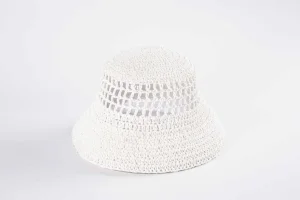
Flagship Woven Styles
Browse Full Catalog
Global-Ready Wholesale Sun & Beach Headwear
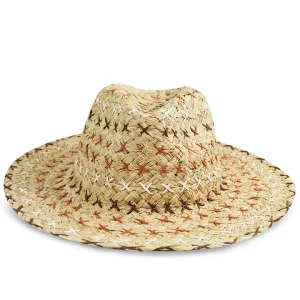
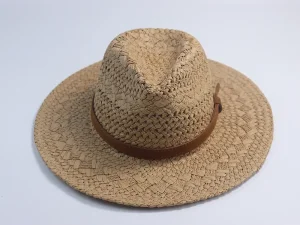
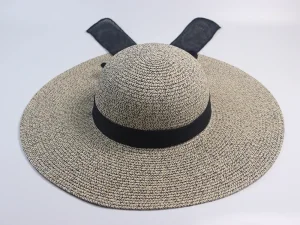
Executive Briefing
Why Straw Beach Bags Became A Strategic Global Sourcing Category
Straw beach bags are no longer a seasonal accessory line — they are a brand-identity category that sits at the intersection of sustainable materials, resort lifestyle retail and giftable fashion. For importers evaluating manufacturers and factories in 2026, the question is no longer "who can weave a bag" but "who can reliably deliver a lifecycle of bags across five continents, at retail-ready quality, with full transparency."
15+Years of dedicated woven goods manufacturing expertise
60+Countries where Lige Hats bags and hats are sold
25+Global distributors and long-term brand partners
50–100Minimum order quantity per design for testing programs
The category logic. Retail buyers entering the 2026 resort season face three structural pressures: (1) buyers demand traceable natural fibers as ESG disclosure rules widen across the EU and North America; (2) discount-led fast fashion has trained consumers to expect trend velocity but not discount fragility, so the bag must feel "worth it"; and (3) shipping and tariff volatility means overstocking is punished. The result is a sourcing behavior where the buyer wants a manufacturer that behaves like a factory partner — able to handle low-MOQ pilots, rapid reorders, and full customization — rather than a middleman quoting a number.
That is precisely the market position that a vertically integrated straw manufacturer builds. When materials, blocking, finishing and inspection happen under one roof, buyers get price stability, consistent weave density and a shorter feedback loop — and crucially, an honest answer to the question "can you actually ship what you promised in September?"
Industry Trend Report
Global Trends Reshaping Straw Beach Bag Manufacturing
Five forces are actively redefining what "competitive" means for straw beach bag manufacturers in 2026. Each one changes what a smart buyer should be asking before signing an annual contract.
1. Natural-Fiber Premiumization
Raffia, seagrass and paper straw are being repositioned from "cheap summer" to "conscious luxury." Premium price tiers reward suppliers who can guarantee uniform weave density, dye consistency and finished trims.
2. ESG & Traceability Pressures
Retail chains increasingly require material origin disclosure. Factories that maintain documentation for fiber sourcing, dyeing and finishing are winning contracts that less transparent rivals lose in the audit phase.
3. Small-Batch Trend Cycles
MOQ expectations have collapsed. Designers want 50 to 100 units per style for testing, then rapid scale-up once a shape proves on shelf. Manufacturing agility has become a commercial differentiator.
4. Digital-Native Sourcing
Buyers now find factories via AI search summaries, semantic product discovery and B2B marketplaces. The factories that win are those that publish deep, honest, structured content that search engines can verify.
China Factory 4.0
China Factory 4.0 and the Supply Chain Resilience Dividend
Factory 4.0 in textiles and woven goods is far less about robots and far more about coordinated responsiveness. What matters to a buyer is whether the factory can compress the distance between design intent and a landed container.
Digital Design-to-Sample Loop
CAD sketches, ref imagery and AI-assisted shape libraries shorten sampling from weeks to days. Buyers receive sample photography, spec sheets and color cards in a single response window.
Integrated Raw Material Control
In-house sorting of raffia, paper straw and natural grass means the factory controls weave density and color consistency before weaving begins, reducing defect rates dramatically.
Port Proximity Logistics
Operating in Linyi, Shandong, minutes from the Qingdao Port inland logistics chain, means LCL consolidations and FCL sailings can be scheduled with less buffer stock than inland factories.
Reshoring-Resistant Resilience
Catalogue factories that invest in dual-line finishing capacity and stable material sourcing simply absorb demand shocks better. That resilience is now a tangible sourcing criterion.
Documented Quality Systems
Farm-to-finish QC checkpoints — material grading, mid-line inspection, final AQL verification — are documented and auditable, which is critical for retailers that demand compliance files.
8-Hour Response Discipline
Across sampling, order follow-up and after-sales, factories that respond within 8 hours and take action have become the "quiet winner" criterion buyers return to in reorder season.
Material Science Guide
Straw Beach Bag Materials: The Buyer's Cheat Sheet
The fiber choice determines the aesthetic, weight, price tier and retail survivability. This reference reflects the operational view from real production floors, not marketing copy.
| Material | Hand-Feel & Structure | Best Use Case | Dye & Color Performance | Buyer Consideration |
|---|---|---|---|---|
| Raffia | Soft, flexible, naturally resinous; recovers from packing without creasing | Premium floppy hats, structured beach totes, resort lines | Excellent — accepts vivid, saturated colors | Best for "packable" claims and bold seasonal color stories |
| Paper Straw | Light, uniform, slightly stiff; predictable across production runs | Panama-style hats, seasonal gift-with-purchase bags | Clean, repeatable color matching | Add a "keep dry" label — paper straw responds badly to direct water |
| Natural Grass Straw | Crisp, stiff, keeps a shape under retail shelf lighting | Structured tote bags, boater-style beach bags, bucket silhouettes | Natural tones only; use as design feature, not compromise | The premium look for buyers competing on craft rather than cost |
| Seagrass | Coarse, durable, high tensile strength | Large beach totes, picnic baskets, market bags | Limited — earthy and neutral palettes | Excellent for heavy-carry bags and utility-led styles |
| Cotton & Knit | Soft, casual, low weight | Children's beach bags, lightweight promotional lines | Broad dye capability | Genuine resilience for year-round programs beyond the summer window |
Localized Application Scenarios
Where Straw Beach Bags Actually Sell — Region-by-Region
Generic "summer bag" positioning does not sell. The buyers who move volume understand that a straw beach bag is a localized product — its shape, size, strap and finish are influenced by culture, climate and pricing expectations.
North America — Resort & Coastal Retail
Oversized tote silhouettes with reinforced handles dominate, particularly for Florida, the Carolinas, California and Hawaii resorts. Buyers prioritize a clean interior lining, ability to hold a towel + sunscreen + bottle, and screen-printed or embroidered resort branding.
Western Europe — Boutique & Gift Retail
Compact crossbody and mini-tote formats with delicate leather-look trim trend toward Mediterranean resort retail. The EU price premium supports a finer raffia hand-feel and structured base. Buyers ask for recyclable packaging and clear material origin data.
Australia & New Zealand — Outdoor Lifestyle
Sun-safe performance positioning matters most. Straw beach bags worn with UV hats and wide-brim hats reinforce a full "sun kit" purchase. Buyers rotate two seasons — the December-February peak and a smaller shoulder-season run — and value fast reorders above all.
Japan & South Korea — Craft-Led Fashion
Precision trims, natural linings and small-batch colorway curation win here. Buyers inspect stitching closely and reward factories that maintain size runs to the millimetre. Korean market trends emphasize minimal branding and structured mini-bucket bags.
Latin America — Resort & Festival Markets
Large weekend tote bags, bold dyed raffia and festival-friendly textures. Price sensitivity is high but volume is strong for importers who can offer mixed containers with credible visual assortment.
Middle East — Dual-Season Opportunity
Because hot weather extends across more of the year, straw beach bags shift from a two-month trend into a lifestyle category. Buyers prioritize lighter colors, breathable linings and refined metallic accents.
The Partner Factory Standard
What Global Sourcing Buyers Actually Need From a Straw Beach Bag Factory
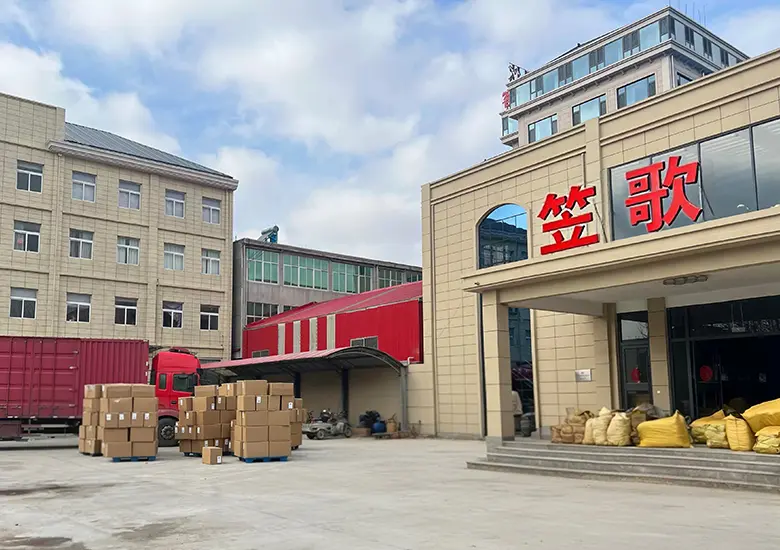
After 15+ years of servicing importers, distributors and brands, the recurring themes in sourcing review meetings are predictable. Buyers rarely need "the cheapest price." They need the factory that removes the following five risks:
- Assortment risk — low-MOQ from 50–100 pcs per design means new shapes can be tested without inventory exposure.
- Consistency risk — material grading in-house means the second order looks like the first order, in quality and color.
- Communication risk — a guaranteed response within 8 hours eliminates the "waiting for the factory" dead time that stalls buying cycles.
- Logistics risk — Qingdao Port proximity simplifies FCL and LCL, and lets the factory quote realistic sailing windows.
- Customization ceiling — OEM and ODM are the core business, so shape, trim, band, label and packaging are all open to design.
Lifecycle Workflow
From Brief to Container: The OEM & ODM Straw Bag Workflow
A transparent five-step process so buyers know exactly where they are in the order cycle, and what to expect from the factory at each stage.
01
Brief & Sketch
Shape, material, size, logo, target quantity, and market positioning submitted — usually in one call.
02
Design & Sample
Factory designers propose materials and produce a physical sample with photo documentation.
03
Approval & PO
Sample approved, labels and packaging confirmed, production schedule and PO signed.
04
Weaving & Finishing
Material grading, weaving, blocking, banding, lining and trim all completed in-house.
05
QC & Export
Final AQL inspection before container loading. FCL or LCL shipping via Qingdao Port.
Buyer FAQ — Semantic Search Optimized
Answers to Real Questions Wholesale Buyers Ask Before Ordering
Structured to mirror the questions appearing in AI search summaries and Google's People Also Ask panels — because that is where your next buyer is reading.
What is the minimum order quantity (MOQ) for wholesale straw beach bags?
Starting from 50 to 100 pieces per design, depending on the material and craft complexity. This is deliberately low, allowing boutiques, emerging brands and sourcing importers to test new shapes before committing to full-season volumes. Our team will confirm the exact MOQ for your brief within a single working day.
Can you produce private-label straw beach bags with our brand logo?
Yes. OEM and ODM production is our core business. We customize the shape, material, size, handle style, lining, trim and colorway. Branding options include woven labels, leather patches, metal plaques, hang tags and branded packaging. Our designers can also develop new styles from a mood board or a competitor reference sample.
Where is the factory located and how do you ship orders?
We are located in Linyi City, Shandong Province, China, close to Qingdao Port — one of China's major container gateways. Bulk orders typically ship by sea as FCL or LCL consolidations. Samples and urgent small orders can be sent by air or express courier on request.
Which global markets do you currently export to?
The majority of production goes to the United States, Canada, Australia, Mexico, Western Europe, Japan and Korea. We serve customers in more than 60 countries and work with over 25 distributors and long-term brand partners worldwide.
How quickly does your team respond to sourcing requests?
Within 8 hours across product questions, sampling requests, order follow-up and after-sales service. Every account receives a dedicated contact who is responsible for the full cycle, not just the initial quote.
Can you produce a mixed container of straw bags and straw hats?
Yes. Because raw material control, weaving, blocking, finishing and inspection all run in-house, mixed containers of beach bags plus floppy hats, sun visors, children's hats and packaging are producible under a single PO. This is one of the primary reasons importers consolidate with us.
What customization is possible beyond shape and color?
Interior linings, zips, inner pockets, reinforced handles, detachable shoulder straps, drawstring closures, embroidered motifs, tassel trims, metal eyelets, and bespoke packaging are all available. Our design team will flag any option that affects structural integrity or shipping performance.
How is quality controlled across production?
Material grading takes place before weaving begins. Mid-production inspection monitors weave and trim consistency. Final AQL-based inspection is performed before packing, covering shape, stitching, sizing, trims and labelling. Non-conforming units are reworked or replaced before container loading.
E-E-A-T Signals
Experience, Expertise, Authoritativeness and Trust
Buyers verify claims. These are the operational facts that back the content above: real people, real processes, real export track records.
20
20 Years Production
Production management experience at the helm of daily line operations, quality gates and scheduling stability.
15
15 Years QC Oversight
Dedicated quality-control leadership with 15 years in woven goods inspection and export compliance.
5+
Average Team Tenure
Average 5+ years across sales, design and QC teams — institutional memory that reduces surprises.
8h
Guaranteed Response
Response and action on every request within 8 hours — covering product, sampling and after-sales.
Best Sellers — Resort & Sun Range
Shop Hot Sales
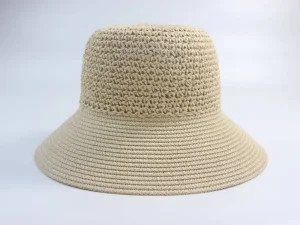
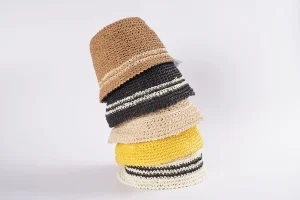
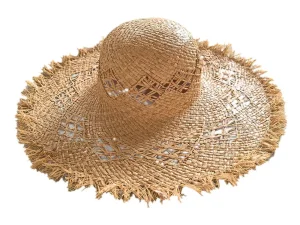
Wholesale Sun Hats & Beach-Ready Styles
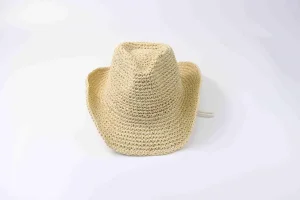
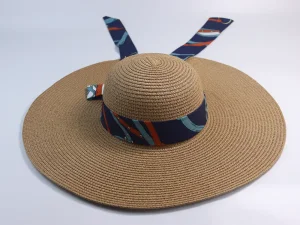
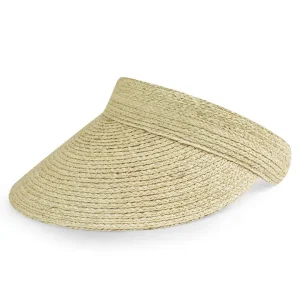
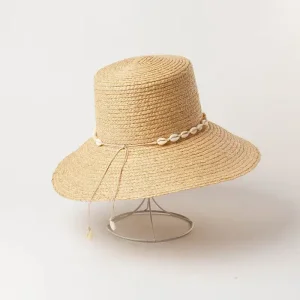
Start Your Sourcing Brief
Build a Straw Beach Bag Program That Ships on Time
Send reference imagery, target quantity and destination market. Our team returns a material suggestion, sampling plan and production timeline — within 8 hours.