
Beach & Resort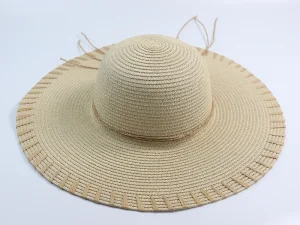
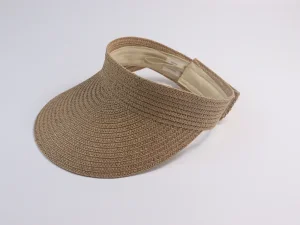
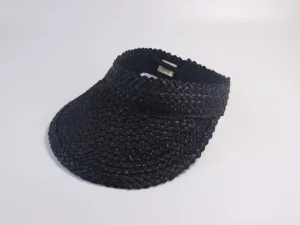
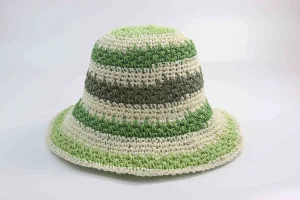
Children's straw bags rarely travel alone. Retailers buy them as part of a coordinated summer accessory story — a sun hat, a visor and a woven tote in the same colorway. The styles below are our most-requested SKUs for mixed programs, and every one is available with matched kids' sizing, custom bands and private-label trims.
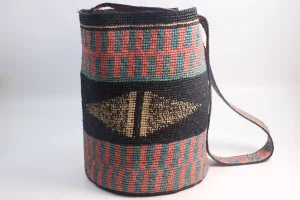
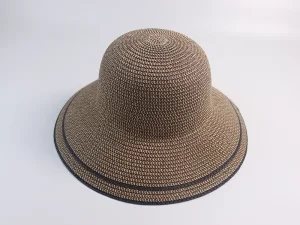
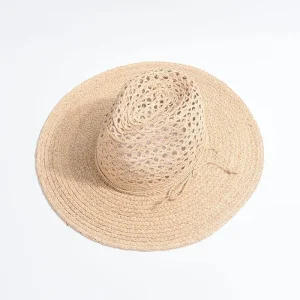
A kids straw bag exporter is a factory-backed supply partner that manufactures miniature woven totes, cross-body bags, basket purses and beach pouches for children, then handles export documentation, quality inspection and freight. The word "exporter" is doing a lot of work in that sentence.
In practice, buyers searching for a wholesale kids straw bag exporter manufacturer are usually not looking for a trading company at all. They want the party who physically controls the weave, the lining, the strap attachment and the final inspection — because children's products carry a different risk profile than adult fashion accessories. A loose strap or a rough straw edge is a returns issue at best and a safety review at worst.
This is where the manufacturer-versus-middleman distinction becomes commercially meaningful. A direct factory can adjust a weave density mid-production, swap a strap to a wider cotton webbing, add an internal lining seam allowance, or change a closure from a snap to a hook-and-loop tab without a three-party negotiation. A trading desk cannot, and typically will not, absorb those changes without margin protection. For importers building a repeatable children's bag program, the origin of the product is the origin of your flexibility.
Children's straw and woven bags sit at an unusual intersection: they are fashion accessories, seasonal impulse purchases, and — in many markets — regulated consumer products for minors. That three-way overlap shapes everything about how the category is sourced, priced and shipped.
The overwhelming majority of the world's natural-fibre woven bags originate in a small number of Chinese provinces, with Shandong — and Linyi in particular — functioning as a long-established cluster for straw braiding, hat blocking and woven accessories. Proximity to Qingdao Port gives this cluster a structural freight advantage for US, Canadian and European importers.
Secondary production exists in Vietnam, Madagascar (raffia raw material), the Philippines and parts of India, but each has a narrower material or style specialty. For a full-range kids bag program, Shandong remains the most complete single source.
Children's bags occupy a compressed price band. Because the unit is small, the retail price ceiling is low, yet the labour content per piece is not proportionally lower — a miniature tote may require nearly the same hand-weaving steps as an adult one. This squeeze is why material selection is the primary cost lever, not labour arbitrage.
Paper straw and cotton-rope constructions reliably land in opening price points; raffia and hand-braided natural grass support mid-to-premium positioning where the weave itself is the selling story.
Children's accessories are scrutinised for small parts, cord and strap length, chemical residues in dyed natural fibres, and flammability depending on the market. The EU's General Product Safety Regulation, US CPSIA tracking-label expectations for children's products, and retailer-specific testing protocols all push buyers toward suppliers who can document their materials.
This is a genuine competitive moat for factory-direct exporters: documentation capability is now a sales feature, not an administrative afterthought.
The category has moved decisively away from container-load single-SKU orders. Buyers now place smaller, more frequent, more colour-diverse orders — driven by boutique retail, marketplace selling and test-and-repeat buying behaviour. Suppliers who cannot economically produce 50–100 pieces per design are effectively locked out of the fastest-growing buyer segment.
Natural fibre is not automatically "sustainable" in a buyer's eyes — provenance, dye chemistry, worker conditions and packaging all enter the assessment. Increasingly, sustainability arrives as a specification document attached to a purchase order rather than a marketing claim on a website, which favours suppliers who can name their fibre sources.
Resort retail, museum and aquarium gift shops, kids' fashion boutiques, marketplace private labels and hotel amenity programs have all expanded their woven-accessory assortments. Each channel imposes different packaging, labelling and carton-marking expectations — a detail that separates a genuinely export-ready factory from a domestic wholesaler.
Trends in this category rarely arrive as dramatic shifts. They arrive as small, repeated requests in buyer emails — and then harden into order specifications within two or three seasons.
Kids bags increasingly echo adult bestsellers — the same raffia tote silhouette, scaled down with a shorter strap and lighter hardware. Buyers want the "matching set" story for family photography and gifting.
Coordinated sets — one weave, one trim colour, one label system — reduce a buyer's SKU management overhead and increase average order value. Suppliers who can produce both categories in-house win these programs.
Embroidered name tags, monogram hang tags and removable charm attachments turn a commodity basket into a gift item — a low-cost, high-margin upgrade that requires only a small change in the finishing line.
Bags designed to carry a refillable water bottle or snack container, with wipe-clean linings and reinforced base panels, extend product life and support retailers' durability messaging.
Buyers increasingly build ranges from keyword demand data — "toddler straw beach bag", "mini raffia crossbody for girls", "woven basket purse kids". Suppliers who publish clear, descriptive product naming make themselves discoverable at exactly the moment of intent.
Retail compliance teams now ask for material declarations and test summaries before commercial terms are discussed. A supplier's documentation pack is becoming a de facto pre-qualification gate.
The same woven basket behaves very differently in Queensland, Copenhagen and Southern California. Understanding the local usage context changes the specification, not just the marketing.
Here the bag is functionally part of sun protection — it travels to the beach carrying sunscreen, a hat and a water bottle. Buyers in these markets prioritise tight weave density (to stop sand ingress), a slightly larger body size, and robust cotton webbing straps that survive salt water and repeated washing. Linings should be wipe-clean rather than absorbent.
Purchasing is heavily concentrated into a short pre-season window, and the product is often sold as a souvenir or hotel amenity. Volume-per-style is higher, decoration is simpler, and packaging (a swing tag, a polybag alternative) carries more weight in the decision than long-term durability.
Straw bags here are gift items and boutique accessories rather than beach equipment. Buyers specify finer braids, muted and natural colourways, embroidered name tags, and recycled or FSC-certified paper packaging. The purchase is driven by aesthetic narrative, and the tolerance for visible imperfection in the weave is lower.
Small woven pouches used as snack carriers or play baskets must satisfy durability and small-parts expectations. Reinforced stitch points, no detachable beads, and blunt-end hardware are non-negotiable specification items in these channels.
A transparent six-stage route, with the specification decisions that determine cost, compliance and shelf appeal at each stage.
Choose raffia, paper straw, natural grass braid or cotton rope. This single decision sets the price band, the achievable colour palette and the durability claim.
Define body dimensions, base panel, gusset depth, strap drop length and closure type — all adjusted to children's proportions rather than simply scaled.
A physical sample confirms weave density, lining attachment, strap anchoring and label placement before any production commitment.
Small-parts assessment, strap and cord length, dye declarations and destination-market labelling are confirmed against the buyer's brief.
Weaving, blocking or shaping, lining insertion, trim application and final assembly run in-house under a single quality process.
Final QC checks weave consistency, stitching, sizing and trims before export packing and carton marking.
FCL or LCL sea freight via Qingdao Port for bulk orders; air and express courier for samples and urgent small runs.
Winning styles are reordered, colour-extended and scale into larger volumes while the approved specification is locked.
Material choice drives cost, colour range, shape retention and the durability claim you can credibly make to a retail buyer. This is how our product team frames the conversation before sampling begins.
| Fibre | Hand-Feel & Structure | Best-Fit Styles | Cost Position | Buyer Note |
|---|---|---|---|---|
| Raffia | Soft, flexible, natural resins aid shape recovery | Mini totes, crossbody bags, slouch baskets | Mid to premium | Strong dye uptake — supports bold colourways and "packable" claims. |
| Paper Straw | Lightweight, uniform, crisp finish | Structured baskets, boxy pouches, promotional lines | Opening price point | Excellent colour consistency; requires "keep dry" care labelling. |
| Natural Grass Braid | Firm, resilient, artisanal texture | Basket purses, reinforced snack carriers | Mid | Best shape retention on shelf; visible weave is itself the selling story. |
| Cotton Rope & Knit | Soft, washable, tactile | Play pouches, nursery storage baskets | Mid | Extends your range beyond summer into year-round categories. |
| Lining & Trim | Cotton canvas or wipe-clean polyester | All styles | Low cost, high impact | Determines perceived quality more than the outer weave in many retail tests. |
Individual SKU questions are easy. The harder questions are programme-level: how do you run a children's woven accessories line that is repeatable, compliant and commercially defensible across several seasons?
Because hats and bags share raw materials, trims, linings and finishing labour, sourcing both from a single factory removes duplicated sampling cycles, duplicated freight consolidation and duplicated compliance documentation.
For a buyer launching a coordinated summer story, this can compress the development timeline by several weeks and reduce total landed cost without changing the retail price architecture.
Beginning at 50–100 pieces per design lets a boutique or emerging brand validate a silhouette at acceptable inventory risk, then reorder winners at volume while the approved specification stays locked.
This structure is now the default expectation rather than a premium service — buyers simply do not commit container volumes to unproven children's styles.
A standing pack — material declarations, dye information, construction notes and inspection records — means each new order starts from a documented baseline rather than a blank page.
It also gives the buyer something concrete to hand to a retail compliance team, which shortens the path from sample approval to purchase order.
A structured response commitment — within eight hours, covering product questions, sampling, order follow-up and after-sales — keeps a seasonal calendar on track when a single delay can cost a full selling window.
Operating near Qingdao Port allows FCL and LCL flexibility, mixed-carton consolidation across hat and bag categories, and faster response to freight-rate volatility — all of which matter more for smaller buyers than headline unit price.
In-house designers can develop children's styles from a mood board, a competitor reference or a raw concept — including proportion adjustments that a catalogue cannot provide. For brand owners building a distinctive line, this is the difference between sourcing and developing.
Nothing in this category is likely to change abruptly. The direction of travel, however, is fairly clear — and it rewards buyers who choose supply partners with the flexibility to move with it.
Traceability will become routine. As natural-fibre provenance moves from marketing language to procurement requirement, suppliers who can name fibre origin, dye class and finishing process will hold a structural advantage in European and North American retail conversations.
Smaller, faster, more frequent orders will dominate. The economics of boutique and marketplace retail point toward compressed minimums, faster sampling and repeat ordering rather than seasonal bulk. Suppliers optimised for 50–100 piece runs will increasingly be the default choice.
Coordination will beat fragmentation. Buyers want fewer suppliers covering more of the summer accessory story — hat, bag, visor, pouch — with consistent materials and trims. Single-category suppliers will need to partner or consolidate to stay relevant.
Design differentiation will migrate to trims. As base weaving becomes widely available, the brandable surface moves to linings, labels, charms, strap hardware and packaging. The next competitive frontier is finishing, not fibre.
Direct answers on minimums, customisation, materials, logistics and service — the questions that come up in almost every first conversation.
Our starting quantity for small orders is 50 to 100 pieces per design, depending on material and craftsmanship. This allows boutiques, emerging brands and importers to test new children's styles before scaling to larger volumes.
Yes. OEM and ODM production is our core business. We customise shape, material, colour, size, lining and strap, and can add branding such as woven labels, patches and hang tags. Our in-house designers can also develop new children's styles from your mood board or reference samples.
Raffia, paper straw, natural grass braid and cotton rope are all viable. Raffia offers softness and strong dye uptake for colour-led ranges; paper straw supports opening price points with excellent colour consistency; natural grass braid gives the firmest shape retention; cotton rope extends the range beyond summer. Lining choice — cotton canvas or wipe-clean polyester — has a larger effect on perceived quality than most buyers initially expect.
We are located in Linyi City, Shandong Province, China, close to Qingdao Port. Bulk orders are typically exported by sea freight as FCL or LCL shipments, while samples and urgent small orders can be sent by air or express courier.
Most of our products are exported to the United States, Canada, Australia, Mexico, Western Europe and Japan. We serve customers in more than 60 countries and work with over 25 global distributors.
We respond and take action within 8 hours, covering product questions, sampling, order follow-up and after-sales service.
Yes — this is one of the practical advantages of sourcing from a single factory. Hats and bags share raw materials, trims, linings and finishing labour, so coordinated colourways and consistent label systems can be produced and consolidated into one shipment.
In addition to straw bags, we manufacture paper hats, straw hats, paper bags, children's straw hats, toy hats, lifeguard hats, sun visors, winter hats and other bags — a full seasonal accessory range from a single supply partner.
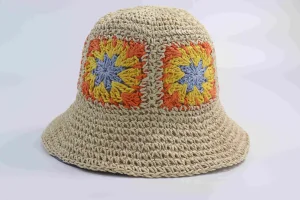
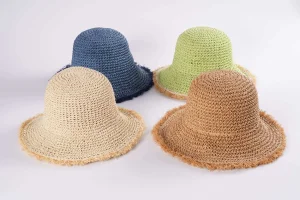
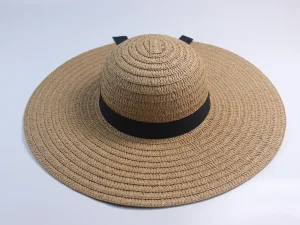
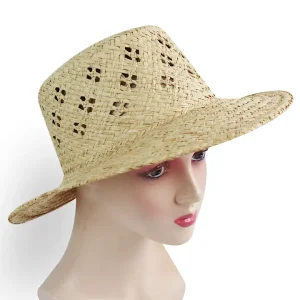
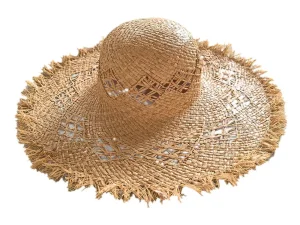
A coordinated summer story needs both categories. These styles are produced from the same material families as our bag lines, making matched colourways and consistent trims straightforward.
Share your style references, target quantity, material preference and destination market. Our team will come back with material recommendations, a sampling plan and a production timeline.