Universal Fit
A soft crown and downward brim fit more head shapes than structured hats, cutting size-curve complexity and return rates for e-commerce sellers.
Bucket hats have migrated from a summer novelty to a year-round, cross-demographic staple. For bulk buyers, the question is no longer whether to stock them — it is how to source them with predictable quality, defensible margins, and a supply chain that survives tariff, freight, and seasonal volatility.
A soft crown and downward brim fit more head shapes than structured hats, cutting size-curve complexity and return rates for e-commerce sellers.
The 360° brim shields the face, ears, and neck — the exact zones regulators and consumers associate with sun-protection claims.
Leading Chinese factories now start at 50–100 pcs per design, letting boutiques and DTC brands validate SKUs before committing to containers.
Weaving, blocking, trimming, and QC under one roof compress lead times and remove the margin stacking of trading-company intermediaries.
"Leading" is an overused word in B2B listings. Operationally, it means four measurable capabilities: raw-material access, weaving capacity, finishing precision, and export logistics density. Shandong and Zhejiang cluster these four better than almost any other region.
Linyi sits within a dense belt of straw-weaving, paper-straw twisting, and headwear finishing workshops. Sub-suppliers for raffia, paper yarn, grosgrain ribbon, and metal eyelets are within hours, not weeks — which is why sampling cycles here run 30–50% faster than in isolated factories.
Qingdao Port — one of China's largest container gateways — is a short truck haul from Linyi. That proximity translates into faster FCL consolidation, cheaper LCL co-loading, and lower inland drayage per unit than inland provinces. For US and EU buyers, transit time to West Coast and Northern Europe is competitive against any origin.
Leading factories combine hand-weaving artisans (critical for raffia and natural grass) with automated blocking presses and computer-controlled color matching (critical for paper straw consistency). That duality is what allows a single supplier to serve both premium resort brands and mass-market promotional buyers.
Tenured production and QC managers — often 15–20 years in headwear — reduce specification drift between the approved sample and the 5,000-unit reorder. For buyers, this is the single largest determinant of reorder confidence.
Raffia, paper straw, wheat-grass ribbon, cotton canvas, and knit constructions can be sourced and finished within one relationship — reducing the vendor-management overhead that multi-supplier assortments create.
The best factories price MOQ from 50–100 pcs per design while still holding capacity for 100k+ unit seasonal programs — an unusual combination that supports both market testing and national rollouts.
Buyer insight: When evaluating a "leading" supplier, request three things — (1) a specification sheet with weave density, brim width, and sweatband construction; (2) the last 12 months' on-time shipment rate; (3) a video walkthrough of the blocking and finishing line. A supplier that hesitates on any of the three is almost certainly a trading desk, not a factory.
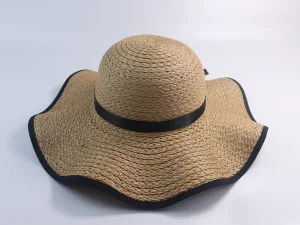
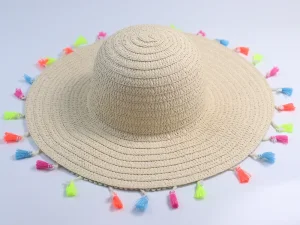
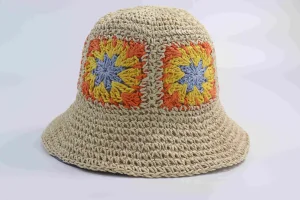
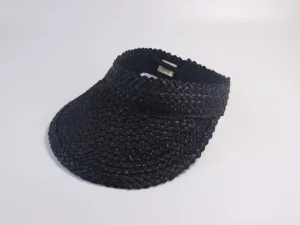
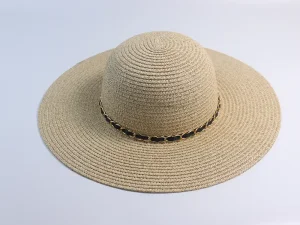
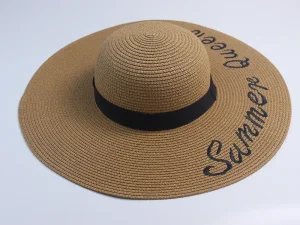
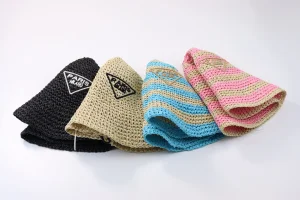
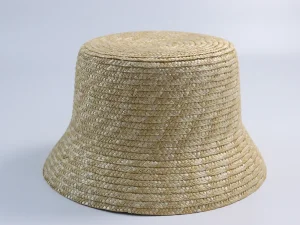
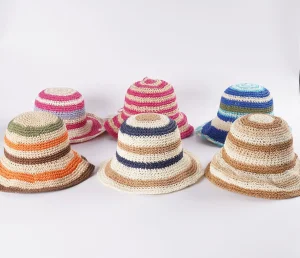
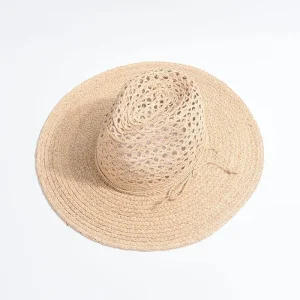
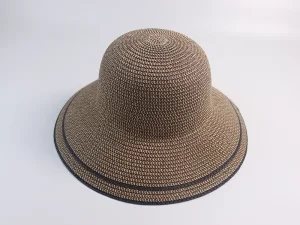
A representative slice of the factory catalogue: woven bucket hats, wide-brim sun hats, Panama styles, and children's lines. Every style is available for private label, custom band, and custom color development.
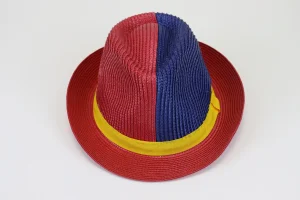
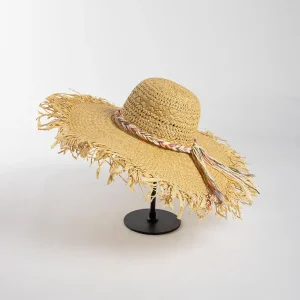
Demand signals from European, North American, and APAC retail channels point to a category that is growing in sophistication, not just volume. The five forces below should inform any multi-season sourcing plan.
Buyers now write "natural fiber content," "biodegradable packaging," and "no PFAS finishing" into POs — pushing factories to document fiber origin and finishing chemistry rather than claim "eco-friendly" abstractly.
Foldable, crush-resistant constructions that return to shape are increasingly a baseline requirement for resort and DTC travel brands — a direct engineering brief for raffia and paper-straw blends.
US and EU buyers diversify across two to three origins while keeping China as the primary volume source. China's depth in natural weaving materials remains difficult to replicate elsewhere at scale.
Retailers replenishing 12-week sell-through data now demand smaller, faster reorders — pressuring suppliers to hold component inventory and compress production lead time toward 20–30 days.
Bucket hats moved from boutique shelf to marketplace, social commerce, and promotional catalogues. Suppliers who support per-channel packaging and barcoding reduce retail-side labor.
Major importers increasingly require batch-level traceability on natural fibers. Factories that document procurement at the weaving stage are positioned to win long-term contracts.
The fiber you select drives unit cost, shape retention, dye behavior, and packability. This matrix reflects how our product engineers shortlist materials once a buyer shares the target market and price band.
| Material | Hand-feel | Shape Retention | Best-fit Use Case | Price Band |
|---|---|---|---|---|
| Raffia Straw | Soft, flexible | Recovers after packing | Floppy brims, resort, premium DTC | Premium |
| Paper Straw | Light, uniform | Moderate; sensitive to moisture | Panama styles, promotional, mass retail | Mid |
| Wheat-Grass Ribbon | Crisp, structured | High | Bucket hats, structured brims, logo applications | Mid-Premium |
| Natural Grass Straw | Firm, artisanal | Very high | Boater, cowboy, lifeguard lines | Premium |
| Cotton Canvas | Textile feel | High; wash-care required | Everyday fashion, youth lines | Entry-Mid |
| Knit / Poly Blend | Stretch, soft | Moderate | Sporty visors, winter, children's | Entry |
Sampling rule of thumb: For a retail price under USD 15, paper straw or cotton canvas delivers the cleanest margin. Between USD 15–30, wheat-grass ribbon and natural grass hold up best against "quality" reviews. Above USD 30, raffia and hand-woven natural fibers justify premium positioning — provided the weave is documented.
A bucket hat that sells in Miami will not sell unchanged in Oslo. Localizing brim width, color palette, packaging, and even weave density is how leading suppliers support importers across continents.
Wide-brim UPF 50 style dominates; neutral and earth-tone palettes; emphasis on coastal, festival, and everyday-street use. Retail partners expect barcoded polybags and mixed-size cartons.
Mid-brim raffia with natural dyes, stronger emphasis on fiber traceability, and packaging that supports sustainability claims. Small-batch seasonal drops with reorder flexibility outrank large single shipments.
Buyers prioritize clean stitching, accurate sizing, and refined packaging. Narrower brim profiles and muted palettes outperform oversized summer silhouettes in these markets.
UPF testing documentation is often required. Wiring or structured brims are preferred for on-water and outdoor activity; unisex and children's programs frequently run in parallel.
High-volume resort and promotional programs drive demand for high-contrast palettes, packable bags, and multi-pack assortments. Lead time and container loading efficiency are as important as unit price.
Chinese DTC brands prioritize trend velocity, social-ready packaging, and 15–20 day replenishment windows. Suppliers must flex between MOQ 50 and rapid reorders within the same season.
Leading bulk suppliers no longer just manufacture — they architect logistics, packaging, and inventory models to reduce the buyer's total landed cost. Here is how the modern program is structured.
Map styles to channels before sampling. A 6-SKU resort capsule behaves differently from a 40-SKU marketplace assortment — and pricing, MOQ, and packaging must follow that logic.
Approved samples become the legal specification: weave density, brim width, sweatband material, stitch count per inch. Locking every variable is what prevents reorder drift.
Raffia and natural grass have seasonal availability windows. Leading factories pre-book raw material for Q1 and Q2 programs to protect price and delivery.
In-line inspection at blocking and finishing stages catches defects mid-batch, avoiding the costlier discovery at final AQL inspection.
Polybag, hangtag, barcode, carton labeling, and store-ready multi-pack configuration are completed at factory level to reduce DC labor.
Stackable brim design and load-plan optimization can push 20–35% more units per container, directly reducing per-unit freight — often worth more than a small FOB reduction.
Share your target market, quantity, and price band. Our team will return material recommendations, a sampling plan, and a container-optimized cost sheet within 8 hours.
Start Your Sourcing BriefAcross interviews with importers in the US, EU, and APAC, six requirements recur consistently. A supplier that meets all six becomes a strategic partner, not a spot vendor.
Spec sheets, compliance certificates, and test reports are shared before request, not after. This reduces compliance friction with EU and North American retailers.
Buyers plan to published lead times, with in-season reorder windows between 20–30 days for repeat styles and components already in stock.
AQL-based inspection, documented tolerance ranges, and photographic QC reports on request — especially for buyers with stringent retail partners.
Custom labels, hangtags, embroidery, woven bands, and packaging — managed by one account team rather than four separate vendors.
Container load plans are optimized to fit more units without brim deformation — a structural lever that outsized few-cent FOB negotiations.
A single, English-fluent account manager who responds within 8 hours and owns the relationship from sampling through after-sales.
Predictability is the product. The workflow below is what buyers should expect from a leading factory — and what we run for every program, from 50-piece capsules to seasonal containers.
Style references, target market, quantity, price band, and delivery window captured in a single spec sheet.
Our designers recommend fiber, weave density, and band options; samples delivered for approval.
Samples, packaging, labeling, and delivery schedule signed off as the binding program specification.
Raw material sorting, weaving, blocking, and finishing performed in-house with in-line checks.
AQL inspection covers shape, stitch precision, sizing tolerance, and trim attachment.
FCL or LCL via Qingdao Port, with container load planning optimized for brim integrity.
Direct answers to the questions procurement teams raise most often before placing a bulk order.
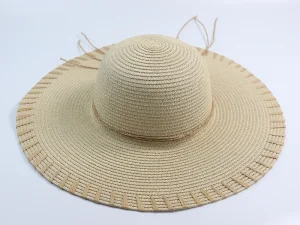
Additional silhouettes from the same factory line — wide-brim beach, oceanside visors, embroidered straw, and children's hat-and-bag sets. All available for private label and custom development.