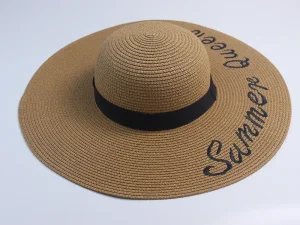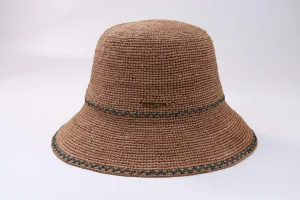
Wholesale Hat & Accessory Range
OEM / ODM · MOQ from 50–100 pcs per design · Export via Qingdao Port
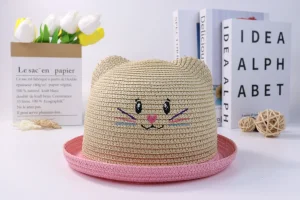
Wholesale Kids' Straw Hats for Summer Fun - Stylish & UV Protection Manufacturer, Factories
View Product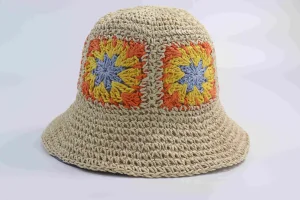
Wholesale Stylish China Straw Bucket Hat from Trusted Suppliers - Ideal for Sun Protection! Factory Direct Pricing Available! Suppliers, Factory
View Product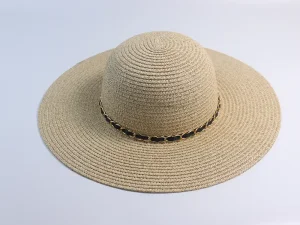
Wholesale Wholesale Women's Summer Seaside Sun Visor Hat - China Suppliers & Factory for Custom Straw Sun Protection Manufacturers, Suppliers
View Product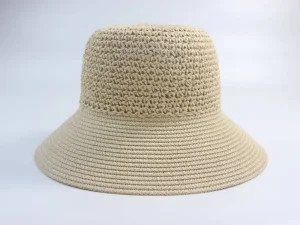
China Elegant Summer Bucket Hats for Women - China Suppliers Factory - Custom Crochet Sun Fisherman Hat Manufacturers, Factory
View Product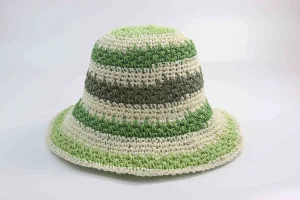
High-Quality Trendy Summer Bucket Hat: Stylish Crochet Design by China Suppliers and Factory - Customizable Options Available Manufacturer, Factories
View Product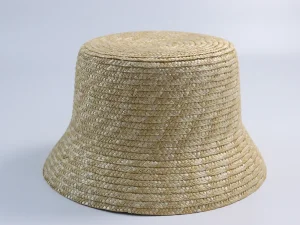
China Unisex Summer Straw Hat Panama Style from China Suppliers - Custom Logo for Beach Party & Sports Factory Direct Manufacturers, Factory
View Product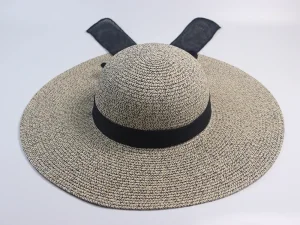
China Multi-colors Lady Hat Summer Floppy with Big Brim - Premium Quality from China Suppliers & Factory Manufacturers, Suppliers
View Product
Search Intent & Definition
What Buyers Actually Mean by “Leading Cowboy Hats Grey Manufacturers”
Queries combining “leading”, “cowboy hats grey”, “manufacturers” and “manufacturer” sit at the intersection of three commercial intents: supplier discovery, product specification, and risk validation. A buyer typing this phrase is rarely browsing — they are qualifying a shortlist before requesting samples, RFQs or a factory audit.
This whitepaper is written for that buyer. It explains how grey cowboy hat programs are engineered, how a Chinese hat factory operating under a Factory 4.0 model absorbs volatility, what compliance documentation should accompany a shipment, and how to benchmark one manufacturer against another using verifiable criteria rather than marketing claims.
0Years of straw & felt headwear manufacturing
0Export countries served across six continents
0Active global distributors and import partners
0Hours average response & action on buyer requests
Localisation & Compliance Assurance
Localisation Support and Compliance Guardrails for Grey Hat Programs
A grey cowboy hat is not a single SKU — it is a specification stack. Grey is the most visually sensitive color family in headwear because dye lot variance, lighting metamerism and brush direction all read differently on a sales floor versus a studio photograph. Manufacturers who serve global brands must therefore localise both the product and the paperwork.
Market-Specific Labeling
Fiber content, country of origin, care instructions and sizing conventions are prepared per destination market — US FTC textile rules, EU Regulation 1007/2011, UK, Canadian bilingual, Australian and Japanese requirements — before bulk production begins.
Documentation Pack
Commercial invoice, packing list, HS code classification, certificate of origin, material declarations and test reports are consolidated into a single shipment dossier so customs brokers and retail compliance teams work from the same source of truth.
Grey Shade Control
Grey is controlled through lab-dip approval plus production bulk dip, with a documented ΔE tolerance. Buyers receive physical swatches for light grey, charcoal, stone, dove and gunmetal references so reorders stay visually consistent season over season.
Brand & IP Hygiene
Logo files, patches, woven labels and packaging artwork are logged with version control and sample sign-off records, reducing the risk of unauthorized mark reproduction and enabling brand-protection audits downstream.
Ethical & Social Standards
Factory-level social compliance documentation, worker-safety procedures and traceability of raw material batches are maintained and can be shared under NDA with buyers running supplier-code-of-conduct programs.
Sustainability Positioning
For grey collections using raffia, paper straw or recycled felt blends, documentation supports eco-positioning claims — important where retailers require material substantiation before a product page goes live.
China Factory 4.0
Supply-Chain Resilience and Efficiency Inside a Modern Hat Factory
“Factory 4.0” is often used loosely. In headwear it means four concrete capabilities: digitised order intake, instrumented production, data-driven quality control, and logistics visibility. Together these determine whether a manufacturer can protect a buyer's launch date when raw-material lead times, port congestion or a last-minute colour change intervene.
Digitised Order Intake
Tech packs, size charts, colour references and packaging artwork are centralised per SKU. A change requested by a buyer is logged with a timestamp and reflected consistently across sampling, bulk and inspection checklists.
Instrumented Production
Blocking temperature, brim-flange pressure, drying humidity and stitch density are measured rather than estimated. Grey felt is especially unforgiving — over-blocking produces shine, under-blocking produces a limp brim.
Data-Driven QC
Inspection results are captured per lot: crown height, brim width, circumference, shade batch, trim attachment and packing count. Defect trends are reviewed before the next production run, not after a claim arrives.
Logistics Visibility
Located in Linyi, Shandong, the factory sits within reach of Qingdao Port. FCL and LCL shipments, air freight for urgent replenishment, and express courier for samples are all coordinated from a single planning view.
Resilience Through Redundancy
Multiple raw-material lots, cross-trained weaving and finishing teams, and buffer capacity on high-rotation grey SKUs allow the factory to absorb a demand spike or a supplier gap without breaking delivery commitments.
Low-MOQ Flexibility
Programs can start at 50–100 pieces per design, letting boutiques and emerging brands validate a grey cowboy silhouette before committing to volume — a structural efficiency advantage that rigid factories cannot match.
Global Procurement Demand
What Global Buyers Are Asking For in Grey Cowboy Hat Programs
Demand for grey western headwear has shifted from occasional seasonal add-ons to a core assortment line. The reasons are commercial, not merely aesthetic: grey photographs predictably for e-commerce, it pairs with a wide apparel palette, and it positions western styling as a year-round fashion category rather than a festival product.
| Buyer Type | Primary Requirement | Typical Order Logic | What They Audit First |
|---|---|---|---|
| Western & rodeo retailers | Shape fidelity, cattleman crown accuracy, brim stability | Seasonal, repeat-year SKUs | Sample shape versus reference hat |
| Fashion & streetwear brands | Grey shade precision, private label, packaging | Drop-based, low MOQ | Lab dips and label accuracy |
| E-commerce sellers | Photographic consistency, packability | Test-then-scale | Colour consistency across lots |
| Promotional & event buyers | Logo placement, unit cost, delivery window | One-off, timed | Delivery reliability |
| Distributors & wholesalers | Assortment breadth, reorder stability | Program-based | Factory capacity and documentation |
| Resort & travel retail | Lightweight construction, crush recovery | Seasonal | Packability and spring-back tests |
Across all six segments, buyers converge on the same three questions: can this manufacturer hold a grey shade across reorders, can it deliver inside my window, and can it prove both with records. Manufacturers who answer with documentation rather than assurances convert RFQs at a materially higher rate.
Macro Industry Solutions
Sector-Level Solutions Built Around One Manufacturing Backbone
A single factory line can serve radically different industries if the surrounding program is designed correctly. Rather than selling one hat to everyone, leading manufacturers configure material, finish, packaging and documentation per vertical.
Western Specialty Retail
Structured felt and stiffened straw grey cowboy hats with cattleman or teardrop crowns, shapeable brims and leather-effect bands. Emphasis on silhouette integrity so the hat holds shape on a saddle-rack display.
Fashion & Lifestyle Labels
Softer, packable grey construction with wide floppy-western brims, custom bands and tonal embroidery. MOQ from 50 pieces per design allows capsule drops without inventory exposure.
Travel & Resort Groups
Lightweight woven grey hats engineered for packing — crush-recovery testing, fold-flat crown options and branded hang tags suited to hotel boutiques and resort retail programs.
Corporate & Event Supply
Grey cowboy hats as branded event merchandise — embroidery, patch application and custom packaging handled within a defined production calendar so delivery aligns with the event date, not after it.
Marketplace & DTC Sellers
Batch-consistent grey shades, standardised size charts and repeatable photography references — because marketplace returns are driven by colour and dimension surprises, not by design preference.
Wholesale Distribution
Broad assortment programs combining grey cowboy hats with Panama, boater, bucket, floppy, visor, children's and winter lines — one supplier, one shipment dossier, one quality standard.
Technical Roadmap & Outlook
Technology Roadmap for Leading Cowboy Hats Grey — 2026 and Beyond
The next competitive frontier in headwear manufacturing is not cheaper labor — it is specification certainty. Buyers increasingly reward manufacturers who can guarantee a documented outcome before the first bulk unit is produced.
- Phase 01
Digital Colour Libraries
Grey shade references move from paper swatch books to digital libraries tied to measured ΔE tolerances, enabling remote approval and eliminating the physical-swatch shipping cycle.
- Phase 02
3D Shape Prototyping
Crown profile, brim flange and band width are visualised before sampling, compressing the sample loop from weeks to days for new western silhouettes.
- Phase 03
Traceable Material Batches
Raffia, paper straw and felt batches carry identifiers linking finished hats to raw-material intake, supporting retailer traceability requests and eco-claim substantiation.
- Phase 04
Predictive Capacity Planning
Historical reorder data informs capacity reservation so seasonal peaks in western headwear are absorbed without compressing lead times on parallel programs.
- Phase 05
Automated Final Inspection
Vision-assisted checks on brim symmetry and shade consistency complement human QC, improving consistency across high-volume grey lots.
- Phase 06
Closed-Loop Packaging Design
Right-sized cartons and crush-resistant inserts reduce dimensional-weight cost and transit damage — measurable savings passed through to buyers.
Request a Grey Cowboy Hat Sampling Plan
Share your silhouette, grey reference and target quantity — receive a material recommendation and timeline within 8 hours.
Risk Register
Six Failure Modes That Break a Grey Cowboy Hat Program
Procurement failures in headwear are rarely dramatic — they are small specification drifts that compound at scale. Each has a documented countermeasure.
1 · Shade Drift Between Lots
Grey amplifies dye variance. Countered by bulk dip approval, retained production swatches and lot coding on every carton.
2 · Brim Set Loss
A limp brim destroys the western silhouette. Countered by measured flange pressure and post-blocking resting time.
3 · Trim Detachment
Bands and conchos fail at the weakest stitch. Countered by pull-test sampling on every trim type before bulk.
4 · Size Inconsistency
Circumference variance causes returns. Countered by measuring finished hats against a fixed block standard, not nominal labels.
5 · Documentation Gaps
Missing fiber or origin declarations stall clearance. Countered by a consolidated shipment dossier prepared before dispatch.
6 · Window Compression
Late sampling collapses production time. Countered by reserving capacity at sample approval rather than at PO issue.
Buyer Q&A
Frequently Asked Questions on Wholesale Grey Cowboy Hats
Direct answers to the questions that decide supplier selection.
What is the minimum order quantity for custom grey cowboy hats?
Programs typically start at 50 to 100 pieces per design, depending on construction, material and trim complexity. This structure lets boutiques, emerging labels and importers validate a grey western silhouette before committing to volume production.
Can you produce private-label cowboy hats with our logo?
Yes. OEM and ODM production is core business. Crown shape, material, grey shade, size run, brim profile and band are all customisable, with branding added via woven labels, patches, embroidery and hang tags. In-house designers can also develop new styles from a mood board or reference sample.
How is a grey shade kept consistent across reorders?
Through a controlled approval chain: lab dip approval, production bulk dip approval, retained production swatches and lot coding on cartons. Buyers can specify a ΔE tolerance so reorder lots are objectively compared to the approved reference.
Where is the factory located and how are orders shipped?
The factory is in Linyi City, Shandong Province, China, close to Qingdao Port. Bulk orders ship by sea as FCL or LCL, while samples and urgent small orders move by air or express courier.
Which markets do you export to?
The majority of output goes to the United States, Canada, Australia, Mexico, Western Europe and Japan. The manufacturer serves customers in more than 60 countries and works with over 25 global distributors.
How quickly does the team respond to buyer requests?
Requests are answered and acted on within 8 hours, covering product questions, sampling, order follow-up and after-sales service.
What materials are available for grey cowboy hats?
Grey programs can be produced in raffia, paper straw and natural grass straw, as well as felt and knit constructions. Each fiber changes hand-feel, shape retention, price point and shipping durability, so material selection is confirmed at sampling.
What else is manufactured besides cowboy hats?
Alongside cowboy hats, the factory produces Panama, fedora and trilby, boater, bucket, floppy, visor and children's straw hats, plus paper hats, straw bags, paper bags, toy hats, lifeguard hats, winter hats and other bags.
Explore Related Wholesale Styles
Factory-direct pricing · Custom logo · OEM & ODM supported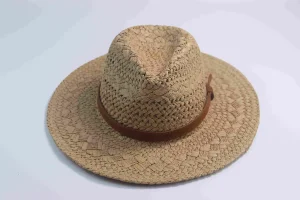
High-Quality Stylish Women's Fashion Hats - Perfect for Every Occasion Manufacturer, Factory
View Product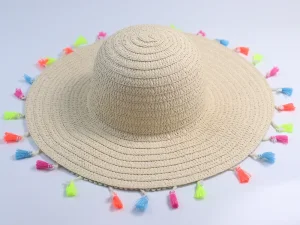
China Summer hat & bag for Kids Cute Beach Handbag and Hat Set Manufacturer, Factory
View Product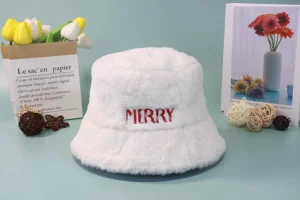
High-Quality Soft Warm Womens Winter Beanie Hat, Thick Knit Hat, Ideal for Ski, Hiking, Daily & Holiday Gift Manufacturers, Factory
View Product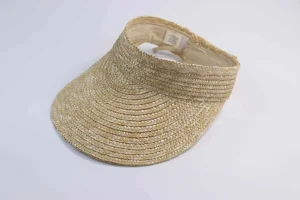
High-Quality Stylish Sun Visor Hat Cap - Perfect for Outdoor Activities Manufacturer, Factory
View Product
Wholesale Elegant Beach Sun Fisherman Bucket Hats for Women - China Suppliers & Factory Customizable Options Available Supplier, Suppliers
View Product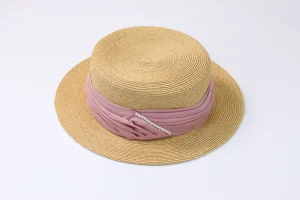
High-Quality Classic Boater Hat for Women, Lightweight Woven Straw Sun Protection Hat for Travel Manufacturer, Suppliers
View Product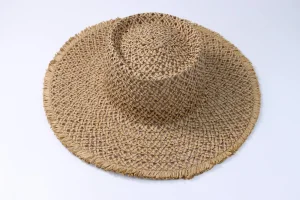
Wholesale Flat Crown Wide Brim Boater Summer Hat Supplier, Suppliers
View Product