
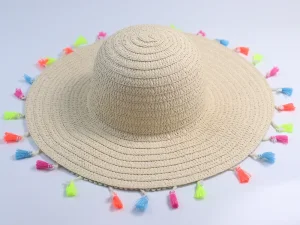
Executive Summary
Why the Cowboy Party Hat Category Is Growing Faster Than General Headwear
Cowboy-style straw hats have migrated from a pure western-wear niche into festivals, bachelorette weekends, country concerts, brand activations and resort retail. That migration changes how buyers source: shorter runs, faster colour refreshes, and packaging that survives event-day handling.
As a wholesale cowboy party hat exporter supplier and factory based in Linyi, Shandong, Shandong Lige Import & Export Co., Ltd. has produced woven headwear for more than 15 years, shipping to buyers in over 60 countries through Qingdao Port. This document consolidates what our product, quality-control and export teams observe across seasonal programmes — written for procurement teams who need to defend a sourcing decision, not just browse a catalogue.
Three forces are reshaping the category in parallel. First, event-led demand — music festivals and country-themed hospitality have created repeatable short-cycle orders instead of single annual buys. Second, materials substitution — raffia and paper straw now deliver colour consistency and cost control that were impossible a decade ago. Third, compliance transparency — retail buyers increasingly request material declarations, care labelling and inspection records before confirming a PO.
How to use this whitepaper: Section 2 covers global commercial context, Section 3 the China factory efficiency model, Section 4 localized application scenarios, Section 5 purchase-intent clusters, Section 6 the material decision matrix, Section 7 the OEM/ODM workflow, and Section 8 consolidated Q&A. The product modules above and below the article reflect live catalogue references you can quote directly.
15+Years manufacturing woven headwear
60+Countries served by export team
50–100Pieces starting quantity per design
8 hResponse and action on buyer requests
Catalogue Reference — Set A
Factory-Direct Woven Hat Styles Buyers Quote Most Often
Each reference below links to its live product page. Styles can be produced in raffia, paper straw or natural grass straw, with custom bands, branding and packaging.
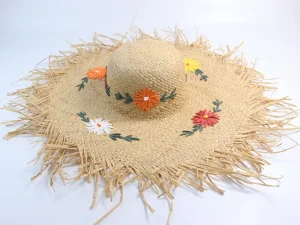
Wholesale China Handmade Raffia Straw Lady Floppy Hat – Customizable with Embroidery
View Product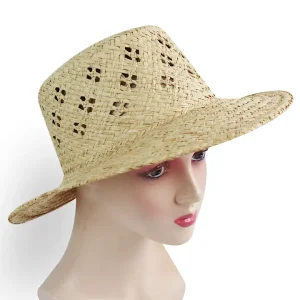
China Wide Brim Straw Fedora Womens, Packable Panama Sun Hat, Summer Vacation Hat
View Product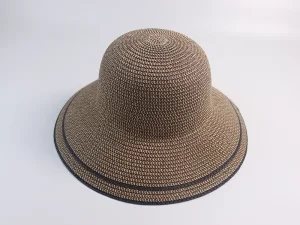
Wholesale Women's Summer Bucket Hats with Big Brim – Lightweight Paper Straw
View Product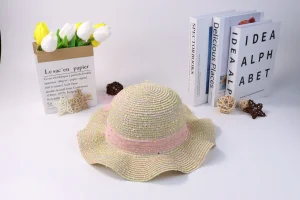
High-Quality Brand Children's Sun Hat UK with Neck Flap, UPF50+ UV Protection
View Product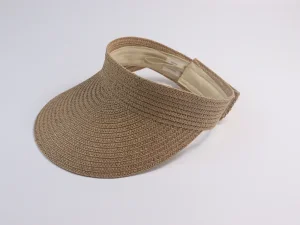
Wholesale Unisex Straw Visor Hat for Summer Sun Protection – Lightweight & Breathable
View Product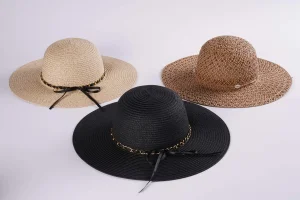
High-Quality Stylish Floppy Sun Hat for Ultimate Sun Protection
View Product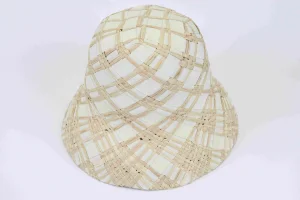
High-Quality Stylish Raffia Sun Hat for Ultimate Summer Protection
View Product
Section 2 — Global Commercial Context
The Commercial Reality of the Leading Cowboy Party Hat Exporter
Demand for woven cowboy silhouettes no longer follows a single summer peak. It is distributed across event calendars, retail reset windows and promotional cycles — which is precisely why export capability, not just unit price, determines who wins the account.
Demand Is Fragmented, Not Seasonal
Festival organisers, hospitality groups, bachelorette event planners and resort retailers order on different calendars. A supplier able to run staggered production slots keeps lead times stable through the year instead of squeezing everything into a Q1 pre-season window.
Price Bands Have Widened
Entry-level paper straw pieces serve volume giveaways and event bulk buys, while hand-woven raffia with custom bands supports premium retail price points. A single factory covering both bands removes the risk of splitting a programme across two vendors.
Compliance Moved to Pre-PO
Material declarations, care labelling and inspection documentation are increasingly requested before purchase orders are issued. Suppliers who can produce these artefacts quickly shorten the buyer's internal approval cycle significantly.
Colour Refresh Cycles Shortened
Buyers now re-order the same silhouette in new colourways each season rather than commissioning entirely new shapes. Factories that maintain dye-lot records and banding templates can repeat a shape in a new colour with minimal sampling cost.
Consolidation Favours One-Stop Suppliers
Importers are reducing vendor count to cut administrative overhead. A supplier who also produces straw bags, visors, children's hats and winter headwear lets a buyer place one consolidated order per season instead of five.
Sustainability Is Now a Sourcing Question
Natural raffia and grass straw are plant-derived and biodegradable, which supports sustainability narratives in retail listings. Buyers should verify claims against actual material composition rather than accepting generic eco-labelling.
Section 3 — China Factory Efficiency
Where the China Factory Model Creates Measurable Buyer Advantage
Efficiency in woven headwear is not about speed alone. It is about the number of times a product is handled, the stability of the material supply upstream, and how quickly a sample can become an approved bulk order.
Vertical Integration
Material sorting, weaving, blocking, banding, finishing and final inspection run under one roof in Linyi. Fewer handoffs mean fewer defects introduced between stages and faster root-cause tracing when an issue appears.
Material Cluster Proximity
Shandong sits within a dense woven-material supply cluster. Raw raffia and paper-straw yarn can be sourced and replenished quickly, which shortens the gap between colour approval and production start.
Port Access
Qingdao Port is a short inland haul from Linyi, supporting both FCL consolidation and LCL groupage for smaller buyers. That flexibility matters most to brands testing a category for the first time.
Low MOQ Engineering
A 50–100 piece starting quantity per design is achievable because blocking tools and banding templates are reused across colourways. Buyers can test a silhouette without committing to container-scale volume.
Experienced Supervision
A production manager with 20 years of experience and a QC manager with 15 years oversee lines where the broader team averages more than 5 years — the practical reason weave consistency holds across repeat orders.
Direct Factory Communication
Buyers deal with the production team rather than a trading intermediary. Specification changes, sampling questions and corrective actions are resolved within an 8-hour response standard.
Buyer diligence tip: When comparing factories, request the same reference sample from each and compare crown height consistency, brim symmetry and band stitching tension side by side. These three measurements reveal more about production discipline than any brochure.
Section 4 — Localized Application Scenarios
Where Cowboy Party Hats Actually Sell: Region-by-Region Use Cases
Specification choices differ sharply by market. A hat built for a Texas country-music weekend is not the same build as one sold into a Mediterranean resort boutique, even when the silhouette looks identical in a photo.
Festival, Rodeo & Country Concert Merchandising
Buyers prioritise structured cattleman crowns, shapeable wide brims and strong banding that photographs well under stage lighting. Bulk event orders often need consistent colour across large quantities, favouring paper straw for colour uniformity and raffia for premium tiers.
Resort Retail & Boutique Private Label
Smaller runs with higher specification: embroidered logos, woven labels, grosgrain bands and packable construction for travellers. Floppy and fedora-adjacent silhouettes outsell strict western shapes, and buyers test with 50–100 pieces before committing to a season.
Outdoor, Surf & Sun-Safety Retail
UPF messaging and brim coverage drive the purchase decision. Neck-flap children's styles and wide-brim unisex shapes perform strongly, with buyers requesting care labelling that supports sun-protection claims in-store.
Festival, Carnival & Tourist Markets
Volume-driven with bold colourways and low unit cost. Paper straw and natural grass constructions dominate, and buyers value fast replenishment across repeated festival dates rather than deep single-order inventory.
Seasonal Fashion & Gift Retail
Refined finishing standards: precise stitching, restrained colour palettes and packaging suitable for gift retail. Smaller order quantities per SKU across a wider style range are common, making low-MOQ flexibility a genuine commercial advantage.
Hospitality, Poolside & Event Gifting
Hotel groups and event organisers order branded visors and wide-brim shapes for guest amenities. Custom banding and logo application are standard requirements, with packing designed for individual guest-room presentation.
Section 5 — Purchase-Intent Mining
What Global Buyers Are Actually Searching For — and Why It Matters
Search behaviour in this category clusters into four distinct intent groups. Suppliers who answer all four in one place reduce the number of buyer enquiries that stall at the research stage.
Specification Intent
“Wide brim straw cowboy hat”, “packable raffia hat”, “UPF50 children's sun hat”. Buyers want dimensions, materials and construction detail — not marketing language.
Wholesale Economics Intent
“Cowboy hat MOQ”, “straw hat wholesale price per piece”, “custom logo hat supplier”. These buyers are close to a decision and need quantity tiers and lead times.
Compliance & Trust Intent
“Straw hat factory inspection report”, “customs documentation headwear”, “material composition declaration”. Trust signals such as QC process and inspection records matter here.
Application Intent
“Hats for country music festival”, “cowgirl party favour hats bulk”, “hotel poolside visor supplier”. These buyers need scenario matching and packaging guidance.
Information-gain principle: A supplier page earns its ranking when it answers the follow-up question the buyer has not yet typed — what happens after sampling, how packaging is consolidated for LCL, how colour matching is handled across repeat orders. This whitepaper is structured around that principle.
Section 6 — Material Decision Matrix
Choosing the Right Fiber Determines Cost, Shape and Shipping Survival
Material choice is the single decision that most affects unit cost, retail price positioning and damage rate in transit. The four families below cover the majority of cowboy and western-inspired programmes.
Soft, Dye-Receptive, Packable
Natural palm-leaf fiber valued for flexibility and vivid colour saturation. Brims recover shape after packing, making it the default for travel and resort programmes.
Uniform Colour at Volume
Twisted paper yarn delivers clean, consistent colour across large runs at a competitive unit cost — well suited to event bulk orders and promotional retail.
Structural Stiffness
Braided natural stems hold crisp silhouettes on shelf. Preferred where shape retention and an authentic artisanal appearance support a premium price point.
Year-Round Assortment
Cotton, polyester and knitted builds extend a programme beyond summer into children's, sport and cold-weather categories from the same supplier.
Practical note on care labelling: Paper straw softens when soaked, so buyers should include “keep dry” care instructions on swing tags. Raffia tolerates humidity better but benefits from shape-retaining packaging during LCL transit.
Section 7 — OEM & ODM Workflow
A Transparent Six-Step Process From Brief to Container Loading
Every stage has a defined output, so buyers always know what they are approving and what happens next.
Share Your Brief
Style, material preference, size range, colourway, branding method and target quantity. Reference images or competitor samples accelerate this stage considerably.
Design & Sampling
Our designers recommend suitable materials and develop samples, including banding and logo application options where required.
Approval
Confirm the sample, labelling, packaging format and delivery schedule. Colour references are recorded for future repeat orders.
Production
Material sorting, weaving, blocking and finishing run in-house, with production supervision checking consistency through the run.
Quality Inspection
Final inspection covers shape, stitching, sizing, trims and packaging integrity before cartons are sealed.
Export Shipping
FCL or LCL sea freight via Qingdao Port, with air and express options for samples and urgent small orders.
Section 8 — Buyer Q&A
Frequently Asked Questions From Wholesale Buyers
Consolidated answers covering classification, minimums, customization, shipping and service standards.
What is the minimum order quantity for custom straw cowboy hats?
Our starting quantity for small orders is 50 to 100 pieces per design, depending on material and craftsmanship. This allows boutiques, emerging brands and event organisers to test new styles before scaling up.
Is a “cowboy party hat” classified differently from a retail straw hat?
In commercial terms, the same silhouette can serve both categories. Party and event programmes typically prioritise colour consistency, packaging efficiency and unit cost across large quantities, while retail programmes emphasise finishing detail, banding quality and labelling. Both can be produced from the same blocking tools.
Can Lige produce private-label hats with our own logo?
Yes. OEM and ODM production is our core business. We customize shape, material, colour, size and hat bands, and can add woven labels, patches, embroidery and hang tags. Our designers can also develop new styles from your mood board or reference samples.
Where is your factory located and how are orders shipped?
We are located in Linyi City, Shandong Province, China, close to Qingdao Port. Bulk orders are typically exported by sea freight as FCL or LCL shipments, while samples and urgent small orders can be sent by air or express courier.
Which markets do you export hats to?
Most of our products are exported to the United States, Canada, Australia, Mexico, Western Europe and Japan. We serve customers in more than 60 countries and work with over 25 global distributors.
How quickly does your team respond to buyer requests?
We respond and take action within 8 hours, covering product questions, sampling, order follow-up and after-sales service, with one dedicated contact for your account.
What products do you manufacture besides straw hats?
In addition to straw hats, we manufacture paper hats, straw bags, paper bags, children's straw hats, toy hats, lifeguard hats, sun visors, winter hats and other bags — enabling consolidated seasonal ordering from a single supplier.
Can samples be produced before a bulk commitment?
Yes. Sampling is a standard step in our workflow. Buyers typically request a sample in a preferred material and colourway, then approve banding and labelling before production begins. Colour references from approved samples are retained for repeat orders.
How is packaging handled for event or LCL shipments?
Carton configuration is agreed at the approval stage. For LCL shipments we optimise carton size and stacking to reduce volumetric cost and prevent brim deformation, and can pack to individual-unit specification where guest-room or gift presentation is required.
Catalogue Reference — Set B
Additional Styles for Consolidated Seasonal Ordering
Combining woven hats, bags and children's styles in one shipment reduces freight overhead and vendor administration for importers.
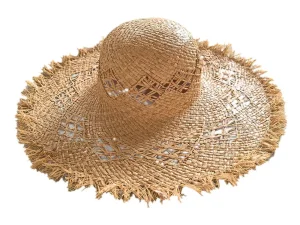
Wholesale 100% Natural Raffia Straw Wide Brim Cloche Hat – OEM Customizable
View Product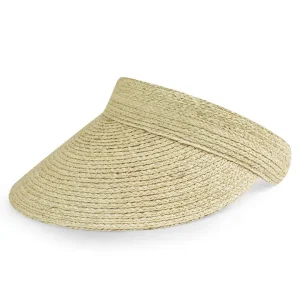
High-Quality Trendy Summer Hats for Women – Stylish & Sun-Proof Styles
View Product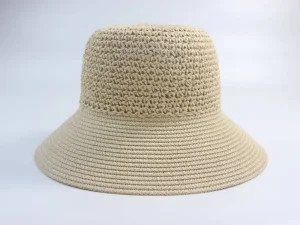
High-Quality Elegant Beach Sun Fisherman Bucket Hats For Woman Summer
View Product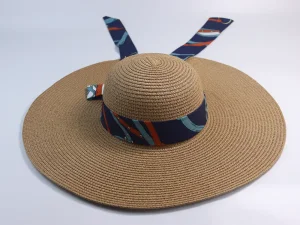
China Wholesale Fashion Female Summer Hats – Big Brim Sunshine Hat
View ProductHigh-Quality Cute Summer Hat & Bag Set for Kids – Handmade from China
View Product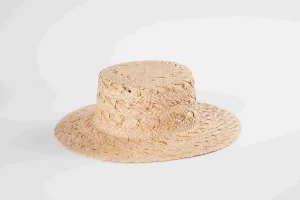
Wholesale Stylish Premium Cowboy Hats for Every Occasion
View Product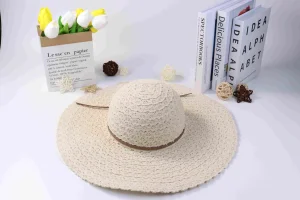
China Women's Wide Brim Straw Hat – Elegant Outdoor Sun Protection
View Product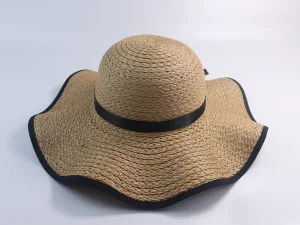
High-Quality China Women's Large Brim Summer Beach Hat – Wavy Edge Sun Protection
View Product
Experience & Authority
Written From Production Floor Experience, Not a Marketing Template
Shandong Lige Import & Export Co., Ltd. is based in Linyi City, Shandong Province, within easy reach of Qingdao Port. For more than 15 years we have focused on straw hats, paper hats, straw bags and paper bags, combining traditional hand-weaving skills with modern blocking and finishing expertise.
Our production manager brings 20 years of experience, our QC manager 15 years, and the wider team averages more than 5 years. That institutional knowledge is the reason repeat orders hold their weave consistency and sizing accuracy across seasons.
Every recommendation in this document — material selection, MOQ structure, packaging approach, shipping method — reflects decisions our team makes with importers, wholesalers, brand owners and retailers across the United States, Canada, Australia, Mexico, Western Europe and Japan every week.
20 Years
Production management experience
15 Years
Quality control management
8-Hour
Response and action standard
In-House
Weaving, blocking and finishing
Next Step
Send Your Brief and Get a Sampling Plan Within 8 Hours
Share your style references, target quantity and destination market. Our export team responds with material suggestions, a sampling plan and a production timeline — tailored to whether you are sourcing for retail, events or hospitality.