
Featured Wholesale Selection
Styles Buyers Request First
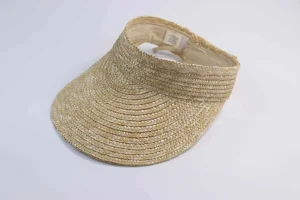
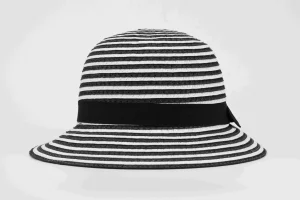
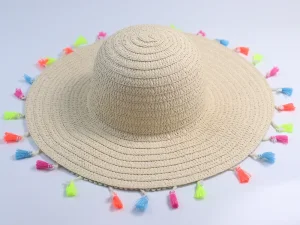
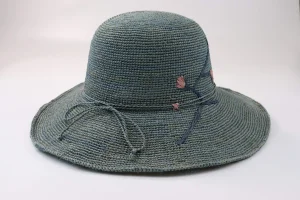
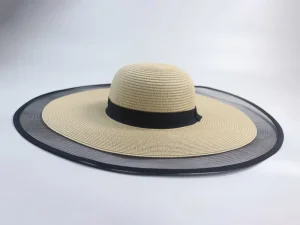
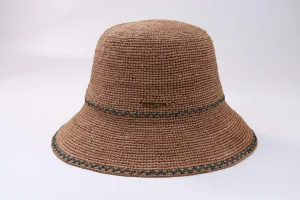
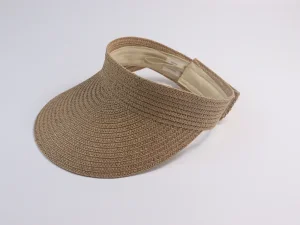
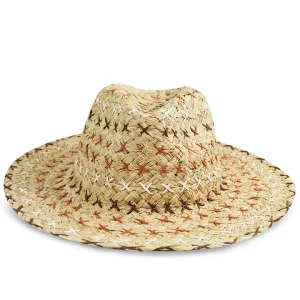
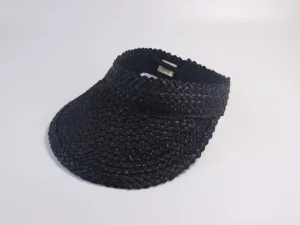
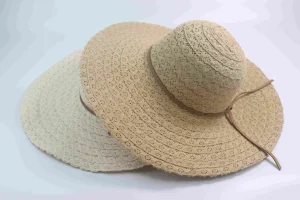
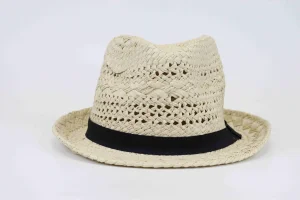
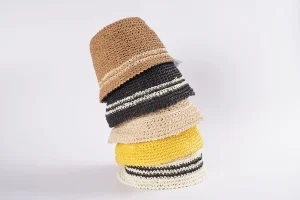
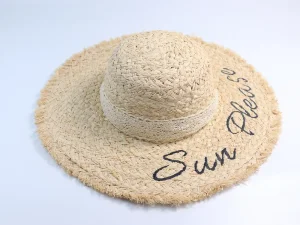
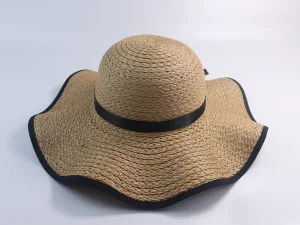
Eight production-ready references from our women's straw, raffia and visor range — the silhouettes most frequently quoted for fedora-led and sun-protection programmes.
Executive Summary
Why Women's Fedora Is Now a Structured Sourcing Category
Fedoras were long treated as an accessory add-on. In the current wholesale cycle they are a demand-led category in their own right: a pinched, centre-dent crown with a shaped brim that reads as tailoring rather than beachwear, and which travels comfortably from resort retail into city fashion, corporate gifting and event hire.
Category Shift
Buyers now brief fedora programmes with fixed crown height, brim width tolerances and band specifications — the same discipline used for footwear or structured bags. This gives suppliers a clear technical target and gives buyers a repeatable SKU.
Information Gain First
Most supplier pages describe shape families. This document adds the parts buyers cannot see on a product card: fibre behaviour under compression, blocking temperature windows, and the inspection points that determine whether a crown survives a container.
Programme Economics
Starting quantities from 50–100 pieces per design, an 8-hour response commitment and export through nearby Qingdao Port keep the test-order maths viable for boutiques, emerging labels and multi-market importers alike.
0+
Years in straw & woven headwear0+
Export countries served0+
Active global distributors0h
Response & action SLA
Localised Applications
Where Women's Fedoras Actually Sell — By Market
A fedora is not one product. Climate, occasion and retail format change the brief in every territory. These are the localised use cases our buyers brief most often, and the construction decisions that follow from each.
Festival, Rodeo-Adjacent & Campus Retail
Spring through early autumn drives country-music festivals and outdoor event retail. Buyers want a shaped crown that holds through a long day, a band that can carry a brand patch, and a brim wide enough for real sun but not theatrical. Paper straw and stiffened raffia-blocked bodies dominate because they photograph well and pack flat in mixed cartons.
City Tailoring & Quiet-Luxury Resort
German, Dutch, French and Italian buyers brief fedoras as wardrobe pieces, not souvenirs: lower crown, moderate 6–7 cm brim, grosgrain or self-fabric band, muted natural and deep-dye tones. Order values are smaller but repeat frequency is higher, making a low-MOQ, high-consistency programme more valuable than a single large run.
UV-First Sun Protection
The brief inverts: coverage outranks silhouette. Brims trend wider, crown heights rise slightly for airflow, and UPF-oriented language enters the product copy. Tight weave density, breathable sweatbands and chin-cord or size-adjust options are requested as standard rather than as upgrades.
Hospitality, Resort & Gifting
Hotel and resort groups order fedora-style hats as in-room amenities and excursion accessories, usually with embroidered or woven logos. Uniformity of shape matters more than seasonal novelty, so production is specified against a sealed golden sample with a documented tolerance on crown symmetry and brim curl.
Refined Finishing & Detail Tolerance
Buyers scrutinise band stitching, brim edge finishing and label placement. Small-lot, multi-colourway programmes with short replenishment cycles are common. Fine paper straw and clean raffia weaves with precise blocking outperform coarse textures, and packaging presentation is inspected as closely as the hat.
Heritage & Everyday Sun Wear
Natural, undyed and earth-tone finishes sell strongly, often alongside western and cowboy silhouettes in the same assortment. Buyers frequently combine fedora, cowboy and visor lines in one container to consolidate freight, which makes a single supplier able to cover multiple shape families materially cheaper.
Design implication: the same crown block can serve four markets if brim width, band treatment, sweatband and packing method are specified per destination. Buyers who plan this at sampling stage avoid re-tooling later in the season.
Buyer's Technical Guide
Fibre Choice Decides Whether the Crown Survives the Carton
Shape retention is not a styling question — it is a materials question. The table below reflects how our product team advises buyers before a sample is cut.
| Fibre | Hand-Feel | Shape Retention | Best Fedora Use | Buyer Consideration |
|---|---|---|---|---|
| Paper straw | Light, dry, uniform | Good with stiffener | Volume fedora & trilby lines | Consistent colour; avoid prolonged moisture |
| Raffia | Soft, flexible, faintly waxy | Excellent, recovers | Premium & packable fedoras | Natural tonal variation between lots |
| Natural grass straw | Crisp, artisanal | Very high, stiff | Structured dress fedoras | Heavier; freight cost per unit rises |
| Organza / fabric | Delicate, airy | Low without support | Occasion & event styling | Needs insert support and gentle packing |
| Fine weave / toyo | Smooth, dressy | High, holds crease | City tailoring, quiet-luxury briefs | Higher unit cost; premium shelf presence |
Blocking & Shape Control
Crown geometry is set on heated blocks within a defined temperature and dwell window; too short and the crease relaxes in transit, too long and the fibre surface dulls. Brim curl is set separately, then the band is applied — a sequence that explains why band quality and crown quality are rarely equal in low-cost production.
Packing & Damage Control
Fedoras are shape-dependent SKUs, so packing is a specification, not an afterthought. Nested or stacked packing requires crown inserts and a documented maximum stack height; individual polybags with crown fillers cost slightly more per unit but measurably reduce claim rates on first container shipments.
China Supply-Chain Resilience
Why an Integrated Factory Outperforms a Trading Desk
Shandong Lige Import & Export Co., Ltd. operates from Linyi City, Shandong Province, close to Qingdao Port. Raw material sorting, weaving, blocking, finishing and final inspection sit under one roof — which is where resilience actually comes from.
Compressed Lead Time
Because blocking and finishing are in-house, a change to brim width or band colour does not trigger an external re-quote cycle. Sample revisions move at workshop speed rather than supplier-chain speed.
Material Buffer Control
Straw, raffia and paper yarn are seasonal agricultural inputs. Holding qualified material stock ahead of peak season is only possible when the entity controlling production also controls purchasing — the structural advantage of a factory over a broker.
Documented QC Ownership
A production manager with 20 years of experience and a QC manager with 15 years own the outcome from first sample to final inspection — so the person who approves the golden sample is accountable for what actually ships.
Port Proximity
Qingdao Port is a short inland haul from Linyi, supporting both FCL and LCL consolidation. For buyers mixing fedoras with visors, bucket hats or straw bags, a single origin point simplifies freight and reduces transhipment handling.
Consolidated Assortments
A single supplier able to produce fedoras, boater hats, bucket hats, visors, children's hats and straw bags lets buyers build a complete summer programme in one order — reducing both freight cost per unit and supplier management overhead.
Small-Lot Replenishment
With starting quantities from 50–100 pieces per design, buyers can replenish proven colourways mid-season rather than committing once and absorbing the markdown risk of a single large speculative buy.
Commercial & Industrial Context
What Is Shaping Demand for Wholesale Fedora Hats for Women
Three structural forces are visible across the territories our buyers serve, and each changes how a programme should be specified.
Natural-Fibre Preference
Consumer scrutiny of synthetic materials has shifted assortment weight toward raffia, grass straw and paper-based weaves. Buyers increasingly request material origin notes and care instructions as part of the product data package, not as an optional extra.
Small-Batch, Fast-Repeat Buying
Order patterns have fragmented. Rather than two large seasonal buys, retail buyers now place a wide first assortment and replenish winners in weeks. Suppliers who cannot run 50–100 piece lots are structurally excluded from this buying behaviour.
Freight-Aware Assortments
With sea-freight economics volatile, buyers consolidate shape families per container. A supplier covering fedora, boater, bucket and visor lines in one shipment is materially more attractive than four separate specialists, even at a marginally higher unit cost.
Taken together, these forces reward suppliers with vertical control, small-lot flexibility and broad shape coverage — and penalise intermediaries whose only differentiator is price.
Technical Route Map & Outlook
How Fedora Development Progresses, Stage by Stage
A transparent four-phase route from buyer brief to container loading — the same sequence used for OEM and ODM programmes, with the decision points that determine cost and lead time made explicit.
01
Brief & Feasibility
Style, fibre, crown height, brim width, size range, band treatment, branding and target quantity are fixed. The team returns material options with indicative cost and timing.
02
Sampling & Blocking Trials
Designers recommend fibre and stiffener combinations, trial blocks are set for crown geometry, and brim curl is calibrated against the brief. Sample revisions are agreed and documented.
03
Approval & Pre-Production
Golden sample, labels, hang tags, packaging method and shipment schedule are sealed. Tolerances on symmetry, brim width and stitching are recorded in writing.
04
Production, QC & Export
Material sorting, weaving, blocking and finishing run in-house; final inspection covers shape, stitching, sizing and trims before FCL or LCL export via Qingdao Port.
Near-Term Direction
Expect continued demand for packable constructions, wider size-adjust options and clearly documented fibre provenance. Buyers will keep shortening first orders while raising replenishment frequency, which favours suppliers with retained material stock and stable blocking standards.
Longer-Term Outlook
Shape families are likely to consolidate around a smaller number of proven blocks with colour, band and trim carrying seasonal novelty — reducing tooling cost and shortening development cycles. Suppliers able to hold a sealed block across multiple seasons will be the natural long-term partners.
Localised Support & Compliance
What Buyers Should Be Able to Verify Before Ordering
Compliance is a documentation discipline before it is a legal one. These are the checkpoints our team works to, and the ones we recommend buyers request from any supplier in this category.
Material & Fibre DeclarationFibre type, treatment and origin noted so destination-market labelling can be completed accurately.
Sizing ConsistencyDocumented size range — commonly 56–58 cm on structured styles — with a stated tolerance rather than an assumed one.
Labelling & Care InstructionsWoven labels, patches, hang tags and care text prepared for the destination market, not retrofitted at the port of arrival.
Golden Sample ArchiveA sealed reference sample retained against each SKU so replenishment orders can be matched to a physical standard.
Inspection RecordFinal QC results covering shape, stitching, sizing and trims, available with the shipment documentation.
Export DocumentationStandard commercial documentation prepared for FCL or LCL export from Qingdao Port, with express options for samples.
Dedicated Account Contact
One named contact across sampling, production and after-sales, so questions do not circulate between departments and answers stay consistent.
8-Hour Response Commitment
Product questions, sampling, order follow-up and after-sales are actioned within 8 hours — a practical difference when a retail window is fixed.
Customisation Scope
Shape, fibre, colour, size and band can be specified, with woven labels, patches and hang tags added for private-label programmes. Designers can also develop new styles from a mood board or reference sample.
Buyer FAQ
Questions Wholesale Buyers Ask Most
Direct answers on quantity, customisation, shipping, markets and service.
What is the minimum order quantity for custom straw hats?
Our starting quantity for small orders is 50 to 100 pieces per design, depending on material and craftsmanship. This lets boutiques, emerging brands and importers test new styles before scaling up.
Can you produce private-label hats with our logo?
Yes. OEM and ODM production is our core business. We customise shape, material, colour, size and hat bands, and can add branding such as woven labels, patches and hang tags. Our designers can also develop new styles from your mood board or reference samples.
Where is your factory and how do you ship orders?
We are located in Linyi City, Shandong Province, China, close to Qingdao Port. Bulk orders are typically shipped by sea as FCL or LCL, while samples and urgent small orders can go by air or express courier.
Which markets do you export to?
Most of our products go to the United States, Canada, Australia, Mexico, Western Europe and Japan. We serve customers in more than 60 countries and work with over 25 global distributors.
How fast will your team respond to my request?
We respond and take action within 8 hours — covering product questions, sampling, order follow-up and after-sales service.
What do you make besides straw hats?
Alongside straw hats, we manufacture paper hats, straw bags, paper bags, children's straw hats, toy hats, lifeguard hats, sun visors, winter hats and other bags.
Related Programme References
More Styles for Combined Containers
Additional references frequently quoted alongside fedora programmes — useful when consolidating a summer assortment into a single shipment.
Next Step
Send Your Fedora Brief — Get a Material Plan Within 8 Hours
Share style references, crown and brim specification, target quantity and destination market. Our team replies with fibre recommendations, a sampling plan and a production timeline.