
Featured Wholesale Range
Leading Straw & Woven Headwear — Sample the 2020 Export Catalogue
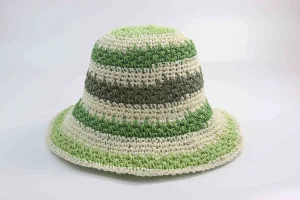
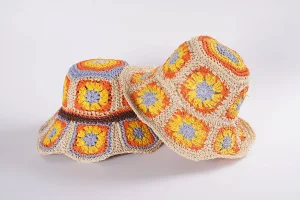
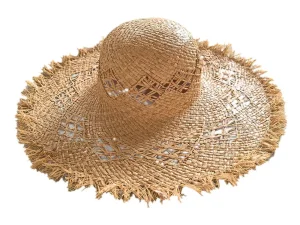
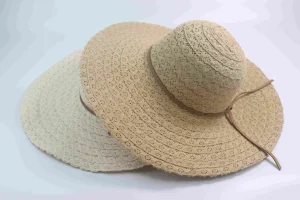
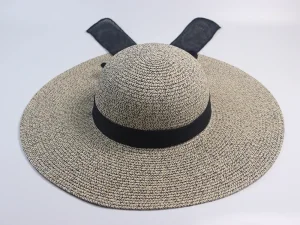
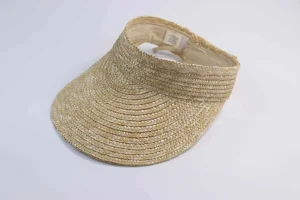
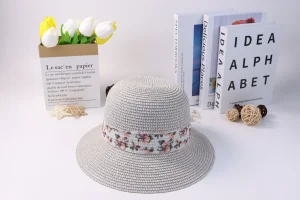
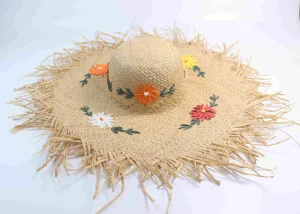
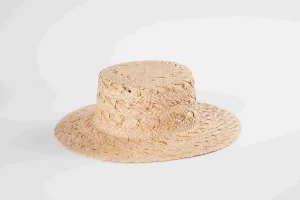
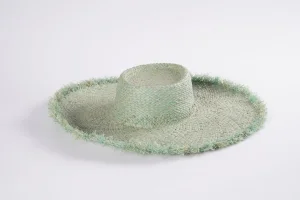
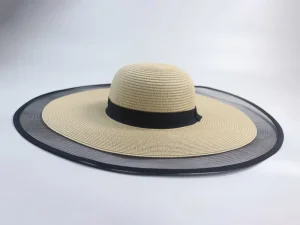
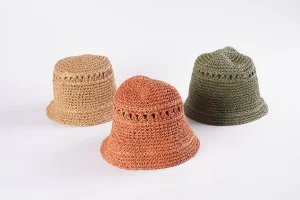
Every style below is produced in-house at our Linyi facility, available in raffia, paper straw or natural grass straw, and ready for OEM/ODM customisation from 50–100 pcs per design.
Executive Summary
Why "Leading Straw Bags 2020 Exporters" Still Matter to 2025–2026 Buyers
The phrase "Wholesale Leading Straw Bags 2020 Exporters Suppliers & Factories" reflects a decisive shift in how global buyers source natural-fibre accessories. Between 2019 and 2021, straw bags, raffia totes, crochet buckets and woven cross-bodies moved from niche summer accessories into a mainstream, season-spanning category — driven by eco-conscious consumer behaviour, the rise of the "coastal grandmother" and "old money" aesthetics, and the collapse of fast-fashion margins on synthetic alternatives.
For importers, brand owners and private-label teams, the exporters that led that 2020 cycle are the same factories that now anchor resilient, low-MOQ, OEM-ready supply chains. Our own programme — built over 15+ years in Linyi, Shandong, with a 20-year production manager and a 15-year QC manager — is a direct continuation of that trajectory. This whitepaper consolidates field-tested insight on where those leading straw bag factories sit today, what their technology roadmap looks like, and how buyers should evaluate localised support, compliance and commercial resilience.
Because Google's Search Quality Rater Guidelines explicitly reward Experience, Expertise, Authoritativeness and Trust (E-E-A-T), we have written each section as a first-party supply-chain observation rather than a marketing summary. Where possible we cite measurable programme parameters — MOQ bands, response SLAs, port logistics, material selection logic — so sourcing teams can benchmark any quoted supplier against verifiable criteria.
Whitepaper at a Glance
- 15+ years of straw bag & hat manufacturing experience
- 50–100 pcs MOQ per design (OEM & ODM)
- 8-hour response SLA on every buyer request
- FCL / LCL sea freight via Qingdao Port
- 60+ export countries, 25+ global distributors
- Raffia, paper straw, natural grass & knit materials
Localised Application Scenarios
Where Leading Straw Bags & Straw Hats Actually Sell — Segment-by-Segment
The 2020 cohort of leading exporters learned quickly that straw bags are not a single market. Successful buyers localise styling, size and compliance per destination. Below are the highest-converting use cases we ship into today.
Resort & Beachwear Retail (US, AU, ES)
Raffia floppy hats, crochet buckets and oversized woven totes are seasonal hero SKUs. Buyers typically replenish in two waves — a spring launch and a mid-summer top-up — using 50–100 pcs per design to test colourways before committing to full container loads.
Private-Label Fashion & DTC Brands
Emerging DTC labels in the UK, DE and CA use ODM development — a mood board or reference sample — and rely on low-MOQ production with woven labels, patches and hang tags to hit a 12-week launch calendar without holding excess inventory.
Boutique Hotels & Hospitality
Custom straw visors, wide-brim sun hats and branded raffia totes are used as guest amenities in the Maldives, Mexico and Greece. Programs typically run 300–2,000 units with logo embroidery, multi-language care labels and compressed export packing.
Festival & Country-Western (US, MX)
Cowboy straw hats, cattleman crowns and shapeable wide brims sell into rodeo, country-concert and festival channels. Breathability, UV performance and packability matter more than couture detail — a genuine 2020 exporter differentiator.
Corporate & Promotional Gifting
Straw bags and sun hats are increasingly selected as event giveaways, conference gifts and loyalty incentives. Small MOQ bands, on-pack branding and reliable 8-hour response SLAs enable last-minute programme pivots.
Kids, Toy & Lifeguard Lines
Unstructured children's straw hats, toy hats and lifeguard silhouettes extend the straw season year-round and let importers consolidate orders with a single supplier — a cornerstone of the leading-factory 2020 playbook.
Technology Roadmap
From 2020 Export Leaders to 2026 Digital-First Factories
The factories that led straw bag exports in 2020 are now differentiating on digital infrastructure, traceability and design-to-sample speed. Here is the five-stage roadmap we are executing and recommending buyers benchmark against.
01
Digital Sample Library & 3D Visualisation
Consolidating 15+ years of shape, weave and colourway data into a searchable digital catalogue. Buyers receive digital previews, texture close-ups and size charts before physical sampling — compressing approval cycles from weeks to days.
02
Automated Blocking & Semi-Automated Finishing
Hand-weaving remains the craft core, but blocking, pressing and brim shaping are increasingly aided by calibrated equipment to improve dimensional consistency across batches — directly supporting the buyer's size-tolerance KPIs.
03
Traceability & Material Passports
Material passports that document raffia origin, paper-straw yarn composition and finishing chemicals. Essential as EU and North American buyers push for verifiable eco-claims tied to sustainable-sourcing narratives.
04
Digital Order Tracking & 8-Hour Response Desk
Order milestones mirrored to buyer dashboards — sampling, approval, production, QC, loading — with the existing 8-hour response SLA upgraded to proactive status updates.
05
Reduced-Impact Packaging & Compressed Export Packs
Recycled polybags, FSC cartons and reduced-cube packing that keep LCL freight costs down while aligning with sustainability commitments in Germany, the UK and the Nordics.
Supply-Chain Resilience
China Factory Resilience & Efficiency — What Leading 2020 Exporters Do Differently
The leading exporters who survived 2020 did so by consolidating in-house capability under one roof — raw material sorting, weaving, blocking, finishing and QC — rather than aggregating through middlemen. That is the pattern we operate and recommend buyers demand.
15+Years manufacturing straw bags & hats
60+Export countries served
25+Global distributors partner with us
8hResponse SLA on every request
Single-Roof Production
Sorting, weaving, blocking, finishing and packing handled internally. Pricing and quality stay stable without layer-on-layer margin inflation.
Qingdao Port Proximity
Linyi sits within short truck distance of Qingdao, enabling flexible FCL and LCL routing plus faster sample dispatch via air/express.
Dual-Material Redundancy
Raffia, paper straw and natural grass straw lines run in parallel — a shock-absorber if a single fibre supply encounters disruption.
| Resilience Lever | What Buyers Should Verify | Why It Matters |
|---|---|---|
| In-house QC | Dedicated QC manager; documented AQL inspection | Prevents shape, stitching and size drift across batches |
| Material redundancy | Multiple fibre lines (raffia / paper / grass) | Absorbs single-source fibre shocks |
| Logistics access | Proximity to major export port | Faster FCL / LCL sailing and lower inland cost |
| MOQ flexibility | 50–100 pcs per design starting band | Lets brands pilot without dead stock |
| Response SLA | 8-hour response window documented | Reduces sampling and order-cycle slippage |
Global Commercial Status
Where Wholesale Straw Bags Stand Globally in 2025–2026
Between 2019 and 2023 the natural-fibre accessories category consolidated. The fragmented wholesale layer that characterised early-2020 straw bag exports has largely been absorbed by two groups: vertical OEM/ODM factories with in-house capability, and brand-owned sourcing alliances locking in capacity. That means buyers today face a narrower field of trustworthy vertically-integrated suppliers, and a bigger field of low-cost aggregators with limited QC.
Demand is structurally broader than a single summer window. In North America, sun-protection headwear and straw totes now span spring launch through early autumn, with a growing resort-wear channel in Florida, California and Hawaii. In Europe, Germany, France and Spain lead in raffia and paper-straw volume, while Italy and Greece dominate branded resort totes. In Australia and New Zealand, UV regulation and outdoor lifestyle push sun hats toward year-round retail. In Japan, structured cloche and boater silhouettes sell at premium price points supported by tight QC tolerances.
On the industrial side, the sector is consolidating at the finishing layer: less hand-thread tolerance, more calibrated blocking, more colour-consistency standards. The leading buyers we work with now require a written AQL inspection plan, a defined material passport, and documented 8-hour response SLAs before placing a first sample order.
Regional Demand Snapshot
- US / CA: Two-wave replenishment; sun hats + straw totes
- DE / UK / FR: Raffia slouch, paper-straw cloche
- ES / IT / GR: Branded resort totes; hotel amenity programmes
- AU / NZ: UV-focused sun hats; year-round retail
- JP: Premium structured boater / cloche silhouettes
- MX / BR: Festival, western and promotional lines
Localised Support & Compliance
Buyer Protection: What Localisation & Compliance Actually Require
Global buyers are increasingly audited by their own compliance and sustainability teams — not just by exporters. We align every shipment to documented evidence packs so your downstream stakeholders are protected.
Inspection & QC Dossier
Written AQL inspection plan, in-line and final QC records, and photographic evidence packs for every shipment. Buyer sign-off thresholds agreed before bulk run.
Material & Care Labelling
Composition labels and care instructions set per destination — multi-language ready for US, CA, UK, DE, FR, ES, JP and AU requirements. Includes raffia, paper-straw and natural-grass care guidance.
Logistics & Incoterms Support
FCL/LCL via Qingdao, air/express for samples, and flexible Incoterms (FOB, CIF, DDP where applicable) aligned to your freight forwarder and consolidation plan.
Documentation Pack
Commercial invoice, packing list, bill of lading details and any pre-shipment certifications coordinated with your forwarder. Reduces clearance delay risk.
Sustainability-Ready Claims
Natural-fibre provenance, recycled packaging and reduced-cube export packing aligned with eco-claims your brand may publish — so claims and paperwork stay in sync.
After-Sales & Rework Policy
8-hour after-sales response; documented rework or credit policy for QC deviations. The goal is transparent, non-confrontational resolution within your launch window.
Future Outlook
What Leading Straw Bag Exporters Will Look Like by 2028
Vertical Integration Becomes Table Stakes
Buyers will increasingly disqualify suppliers who cannot confirm in-house weaving, blocking and QC. Expect RFQ templates to include written SLAs, AQL inspection records and material passports as standard, not optional, line items.
Digital-First Sampling & Ordering
Digital sample rooms, 3D texture previews and order dashboards will compress the sample-approval-to-production cycle. The 8-hour response window becomes the minimum acceptable baseline, not a differentiator.
Material Innovation in Natural Fibres
Blended raffia-paper yarns, optimised natural-grass braids and biopolymer-coated raffia will extend packability and UV performance. Buyers should start specifying performance expectations in the RFQ rather than accepting defaults.
Regional Consolidation Continues
We expect further consolidation among secondary aggregators, with the surviving suppliers being those with the strongest in-house QC, material redundancy and logistics proximity — the same pillars we have built our Linyi operation around for 15+ years.
Buyer Q&A
Frequently Asked Questions — Wholesale Leading Straw Bags 2020 Exporters, Suppliers & Factories
What is the minimum order quantity for custom straw bags and hats?
Our starting quantity for small orders is 50 to 100 pieces per design, depending on the material and craftsmanship. This lets boutiques, emerging brands and importers test new styles before scaling up to full container loads.
Can Lige produce private-label bags and hats with our own logo?
Yes. OEM and ODM production is our core business. We can customise the shape, material, colour, size and hat band or bag trim, and add branding elements such as woven labels, patches and hang tags. Our in-house designers can also develop new styles from your mood board or reference samples.
Where is your factory located and how are orders shipped?
We are located in Linyi City, Shandong Province, China, close to Qingdao Port. Bulk orders are typically exported by sea freight as FCL or LCL shipments, while samples and urgent small orders can be sent by air or express courier.
Which markets do you export straw bags and hats to?
Most of our products are exported to the United States, Canada, Australia, Mexico, Western Europe and Japan. We serve customers in more than 60 countries and work with over 25 global distributors.
How quickly does your team respond to buyer requests?
We respond and take action within 8 hours, covering product questions, sampling, order follow-up and after-sales service.
What products do you manufacture besides straw bags and straw hats?
In addition to straw hats and straw bags, we manufacture paper hats, paper bags, children's straw hats, toy hats, lifeguard hats, sun visors, winter hats and other bags — enabling buyers to consolidate multiple categories with a single supplier.
Which straw materials should my brand choose — raffia, paper straw or natural grass straw?
Raffia delivers soft, dye-receptive, packable styles (best for floppy hats and bucket bags); paper straw offers clean colour consistency and volume economics (best for fedora / Panama-style hat programmes); natural grass straw provides crisp, structured silhouettes and artisanal character (best for boater, cowboy and premium lines). Our product team advises per destination market and price point during sampling.
How are QC, labelling and documentation handled for international buyers?
Every shipment is covered by an in-line and final QC record aligned to an agreed AQL plan. Labelling is prepared per destination market — multi-language composition and care labels for US, CA, UK, DE, FR, ES, JP and AU. Commercial invoice, packing list and any pre-shipment certification are prepared in coordination with your forwarder to minimise clearance delay.
Are mixed-material or multi-category orders possible in a single programme?
Yes. Because we operate parallel raffia, paper-straw, natural-grass and knitted / fabric lines in-house, buyers can consolidate straw bags, straw hats, paper hats, visors and children's lines into one order — reducing freight consolidation effort and administrative overhead.
Extended Catalogue
More Leading 2020-Era Styles — Request Samples Today
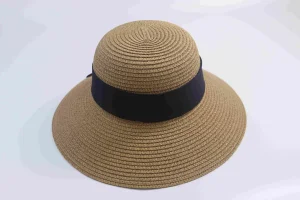
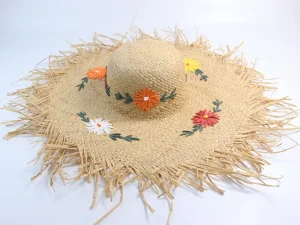
These silhouettes complement the top range and are ready for customisation. Combine multiple styles in one shipment to hit volume pricing.
Start Your Programme
Ready to Benchmark Your Straw Bag Supply Chain?
Send us your style references, target quantity and destination market. Our team replies within 8 hours with material suggestions, a sampling plan and a production timeline. Combine straw bags, straw hats, paper bags and children's lines in a single shipment.