
Raffia
A natural palm-leaf fiber traditionally sourced from Madagascar. Its resin content makes it soft, flexible and highly dye-receptive — ideal for tote shapes that fold flat and bounce back.
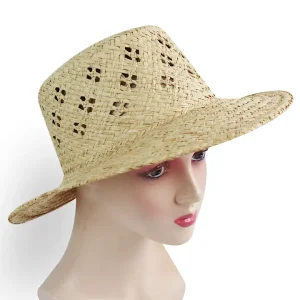
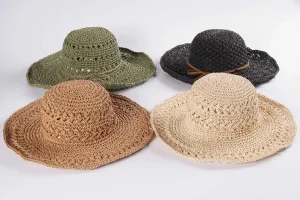
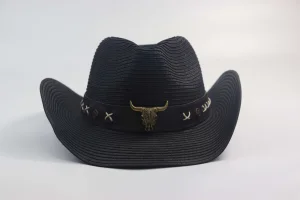
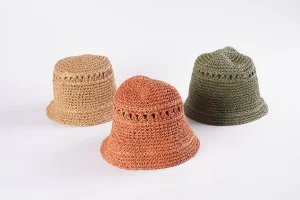
Shandong Lige Import & Export Co., Ltd. (“Lige Hats”) has spent more than 15 years producing straw hats, paper hats, straw beach bags and paper bags for importers, brand owners and retail buyers worldwide. From woven Panama and fedora silhouettes to cowboy, boater, bucket and floppy sun hats — and the matching tote, market and beach straw bags that complete a resort story — we design, sample and manufacture in-house, then ship through nearby Qingdao Port.
This guide is written for procurement teams, boutique buyers and private-label founders who need more than a product list. It explains the materials, compliance requirements, localisation strategies, supply-chain economics and lifecycle trends that determine whether a wholesale straw beach bag programme performs in your market — and how to evaluate a Chinese factory for genuine, verifiable capability.
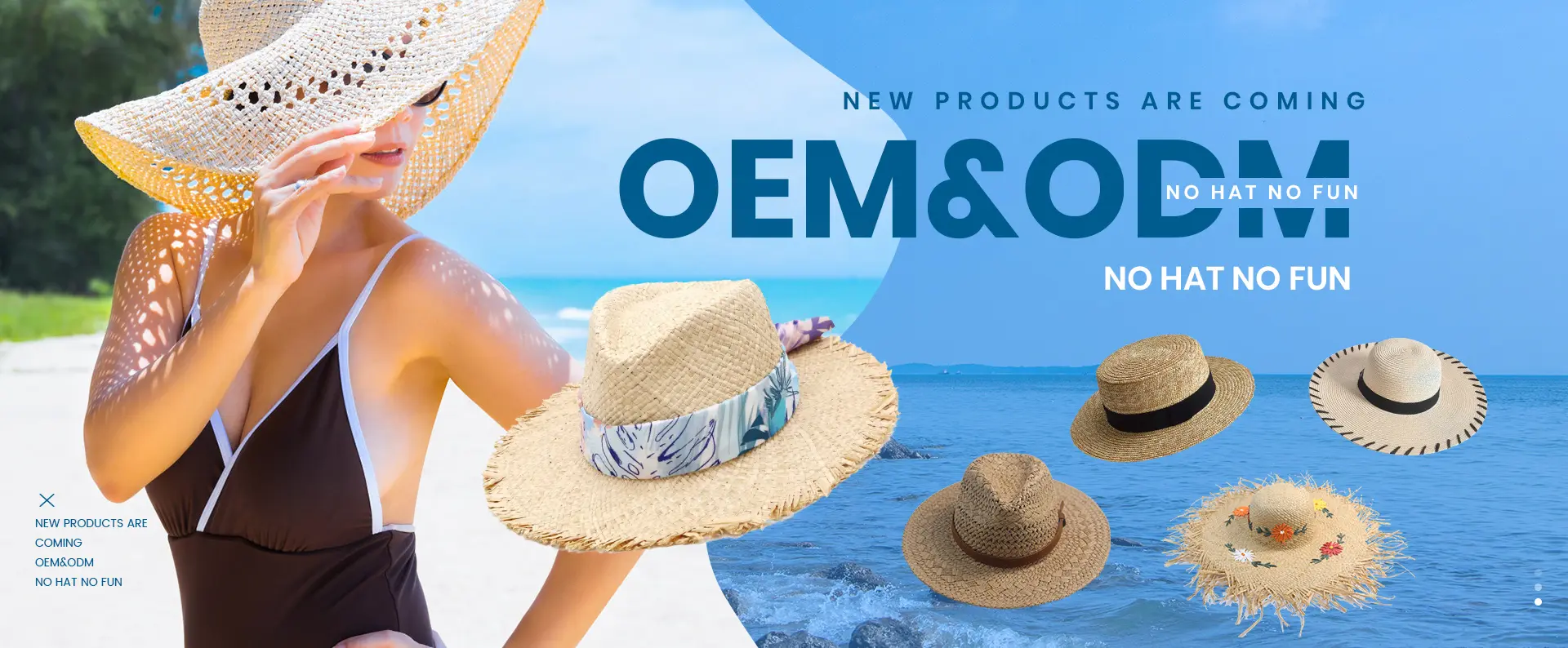
The fiber you choose determines hand-feel, shape retention, price point and how well a bag survives ocean freight. This is how our product team advises buyers before sampling.
A natural palm-leaf fiber traditionally sourced from Madagascar. Its resin content makes it soft, flexible and highly dye-receptive — ideal for tote shapes that fold flat and bounce back.
Twisted paper yarn braided into a consistent, uniform fabric. It delivers clean colorways and competitive unit economics for volume beach-bag programmes.
Braided natural stems with inherent stiffness — crispy, structured silhouettes and an artisanal look that supports premium price positioning.
Cotton, polyester and knit constructions extend a single program beyond summer into visors, children's hats, winter hats and cold-weather accessories.
As a rule of thumb for beach bags specifically: raffia survives packing and travel, paper straw wins on price and color consistency, natural grass keeps its shape on the shelf, and knit/fabric is your year-round volume play. A whistle-stop material guide keeps buyers from misordering “soft” when they actually need “crisp,” or vice-versa — a mistake that shows up six weeks later as returns.
Shandong's Linyi–Qingdao corridor is one of the world's most efficient natural-fiber manufacturing clusters. The advantage is not simply “cheaper” — it is the density of skills, materials and logistics that compound into reliability.
Raffia, paper yarn and natural grass are sorted and braided within the same region, cutting lead times and giving buyers granular control over dyelots.
Weavers, blockers and finishers with decades of experience. Skilled hands can't be automated — and that's exactly why hand-woven straw retains its premium.
Linyi sits within easy trucking distance of Qingdao — one of China's major container gateways for FCL and LCL sea freight.
From 50–100 pcs per design, emerging brands and boutiques can test new styles, iterate quickly, and scale winners without overstock risk.
Trims, bands, linings, pocketing and stitching are all completed under one roof — no sub-supplier risk, no quality gaps.
Sampling questions, order follow-up, quality reports and after-sales replies within eight hours, backed by one dedicated account contact.
A straw beach bag crosses borders as a “natural-fiber textile good” — a category that carries specific localisation, labelling, packaging and customs requirements per destination market. Our team handles the paperwork side so your import doesn't stall at the port.
Material disclosures, fiber composition labels per EN 13402 conventions, and care-label language localisation for DE, FR, IT, ES and NL markets.
For children's straw hats and toy hats, dye safety and label compliance. California Proposition 65 substance disclosures supported on request.
Australian consumer labeling obligations plus Japanese JIS-friendly sizing and packaging — with bilingual care and identity labels.
HS classification of woven straw bags (typically 4602.xx), origin documentation, packing lists and FOB/CIF terms agreed in writing.
Retail-ready poly bags, hang-tags, barcodes and box sizing tailored to local retail planogram standards.
FSC-style traceability for paper bags, natural-fiber evidence for raffia/grass, and honest eco-messaging — no greenwashing.
Procurement intent for straw beach bags breaks into distinct buyer journeys. Each one has different questions, requirements and evaluation criteria — and this is how we support each one.
Wants distinct silhouette + branding, moderate volumes, reliable sample development. Needs custom logo, hang-tag, and story-driven packaging.
Needs consistent supply, HS codes, FOB pricing, scalable capacity — plus reliable QC to avoid retailer chargebacks.
Small seasonal runs, high design sensitivity, provenance storytelling. Low MOQ and quick sampling are the decisive factors.
Photography-ready finish, durable materials, low returns, and consistent dye-lot matching — for a storefront that repeats.
Branding on bag, ribbon and hang-tag with high polish, ahead of major holiday gifting windows.
In-room amenity bags, welcome totes, and branded poolside kits — often with eco-narrative as important as the fabric.
A measured, transparent process keeps buyers informed from the first mood board to the moment the container is sealed.
Style, material, size, branding & target quantity.
Designers recommend materials & develop samples.
Confirm samples, labels, packaging & schedule.
Sorting, weaving, blocking & finishing in-house.
Final QC of shape, stitch, size & trims.
FCL or LCL via nearby Qingdao Port.
Styles proven across North American, Australian and European retail seasons. Each is available for OEM/ODM production with bands, labels, and colorways matched to your brand.
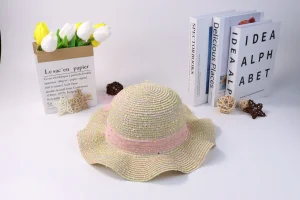
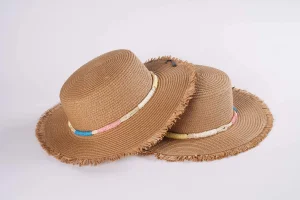
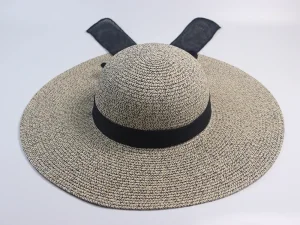
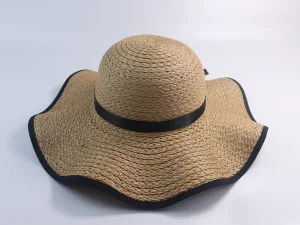
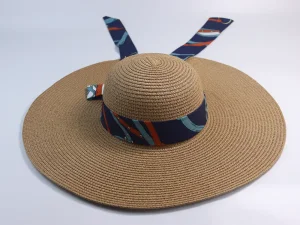
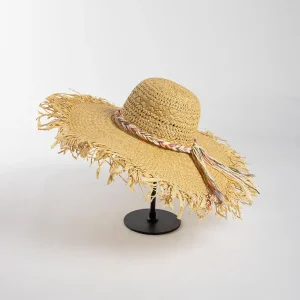
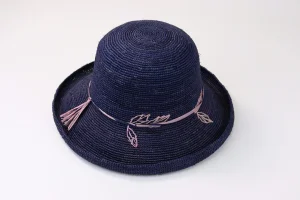
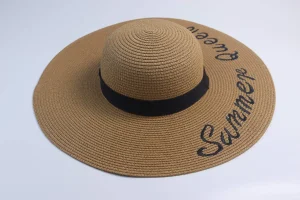
Four forces are reshaping how buyers brief their straw bag programmes. Understanding them early is worth real margin — as much as a full category position.
Consumers want provenance. Buyers now ask for natural-fiber certification, dye lot transparency, and packaging stories — a shift that favors authentic factories.
Post-2023 retailers have shifted to smaller, thematic drops. 50-pc programs and in-season replenishment are now standard, not niche.
Merchants increasingly buy coordinated beach sets — matching tote, floppy hat and visor — from a single supplier to simplify merchandising.
Fast-fashion fatigue is real. Mid-market brands are moving up in durability, stitched handles and ripstop lining — buyers pay for longevity.
The same straw beach bag can be merchandised very differently across markets. Sizing, finish, packaging and storytelling should reflect the market — not just the fiber.
Big-brim sun protection, UPF messaging, coast-to-coast travel-friendly shapes. DTC brands prefer lifestyle photography-ready finishes.
Côte d'Azur, Amalfi, Ibiza — premium raffia, natural dyed colorways, provenance storytelling and unbleached packaging.
UPF50+ sun protection for beach and surf lifestyle. Functional strap, wide-brim coverage and durable woven handles are non-negotiable.
Neutral colorways, refined finishing, compact sizing. Packaging often carries a seasonal aesthetic message alongside function.
Generous dimensions, structured silhouettes and elegant trims. Color palettes tuned to warmer seasonal apparel wardrobes.
Branded amenity bags, welcome totes, and premium “take-home” merchandise with a hotel or cruise signature — high-margin, high-loyalty.
Programmes are rarely “one SKU.” Mix children's, unisex and classic silhouettes in a single container to maximise merchandising depth — and minimise per-unit freight.
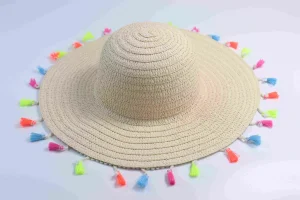
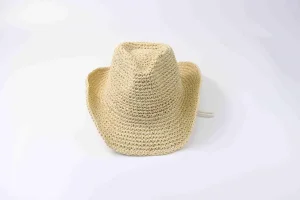
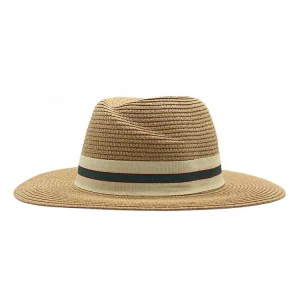
Straight answers to the questions most commonly asked by straw beach bag and sun hat buyers. Need deeper detail? Our team replies within 8 hours.
Send us your style references, target quantity and destination market. Our team replies within 8 hours with material suggestions, a sampling plan and a production timeline.