
Why the Wholesale Straw Cowboy Hat Supply Chain Matters Now
As a straw hat manufacturer headquartered in Linyi, Shandong, China with more than 15 years of OEM and ODM production experience, Lige Hats sits inside the very supply chain this whitepaper describes. Below we translate field knowledge, factory-floor observations and buyer feedback from 60+ export markets into a structured, decision-grade reference for sourcing teams evaluating wholesale top cowboy hat straw manufacturers and factories.
The straw cowboy hat is no longer a single-season novelty. Between spring festival circuits, country-music tourism, western-lifestyle retail and mainstream fashion resale, the category has evolved into a year-round, multi-material, multi-channel product class. Buyers who understand the industrial realities — fiber selection, blocking tolerance, lead time, port logistics, MOQ economics — consistently win on margin and shelf velocity. Buyers who treat the hat as a commodity item typically struggle with shape retention, size complaints and replenishment gaps.
This guide is structured to answer the exact questions global procurement teams ask us: What does modern cowboy-hat straw production look like? Where does China's factory efficiency come from? Which local markets demand which styles? And what does the 2026 buyer need to specify to avoid costly misorders?
Straw Cowboy Hat Demand by the Numbers
Reference indicators drawn from Lige's own export data, buyer communications and public trade patterns observed across North America, Oceania and Western Europe.
The Commercial Reality of Top Cowboy Hat Straw Supply
Understanding where raw material, weaving, blocking and finishing actually happen is the first step to buying well.
Raw Fiber Origins
Raffia palm fiber is largely harvested in Madagascar and East Africa; paper straw is manufactured in East Asia; wheat and toyo straw come from regional agricultural supply chains. Fiber sourcing geography directly shapes landed cost and lead time.
Weaving & Braiding Hubs
China, Vietnam, Ecuador and Madagascar form the four major braiding corridors. China dominates industrial-scale output because weaving, blocking and finishing sit under one management structure, cutting rework and inspection gaps.
Brand & Retail Concentration
North American western-wear retail, Australian outdoor brands and European resort-fashion groups account for the largest share of reorder volume. Each market demands distinct brim width, crown height and trim detailing.
Wholesale Channel Structure
Importers, distributors, private-label brands, boutique wholesalers and promotional-goods suppliers each operate different MOQ, packaging and labeling expectations — one production line cannot serve all equally.
Visibility & Transparency
Post-2020, buyers increasingly demand traceable raw material, factory audits and documented quality checkpoints. Suppliers who cannot articulate their workflow lose tender opportunities.
Symbolic & Cultural Value
Beyond sun protection, the straw cowboy hat carries identity value across rodeo culture, country music festivals, ranch tourism and coastal resort fashion — a demand multiplier that pure commodity logic misses.
Why Chinese Straw Hat Factories Deliver Structural Cost Advantage
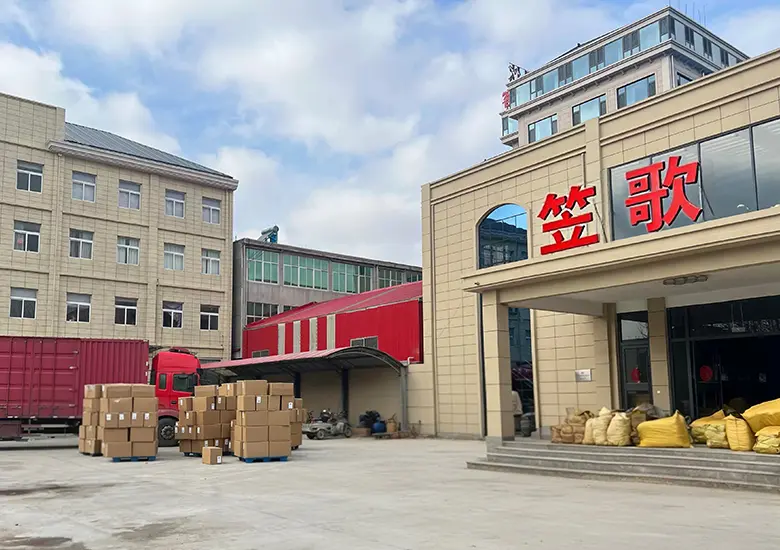
China's advantage is not simply wage cost. It is vertical integration, cluster density and process discipline. A modern straw cowboy hat factory in Shandong or Zhejiang coordinates fiber sorting, weaving, blocking, trimming, labeling, inspection and export logistics under a single management structure. This eliminates the rework, communication lag and quality drift that middlemen layers introduce.
Choosing the Right Straw Fiber for Your Cowboy Hat Line
The fiber you specify determines hand-feel, shape memory, shippability and price. This is the single decision most likely to cause reorders — or returns.
Where Straw Cowboy Hats Actually Sell — and Why
Style preference is not universal. Buyers who mirror a single template across markets consistently lose sell-through. This is how demand breaks down by region.
Rodeo, Country & Western Retail
Wide-brim cattleman crowns and structured grass straw dominate. Buyers require strong shape memory for shelf display and resist visual sag after shipping. Red, tan and classic natural tones lead.
Outdoor, Surf & Sunshine Culture
UV-protective brims with breathable weave are essential. Raffia and lighter paper-straw blends outperform heavy grass straw in a hot, coastal climate. Style leans relaxed, sweeping brim.
Resort & Fashion Crossover
Elevated finishes, embroidery and refined trims sell at premium price points. Smaller brim widths and pastel colorways dominate in French, Italian and Spanish resort channels.
Refined & Compact Silhouettes
Compact crowns, sharp detailing and high finishing tolerances. Buyers reject visible weave irregularities and demand tight label consistency.
Festival & Heritage-Driven Demand
Authentic straw character, traditional proportions and durability under heavy sun are prioritized. Buyers often source larger quantities per design and reorder on short notice.
Premium Sun-Protection Retail
High UV protection, breathing weave and structured crown dominate. Neutral tones and white straw fabrications lead demand.
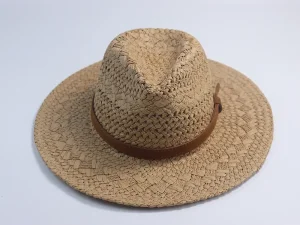
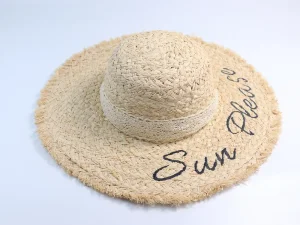
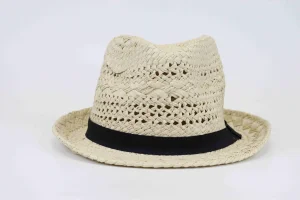
Featured Straw Cowboy & Western Hat Programs
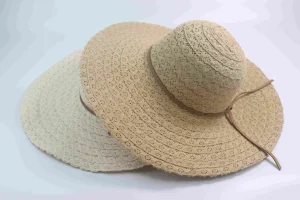
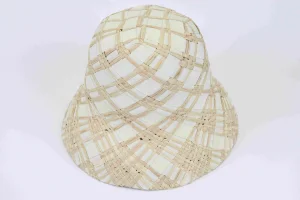
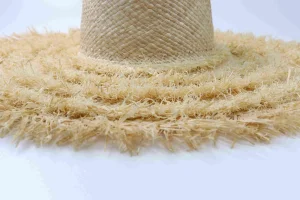
Directly from our Linyi factory floor. All styles are customizable across fiber, brim, trim and labeling. Click through to view each product specification.
The Four Forces Reshaping Straw Hat Procurement
Buyers who map their supplier strategy to these forces gain substantial first-mover advantage on both cost and shelf positioning.
Sustainability & Traceability
Natural raffia, paper straw and toyo are increasingly specified for eco-claims. Buyers require documented fiber sourcing and low-waste trimming practices.
Packable & Travel-Ready Design
Raffia's shape-memory advantage fuels demand for roll-up brims and crush-recovery western silhouettes — a "packable" claim that drives direct-to-consumer conversion.
Small-Batch & Drops
MOQs from 50–100 pieces per design allow boutique and DTC brands to test styles. Suppliers who support this model shift from commodity to strategic partner.
Customization Depth
Beyond color, buyers now request custom embroidery, woven labels, patches, hang tags, packaging and even unique blocking molds for proprietary silhouettes.
What Global B2B Buyers Actually Require from a Factory
Consolidated from buyer briefs across North America, Oceania, Europe and East Asia.
Defined Lead Time
Buyers lock replenishment around factory-lead-time disclosures. Vague timelines erode trust faster than any other variable.
Consistent Size Tolerance
Inconsistent head sizing drives returns. Tier-one factories specify ±2mm blocking tolerance to prevent this failure mode.
Export-Grade Cartonization
Proper crush-resistant packaging determines whether a cowboy hat arrives as a hat — or a shape that must be re-blocked on arrival.
Branding Capability
Private-label programs need woven labels, heat-transfer branding, hang tags and secure tag attachment — no brand should appear as an afterthought.
Sample-to-Bulk Consistency
Golden-sample discipline separates reliable factories from risk. Buyers regularly audit whether bulk matches approved samples in color, weave and trim placement.
Commercial Transparency
Clear MOQ tiers, freight terms and payment milestones. Buyers actively avoid suppliers who quote on request only — pricing opacity signals risk.
Real Factory. Real Experience. Direct Accountability.
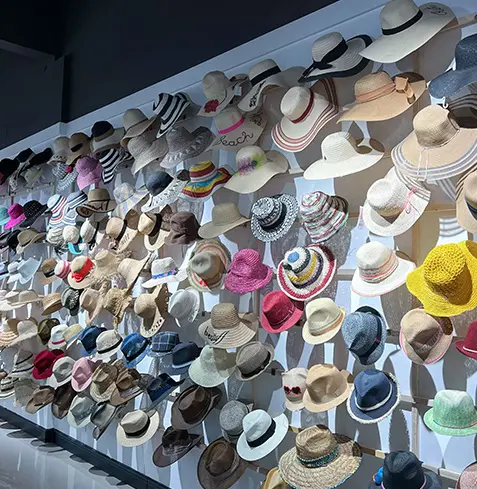
Shandong Lige Import & Export Co., Ltd. is a straw hat manufacturer based in Linyi City, Shandong Province, China — within easy reach of Qingdao Port. For more than 15 years we have produced straw hats, paper hats, straw bags and paper bags for importers, brand owners and retail buyers across 60+ countries. Our team combines traditional hand-weaving skill with industrial blocking, trimming and finishing expertise.
The Six-Step OEM / ODM Production Journey
Every order follows an auditable sequence — from buyer brief to container loading — so quality, cost and schedule stay aligned.
Share Your Brief
Style, fiber, size, color, branding, target quantity and delivery market.
Design & Sampling
Our designers recommend materials and develop samples against your reference or mood board.
Approval
Confirm approved sample, labels, packaging and commercial schedule before bulk.
Production
Material sorting, weaving, blocking and finishing under one factory roof.
Quality Inspection
Shape, stitching, sizing, trims and labeling inspected against golden sample.
Export Shipping
FCL or LCL sea freight via nearby Qingdao Port; air and express for urgent runs.
After-Sales
8-hour response window for QC claims, replenishment questions and reorder requests.
Reorder & Scale
Reorder-ready master data — style codes, tolerances, carton specs — kept on file for fast repeat production.
Frequently Asked Wholesale Questions
Direct answers on MOQ, customization, shipping and market scope — drawn from thousands of buyer conversations.
What is the minimum order quantity for custom straw cowboy hats?
Can Lige produce private-label cowboy hats with our own logo?
Where is your factory located and how are orders shipped?
Which markets do you export cowboy hats to?
How quickly does your team respond to buyer requests?
What products do you manufacture besides straw cowboy hats?
Which straw fiber should I choose for a market that values shape retention?
Can I mix cowboy hat styles within a single order to hit MOQ?
Do you offer quality inspection reports and pre-shipment audits?
More Straw Hat & Accessory Programs from Lige
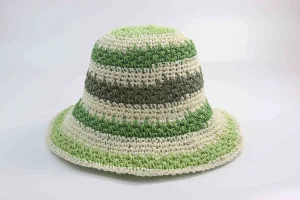
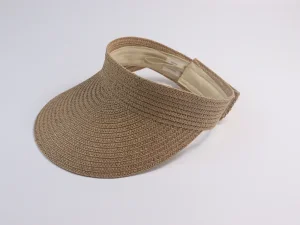
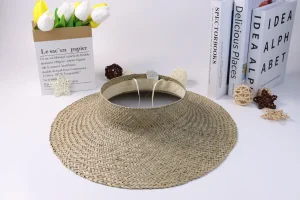
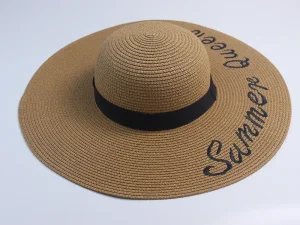
From kids' styles to visors and full outfit sets — complete your seasonal sourcing in a single supplier relationship.
Let's Build Your Next Straw Cowboy Hat Collection
Send us your style references, target quantity and destination market. Our team will respond within 8 hours with material recommendations, a sampling plan and a production timeline.