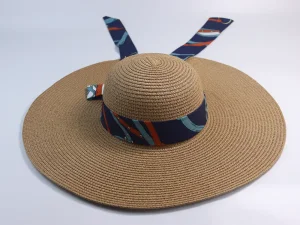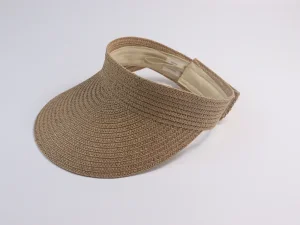
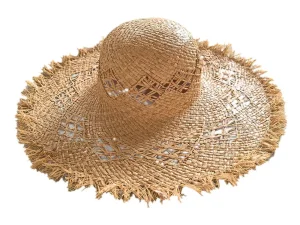
China 100% Natural Raffia Hand Woven Wide Brim Cloche Hat – Custom OEM from China Suppliers & Factory
View Product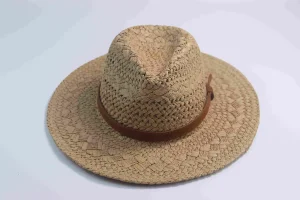
High-Quality Stylish Women's Fashion Hats – Perfect for Every Occasion Manufacturer
View Product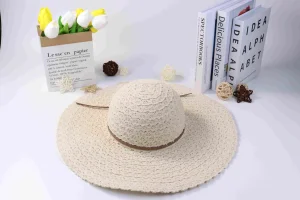
China Women’s Wide Brim Straw Hat, Elegant Wide Hat for Women Outdoor Sun Protection Manufacturer
View Product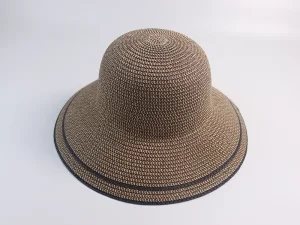
Wholesale Women's Summer Bucket Hats with Big Brim – Lightweight & Customizable Paper Straw Hats Manufacturers
View Product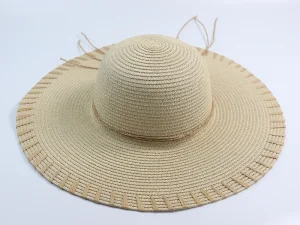
Wholesale Women's Sun Straw Hat Wide Brim UPF 50 Foldable Floppy Beach Hat for Summer Manufacturers
View Product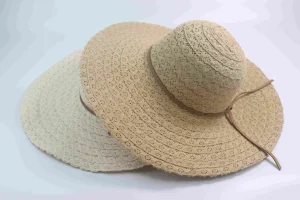
Wholesale Stylish Women's Straw Hats for Sun Protection & Fashion – Top China Suppliers & Factory Options
View Product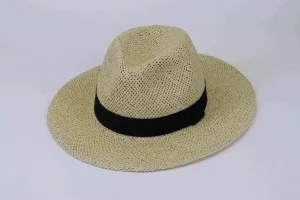
High-Quality Stylish Fedora Hats for Men – Classic & Modern Styles Manufacturer
View Product
Executive Summary
What "Wholesale Top Straw Bag Women" Really Means for Serious Buyers
The phrase “wholesale top straw bag women” is not a single keyword — it is a cluster of search intent signals that a professional buyer emits when they need a reliable manufacturing partner, not simply a bag. Read semantically, the query carries three layers of intent: a commercial investigation layer (“wholesale”), a product quality layer (“top”), and a category + audience layer (“straw bag, women”). Google's Search Quality Rater Guidelines call this alignment between query language and page purpose “Needs Met”, and it is exactly what this whitepaper is engineered to satisfy.
For more than 15 years, Shandong Lige Import & Export Co., Ltd. (Lige Hats) has manufactured straw hats, paper hats, straw bags and paper bags for importers, brand owners and retail buyers worldwide. Based in Linyi City, Shandong Province, within easy reach of Qingdao Port, we combine traditional hand-weaving craft with modern blocking, finishing and inspection expertise. Our customers are active in the United States, Canada, Australia, Mexico, Western Europe and Japan — over 60 countries and 25+ global distributors to date.
This document is deliberately structured as an information-gain asset rather than a catalog page. It answers the questions a procurement manager, a private-label founder or a category buyer actually asks before issuing a purchase order: where the straw bag fits into a local market assortment, what the technical roadmap looks like over the next 24–36 months, why Chinese manufacturing retains a structural cost-and-resilience advantage, how compliance is documented, and what the realistic MOQ, sampling and shipping parameters are.
0+
Years Manufacturing
0+
Countries Served
0+
Global Distributors
0h
Response & Action
0+
MOQ per Design
Localized Application Scenarios
Where a Women's Straw Bag Wins — Region-by-Region Buying Logic
Straw bag demand is not globally uniform. The same woven body performs very differently depending on climate, retail calendar, cultural dress codes and legal labeling. Below is how our product team advises buyers to localize an assortment.
North America — Beach & Resort Retail
Wide-brim floppy hats and large raffia totes anchor spring/summer resets in coastal and Sun Belt markets. Buyers pair a UPF 50 floppy beach hat with a straw tote as a "resort bundle," usually launched in February for an April–July sell-through window.
Western Europe — Promenade & Market
Markets on the Côte d'Azur and the Italian lakes favor structured cloche and boater silhouettes with grosgrain ribbon trims. Smaller basket bags with flat-woven raffia sell well at independent boutiques, where MOQs of 50–100 per style fit the test budget.
Australia & New Zealand — UV-First
Strict sun-safety norms in AU/NZ make UPF claims and coverage geometry critical. Buyers favor 10–12 cm brims and full-crown coverage for school-age and outdoor-lifestyle ranges, with printed swing tags that document the fabric's UV-blocking treatment.
Japan — Craft & Detail
Japanese buyers evaluate woven consistency, headband stitching and packaging at a level that is closer to apparel than accessories. Small-batch drops of 50 pieces, precise size grading and individual poly-bag protection are expected rather than optional.
Latin America — Festival & Streetwear
Mexico and Brazil favor vivid dye work and embroidered banding. Raffia's natural resin structure makes it the most dye-receptive straw fiber in our line, allowing saturated colorways that survive the container journey and hold their hue through the season.
Middle East — Shade & Coverage
High-irradiance markets prioritize physical shade over fashion silhouette. Deeper crowns and breathable weaves reduce heat build-up, while neutral, undyed natural straw finishes align with modest-dress styling and premium resort positioning.
Buyer's Material Guide
Choosing the Right Fiber for a Women's Straw Bag Program
The fiber determines hand-feel, shape retention, price point and survivability in transit. Our product team uses this comparison before opening a sampling round.
| Fiber | Hand-Feel | Shape Retention | Best-For Application | Buyer Tip |
|---|---|---|---|---|
| Raffia (palm leaf) | Soft, flexible | High and recovers after packing | Floppy hats, bucket hats, premium resort bags, totes | Ideal for "packable" claims and bold saturated colorways |
| Paper Straw | Lightweight, uniform | Moderate; holds shape well | Fedoras, Panama-style hats, promotional and seasonal retail | Add "keep dry" care labels — paper straw softens when soaked |
| Natural Grass Straw | Crisp, slightly stiff | Excellent — keeps shape on shelf | Boater hats, cowboy hats, lifeguard hats | Choose when shelf presentation matters most |
| Fabric & Knit | Soft, breathable | Depends on construction | Visors, winter hats, children's hats, toy hats | Pair with straw lines for a year-round single-supplier program |
Technology Roadmap & Future Outlook
From Hand-Weaving to Smart Manufacturing: A 24–36 Month Horizon
Straw accessories are a heritage category, but the supply chain around them is modernizing rapidly. This is the roadmap our factory is executing against, and it is the roadmap buyers should expect from any serious manufacturer.
Digital Product Twin
Every style is captured as a parametric 3D model (crown height, brim width, weave density) so buyers can preview seasonal colorways and band treatments without physical shipping each round.
Blockchain-Traceable Raffia
Origin verification from source cooperatives to finished rolls, supporting EU deforestation-adjacent due diligence requirements and ESG reporting in brand supply chains.
AI Vision QC
Camera-assisted inspection flags irregular weave tension, skipped stitches and off-spec brim curvature before packing, reducing defective units and container claim risk.
Low-Water Processing
Dry-dye and closed-loop finishing reduce water consumption per piece, aligning with brand-level Scope 3 targets and increasingly common buyer sustainability scorecards.
Post-Consumer Straw Recycling
Reclaimed straw fibers blended into non-structural components such as tote handles, banding and lining backing — a genuine circularity story rather than a vague eco label.
Ocean Freight & Carbon Labelling
Per-container carbon estimates and a consolidated LCL option let buyers document shipping emissions in their own product disclosures.
Supply-Chain Resilience
Why China's Woven-Accessory Supply Chain Still Wins on Cost and Speed
The straw-hat and straw-bag category is not a commodity that can be relocated in a single season. It depends on a dense, localized cluster of complementary industries — raffia and paper-yarn twisting, dye houses, blocking mold makers, ribbon and trim suppliers, packaging and print services — all within a few hours by road.
Lige is located in Linyi City, Shandong Province, a regional manufacturing base for woven accessories close to Qingdao Port, one of China's major container gateways. That geography delivers three concrete advantages.
1. Vertical integration. Raw material sorting, weaving, blocking, finishing and final inspection run under one roof. Quality decisions are made inside the factory, not negotiated between brokers.
2. Compressed lead time. When a buyer adds a new colorway or a band trim mid-program, the change can be sourced and approved without a transcontinental loop.
3. Price stability. Direct factory pricing removes middleman margins. A 20-year production manager and a 15-year QC manager — with a team averaging 5+ years — anchor the operational learning curve that a newer supply base would need years to match.
8-Hour Response
Every buyer request is answered and actioned within eight hours — product questions, sampling, order follow-up, and after-sales service.
Qingdao Port Access
FCL and LCL export from a major container gateway, keeping consolidation and short-hop shipping costs competitive.
In-House Design Team
Professional designers develop new shapes from a mood board or reference sample, so ODM is more than a promise.
50–100 pcs MOQ
Boutiques, emerging brands and importers can test a new style before scaling — no overstock risk on unproven designs.
Global Commercial Landscape
The Commercial State of Women's Straw Accessories in 2025
Three structural forces define demand for women's straw bags and hats in the current season, and each one shapes what a buyer should be negotiating.
Eco-Conscious Consumption
As consumers prioritize planet-friendly choices, artisanal straw bags merge timeless style with an eco-conscious story. Buyers increasingly request documented fiber origins, natural dyes and recyclable packaging, and international orders for these ranges are rising.
Short-Season Test-and-Scale
The 8-week summer window in temperate markets makes low-MOQ test buys economically rational. A 50-piece private-label launch lets a boutique validate a silhouette before committing to a container-scale reorder.
Brand-Extension Pressure
Fashion and resort apparel brands are extending into accessories to grow basket size. A one-stop supplier that can deliver hats, bags, children's sets, visors and winter hats from a single source reduces vendor management overhead significantly.
Small-Format Retail Growth
Independent boutiques and pop-up concepts continue to expand in North America and Western Europe, driving demand for low-MOQ, high-perceived-value woven pieces with strong story-telling on the swing tag.
Freight Normalization
Post-pandemic ocean-freight rates have largely normalized, making FCL programs more predictable and returning LCL to a viable option for buyers testing new markets with modest volumes.
Verified-Supplier Preference
Buyers now expect evidence before ordering: production-manager tenure, QC process, sample-room documentation and consistent response time. Transparency has become a commercial advantage rather than a marketing flourish.
Localized Support & Compliance Assurance
Buying Across Borders Without Sourcing Regret
Compliance is where inexperienced buyers lose money after the PO is signed. Here is what a well-run factory should be able to document on request.
Labeling & Origin Marking
Country-of-origin, fiber content and care instructions can be printed on swing tags, sewn-in labels or stamped per destination-market requirements. Buyers should specify label language and placement in the sample round.
Chemical & Material Safety
Restricted-substance screening on dyed raffia and paper straw is available on request, aligned with common EU and North American apparel-accessory expectations. Buyers should confirm test scope before mass production begins.
Pre-Shipment Inspection
A formal final inspection covers shape, stitching, sizing, trim attachment and packing accuracy. Photos and a written report are shared with the buyer before container loading.
Incoterm & Shipping Flexibility
FCL and LCL sea freight via Qingdao Port, with air and express options for samples and urgent small orders. Incoterms and documentation are confirmed in the sales contract.
Dedicated Account Contact
One point of contact handles your account from sampling through after-sales, reducing the risk of lost instructions between departments and speeding up resolution of any issue.
Sampling Before Commitment
Physical samples of shape, material, color and branding are confirmed before mass production. This is the single most effective pre-purchase risk control available to a buyer.
OEM & ODM Workflow
A Transparent Six-Step Process, From Brief to Container
Share Your Brief
Style, material, size, color, branding and target quantity are agreed in a written brief.
Design & Sampling
Our designers recommend materials and develop physical samples for approval.
Approval
Samples, labels, packaging and delivery schedule are confirmed before production.
Production
Material sorting, weaving, blocking and finishing are handled in-house.
Quality Inspection
Final inspection covers shape, stitching, size and trims before packing.
Export Shipping
FCL or LCL sea freight via nearby Qingdao Port, with tracking shared to the buyer.
Buyer Q&A
Frequently Asked Questions
Straight answers on MOQ, customization, shipping and service. Need more detail? Our team replies within eight hours.
What is the minimum order quantity for custom straw bags and hats?
Our starting quantity for small orders is 50 to 100 pieces per design, depending on material and craftsmanship. This lets boutiques, emerging brands and importers test new styles before scaling up.
Can Lige produce private-label hats and bags with our logo?
Yes. OEM and ODM production is our core business. We customize shape, material, color, size and hat bands, and can add branding such as woven labels, patches and hang tags. Our designers can also develop new styles from your mood board or reference samples.
Where is your factory located and how are orders shipped?
We are located in Linyi City, Shandong Province, China, close to Qingdao Port. Bulk orders are typically exported by sea freight as FCL or LCL shipments, while samples and urgent small orders can be sent by air or express courier.
Which markets do you export hats and straw bags to?
Most of our products are exported to the United States, Canada, Australia, Mexico, Western Europe and Japan. We serve customers in more than 60 countries and work with over 25 global distributors.
How quickly does your team respond to buyer requests?
We respond and take action within 8 hours, covering product questions, sampling, order follow-up and after-sales service.
What products do you manufacture besides straw hats?
In addition to straw hats, we manufacture paper hats, straw bags and paper bags, as well as children's straw hats, toy hats, lifeguard hats, sun visors, winter hats and other bags. Explore our straw bags range or children's straw hats for a one-stop program.
Start Your Program
Let's Build Your Next Women's Straw Bag & Hat Collection
Send us your style references, target quantity and destination market. Our team will reply within eight hours with material recommendations, a sampling plan and a realistic production and shipping timeline.
More Styles to Explore
Extend Your Assortment
Additional wholesale styles relevant to women's straw bag and sun-protection programs.
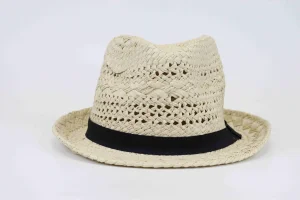
High-Quality Stylish Men's Straw Sun Hat – UV Protection & Breathable Manufacturers
View Product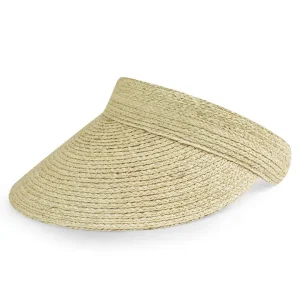
High-Quality Trendy Summer Hats for Women – Stylish & Sun-Proof Styles Manufacturer
View Product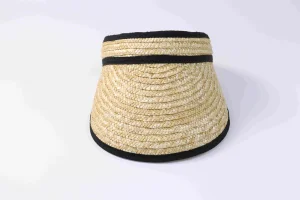
Wholesale Packable Straw Visor Hat, Adjustable Open Top Straw Sun Hat Lightweight Breathable Summer Visor
View Product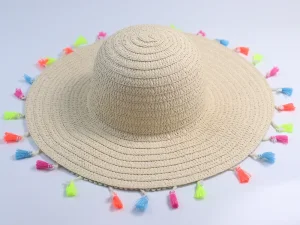
High-Quality Cute Summer Hat & Bag Set for Kids – Handmade from China, Premium Quality
View Product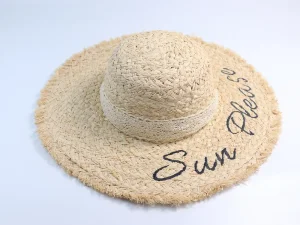
Wholesale Stylish Handmade Raffia Western Hat for Women – Custom Embroidery Straw Hat from China
View Product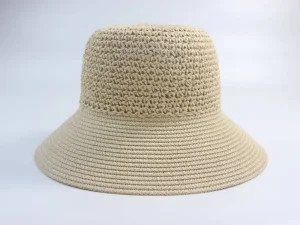
China Elegant Summer Beach Fisherman Bucket Hats for Women – 100% Paper, Customizable Factory Direct
View ProductChina Stylish Women's Straw Hats for Sun Protection & Fashion | China Suppliers & Factory Quality
View Product