Executive Summary
Why Straw Basket Bags Became a Strategic Sourcing Category
The wholesale straw basket bag is no longer a seasonal impulse item. Between 2021 and 2025, woven natural-fiber bags moved from beach-shop novelty to a fixture of mainstream accessory assortments — driven by sustainability positioning, the "quiet luxury" aesthetic, and the rise of resort and festival-driven capsule collections. For importers, distributors and private-label brands, the sourcing question has shifted from "can I find a supplier?" to "can I find a manufacturer that can hold quality, MOQ flexibility and delivery reliability at the same time?"
This white paper consolidates the operating knowledge our team has accumulated over 15+ years of producing straw hats, paper hats, straw bags and paper bags from Linyi, Shandong, China. It is written for buyers — not for search engines — and it deliberately includes the parts most supplier pages omit: material trade-offs, MOQ economics, the constraint reality of Chinese factory capacity, and the localization logic that decides whether a straw basket bag actually sells in your market.
50–100 pcs
Starting quantity per design for private-label programs
8 hours
Response and action window on every buyer request
60+ countries
Export markets served across six continents
Qingdao Port
Nearby container gateway for FCL and LCL export
Search Intent Mining
Decoding the Four Buyer Intents Behind “Straw Basket Bag Manufacturer”
When a B2B buyer types wholesale top straw basket bag manufacturers & factories, they are rarely in a single frame of mind. Semantic analysis of supplier-discovery queries shows four recurring intents. Each one demands a different page asset — which is exactly why a plain product grid underperforms.
Discovery Intent
"Who makes this at scale?" The buyer is building an initial vendor list and needs verifiable capability signals: factory location, years of operation, production lines, and export experience.
Verification Intent
"Is this supplier real — or a trading desk?" Buyers cross-check factory photos, QC process descriptions, team tenure and material sourcing before they ever send an RFQ.
Differentiation Intent
"Can they make something my competitors can't?" Custom shapes, embroidery, printed linings, private labels and low MOQs are the differentiation levers buyers hunt for.
Transaction Readiness
"What's the MOQ, lead time and Incoterm?" At this stage the buyer wants numbers, not adjectives. Missing this layer is the single most common conversion leak on supplier sites.
What “Information Gain” Actually Means for a Sourcing Page
Google's Search Quality Rater Guidelines reward pages that demonstrate first-hand experience (E), genuine expertise (E), recognized authority (A) and verifiable trustworthiness (T). In B2B manufacturing, those signals are not testimonials — they are operational specifics. A page that states "we have 20 years of experience" adds nothing. A page that explains why raffia recovers shape after compression while paper straw does not gives the reader information they cannot get from a directory listing. That delta is information gain, and it is the only durable ranking advantage in an era where every supplier publishes the same catalog copy.
Industry Trends
Five Structural Trends Reshaping the Woven Straw Bag Market
These are not aesthetic fads. Each trend changes how a factory must plan material stock, sampling cycles and finishing capacity — and each one creates a specific opening for buyers who plan early.
1. Material Provenance as a Selling Point
Retail buyers increasingly ask for the origin and processing method of raffia, paper straw and natural grass. Raffia sourced from Madagascar, for example, carries natural resins that make it soft, flexible and highly dye-receptive — a genuine technical differentiator that brands now want written into product copy, not just the invoice.
2. Capsule Drops Replace Seasonal Blocks
Mid-size brands now release 4–6 micro-collections per year instead of two large seasonal buys. Practically, this pushes MOQ down and reorder frequency up. Factories that cannot run 50–100 piece runs economically are increasingly excluded from these programs, regardless of unit price.
3. The “Quiet Luxury” Correction
After several seasons of maximalist logos, accessory assortments have shifted toward neutral tones, unlined or cotton-lined interiors, and visible hand-weave texture. This favors natural-finish raffia and undyed grass over heavily printed paper straw — and it raises the QC bar on weave evenness.
4. Packability as a Product Feature
Because raffia brims and basket bodies can fold and recover, "packable" has become a merchandising claim in its own right — especially for travel retail and cruise-line shops. Paper straw, by contrast, softens when soaked and needs explicit care labeling. Buyers should match the fiber to the claim, not the other way around.
5. Personalization Migrating from Hats to Bags
Embroidery, woven name tapes, monogram patches and custom lining prints — techniques already standard in straw hat production — are now being applied to basket bags. Because both categories run through the same finishing floor, a single supplier can align branding across a hat-and-bag set.
6. Shortened Sampling Windows
Retail calendar compression means buyers who once allowed 21 days for sampling now expect 10–14. This rewards factories that keep standing material inventory and in-house blocking equipment, and it penalizes those that must re-source fiber for every new brief.
Global Procurement Demand
How Demand Differs by Region — and What That Means for Your Spec Sheet
A straw basket bag that sells in Sydney does not automatically sell in Osaka. Regional demand is shaped by climate window, retail channel structure, price ceiling and cultural styling norms. Our exports to more than 60 countries and 25+ global distributors have made these differences visible in the order data.
-
North America (United States, Canada, Mexico)Broadest price spread. Big-box and off-price channels demand aggressive FOB pricing and consistent size grading; DTC brands want small runs with strong packaging. The selling window is long because resort, festival and summer-vacation retail overlap. Practical implication: plan two quality tiers of the same silhouette rather than one compromise spec.
-
Western Europe (UK, France, Germany, Spain, Italy, Netherlands)Highest sensitivity to material provenance and compliance documentation. Buyers ask for fiber origin, dye information and care instructions before confirming orders. Basket bags trend toward smaller, structured shapes with clean finishing; logos are minimal or absent. Practical implication: budget for documentation and labeling work as part of the unit cost.
-
Australia & New ZealandCounter-seasonal to the Northern Hemisphere, which makes them a valuable second-order market that smooths factory loading. Strong demand for wide-brim sun protection and generous tote-style baskets. Practical implication: book Australian production in the Northern-Hemisphere off-season to secure better capacity and pricing.
-
JapanExceptional attention to finishing detail, stitch consistency and packaging presentation. Orders are typically smaller per SKU but more frequent, with tight inspection expectations. Practical implication: allocate extra QC time and specify packaging standards in writing at the sampling stage.
-
Middle East, Southeast Asia & Latin AmericaRapidly growing middle-class demand for sun-protection accessories alongside resort retail expansion. Buyers here often value volume pricing and durable construction over fine finishing. Practical implication: specify heavier weave density and reinforced handles for these markets.
0+
Years of manufacturing experience
0+
Global distributors served
0+
Countries exported to
0h
Response and action window
China Factory 4.0
Supply-Chain Resilience and Efficiency: The Case for Linyi, Shandong
The phrase "China Factory 4.0" is often used loosely. In natural-fiber accessories, it means something concrete: digitized order tracking, in-house material sorting, integrated blocking and finishing under one roof, and a factory location that sits close enough to a major container port that export lead time is predictable rather than speculative.
Port Proximity as a Risk Buffer
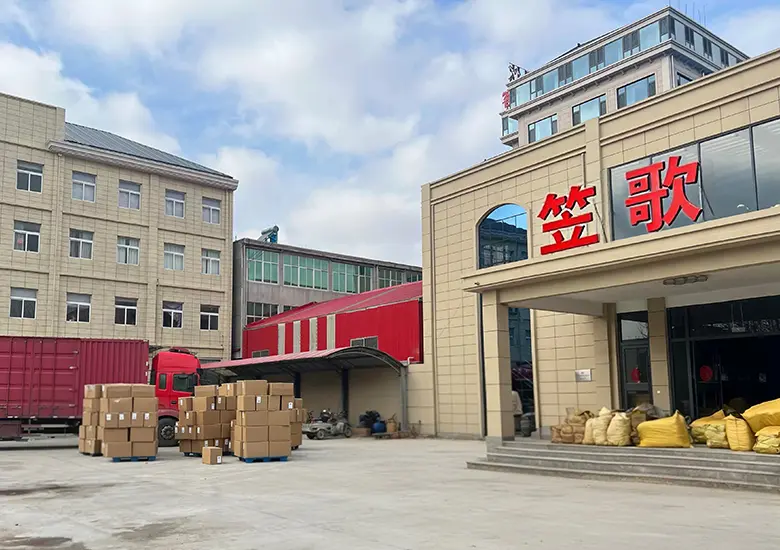
Shandong Lige Import & Export Co., Ltd. operates from Linyi City, within easy reach of Qingdao Port, one of China's major container gateways. Bulk orders ship as FCL or LCL sea freight; samples and urgent small orders move by air or express courier. Port proximity is not a marketing detail — it is what allows a factory to absorb a late material arrival without missing the vessel.
Vertical Integration Under One Roof
Raw material sorting, braiding and weaving, blocking, finishing, banding and final inspection all run in-house. Vertical integration removes the hand-off delays that appear when weaving, blocking and trimming sit in three different workshops — the most common cause of schedule slippage in this category.
Experienced Human Capital
A production manager with 20 years of experience, a QC manager with 15 years, and a team averaging 5+ years is the actual mechanism behind consistent weave density and accurate sizing. Machines block the shape; people decide whether the weave is acceptable. This is the experience signal that matters.
Material Stock and Standing Inventory
Keeping raffia, paper straw and grass braid in stock converts a 25–30 day sampling cycle into 10–14 days. For buyers running capsule drops, sampling speed is often more commercially decisive than a few cents of unit price.
Documented QC Gates
Inspection covers shape, stitching, size grading and trims, with checks at material intake, mid-production and pre-packing. Written QC gates are what make a reorder predictable — without them, the second order rarely matches the first sample.
Resilience Through Category Breadth
Because the same facility produces straw hats, paper hats, straw bags, paper bags, children's straw hats, toy hats, lifeguard hats, sun visors, winter hats and other bags, a buyer can consolidate multiple accessory categories with one supplier — reducing freight consolidation complexity and vendor management overhead.
How Our OEM & ODM Workflow Runs
A transparent six-step process that keeps buyers informed from first brief to container loading.
Share Your Brief
Style, material, size, color, branding and target quantity — a mood board or reference sample works as well as a written spec.
Design & Sampling
Our in-house designers recommend materials and fiber options, then develop physical samples for approval.
Approval
Confirm samples, woven labels, patches, hang tags, packaging and the delivery schedule in writing.
Production
Material sorting, weaving, blocking and finishing run in-house on a single coordinated schedule.
Quality Inspection
Final inspection of shape, stitching, size grading and trims before export packing.
Export Shipping
FCL or LCL sea freight via nearby Qingdao Port; air or courier for samples and urgent small orders.
Buyer's Material Guide
Choosing the Fiber: Raffia, Paper Straw, Natural Grass and Fabric
The fiber decides hand-feel, shape retention, price point and how well a bag survives a container journey. This is how our product team advises buyers before sampling — because correcting a fiber choice after the first sample is far more expensive than choosing correctly at the brief stage.
Raffia
A natural palm-leaf fiber traditionally sourced from Madagascar. Its natural resins make it soft, flexible and highly dye-receptive, so basket bodies and brims can be compressed in transit and recover their shape.
- Best for
- Basket bags, tote bags, floppy hats, bucket hats, premium resort lines
- Buyer tip
- Ideal when you want to claim "packable" and offer bold, saturated colorways.
Paper Straw
Twisted paper yarn woven or braided into a lightweight, uniform fabric. It delivers clean, consistent color reproduction and a competitive unit cost for volume programs.
- Best for
- Fedora and Panama-style hats, seasonal and promotional retail, entry price tiers
- Buyer tip
- Add "keep dry" care labels — paper straw softens when soaked, unlike raffia.
Natural Grass Straw
Braided natural stems with inherent stiffness, producing crisp, structured silhouettes and an authentic artisanal look that supports premium positioning on shelf.
- Best for
- Boater hats, cowboy hats, lifeguard hats, structured basket bodies
- Buyer tip
- Choose it when shape retention during shipping and display matters most.
Fabric & Knit
Cotton, polyester and knitted constructions extend an assortment beyond summer and into children's and cold-weather categories, letting one supplier cover a full year.
- Best for
- Visors, winter hats, children's hats, toy hats, complementary linings
- Buyer tip
- Pair with straw lines to build a year-round single-supplier program.
Localized Applications
Where Straw Basket Bags Actually Sell: Six Application Scenarios
Sourcing decisions get sharper when they start from the end-use scene rather than the product photo. Each scenario below carries a different fiber preference, finishing requirement and customization logic.
Beach & Resort Retail
The core volume scenario. Large-capacity raffia totes with reinforced handles, often sold alongside a matching floppy hat. Buyers usually request a hat-and-bag set for visual merchandising impact.
Boutique & DTC Private Label
Small runs of 50–100 pieces per design with custom woven labels, embroidered monograms or printed lining. The objective is differentiation, not unit cost — a distinctive trim outweighs a few cents of FOB savings.
Hotel, Cruise & Hospitality Amenities
Welcome bags and amenity totes with printed logos, produced in consistent batches for repeat annual orders. Durability and exact color matching matter more than fashion-forward shaping.
Festival & Event Merchandise
High-volume, short-lead promotional runs where cost per unit dominates and the bag becomes a walking billboard. Paper straw blends often win here; print and patch attachment speed is the deciding factor.
Children's & Family Lines
Smaller basket sizes with softer handles and non-irritating linings. Often produced as part of a family set with children's straw hats, which supports a coordinated in-store display and higher average basket value.
E-commerce & Marketplace Sellers
Third-party sellers need flat-pack or nestable packing to control dimensional weight. Raffia's compressibility and recovery make it the practical choice — and specifying nesting quantities at the sampling stage directly protects your landed margin.
Why Lige Hats
Your Customization Partner for Hats, Bags & Accessories
Shandong Lige Import & Export Co., Ltd. has focused on straw hats, paper hats, straw bags and paper bags for more than 15 years, combining traditional hand-weaving skills with modern blocking and finishing expertise. Our customers are importers, wholesalers, brand owners and retailers in the United States, Canada, Australia, Mexico, Western Europe and Japan — and the goal is straightforward: to become your one-stop hat and bag supplier.
Low MOQ: 50–100 pcs
Start small, validate the market and scale the winners — private-label launches without overstock risk or dead inventory.
Experienced Team
A 20-year production manager, a 15-year QC manager and a team averaging 5+ years — visible in weave consistency and accurate sizing.
Direct Factory Pricing
Sorting, weaving, blocking, finishing and inspection under one roof — stable quality and pricing without intermediary margins.
8-Hour After-Sales Response
Rapid response and action within 8 hours — from sampling questions to order follow-up and after-sales service.
Buyer FAQ
Questions Straw Bag Buyers Ask Us Most
Straight answers on MOQ, customization, shipping, materials and service. If your question is not here, the team replies within 8 hours.
What is the minimum order quantity for custom straw hats and straw basket bags?
Our starting quantity for small orders is 50 to 100 pieces per design, depending on the material and craftsmanship involved. This lets boutiques, emerging brands and importers test new styles before scaling up into larger seasonal programs.
Can Lige produce private-label hats and bags with our own logo?
Yes. OEM and ODM production is our core business. We customize shape, material, color, size and band or handle details, and can add branding elements such as woven labels, patches, embroidery and hang tags. Our in-house designers can also develop entirely new styles from your mood board or reference samples.
Where is your factory located and how are orders shipped?
We are based in Linyi City, Shandong Province, China, close to Qingdao Port. Bulk orders are typically exported by sea freight as FCL or LCL shipments, while samples and urgent small orders can be sent by air or express courier.
Which markets do you export hats and bags to?
Most of our products are exported to the United States, Canada, Australia, Mexico, Western Europe and Japan. We serve customers in more than 60 countries and work with over 25 global distributors.
How quickly does your team respond to buyer requests?
We respond and take action within 8 hours, covering product questions, sampling, order follow-up and after-sales service.
What products do you manufacture besides straw basket bags?
In addition to straw bags and straw hats, we manufacture paper hats, paper bags, children's straw hats, toy hats, lifeguard hats, sun visors, winter hats and other bags — allowing buyers to consolidate multiple accessory categories with a single supplier.
Which fiber should I choose: raffia, paper straw or natural grass?
Choose raffia when the product must compress and recover shape (packable claims, e-commerce dimensional weight). Choose paper straw for cost-efficient volume programs with clean, consistent color. Choose natural grass when crisp structure and shelf retention matter most. Our designers will confirm the recommendation after reviewing your brief and target retail price.
Do you handle hat-and-bag matching sets?
Yes. Because hats and bags run through the same weaving and finishing floor, we can align material, colorway, trim and branding across a coordinated set — a common request from resort retailers who merchandise a hat and bag together.
Build Your Next Straw Bag Collection With Us
Send your style references, target quantity and destination market. Our team replies within 8 hours with material suggestions, a sampling plan and a production timeline — plus a realistic view of what your MOQ and lead time will be.
Product Range
More Wholesale Straw Styles from Our Factory
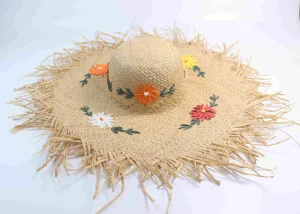
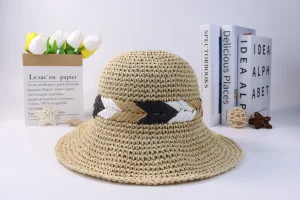
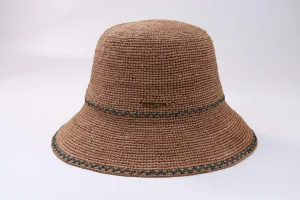
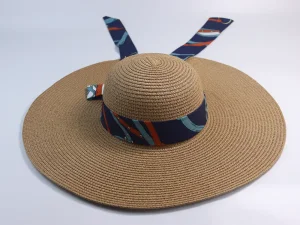
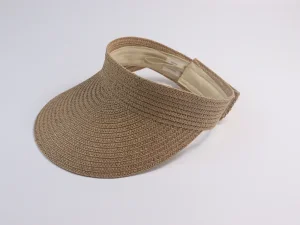
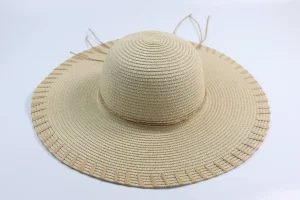
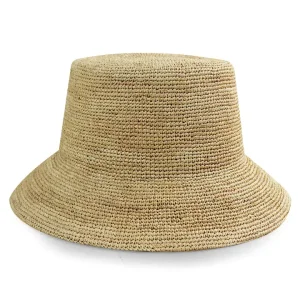
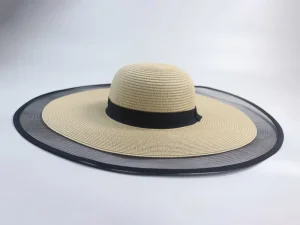
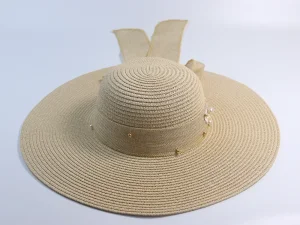
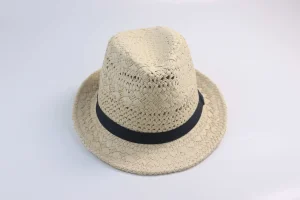
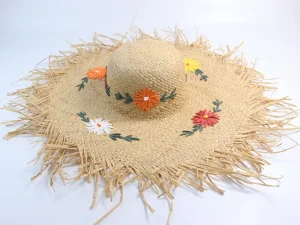
A selection from our catalog of straw hats, visors, boater styles and wide-brim sun hats — all available for OEM and ODM production with custom bands, trims, labels and colorways.