
Sun Protection
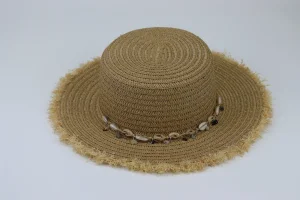
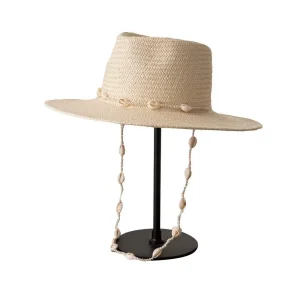
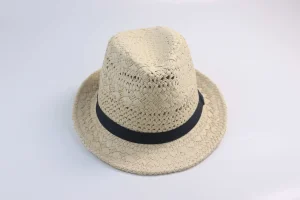
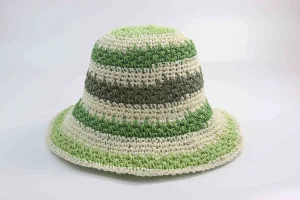
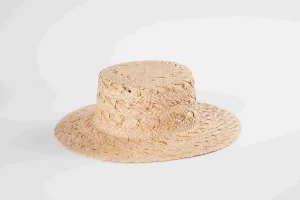
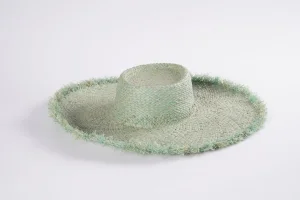
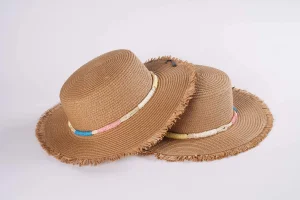
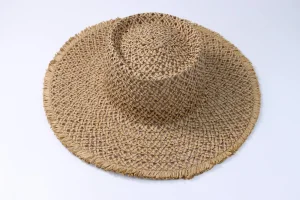
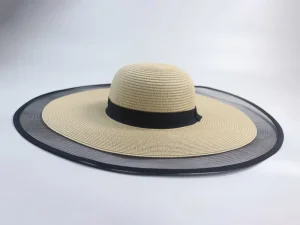
Selected styles that suit Moscow's spring–summer retail windows: event dressing, resort travel, and everyday sun protection. All are available with private-label ribbon bands, woven labels and hang tags.
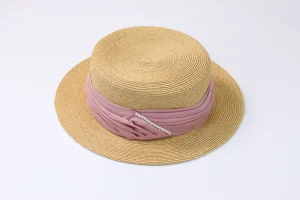
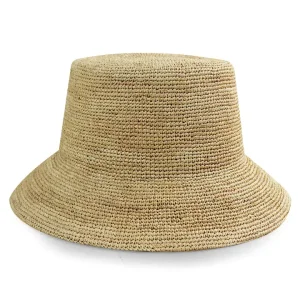
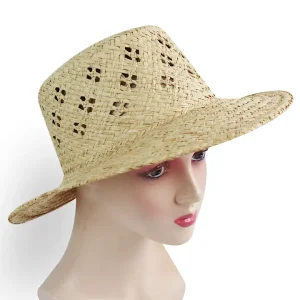
Moscow's retail calendar behaves very differently from Western Europe's. The summer window is compact — typically late May through early September — but demand intensity inside that window is high. Russian buyers do not purchase boater hats the way Madrid or Milan buyers do; they buy them in compressed, high-velocity bursts tied to city events, dacha culture, Black Sea vacation travel, and a strong domestic preference for elegant, photogenic headwear.
Moscow's premium summer event circuit — including open-air festivals, riverside venue events, yacht-club gatherings on the Moscow River, and wedding season concentrated in July and August — produces a genuine, recurring demand for structured flat-crown boaters. Unlike floppy hats, the boater's rigid block and level brim photograph exceptionally well, which matters in a social-media-driven retail environment where consumers buy hats they have seen styled by influencers and bridal content creators.
A secondary and frequently underestimated demand channel is the travel corridor. Muscovites travelling to Sochi, Anapa, Crimea and increasingly to Turkey, the UAE and Egypt during winter months purchase sun hats in significant volumes. A packable construction — one that survives a suitcase without permanent deformation — is therefore a critical product attribute for Russian wholesalers, not a nice-to-have.
Finally, distribution in Russia is heavily concentrated. A relatively small number of marketplace sellers on Ozon and Wildberries, plus a network of mid-tier fashion retailers and department stores such as TSUM-adjacent boutiques, control the majority of accessible volume. A Chinese factory that understands Russian sizing, labeling expectations and consolidation shipping will consistently out-perform a factory that treats Russia as an afterthought.
Years manufacturing boater & straw hats
Minimum order quantity per design
Export markets served globally
Response time to buyer inquiries
Sourcing from China is not simply a price decision. For Moscow importers it is a structural decision about lead time, material consistency, and the ability to react to a short, volatile summer season.
Linyi, Shandong — where most Chinese straw hat production clusters — hosts raw-material sorting, weaving, blocking, trimming and finishing under one roof. That vertical integration is why Chinese boaters can hold shape after long-haul shipping and still land at a competitive FOB price.
Boater hat programs can launch from 50–100 pieces per design, allowing Moscow boutiques and marketplace sellers to test seasonal colorways and ribbon treatments before committing to full containers. This is a critical advantage given the volatility of Russian consumer demand.
Raffia (Madagascar-sourced), paper straw, natural grass straw, and blended fibers are all available from Chinese boater hat suppliers. Moscow buyers typically prefer raffia for premium events and paper straw for mass fashion — the supply chain accommodates both without changing factories.
Because Chinese boater hat factories hold stock molds and ribbon materials, samples can be completed in 7–12 days. For Moscow buyers with a compressed summer calendar, this is the difference between hitting the first warm weekend or missing the season entirely.
Shandong factories ship easily through Qingdao Port, and can consolidate boater hats with other hat programs (bucket, cowboy, floppy) into a single container — which materially reduces per-unit landed cost for Moscow buyers, whether routed via Vladivostok, St. Petersburg or direct rail.
Russian customs and retail require accurate EAC labeling, fiber content declarations, and in many cases Russian-language care tags. Experienced Chinese exporters already package and label for the EAEU market — an overlooked but critical capability for Moscow-focused buyers.
Three structural shifts are reshaping the global boater hat category, and each one is magnified inside the Moscow market.
Natural raffia, paper straw and palm-leaf fibers are increasingly framed by consumers as circular-friendly materials. Moscow's premium retail segment — particularly the fashion chains around Tverskaya and Stoleshnikov Lane — now asks suppliers for documented material provenance. Chinese factories that can supply material traceability documentation gain a measurable sourcing advantage.
With Moscow consumers shifting more of their summer spending toward travel to Black Sea and Mediterranean resorts, "packable" is no longer a marketing claim — it is a defining product specification. Flat-crown boaters with woven ribbon bands and flexible crown blocks now dominate reorder data.
Ozon and Wildberries have compressed the sales cycle: a single viral style can generate thousands of units of demand in 3–4 weeks. This places a premium on Chinese factories offering low-MOQ, fast-sampling, multi-SKU programs. The buyer wins not by forecasting perfectly — but by having a supply chain that can react.
Moscow's wedding and event season relies heavily on boater hats as bridal-party accessories and as styling for open-air celebrations. This produces a seasonal demand pattern distinct from everyday sun hats and justifies maintaining a small, high-margin premium boater line alongside the volume-oriented styles.
The following framework is used by importers consolidating their seasonal headwear under a single Chinese supplier — the goal is predictable cost, reliable quality and flexible reaction to demand shifts.
| Procurement Stage | Moscow Buyer Priority | How the Factory Solution Responds |
|---|---|---|
| Material Selection | Premium feel for events; cost efficiency for mass-market | Raffia, paper straw and natural grass straw options with matching ribbon and lining systems |
| MOQ Planning | Test-market flexibility for boutiques and marketplace sellers | Starting quantity from 50–100 pcs per design; multi-SKU orders consolidated without a hefty minimum |
| Sampling & Approval | Speed — the Moscow summer window is short | 7–12 day sampling cycle with physical sample shipment by courier, followed by production only after written approval |
| Branding & Labeling | Private-label identity and EAEU-compliant packaging | Woven labels, printed logos, Russian-language care tags and hang tags applied in-house |
| Production & QC | Shape consistency — boaters with collapsed crowns cannot be sold | In-line QC on crown block, brim level and ribbon placement, with final inspection before packing |
| Logistics | Balance between speed and cost for the Moscow market | FCL / LCL export via Qingdao Port; rail or trans-Siberian options for eligible volumes; consolidated loading with other hat programs |
| After-Sales | Reliable resolution of quality claims | 8-hour action response, documented inspection reports and photographic evidence for traceability |
Understanding the retail environments where boater hats move fastest is essential for buyers planning Moscow assortments. The scenarios below are drawn from distributor patterns observed by Russian-facing Chinese exporters.
Flat-crown boaters with white, cream or pastel ribbon bands are frequently bought in matched sets by wedding planners and bridal boutiques, typically in July and August. Raffia construction suits the premium price band.
Yacht-club events and river cruises around the Moscow River create demand for classic boaters with navy and black ribbon bands — the traditional "boater" color language remains strong in this segment.
Mid-price paper straw boaters with statement ribbons are the volume driver here. Marketplace sellers reorder in smaller batches but require fast replenishment — low MOQ factories are the natural partner.
Airport boutiques and travel accessory stores buy packable boaters in neutral weave tones. These are typically lower margin but high volume, and reward reliable repeatable production.
Mid-tier department stores and boutique fashion labels order curated assortments of 3–5 boater SKUs per season, with private labels and consistent color stories. Quality consistency matters more than price here.
Cultural events, summer festivals and corporate hospitality programs order boaters in medium batches as branded giveaways. The classic boater shape photographs well on event collateral, sustaining demand through the season.
Moscow buyers are not sourcing in isolation. Global enterprise buyers — from EU retail chains to North American wholesalers — have matured their expectations for boater hat suppliers substantially over the past five years. A Chinese factory capable of serving those buyers is a factory that can serve Moscow retail with a higher quality floor.
The most frequent expectations we observe across enterprise-level procurement include: a documented quality manual; consistent color-matching (typically Pantone references for ribbon bands); availability of compliance paperwork for individual destination markets; and — critically — the ability to consolidate a full seasonal hat assortment into a single purchase order.
For Moscow-focused importers, this consolidation matters because it allows the boater program to be packaged with floppy hats, bucket hats, straw bags, and accessories — reducing container inefficiency and simplifying the buyer's QC workflow. It also means that a single supplier relationship can cover the entire headwear range rather than fragmenting procurement across multiple factories with separate production calendars.
These complement the four featured styles above — completing a full seasonal boater hat assortment for Moscow retail, marketplace and travel channels.
Practical answers drawn from the sourcing experience of importers, marketplace sellers and brand owners procuring boater hats from China for the Russian market.
Share your target quantity, preferred material and ribbon direction — our team will return a sampling plan, timeline and CIF indication within one working day. Consolidation with other hat categories available on request.