
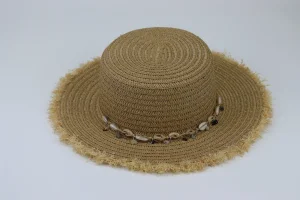
 Boater · Women
Featured Boater Program
Swiss-Ready Boater & Sun Hat Styles
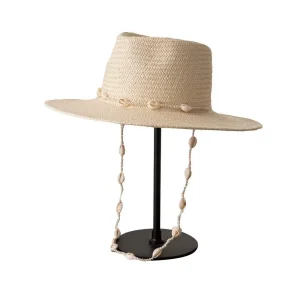
Four flagship references for Swiss boutiques, hotel groups, lake-side resorts and event retailers. Every style can be re-blocked in raffia, paper straw or natural grass straw with custom ribbon bands and private-label trims.
Boater · Women
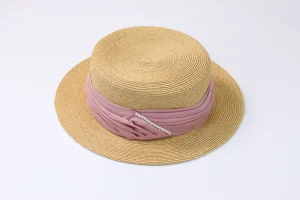 Classic · Travel
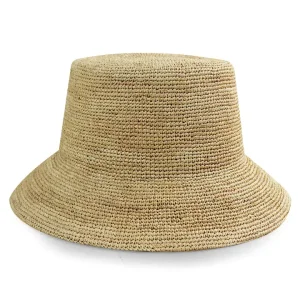 Raffia · Vintage
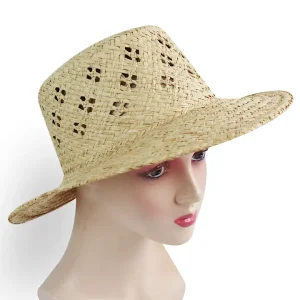 Panama · Packable
Switzerland Chapter
The Swiss Boater Hat Market: Local Business Reality
Switzerland is not a volume market — it is a precision market. Buyers here judge a boater hat on stitch density, ribbon registration, brim flatness and the ability to survive a two-week Alpine summer without losing shape. Suppliers who understand that distinction win the repeat order.
Why boater hats suit the Swiss commercial landscape
Switzerland's headwear demand is driven by three overlapping economies: hospitality and lake tourism, high-end specialty retail, and event and ceremonial trade. Each has its own purchasing logic, but all three share a preference for structured, classic silhouettes over trend-driven volume styles. The boater — flat crown, level brim, grosgrain band — sits squarely in that preference zone.
Hospitality groups around Lake Geneva, Lake Zurich, Lake Lucerne and the Engadin valley refresh seasonal staff and guest amenities each spring. Boutique retailers in Zurich, Basel, Bern, Lucerne and Geneva curate small, tight assortments and rarely buy in thousand-unit lots. Event suppliers serving regattas, polo fixtures, garden parties, weddings and vintage-themed festivals require reliable access to small-batch, high-consistency boater production with tight colour control.
The result is a market that rewards supplier responsiveness over supplier size. A 60-piece order in exactly the right ivory tone, with a correctly registered 24 mm ribbon, arriving before the season opens, is worth more to a Swiss buyer than a 6,000-piece container at a lower unit price.
Regional realities buyers should plan around: peak-season windows are compressed (May–September), storage in city-centre retail is expensive, and multi-currency invoicing in CHF against USD or EUR factory prices creates real landed-cost sensitivity.
4Official Swiss language regions requiring localized product copy
50–100Typical per-design starting quantity for Swiss boutique programs
8 hrsTarget quote and sampling response window for local buyers
May–SepCompressed Alpine selling season that dictates shipping cut-offs
Global Demand Layer
What Global Boater Hat Buyers Actually Ask For
Search-intent mining across sourcing platforms reveals recurring, highly specific buyer questions that a general product page never answers. These are the ten intents that dominate boater-hat procurement conversations — and the answers that convert them.
| Buyer intent (query pattern) | Underlying business problem | What a qualified supplier provides |
|---|---|---|
| "boater hats supplier Switzerland" | Needs a reliable route to structured straw hats without a domestic factory | Documented export history, landed-cost transparency, DDP and DAP options |
| "custom ribbon colour boater hat" | Brand palette must match exactly across seasons | Pantone-matched grosgrain, dyed-to-sample approval before bulk |
| "boater hat MOQ 50 pieces" | Small retailer testing a capsule range | Tiered MOQ from 50–100 pcs per design with fixed sampling fee |
| "packable boater hat that keeps shape" | Customer returns caused by crushed brims in transit | Blocked-and-stiffened construction, protective inner carton design |
| "boater hat with private label" | Brand wants the factory mark invisible | Woven labels, printed patches, hang tags, branded polybags |
| "SGS tested straw hat supplier" | Retail group requires third-party documentation | Batch testing coordination, AZO and formaldehyde reporting support |
| "boater hat wholesale price per piece" | Needs unit economics before committing to a range | FOB tiers by material, quantity and trim complexity |
| "sustainable raffia boater hat" | Consumer-facing sustainability claims need backing | Material origin transparency, natural-fibre documentation |
| "boater hat size 58 cm women" | Sizing inconsistency causes fit complaints | Defined size grid, measured headband tolerance of ±5 mm |
| "ship boater hats to Switzerland duty paid" | Customs and VAT administration is a burden | Correct HS classification, commercial invoice discipline, DDP routing |
Macro Industry Solutions
Four Sourcing Architectures for Boater Hat Programs
There is no single right sourcing model. The correct architecture depends on order frequency, design volatility, compliance exposure and cash-flow structure. These are the four patterns we build most often for European and Swiss buyers.
Capsule Stock Model
Low-quantity, multi-SKU buying for boutiques and concept stores. Typically 50–150 pieces per design across four to eight styles, ordered twice per season. Priorities: colour accuracy, quick sampling turnaround, consolidated shipping to reduce freight cost per unit.
Hospitality Season Refresh
Recurring annual replenishment for hotels, lake clubs and resorts. The same boater silhouette returns each year with updated ribbon colours. Priorities: pattern retention between seasons, consistent size grids, and delivery certainty ahead of the May opening.
Compliance-Led Retail Supply
Programs where the retail group mandates documentation before order confirmation. Priorities: material declarations, third-party test coordination, traceable batch records, and packaging specifications that satisfy both EU and Swiss requirements.
Event & Short-Notice Supply
Regattas, weddings, corporate summer events and vintage festivals with fixed dates. Priorities: confirmed stock availability on classic boater shapes, express sampling, air-freight options, and absolute delivery-date discipline.
Technical Roadmap
Boater Hat Technology Roadmap & Future Outlook
Boater construction has changed less in fifty years than almost any other headwear category — but the pressures around it have changed dramatically. Here is how we see the technical and commercial roadmap unfolding.
Near term: consistency engineering
The immediate competitive frontier is not new shapes — it is dimensional repeatability. Swiss buyers are unforgiving about a 4 mm brim deviation between two production lots. Investment is concentrating in fixed blocking formers, calibrated headband measurement, and photographic quality records attached to every batch.
Mid term: material transparency
Raffia sourcing narratives, natural-fibre content declarations and dye chemistry reporting are moving from marketing extras to procurement prerequisites. Factories that can produce a clear, honest material story per SKU will hold a structural advantage over those that cannot.
Long term: hybrid construction
Expect gradual blending of natural straw faces with stabilized structural layers to deliver boater silhouettes that survive real-world travel. The visual authenticity remains; the failure modes reduce. Buyers should begin specifying recovery behaviour as a sampled, tested attribute rather than an assumption.
Brief & Material Selection
Silhouette, fibre, ribbon specification, size grid and target landed cost agreed in writing.
Sample Blocking
Physical pre-production sample built on the fixed former; photographs and measurements shared.
Trim Approval
Ribbon colour, width, bow placement and branding elements signed off against reference swatches.
Bulk Production
Weaving, blocking, banding and finishing executed in-house with batch-level records.
Inspection & Documentation
Dimensional checks, stitch density review, and compliance paperwork prepared for export.
Export & Delivery
Consolidated container or LCL routing to European gateways with onward Swiss delivery.
Localization & Compliance
Localized Support and Regulatory Assurance
Selling into Switzerland from an Asian factory requires more than a price list. It requires language coverage, customs literacy and documentation discipline. These are the practical support layers that remove friction for Swiss buyers.
Language Coverage
Commercial correspondence in English as standard, with German-language specification documents available for buyers who operate in the DACH region. Product copy can be prepared for German, French and Italian retail channels so listings go live correctly in each language region.
Customs & Duty Literacy
Correct HS classification for straw headwear, complete commercial invoices, accurate country-of-origin statements and consistent packing lists. Where buyers prefer a single landed price, DDP routing can be quoted so VAT and clearance are handled in the freight chain rather than by the buyer.
Product Compliance Support
Coordination of third-party testing for restricted substances, dye safety and colour fastness where a retail group requires it. Material content declarations are supplied for natural fibres, and care instructions are prepared to match the actual fibre behaviour of each style.
Landed-Cost Transparency
Quotations structured so Swiss buyers can compare FOB, CIF and DDP positions clearly. Freight consolidation across multiple boater SKUs reduces per-unit logistics cost for smaller orders — important for boutique programs where a single container is unrealistic.
Packaging Discipline
Boater hats are shape-sensitive. Inner cartons are specified with brim-protecting void fill, and outer cartons are dimensionally optimized to reduce volumetric freight cost. Retail-ready polybags and branded hang tags can be applied at source to shorten inbound handling.
Time-Zone Responsiveness
Switzerland sits within a workable overlap with Chinese production hours. Enquiries receive a substantive response within 8 hours, including sampling feasibility, material options and indicative pricing — not an automated acknowledgement.
Experience & Authority
Fifteen Years of Straw Hat Manufacturing Behind Every Boater
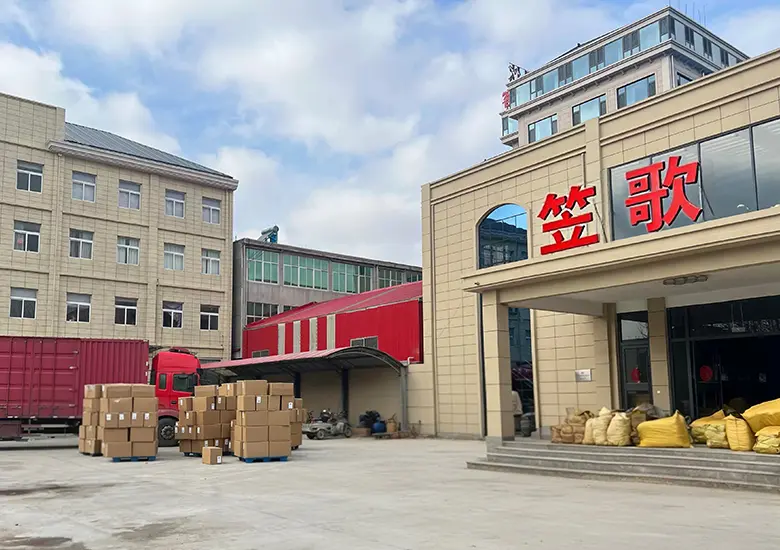
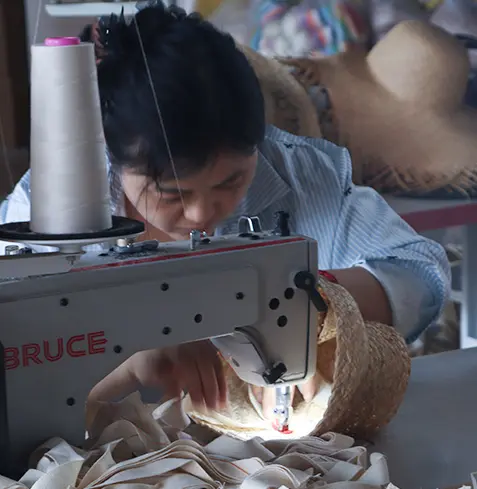
Shandong Lige Import & Export Co., Ltd. operates from Linyi City, Shandong Province, close to Qingdao Port. Our production line covers raw material sorting, weaving, blocking, banding, finishing and final inspection under one roof — the combination that makes dimensional consistency achievable at small order quantities.
Buyers evaluating a boater supplier in Switzerland are rarely choosing between factories. They are choosing between an intermediary and a manufacturer. The practical difference shows up in three places: who controls the blocking former, who signs off the ribbon colour, and who is accountable when the second production lot does not match the first.
Our team structure reflects that accountability. A production manager with twenty years of experience oversees forming and finishing. A quality manager with fifteen years of experience owns the inspection protocol. The broader team averages more than five years of tenure, which matters in a category where hand-skill determines output quality.
More than twenty-five global distributors and buyers in over sixty countries have run seasonal boater and straw hat programs through this line. Many began with a 50-piece trial order — the same entry point we offer Swiss boutiques today.
15+Years of manufacturing experience
20 yrsProduction manager experience
15 yrsQuality control manager experience
60+Countries served worldwide
Full Boater & Straw Range
Complete Program for Swiss Wholesale Buyers
Eight further references covering flat-top boaters, classic straw, bucket, cowboy, western, packable travel and Panama constructions — all available with custom ribbon bands and private-label branding.
 Flat Top
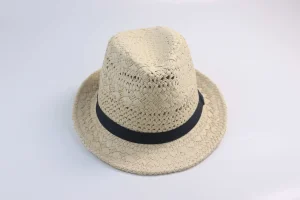 Classic
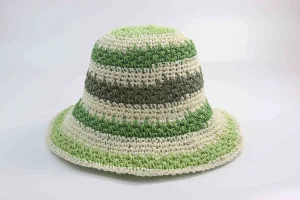 Bucket
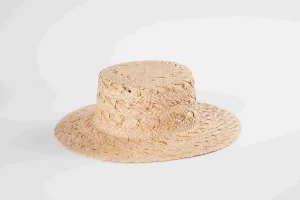 Cowboy
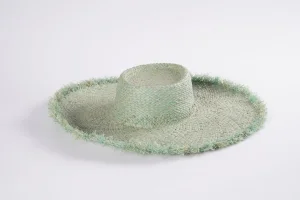 Western
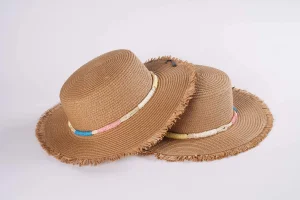 Packable
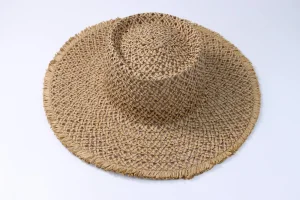 Boater
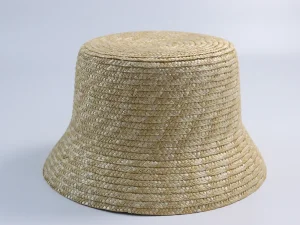 Panama · Custom
Buyer Q&A
Questions Swiss and Global Boater Hat Buyers Ask
Direct answers covering sourcing, customization, compliance and logistics — written for procurement teams making a supplier decision.
Can you supply boater hats directly to buyers in Switzerland?
Yes. Switzerland is served as part of our Western European export program. Orders are exported from Qingdao Port and can be routed as FOB, CIF or DDP depending on how much of the logistics chain your business wants to handle. Consolidated LCL shipments are available for smaller boater orders that do not justify a full container.
What is the minimum order quantity for custom boater hats?
Small orders start at 50 to 100 pieces per design, depending on the material and how complex the finishing is. This entry point is specifically designed for boutiques, emerging brands and importers testing a shape before committing to a larger program. Quantity tiers bring unit pricing down as volume increases.
Can the ribbon colour be matched to our brand palette?
Yes. Grosgrain ribbon is dyed to sample and approved physically before bulk production begins. Buyers typically supply a Pantone reference, a physical swatch or a previous-season trim. Width, bow style and placement are also specified at sample stage, and the approved reference is retained for future repeat orders.
How do you keep boater hats from arriving crushed?
Boater silhouettes depend on a flat, level brim, so packing is treated as a technical requirement rather than an afterthought. Inner cartons use void fill that protects the brim edge, hats are stacked with the correct orientation, and outer carton dimensions are optimized to reduce both movement in transit and volumetric freight cost.
What documentation can you provide for compliance review?
Standard export documentation includes commercial invoice, packing list and country-of-origin statements with correct HS classification for straw headwear. On request we coordinate third-party testing for restricted substances and colour fastness through accredited laboratories, and supply natural-fibre material content declarations for retail compliance files.
How quickly do you respond to an initial enquiry?
Within 8 hours. Responses include substantive information — material recommendations, sampling feasibility, indicative pricing tiers and an outline delivery window — rather than an automated acknowledgement. Sampling and order follow-up continue through a single dedicated contact for the account.
Which markets do your hats already ship to?
The majority of production goes to the United States, Canada, Australia, Mexico, Western Europe and Japan, with customers in more than 60 countries and over 25 global distributors. Western European destinations including Switzerland, Germany, France, the Netherlands and Italy are established lanes with existing freight patterns.
Beyond boater hats, what else can we source in the same program?
Alongside boater hats we manufacture paper hats, straw bags, paper bags, children's straw hats, toy hats, lifeguard hats, sun visors, winter hats and other bags. Consolidating multiple headwear and bag categories with one factory reduces supplier-management overhead and improves freight utilization.
Start Your Swiss Boater Program
Send Your Boater Hat Brief Today
Share your silhouette references, fibre preference, ribbon specification, target quantity and destination in Switzerland. Our team replies within 8 hours with material recommendations, a sampling plan and a production timeline mapped to your season opening date.