
Executive Summary
Why Nigeria Is Becoming a Strategic Bucket Hat Sourcing Destination
Nigeria's population of more than 220 million people, its fast-growing youth demographic and its year-round tropical heat have created sustained demand for sun-protective headwear, especially the bucket hat silhouette that moves easily between streetwear, campus wear, church wear and informal trade.
This whitepaper is written for buyers who are evaluating bucket hat factories serving the Nigeria market — not simply looking for the cheapest hat. We unpack the sourcing landscape, the scale and seasonality of demand, the compliance and logistics picture, and the factory capabilities required to reliably deliver into Lagos, Onitsha, Kano and Port Harcourt.
It is authored from an E-E-A-T perspective: real production experience with straw and raffia bucket hats, documented export operations through Qingdao Port, and a track record of OEM and ODM programs for importers, brand owners and retailers across six continents.
Send Inquiry Now60+ Markets
Export experience across Africa, the Americas, Europe and Asia, with documentation, labeling and packaging adapted per market.
Factory Direct
Weaving, blocking, finishing and QC in-house — no trading margin, with stable unit costs for Nigeria's wholesale tiers.
8-Hour Response
Buyer requests, sampling questions and after-sales follow-up answered within eight hours, with one dedicated contact.
Low MOQ
Start at 50–100 pieces per design, ideal for Nigerian boutiques and emerging labels testing new colorways.
Featured Program Styles
Bucket Hats Prepared for Nigeria's Retail Calendar
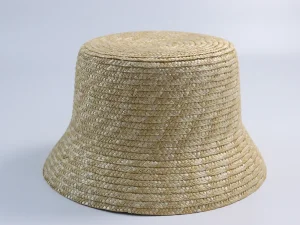
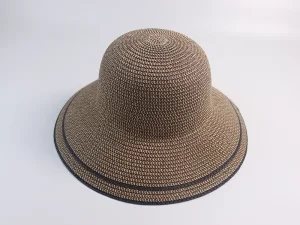
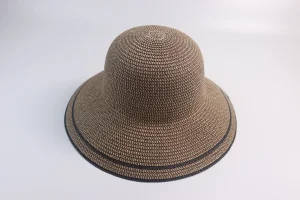
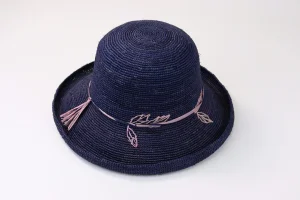
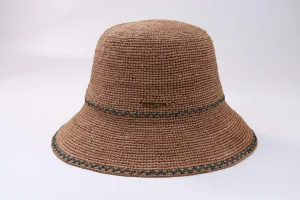
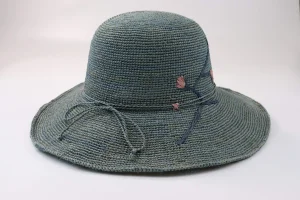
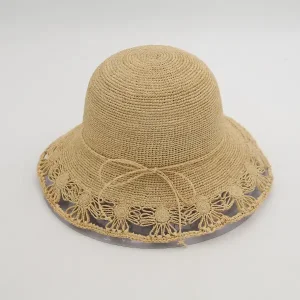
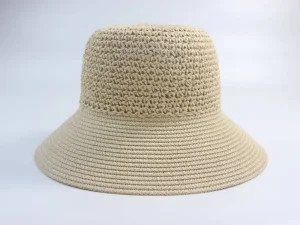
Four silhouettes that consistently perform in equatorial markets — tested in sampling rooms, reordered by importers and shipped through Qingdao Port.
Local Market Context
Nigeria's Bucket Hat Market: Demand Drivers, Trade Channels & Seasonality
Understanding how hats actually move through Nigeria is the first step to building a resilient supply program. The commercial reality is less about fashion-week trends and more about open-air commerce, distribution networks and price bands.
Year-Round Heat
Average daytime temperatures in Lagos, Kano and Port Harcourt sit well above 28 °C for most of the year. Sun protection is functional, not seasonal, which flattens the demand curve compared to European markets.
Youth-Driven Streetwear
Nigeria's median age is under 19. Bucket hats are read as streetwear, festival wear and campus wear, which pushes demand toward bold colorways, prints and lighter woven constructions.
Open-Air Trade Networks
Much of the volume passes through large open-air markets — Onitsha Main Market, Kano's Kantin Kwari and Lagos's Balogun — where unit margin dictates style selection. This rewards suppliers who can offer consistent tier pricing and repeatable quality.
Boutique & Brand Tier
Lagos and Abuja host a growing layer of private-label fashion brands and concept stores. For them, the bucket hat is an accessory with branding potential — woven labels, embroidery, contrast trims and packaging matter.
Church & Event Wear
Social and religious events create recurring demand for coordinated headwear, particularly wide-brim and structured styles that read as "dressed up" rather than casual.
Supply Chain Realities
Nigerian importers typically combine sea freight into Lagos (Apapa / Tin Can Island) with consolidated small-lot air shipments. Container planning, port clearance timing and FX considerations drive sourcing decisions more than raw unit price alone.
Buyer insight: The winning supplier for Nigeria is not the one with the lowest FOB price, but the one that understands tight container utilization, mixed-SKU containers, and rapid replenishment of fast-moving colorways. Factories that can mix styles within one shipment reduce landed cost per unit significantly.
Industry Landscape
Bucket Hat Manufacturing: Current Status & Development Trends
Globally, the bucket hat category has migrated from a utility item to a fashion staple. That shift has changed what factories must be able to do — shorter runs, more colorways, faster sampling and better sustainability storytelling.
| Trend | What It Means for Suppliers | Impact on Nigeria Sourcing |
|---|---|---|
| Small-batch, multi-colorway runs | Factories must flex between 50–500 pcs per SKU without losing margin | Enables importers to test colors before committing to a container |
| Sustainable & natural fibers | Raffia, paper straw and cotton blends gain share over synthetic-only styles | Aligns with eco-conscious boutique positioning in Lagos and Abuja |
| Streetwear-driven silhouettes | Deeper brims, contrast stitching, patch branding, reversible constructions | Higher perceived value at similar landed cost |
| Packability & foldability | Soft-woven constructions that recover shape after compression | Reduces shipping damage on long-haul sea freight |
| Digital sampling & faster approvals | Photo and video sample approval shortens lead time | Improves speed-to-shelf before peak selling windows |
Global Procurement Demand Is Shifting South
Procurement teams for European and North American chains continue to concentrate orders in Asia, but a growing share of replenishment volume is now being routed through emerging-market distributors in West Africa. These distributors act as regional aggregators, buying mixed containers and redistributing to smaller traders.
For factories, this means the channel is no longer "one big buyer, one big order". It is an evolving mix of regional importers, boutique brand owners and drop-shippers who all demand faster turnarounds and more flexible MOQs.
Price Band Sensitivity
Nigerian wholesale price bands are tight. The same silhouette may need to be offered in three material tiers — a volume paper-straw version, a mid-tier cotton-blend version and a premium raffia version — to fit end-market pricing without cannibalizing the brand.
Factory programs that can offer tiered material solutions within one style family give importers a distinct commercial advantage over buyers who are sourcing from single-material suppliers.
0+
Years of Hat Manufacturing
0+
Export Markets Served
0+
Global Distributors
0h
Response & Action Time
Macro Industry Solution
An End-to-End Supply Solution Built for Nigerian Buyers
From a single SKU test order to a multi-container seasonal program, the objective is the same: get consistent quality to the Nigerian market with predictable landed cost and reliable timing.
Material Tiering
One style family delivered in paper straw, raffia, cotton-blend and knit versions — matching the three-to-four price tiers that define Nigerian retail.
Custom Branding
Woven labels, heat-transfer patches, embroidered logos, printed inner bands and custom hang tags — supporting boutique brands entering Nigeria's retail scene.
Mixed-SKU Cartons
Packing plans that combine multiple styles, sizes and colors within one carton or one container — maximizing cubic utilization for importers with tight margins.
Private Label Ready
Full OEM and ODM support: mood-board interpretation, tech-pack compliance, counter-sample approval and production-by-sample consistency.
Consolidated Sampling
Photo, video and physical samples consolidated before shipment — reducing the cost of international courier sampling for Nigerian buyers.
Design Library Access
Access to a curated library of proven bucket hat silhouettes, reducing development time for buyers who need newness every season.
Localization Support & Compliance
Reducing Friction Between the Factory Gate and the Lagos Warehouse
Exporting into Nigeria is a documentation and logistics discipline as much as a manufacturing discipline. Factories who actively support importers on the following points measurably reduce cost, delay and risk.
Export Documentation
Pro-forma invoice, packing list, commercial invoice, bill of lading, certificate of origin and any buyer-specific attestations are prepared in line with the importer's cleared broker requirements.
Labeling Standards
Care, composition and origin labeling are set to match buyer instruction. Fiber composition labeling is prioritized to avoid demurrage risk due to non-conforming labels.
Freight Planning
Sea freight into Apapa or Tin Can Island coordinated with the buyer's clearing agent. Air and express options are available for samples and urgent replenishment.
Payment Structure Flexibility
Typical terms include deposit-plus-balance structures with documentary collection or letter of credit for larger programs, following buyer preference and order risk profile.
Sampling Timeline
Sample development usually runs 7–12 working days once specifications and references are confirmed, followed by approval and 25–40 day bulk production depending on quantity and complexity.
Quality Consistency Commitment
Pre-shipment inspection measuring shape accuracy, brim coverage, stitching tension, size grading and trim attachment. Rework policy agreed prior to production.
Compliance note for buyers: Nigerian importers should confirm current documentation requirements with their licensed clearing agent before production approval. Changes in documentation rules or tariff classifications can materially affect landed cost. Our team supports with any specification or packing data required by the agent.
Technical Roadmap
How a Nigeria Sourcing Program Moves From Brief to Container
A clear, six-stage workflow supported by sampling discipline, quality checkpoints and documentation support at each stage.
Brief & Style Selection
Share style references, target price band, material preference and target container volume.
Material & Costing
We recommend materials and tier pricing to fit Nigerian end-price bands.
Sampling & Approval
Branding, sizing and packing are confirmed on physical samples before production begins.
Bulk Production
Weaving, blocking, finishing and labeling performed in-house with documented checkpoints.
Pre-Shipment QC
Inspection of shape, size grading, stitch integrity and trim attachment, plus packing verification.
Export & Handover
Shipment coordination via Qingdao Port, documentation handover and after-sales follow-up.
Future Outlook for Nigeria Sourcing
Over the next several seasons, we expect the following shifts to shape how bucket hats are sourced into Nigeria:
- Rise of regional aggregators — a middle tier of distributors consolidating volume and demanding mixed-SKU containers.
- Digitized sourcing — virtual sample review, spec sheets shared in DOCX/PDF and photo-based QC reducing physical courier costs.
- Sustainability proof — boutiques begin asking for material recyclability and lower-impact dyeing evidence.
- Shorter replenishment cycles — 3–4 micro-buys per year replacing the classic single seasonal buy.
- Local assembly interest — early-stage exploration of final-stage finishing (labels, trims) closer to the end market.
Full Range Lookbook
Bucket & Straw Hat Styles Ready for Nigeria Programs
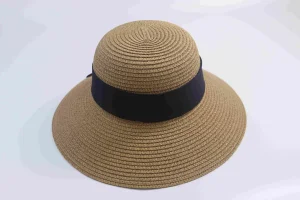
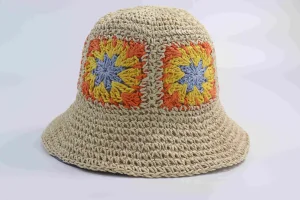
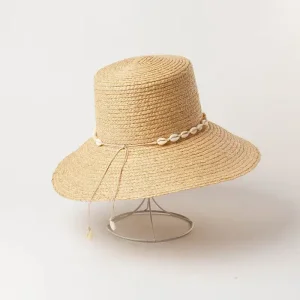
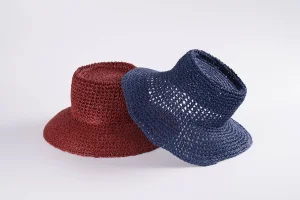
A complete lineup of woven, raffia and straw styles — with brandable options, tiered materials and factory-direct pricing.
Buyer Q&A
Email
Send Inquiry Now
Frequently Asked Questions From Nigeria-Based Buyers
If the answers you need aren't listed here, our team can respond in detail within eight hours.
Call or WhatsApp
+86 136 8639 8175
What is the minimum order quantity for bucket hats to Nigeria?
Our starting quantity is 50–100 pieces per design, depending on material and craftsmanship. For Nigeria-based importers this is particularly useful because it lets you test several colorways before committing to a full container.
Can you produce private-label bucket hats with our own logo?
Yes. OEM and ODM production is our core business. We customize shape, material, color, size and trim, and can add branding such as woven labels, embroidered patches, printed inner bands and hang tags. Our design team can also develop new silhouettes from your mood board or reference samples.
Where is your factory and how are orders shipped to Nigeria?
Our factory is in Linyi City, Shandong Province, China, close to Qingdao Port. Bulk orders are typically shipped by sea as FCL or LCL into Lagos (Apapa or Tin Can Island), while samples and urgent small orders can be sent by air or express courier.
What documentation do you support for Nigeria-bound shipments?
We prepare the commercial invoice, packing list, pro-forma invoice, bill of lading and certificate of origin, along with any spec sheets or attestations the buyer's clearing agent requires. We recommend that importers confirm current documentation and tariff requirements with their licensed agent before approving production.
Which markets do you export to currently?
Most of our products are exported to the United States, Canada, Australia, Mexico, Western Europe and Japan. We serve customers in more than 60 countries and work with over 25 global distributors. Our growing engagement with West African importers is a strategic priority for the coming seasons.
How quickly does your team respond to requests from Nigerian buyers?
We respond and take action within 8 hours, covering product questions, sampling, order follow-up and after-sales service. For buyers in Lagos and Abuja we factor in time zone overlap when scheduling review calls.
What products do you manufacture besides bucket hats?
Alongside bucket hats, we manufacture Panama hats, fedoras and trilbies, cowboy hats, boater hats, floppy hats, sun visors, children's straw hats, toy hats, lifeguard hats, winter hats, straw bags and paper bags. This breadth allows importers to consolidate multiple categories within one container and one supplier relationship.
How do you ensure consistent quality on repeat orders?
Each production run is approved against approved counter-samples held by our production and QC teams. Our production manager has 20 years of experience, our QC manager 15 years, and our team averages 5+ years of experience. Final inspection verifies shape accuracy, size grading, stitching tension and trim attachment before packing.
Ready to Build Your Bucket Hat Program for Nigeria?
Share your target styles, quantity, price band and destination port. Our team will respond within 8 hours with a material recommendation, sampling plan and production timeline.