
Bestseller
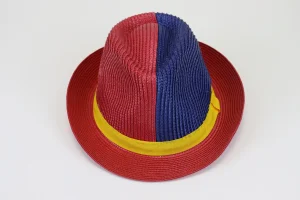
France is not a single buying season — it is a calendar of sun moments. From the Côte d'Azur beach clubs of July and August, to the village marchés of Provence, to the outdoor centres de loisirs that keep running through the grandes vacances, French families buy children's sun hats earlier, more often, and with stricter quality expectations than most European markets. For importers and private-label brands, that means a supplier relationship built around compliance, sampling speed and season-ready logistics — not simply the cheapest per-unit price.
This white paper consolidates Lige Hats' 15+ years of OEM/ODM experience with EU buyer requirements. It explains the local commercial reality in France, the global headwear supply picture, the structural efficiency of Chinese factories, and the practical steps a French distributor, boutique chain or marque de créateur should take before placing a first order. Every claim here is grounded in production practice, not marketing copy.
From the Riviera to the Breton coast, these four programs are the workhorses of a French children's headwear assortment. Sample-tested and photo-reviewed before every shipment.
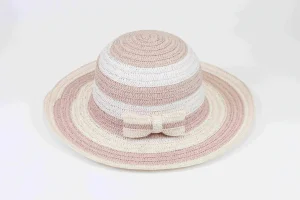
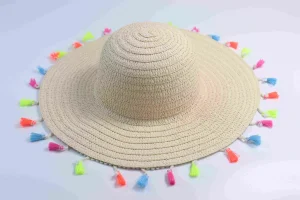
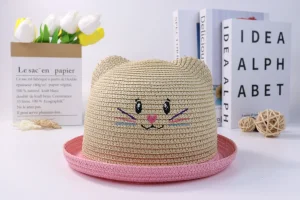
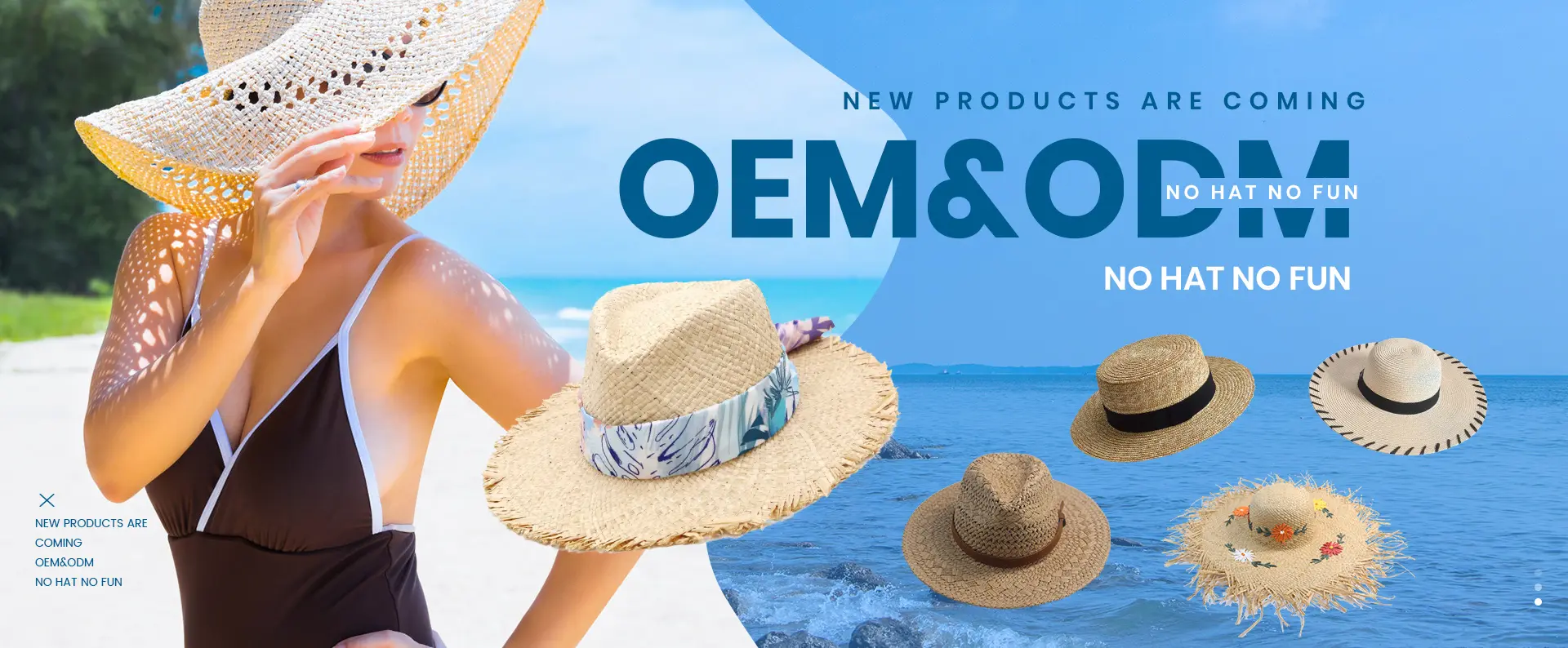
France operates on a March–August spring/summer cycle in retail, with back-to-school (Rentrée) falling in early September. For importers, that means the children's straw hat window is short, competitive, and unforgiving of late deliveries. Multi-brand chains, grandes surfaces spécialisées (like specialized children's chains) and independents all compete for the same June–July shelf space.
The result is a highly compressed calendar: B2B orders are typically placed between November and February, samples approved by March, and goods must land in Marseille or Le Havre by May to hit the first weekend of warm weather. Missing that window generally costs an entire season — not just an order.
Two additional local realities matter:
Trade buyers also increasingly request small-batch replenishment mid-season, which places pressure on the factory to hold a repeat-run capability. A supplier that cannot respond to a re-order in summer is, practically speaking, a supplier for one season.
France does not operate in a vacuum. The global picture shapes what a French buyer can negotiate, how fast a supplier can respond and which materials are truly sustainable versus merely "sustainable-looking."
EU distributors increasingly request paper-straw or raffia constructions, recycled content where applicable, and labelled care instructions. "Green" is no longer a marketing hook; it is a supplier qualification step.
Post-2023, European buyers overwhelmingly favour factories with direct sailing schedules to Marseille, Le Havre and Genoa. A Qingdao-origin container with no trans-shipment is now a competitive advantage.
Buyers are consolidating suppliers. The winners are full-service factories that sample, print, pack and label in-house — removing the extra weeks hidden in a multi-vendor supply chain.
Parents in France and Northern Europe increasingly accept higher prices for certified UPF protection and durable, natural fibres. Cheap hats are losing ground in the mid-market.
Raffia weaving is concentrated in Madagascar; paper-straw braiding in East Asia; natural grass plaiting in Guangdong and Shandong. Buyers now manage fibre provenance as carefully as fabric composition.
"Test, learn, reorder" has replaced "forecast, commit, hope." The supplier that can hold a 50-piece MOQ and still scale to 5,000 pieces reliably wins the relationship for years, not one season.
French buyers often hear "China is cheap." That is imprecise. What actually delivers value to a French importer is the density and integration of China's headwear supply chain — and the fact that a single factory can run weaving, blocking, trimming, labelling and inspection under one roof.
| Efficiency Factor | What It Means for a French Buyer | Typical Impact |
|---|---|---|
| Vertical integration | Raw straw sorting, weaving, blocking, finishing, labelling and QC are in-house — no missing middle link during peak season. | Shorter dependency chains = protected spring delivery |
| Linyi cluster | Shandong's Linyi region is a national centre of natural fibre weaving, with deep pools of skilled weavers and experienced QC staff. | Faster sampling, tighter quality control |
| Port proximity | Qingdao Port handles direct weekly sailings to Le Havre, Marseille and Genoa, with FCL and LCL options. | Predictable ETAs; fewer trans-shipment delays |
| Small MOQ | 50–100 pieces per design lets a boutique or new brand test France's market without a full-season commitment. | Lower inventory risk for importers |
| Design in-house | Our team converts mood boards, mood boards from buyers or reference samples into production-ready specs. | Weeks saved vs. external pattern studios |
The catch, of course, is that efficiency claims are only meaningful when the factory behind them can be inspected. That's why we encourage every serious European buyer to visit, to request production video, and to review a real QC report before a full-season PO is placed. Efficiency without transparency is a liability, not an asset.
A buyer who understands the wear occasion buys better. These are the commercial settings that drive the French demand curve — and what each one asks of the product.
Families on the Côte d'Azur buy sun hats for UV protection during the July–August peak. Wide-brim, neck-covering designs and UPF50+ certification are non-negotiable.
Tourists in Provence buy children's straw hats as gifts and souvenirs — favouring natural raffia, small-scale details, and French-language labels over industrial packaging.
Municipal and private summer camps buy in bulk with strict hygiene and durability requirements — washable materials, reinforced brim stitching, and clear care-labelling.
Families attending summer fêtes de village and outdoor weddings shop for photo-ready children's hats — refined palettes, ribbon bands, and comfortable fit for long days.
Nurseries and crèches buy light, easily adjustable hats in multi-packs. Chinstraps and flexible brims are essential; fabric composition must be verified for child-safety.
Children's fashion brands and concept stores increasingly order private label. Logos, ribbon bands, tissue-wrap and hang-tag design are treated as part of the product itself.
Across 60+ countries and 25+ distributors, our sales team has observed that children's straw hat enquiries cluster into three buyer types: large retailers, mid-size distributors and boutique/private-label brands. Each has a distinct demand profile.
| Buyer Type | Typical Quantity | Primary Concern |
|---|---|---|
| Large retailers | 3,000 - 20,000 pcs | Consistency, compliance, on-time delivery |
| Mid-size distributors | 500 - 3,000 pcs | Category breadth, price stability, fast reorders |
| Boutique / private label | 50 - 500 pcs | Design uniqueness, packaging quality, flexibility |
France sits across all three camps. Marseille and Lyon-based wholesalers frequently behave like mid-size distributors, while Parisian concept stores and Riviera boutiques function as private-label brands. A French-targeted supplier must be fluent in all three conversations.
Style references, target sizes, material preference, branding, quantity.
Our design team proposes materials and delivers physical samples.
Confirm samples plus French-language labelling and hang-tag design.
Weaving, blocking, trimming and finishing in-house.
Final inspection, plus third-party testing when required.
FCL or LCL shipping from Qingdao to Marseille, Le Havre or Genoa.
Buyers in France and Northern Europe increasingly request UPF50+ verification alongside fabric composition tests. Certification is transitioning from differentiator to minimum.
Synthetic straw is losing ground in the premium segment. Raffia, paper straw and natural grass dominate buyer opening conversations in France and Italy.
French concept stores and mid-size brands are launching their own children's ranges. That shifts demand away from generic SKUs and toward suppliers who can brand and label.
Mid-season reorder capability is increasingly specified in supplier agreements. Buyers expect a factory to hold capacity for a summer repeat, not just a spring launch.
Direct Qingdao–Marseille and Qingdao–Le Havre schedules are becoming preferred routes over multi-hub trans-shipments. Buyer patience for indirect routes has collapsed.
Some French brands are bringing children's hat design in-house with design-school collaborations, then sourcing production from China — hybrid model is growing rapidly.
A single supplier for the whole French family assortment. Every style below can be produced in raffia, paper straw or natural grass with custom bands, trims and French-language labels.
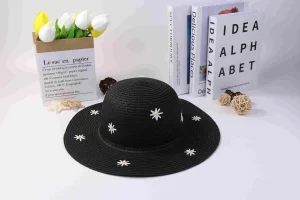
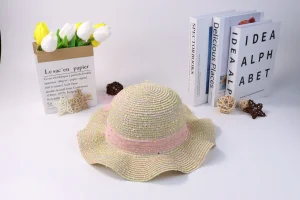
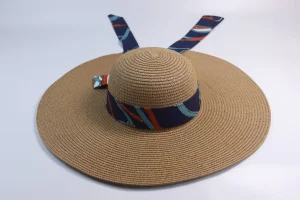
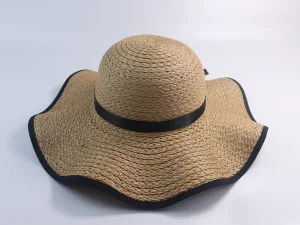
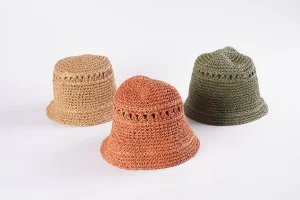
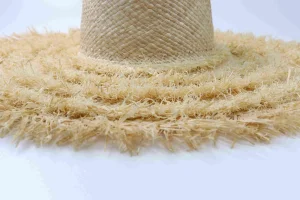
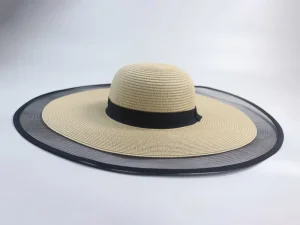
This checklist was created from years of conversations with importers who later discovered the wrong things after their goods shipped. Ask these questions before a full-season commitment.
A practical note for French buyers: the strongest supplier relationships we see are built in a two-step pattern. First, an exploratory order of 100–500 pieces. Second, a full-season commitment once sampling, labelling and shipping are confirmed by the buyer's own team. This is not caution for its own sake — it is the same pattern our most successful multi-year clients have used.
— Lige Hats, Global Service TeamPractical answers drawn from real buyer conversations. If your question isn't here, our team responds within 8 hours.
Send us your mood board, target quantities and delivery window. Our team replies within 8 hours with material suggestions, a sampling plan and a production timeline — built specifically for the French market.