
Best Seller
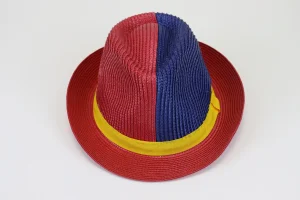
Factory-direct kids' sun hats, raffia and paper-straw children's headwear for Colombo importers, boutique retailers, hotel groups and schoolwear buyers — engineered for UPF protection, tropical humidity and duty-compliant clearance.
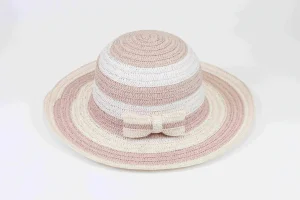
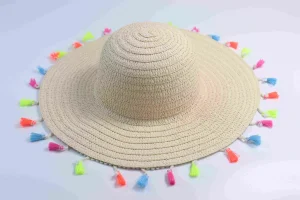
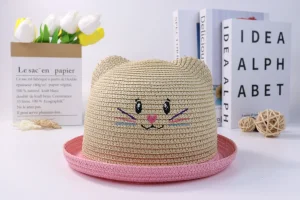
These four shapes consistently clear customs and sell through fastest for Sri Lankan importers: a lightweight everyday sun hat, a tropical-print travel hat, a high-UPF beach hat and a wholesale summer straw hat for volume retail.
Sri Lanka sits within 4°–10° of the equator, which means year-round UV intensity that is far less forgiving than European or North American summer peaks. For any importer in Colombo, Kandy, Galle or Negombo, a children's straw hat is not a fashion accessory — it is a primary sun-protection garment used by schoolchildren, resort guests, beach families and outdoor activity groups every single month of the year.
That distinction changes the sourcing brief entirely. A "children straw hats supplier" for Sri Lanka is expected to deliver UPF-rated materials, humidity-stable blocking, breathable linings, chin-strap retention for small heads, and packaging that survives the ~20-day sea freight cycle out of Qingdao or Ningbo to Colombo Port. This page sets out how Lige Hats, a Linyi-based straw hat factory with more than 15 years of export experience, meets that specification, and what a Sri Lankan buyer should verify before placing a container order.
The information below is written for **importers, wholesalers, resort procurement teams, boutique retailers and schoolwear distributors** — the decision-makers who need to know the commercial mechanics, not just the product photograph.
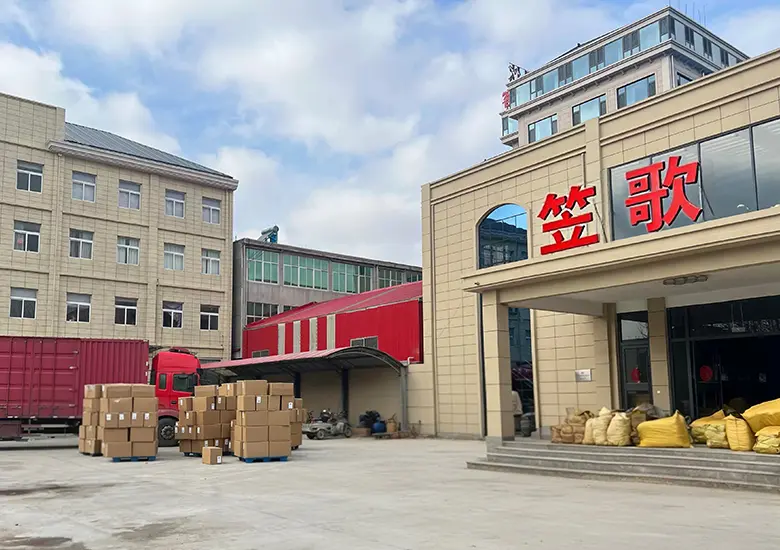
Sri Lanka is not a single retail market — it is four different buying behaviours layered onto one island. Understanding that split is the difference between a full container that sells through and a warehouse of dead stock.
The organised retail tier: department stores, mall-based childrenswear chains and pharmacy-adjacent family retailers. Buyers here expect pre-packed assortments, barcoded hang tags, size-graded runs (2–4Y, 4–6Y, 6–8Y, 8–12Y) and consistent colourways across reorders. Purchase orders are typically 1,200–6,000 pcs per season split across 6–10 SKUs.
Negombo, Bentota, Galle, Mirissa, Trincomalee. Hotel groups, boutique villas and dive/surf operators buy uniform-consistent kids' sun hats for guest amenity and retail corners. Orders are smaller (200–1,200 pcs) but repeat predictably, and branded bands or embroidery are frequently required.
International schools, sports academies and outdoor-education programmes specify UPF-rated wide-brim hats with neck flaps and adjustable chin cords. Procurement runs on tender or annual supply agreements, which means documentation matters as much as the product.
Sri Lankan traders also act as re-export intermediaries into Maldives, South India and the Gulf. This segment is price-sensitive but volume-driven, and will often combine children's hats with adult straw hats and straw bags in one consolidated shipment.
Sri Lanka's two monsoon cycles create two distinct retail peaks: the December–April west/south coast dry season and the May–September east coast season. Buyers who plan one order per year under-stock the second peak — Lige supports split shipments against a single production run.
Domestic straw hat weaving in Sri Lanka remains artisanal and fragmented, oriented toward adult souvenir hats rather than certified children's sun protection. Consistent UPF-rated children's volume therefore comes from imports — primarily China, with Vietnam and India as secondary sources.
A "supplier" in Colombo is usually a trader marking up an import. Going direct to the Linyi manufacturing cluster removes that margin and, more importantly, gives you control over specification.
Raw-material sorting, weaving, blocking, banding, labelling and final inspection run under one roof in Linyi — eliminating the quality drift that occurs when a trader splits a job across three workshops.
50–100 pcs per design lets a Sri Lankan boutique test six colourways without committing capital to a full container — then scale only the proven winners on a reorder.
Raffia, paper straw, natural grass straw, cotton and knit — a single supplier can cover summer, monsoon and year-round children's headwear instead of forcing you into four vendor relationships.
FCL and LCL shipments routed through Qingdao or Ningbo to Colombo Port, with consolidation available when mixing children's hats, adult straw hats and straw bags in one container.
Shape retention, stitch density, sizing tolerance and trim attachment are checked at final inspection — the criteria that matter when a school or hotel group audits your supply.
A dedicated English-speaking contact answers specification, sampling and shipping questions within 8 hours — critical when you are managing a Colombo retail launch from a different time zone.
In-house designers develop kids' shapes from a mood board, reference sample or competitor product — including custom bands, woven labels, patches and hang tags under your brand.
Poly-bagged, size-stickered, carton-marked and master-carton labelled to your importer specification — reducing receiving labour at your Colombo warehouse.
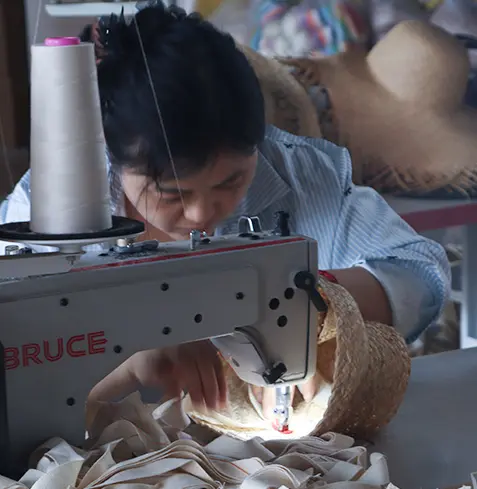
Compliance is where inexperienced suppliers lose containers. For children's headwear entering Sri Lanka, a professional factory should be able to speak to five areas without hesitation.
Fibre choice determines hand-feel, shape retention, price point and how a hat behaves in tropical humidity. This is the guidance our product team gives before any sample is cut.
| Material | Best Use in Sri Lanka | Humidity Behaviour | Retail Price Position | Buyer Notes |
|---|---|---|---|---|
| Raffia (natural palm) | Resort amenity hats, boutique beach lines, premium kids' floppy brims | Excellent — natural resins keep brims flexible and recoverable after packing | Premium | Supports a strong "packable" and "natural fibre" retail story |
| Paper straw | Volume school and family retail, uniform colourways, promotional runs | Good in shade; softens if soaked — pair with a clear care label | Volume / entry | Best cost-per-unit for 3,000+ pc programmes |
| Natural grass straw | Structured wide-brim UPF school and activity hats | Very good — inherent stiffness holds shape on the shelf | Mid to premium | Choose when shelf appearance and shape retention dominate |
| Cotton / knit | Neck-flap sun hats, toddler caps, year-round schoolwear | Excellent — quick-dry, machine washable, breathable lining friendly | Mid | Ideal for the youngest age bands and institutional tenders |
| Raffia-paper blend | Balanced price-and-feel kids' lines for department stores | Good — improved flexibility over pure paper straw | Mid | Useful when a buyer needs premium look at volume cost |
Sri Lankan importers compete in the same supply market as buyers from the UK, Australia and the Gulf. The requirements shaping those markets now flow directly into what a Colombo buyer can and cannot get at a given price.
Retailers in Australia and the UK will not list a children's hat without a defensible UV protection statement. Buyers increasingly pass that expectation upstream to the factory.
Sustainability language now appears in childrenswear buying briefs. Raffia and paper straw carry a stronger natural-fibre narrative than synthetic alternatives.
The era of one giant annual buy is fading. Buyers want 50–500 pc test runs, quick reorders and split shipments — which is exactly why low-MOQ factory partners matter.
Hang tags, barcodes, size sticks and branded bands are now baseline expectations, not premium add-ons — including for mid-tier Sri Lankan retail.
Trends only matter if they change what you order. Each of the six below translates directly into a specification decision for a Sri Lankan buyer.
School and childcare procurement increasingly mandates full-coverage brims and neck protection, pushing demand toward wide-brim and legionnaire silhouettes.
Buyers want to name the fibre origin on packaging. Raffia's Madagascar provenance is becoming a marketing asset rather than a technical footnote.
Rather than 20 SKUs, buyers prefer 6 base shapes × 4 colourways — easier to merchandise, easier to replenish, less dead stock.
Tropical markets are driving demand for blocking and band-adhesion methods tested at 80%+ relative humidity, not just temperate lab conditions.
Pre-production digital mock-ups reduce sample cycles, shortening the path from a Colombo buyer's brief to an approved pre-production sample.
Six concrete use cases our Sri Lankan customers buy for, each with the specification that performs best.
Negombo and Bentota properties include a branded kids' sun hat in family welcome packs. Specification: raffia or blend, embroidered logo band, 2–8Y sizing, individual polybag.
International schools specify the same hat for every pupil. Specification: natural grass straw or cotton, UPF-rated, chin cord, embroidered crest, size-graded cartons.
Weligama and Mirissa surf schools need durable, quick-drying kids' hats. Specification: cotton or raffia blend, neck flap, unisex colourways, low unit cost.
Colombo mall retail needs sell-through merchandising. Specification: paper straw volume shapes, 4-colour capsule, barcode hang tags, size stickers, shelf-ready cartons.
Galle Fort and Colombo 07 boutiques want differentiated styles. Specification: raffia floppy brims, custom band colours, woven brand labels, 50-pc MOQ per design.
Traders consolidate and re-export. Specification: mixed containers combining children's hats, adult straw hats and straw bags, uniform carton marks for onward shipment.
The practical numbers behind a typical Lige Hat children's straw hat programme for a Sri Lankan importer.
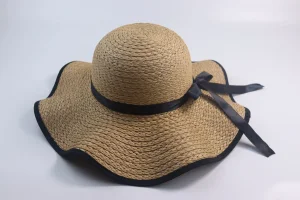
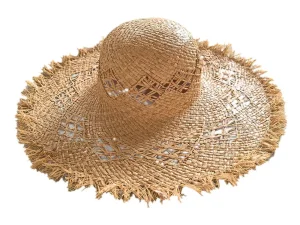
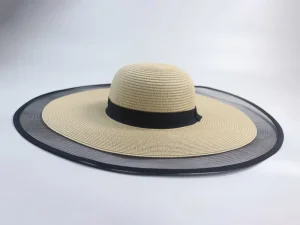
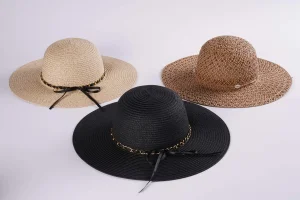
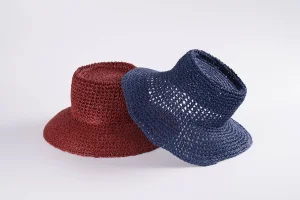
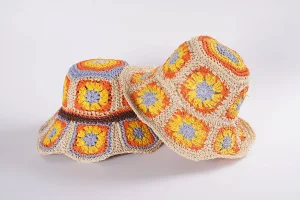
Everything below is available for sampling now. Mix and match within one container to build a complete children's and family summer programme for the Sri Lankan market.
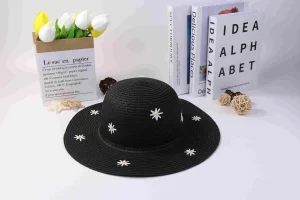
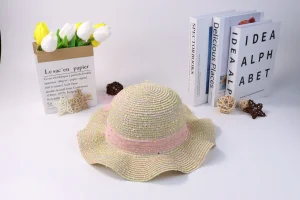
Straight answers on MOQ, tropical performance, shipping to Colombo Port, compliance documentation and after-sales support.
Send us your style references, target quantity, age bands and destination port. Our team will reply within 8 hours with material recommendations, a sampling plan, indicative pricing and a production timeline.