
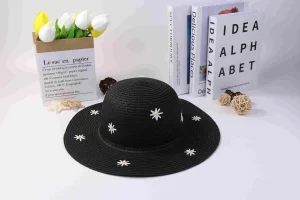
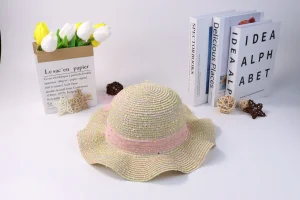
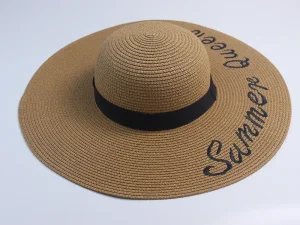
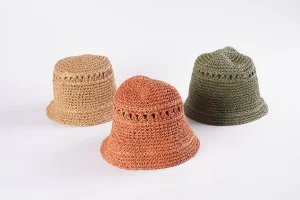
Lightweight Series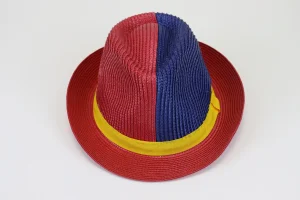
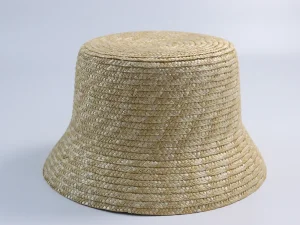
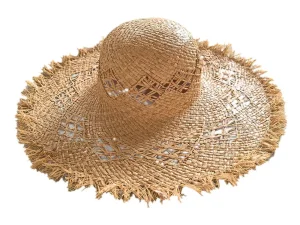
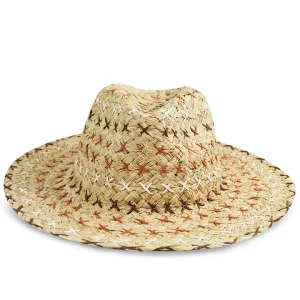
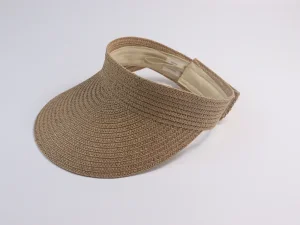
Our four fastest-moving styles for Indonesian importers, school suppliers, resort chains and modern retail. Every style is available in children's sizing with custom UPF-rated materials, adjustable chin straps and private-label trims.
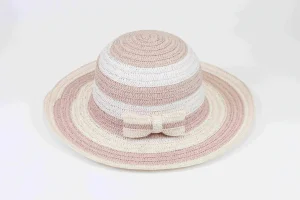
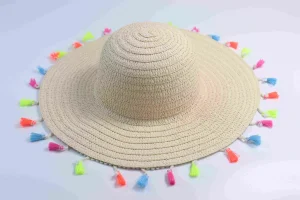
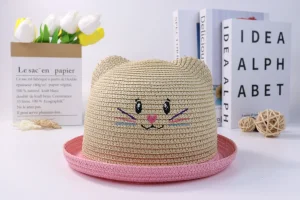
Indonesia is one of the fastest-growing children's sun-protection markets in Southeast Asia. With a young population, a tropical climate, a booming tourism sector and a rapidly expanding modern-retail footprint, demand for children's straw hats — especially lightweight, UV-blocking and breathable designs — has consistently outpaced local manufacturing capacity.
This white paper has been prepared by the export and product-development team at Shandong Lige Import & Export Co., Ltd. (Lige Hats), a Linyi-based manufacturer with more than 15 years of experience in straw hats, paper hats and woven bags. It is written for Indonesian distributors, department stores, resort groups, school-uniform suppliers and D2C brands that need a reliable, scalable supply chain for children's headwear.
Years of hat manufacturing
Export markets served
MOQ pcs per design
Buyer response window
Understanding the local commercial reality is essential before committing to a sourcing plan. Indonesia's children's straw hat segment is shaped by five structural forces that every buyer should map out internally.
Indonesia has a long and respected tradition of hand-weaving natural fibers — pandan leaves, bamboo, rattan, and palm straw — with strong artisanal clusters in Central Java, Yogyakarta, Bali and parts of Sulawesi. However, this craft heritage is dominated by adult fashion, home décor and souvenir products. Children's-specific lines, standardized sizing, improved UV coatings, adjustable chin straps and ergonomic sun-blocking brims are typically outside the capability envelope of small domestic workshops, which lack the tooling, quality control and coloring consistency required by modern retailers.
As a result, a large share of branded and semi-branded children's straw hats in Indonesian malls, e-commerce platforms (Shopee, Tokopedia, TikTok Shop Indonesia) and tourist resorts are imported — and China remains the dominant source. Shandong, Zhejiang and Guangdong provinces together account for the overwhelming majority of shipped volume, because they combine raw fiber production, machine-blocking lines, sewing trims, quality inspection and consolidated export logistics under a single roof.
Indonesian children's hat distribution runs through four main channels: modern retail (department stores, mother-and-baby chains, sports retailers), online marketplaces (Shopee, Tokopedia, TikTok Shop), specialty resort and hotel boutiques, and school or community-group bulk buying. Each channel has different requirements — modern retail demands packaging, labeling and barcodes; marketplaces prioritize photographic consistency and fast restock; resort buyers want premium natural fibers and low-pack hero pieces; schools prioritize bulk durability and price.
Children's products receive extra scrutiny under Indonesian consumer-protection rules. Importers should confirm that hat materials comply with reasonable chemical-safety expectations (no azo-dye hazards, limited formaldehyde), that physical construction is age-appropriate (no easily detachable small parts for children under three), and that paperwork meets Bea Cukai (Customs) requirements, including HS code classification — children's straw hats are typically classified under Headwear of other materials (HS 6504 or 6505 series depending on construction). Working with a factory that pre-prepares compliant documentation significantly reduces clearance friction at Tanjung Priok and Tanjung Perak.
Chinese headwear factories are not just cheaper — they operate on a different industrial model. Four structural advantages translate directly into landed cost, lead time and quality stability for Indonesian buyers.
Raw fiber sorting, weaving, blocking, sewing, trims, labeling, inspection and export packing happen under one roof — no outsourced turn or hand-off risk.
Typical bulk production for children's straw hats runs 25–40 days after sample approval — critically faster than competing jurisdictions that split work across vendors.
In-house experience with raffia, paper straw, natural grass, cotton blends and UPF-rated coatings — the same team can advise on UV blocking versus breathability trade-offs.
50–100 pcs per design at the low end, scaling into container volumes — ideal for Indonesian buyers who need to test multiple style families per season.
| Sourcing Model | Typical MOQ | UV / Safety Control | Unit Landed Cost | Design Iteration |
|---|---|---|---|---|
| Local Indonesian workshop | Very low | Limited | Moderate | Traditional only |
| Trading company (China) | Medium | Vendor-dependent | Higher | Brokered |
| Integrated Chinese factory (Lige model) | 50–100 pcs/design | In-house QC + UPF materials | Lowest at volume | In-house ODM design |
Buyers who map hats to specific Indonesian usage scenarios can build far more efficient assortment plans than those who chase trend styles in isolation. The scenarios below reflect real patterns observed across our Indonesian distributor base and mirror public retail activity in the country's major markets.
Families traveling to Bali, Lombok, Labuan Bajo and the Thousand Islands buy sun hats on arrival. Resorts and hotel boutiques source premium natural-fiber children's hats (raffia or grass straw, UPF-tested) in neutral colors and custom-branded trims. They buy relatively low volumes but with high per-unit margins, and are willing to accept longer lead times for private-label branding.
Private schools, PAUD (early-childhood education centers) and parent–teacher associations regularly order uniform-style sun hats for outdoor activities and end-of-year excursions. These programs demand standardized brim width, breathable weave, adjustable chin strings and fast delivery — and typically close in single bulk orders per season.
Department stores (e.g., Mothercare Indonesia, retail chains under MAP and similar groups) and marketplace private labels are the highest-volume channel. They need seasonal 6–10 SKU capsules, consistent packaging, barcoding and reorders within weeks — a fit for factories that can run small-batch re-stocks instead of forcing container-sized minimums.
Family-oriented events, holiday programs, zoo and theme-park gift shops, and religious-holiday events need themed children's hats with printed brims, embroidered logos or seasonal decorations. These typically require short-run tooling and very fast turnarounds — a category where flexible ODM programs win.
A children's headwear buyer rarely places a single-market order. The same seasonal brief that covers Indonesia typically also includes Australia, Malaysia, Singapore, the UK and the Gulf — so the factory you choose must handle multi-destination programs cleanly.
Focus on EN 71 physical safety testing, care labels, UPF claims and recycled paper hangtags. Neck-flap and UPF 50+ styles lead demand.
Stringent UV standards under AS/NZS 4399. Wide-brim bucket and floppy styles with neck protection and chin straps dominate.
Premium natural fibers, embroidered brims and coordinated adult–child pairs for family-resort merchandising.
CPSC-focused construction, no detachable small parts under age 3, and strong emphasis on packable travel-friendly designs.
Very tight tolerance on stitching and symmetry, small size grading, minimalist private-label trims and short seasonal windows.
Lightweight structures, breathable weaves, fast re-order cycles, and marketing-aligned photography for marketplace listings.
Kids' sun hats without a stated UPF rating are increasingly passed over by parents and by retail buyers. UPF 50+ has moved from premium badge to expected entry-level specification in both Southeast Asia and Australia.
Fold-flat floppy and bucket hats dominate family travel retail. Buyers increasingly want hats that survive suitcase compression and recover their shape on arrival.
Raffia, paper straw and non-toxic dye sets win green-procurement scores in EU, Australia and Singapore retail audits. Buyers are requesting material traceability statements alongside sampling.
Instead of single 5,000-piece heroic orders, top buyers now run multiple 300–800-piece capsules across the season to test colors and shapes quickly. Factories must support this velocity.
Marketplace data shows unisex and neutral children's hats outperform gendered lines. Wide-brim natural beige, sage and sand tones are now top sellers in the category.
The most reliable programs treat children's straw hat sourcing as a system — not a one-off purchase — with six repeatable stages that a factory-direct partner can orchestrate. This is how mature importers in Indonesia build defensible assortments while keeping landed cost under control.
Bulk production after sample approval
Sample turnaround for ODM briefs
Repeatable sourcing stages per program
Beyond children's silhouettes, Lige produces a coordinated family range — kids, women's and unisex styles — that lets Indonesian buyers merchandise complete "family sun" programs from a single supplier.
Practical answers on MOQ, compliance, lead times, and customization for children's straw hat programs shipping into Indonesia.
Send us your style references, target landed cost and destination requirements. Our team will return material recommendations, a sampling plan and a forward-facing production timeline — typically within 8 hours.