
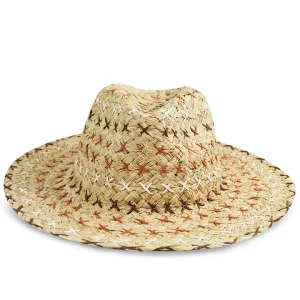
Featured Range — Egypt-Ready Programs
Four Cowboy & Western Hats Built for Egyptian Retail
These four silhouettes are our highest-reorder cotton-straw and Panama-woven programs shipped to Egyptian importers, gift wholesalers in Cairo, and resort retailers along the Red Sea. Each can be run as an OEM program with Arabic hang-tags, bilingual care labels, and Ramadan or summer-season packaging.
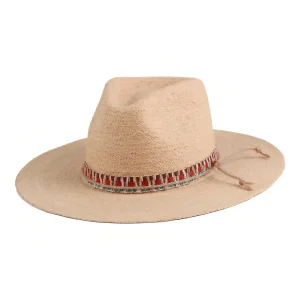
High-Quality Panama Straw Cowboy Hat for Women/Men — Classic Western Cowgirl Sun Hat, Breathable Vacation Hat
View Product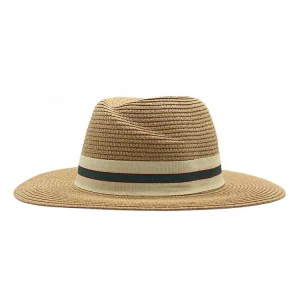
Wholesale Men's Straw Cowboy Hat — Wide Brim Cattleman Crown Western Hat, Packable Sun Hat for Rodeo & Country Concert
View Product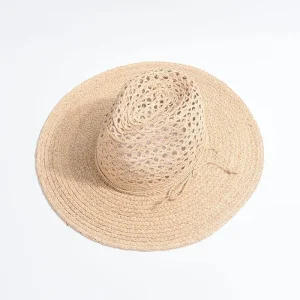
Wholesale Panama Hat — Woven Straw Panama Sun Hat, Classic Wide Brim Summer Vacation Hat
View Product0Cowboy hat factories audited across Shandong & Hebei
0Egyptian ports & free zones mapped for FCL/LCL routing
0Minimum order quantity per design for Egypt programs
0Hour sampling dispatch window (Cairo time)
Egypt Market Intelligence
Why Egypt Is a High-Velocity Channel for Chinese Cowboy Hat Manufacturers
Egypt sits at the exact intersection that Chinese western-headwear factories care about most: a hot, arid, sun-dominant climate for nine months of the year, a rapidly expanding middle class with strong spending on fashion accessories, and a tourism economy that turns every Red Sea resort and Nile cruise into a point-of-sale for sun hats. In practical terms, Egypt imports far more sun protection per capita than its population size would suggest, because hats are re-sold three times over — to residents, to tourists, and to the gift and promotional trade.
The Egyptian headwear retail landscape is dominated by three channels, each with distinct product needs:
- Cairo & Giza wholesale markets — Al-Attaba, El Mosky, and the Shop Mall complexes absorb enormous volumes of low-to-mid-priced straw hats, primarily for local resale and women's fashion boutiques.
- Alexandria and North Coast seasonal retail — summer beachwear chains order cattleman-crown cowboy shapes as fashion accessories to complement coastal tourism, most often in raffia and paper straw.
- Red Sea resort and hotel procurement — Sharm El-Sheikh, Hurghada, El Gouna, and Marsa Alam resort groups purchase branded sun hats for guest amenities, minibars, and pool-concession sales, typically with embossed logos and gift packaging.
In parallel, Egypt's own light-manufacturing base — cluster-tanneries in Alexandria, leather and textile workshops in Tenth of Ramadan City, and handmade-basket cottage industries in Upper Egypt — increasingly co-produces mixed assortments with Chinese hat shells. This opens a hybrid path where raw woven straw bodies arrive from Shandong, get trimmed, banded, and labeled in Egypt, and then re-export to GCC markets under Egypt's COMESA and Arab League tariff advantage.

Global Buyer Behavior
How Global Buyers Now Purchase Chinese Cowboy Hats
Procurement has fundamentally shifted since 2020. Buyers no longer compare catalogs — they compare supply-chain transparency. Understanding this shift is essential for anyone sourcing western headwear from China into Egypt or the wider MENA region.
Factory-First Verification
Buyers arrive with pre-loaded questions about weaving capacity, blocking machinery, and in-house QC. Suppliers that publish process photos, audit summaries, and named production managers win the RFQ before a sample is even requested.
Localized Delivery
FCL and LCL consolidation at Qingdao Port, transshipment through Suez, and final mile to Cairo, Alexandria, or Damietta. Transit times, demurrage risk, and document accuracy are now scored alongside unit price.
Low-MOQ Trial Orders
Regardless of continent, buyers prefer 50–200 piece trial orders per design before committing to a full season. Suppliers offering low-MOQ sampling and scalable production hold the strongest reorder position.
Compressed Sampling Cycles
Buyers increasingly expect samples to leave the factory within 48 hours and land in hand within a week. Lead-time compression is now a competitive differentiator rather than a convenience.
Brand-Defined Storytelling
Cowboy hats are sold as cultural objects, not commodities. Buyers need suppliers who can print Arabic hang-tags, add embroidered logos, and package hats in retail-ready gift boxes aligned to local buying behaviors.
Compliance-Ready Documentation
Egyptian customs require precise HS code classification, certificate of origin, and consistent labelling. Buyers actively filter suppliers based on document accuracy and lapsed-time history at Egyptian ports.
Macro Solution Matrix
End-to-End Solutions for Egypt-Bound Cowboy Hat Programs
Rather than one-size-fits-all wholesale, we build a modular solution architecture around four Egyptian buyer types: importer-wholesaler, brand owner, resort procurement manager, and gift/promotional distributor. Each program is assembled from the modules below.
OEM & Private Label
Your logo woven into the band, embossed on leather patches, or printed on bilingual Arabic/English hang-tags — from 100 pieces per style.
ODM Design Development
Our in-house design team converts reference images, mood boards, or competitor samples into production-ready CAD within 5–7 working days.
Material Engineering
Raffia, paper straw, natural grass, cotton and blended constructions — selected and tested against Egyptian UV index and coastal humidity.
Seasonal Production Planning
Pre-season production windows calibrated to Ramadan, Eid, summer tourism peak, and Q4 gift season footprints in Egypt.
Quality Assurance
In-line and final inspection covering brim symmetry, stitching tension, band alignment, size conformity, and colour consistency across dye lots.
Export Documentation
Commercial invoice, packing list, certificate of origin, HS code classification per Egyptian customs, and Suez-route-aware shipping coordination.
Compliance & Certification
Support for Egyptian GOEIC requirements, textile fibre labelling, restricted substance declarations, and REACH-aligned material sourcing.
After-Sales & Reorder
8-hour response SLA, in-country freight follow-up, and structured reorder windows that lock in material pricing for the following season.
Localization & Compliance
Shipping Into Egypt: Ports, Tariffs, and Documentation
Sourcing cowboy hats from China into Egypt is not a simple point-to-point transaction. It involves the correct port pairing, exact HS code usage, pre-shipment inspection readiness, and packaging decisions that survive the last mile from Suez to Cairo's wholesale warehouses.
- Primary port pairings: Qingdao Port (Shandong) → Alexandria Port or Port Said, with Damietta as a secondary gateway for Mediterranean-facing importers. Container service via Suez typically delivers 24–32 days port-to-port, plus clearance time.
- HS classification: woven straw cowboy hats are most commonly classified under HS 6504 (plaited hats of vegetable materials) or HS 6505 for textile-based constructions. Misclassification is the single largest cause of clearance delays at Egyptian customs.
- Documents: commercial invoice, packing list, certificate of origin, bill of lading, and a pre-shipment inspection certificate (GOEIC-aligned where required). All Arabic translations must match English invoice descriptions line-by-line.
- Labelling: hats sold to Egyptian consumers must display fibre composition, country of origin, and care instructions in Arabic (or bilingual Arabic/English). We print these directly into hang-tags.
- Packaging for climate: Egyptian summer temperatures frequently exceed 40°C in Cairo and 48°C on the Red Sea coast. Polybag-wrapped hats risk condensation during transit through Suez, so we use breathable wrapping and moisture-absorbent desiccants for our Egypt-bound programs.
- Currency and payment: we invoice in USD, EUR, or RMB; letter-of-credit and T/T structures are supported with reference Egyptian banks for importers needing FX clarity.
In-country support: we retain Arabic-speaking account coordinators who correspond directly with Egyptian customs brokers, resolve minor document discrepancies before container arrival, and can route samples directly to Cairo, Alexandria, or Hurghada for buyer inspection.

Industry Trend & Technology Roadmap
The Three-Year Roadmap for Chinese Cowboy Hat Manufacturing
The cowboy hat industry in China is not static. Several technological and structural shifts are expected to materially change how Egyptian and MENA buyers source western headwear between now and 2028.
01
Now → 2026
Sustainable raffia & traceable straw supply. Buyers begin demanding fibre provenance certificates alongside material datasheets.
02
2026 → 2027
Automated blocking lines reduce human variance on shape retention, improving brim symmetry consistency across high-volume programs.
03
2027 → 2028
Digital sampling via 3D CAD and virtual twins reduces physical sample cycles for cross-continental buyers by up to 40%.
04
2028 → beyond
Regional Middle East distribution hubs — potentially in Dubai or Cairo — compress lead times into Egypt to under 10 days.
Materials: Recycled & Traceable Straws
Egyptian buyers increasingly decline virgin-plastic packaging and ask for recycled paper straw and certified raffia. We are aligning our supplier roster to deliver traceability certificates for the 2026 season onwards.
Automation: CV-Based Defect Detection
Computer vision inspection is being piloted on blocking and stitching stages, enabling us to flag brim warping and stitch skips at a level human inspection cannot reliably catch at 10,000-piece scale.
Digital Twins for Remote Approvals
Egyptian buyers can now approve a design from a 3D render before any physical sample is produced — critical for bridging Cairo-to-Shandong review cycles without six-week delays.
Logistics: Egypt-Bound Consolidation
We are building a consolidated LCL hub in Qingdao for Egyptian and MENA buyers, allowing mixed-style containers (cowboy, panama, boater, floppy) without penalty to per-unit freight cost.
Buyer Q&A — Egypt Programs
Questions Egyptian Importers Ask Us Most
Direct answers to the questions we receive most from Cairo, Alexandria, and Red Sea resort buyers sourcing Chinese cowboy hats.
What is the minimum order quantity for cowboy hats shipped to Egypt?
Our standard starting quantity is 50–100 pieces per design for cowboy hats and western straw programs. This allows Egyptian boutiques, gift wholesalers, and resort procurement teams to test seasonal shapes before committing to full container volume. Higher-volume programs (500+ pcs per style) unlock additional material pricing and consolidated FCL shipping benefits.
How long does shipping from China to Egypt take?
Sea freight from Qingdao Port to Alexandria or Port Said typically takes 24–32 days port-to-port, with additional clearance time at Egyptian customs (usually 5–10 working days assuming correct documentation). Air freight to Cairo International can deliver within 5–8 days for sample and urgent programs.
Can you provide Arabic labelling and hang-tags?
Yes. All our OEM programs support bilingual Arabic/English hang-tags, care labels, and packaging. Arabic fibre composition, country of origin, and care instructions are printed directly into the label to satisfy Egyptian consumer-labelling expectations. We also collaborate with Arabic-speaking translators to ensure tone and terminology are accurate.
What HS code is used for straw cowboy hats exported to Egypt?
Woven plough-vegetable-material cowboy hats are typically classified under HS 6504; textile-based hats under HS 6505. We confirm the exact classification with your Egyptian customs broker prior to container dispatch to avoid clearance delays.
Do you support private-label branding for Egyptian brands?
Yes. We support woven labels, embroidered logos, leather patches, hang-tags, and gift-box packaging — all with private-label pricing at 100-piece minimums per style. Our design team can also produce original artwork for Egyptian brand owners who do not have in-house designers.
How do your hats perform in Egyptian desert heat?
Our western cowboy hats use tightly woven raffia or natural grass straw that blocks UV and holds shape under heat; paper straw constructions are lighter and more breathable for coastal resort use. All hats are tested for moisture stability before shipping — our Egypt-bound programs ship with desiccant inserts to manage Suez-route humidity.
What payment terms are offered to Egyptian buyers?
We support T/T (30% deposit, 70% at shipping), Letter of Credit (LC) at sight or usance via Egyptian banks, and — for established reorder accounts — partial balance-on-arrival structures. We coordinate directly with your nominated freight forwarder or can introduce trusted CIF partners.
Can you supply hats for Red Sea resort amenities and gift shops?
Yes — resort branding is one of our fastest-growing Egypt segments. We produce guest-amenity sun hats with embossed logos, pool-concession cowboy hats for Sharm El-Sheikh and Hurghada properties, and retail-ready gift-boxed rancher hats with Arabic care labels for resort gift shops.
Extended Catalog — Egypt Program Compatible
Adjacent Styles That Round Out Egyptian Assortments
In practice, Egyptian buyers rarely order only cowboy hats. The following styles are typically combined with the featured cowboy range into a single seasonal container, improving freight economics and unlocking a broader merchandise story for retail buyers.
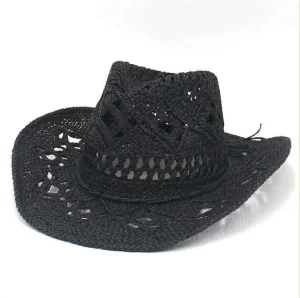
High-Quality Straw Cowboy Hat for Men Women — Wide Brim Cattleman Crown Western Hat, Packable Sun Hat for Rodeo & Country Concert
View Product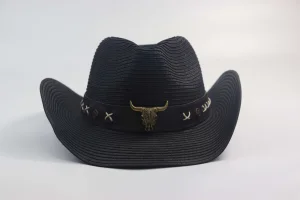
China Men's Straw Cowboy Hat — Stylish, Lightweight Summer Accessory
View Product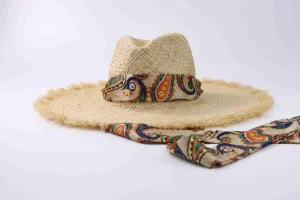
China Stylish Raffia Beach Hat for Sun Protection and Fashion
View Product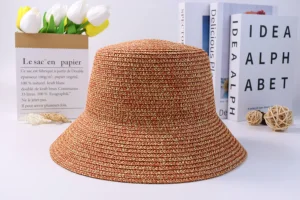
High-Quality Stylish Wide Brim Sun Hats for Women — UV Protection
View Product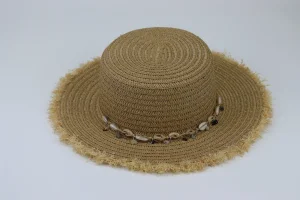
High-Quality Stylish Women's Boater Hat — Perfect for Sun Protection
View Product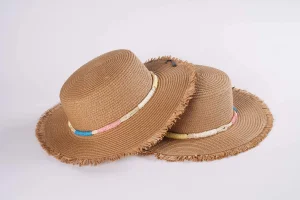
China Packable Sun Hat for Travel — UV Protection & Adjustable Fit
View Product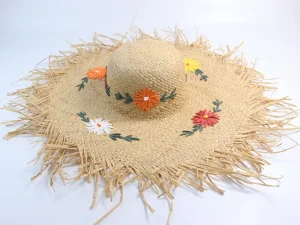
Wholesale China Handmade Raffia Straw Lady Floppy Hat — Summer Hat, Customizable with Embroidery
View Product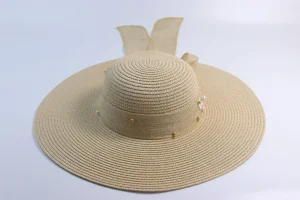
High-Quality Stylish Big Floppy Hat for Sun Protection & Fashion — Quality from China Suppliers and Factory
View ProductStart Your Egypt Sourcing Program Today
Send us your target styles, quantities, and delivery port — Alexandria, Port Said, or Damietta — and our team will return a tailored program with material options, sampling plan, and Egypt-specific documentation roadmap within 8 hours.