
New Arrival
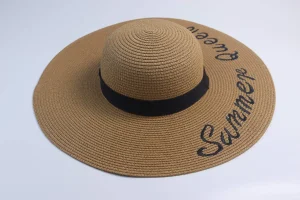
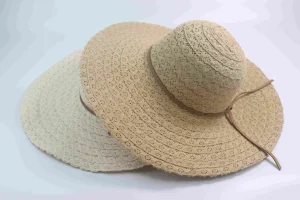
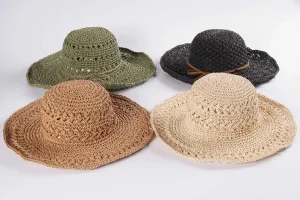
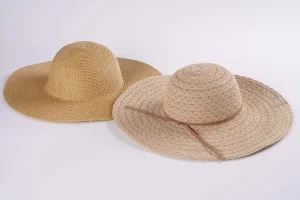
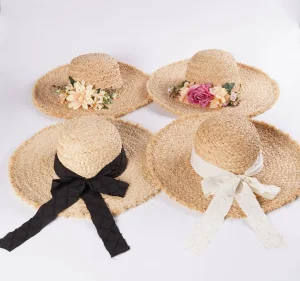
Four proven silhouettes confirmed across American resort, beachwear and boutique retail seasons. Every style below is available in raffia, paper straw or natural grass straw with custom bands, linings, woven labels and hang tags.
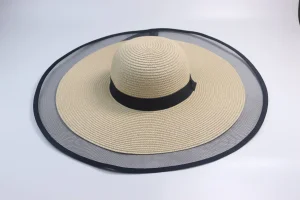
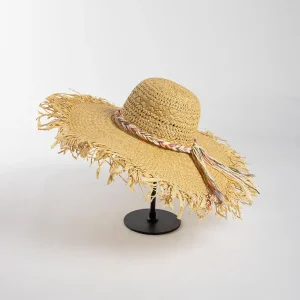
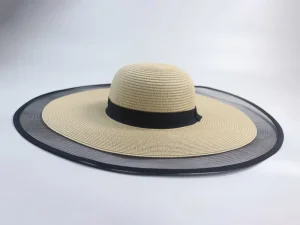
Pieces starting quantity per design
Average response & action on buyer requests
Countries served across six continents
Years producing straw hats and woven bags
The United States remains the single largest destination for woven straw and floppy sun hats manufactured in Shandong, China. Understanding the demand structure — regional seasonality, channel mix and compliance obligations — is what separates a repeatable program from a one-off container.
Across the last five buying cycles, U.S. imports of wide-brim and floppy straw hats have shifted from discretionary seasonal add-ons to a core category for resort wear, travel retail and direct-to-consumer brands. Three forces are driving that shift: extended sun-safety awareness, a post-pandemic travel & leisure boom, and the mainstreaming of "quiet luxury" aesthetics — the very trend that made the Old Money Style floppy silhouette a bestseller in Miami, Palm Beach and Santa Monica boutiques.
Sun Belt states (Florida, Texas, Arizona, Southern California, Hawaii) generate the highest sell-through for wide-brim floppy hats, sustained by year-round tourism and outdoor hospitality. Northeast and Midwest markets follow a compressed April–August window, where packable travel hats and crushable raffia styles dominate. Understanding this split lets buyers stagger production runs and reduce markdown risk.
Boutique and specialty retail favors low minimums (50–100 pcs per design) and rapid colorway testing. Resort and cruise retail buys in seasonal blocks with strong logo and hangtag requirements. DTC and marketplace sellers prioritize photography-ready shapes, consistent sizing and packaging that survives parcel logistics. Each channel has a different tolerance for lead time — a factor that directly shapes your production calendar.
U.S.-bound shipments require accurate HTS classification, country-of-origin marking, and — where applicable — fiber content and care labeling under the FTC textile rules. Natural fiber hats often trigger additional questions on CPSC general conformity for children's styles and California Prop 65 labeling for dyes and trims. We support buyers with documentation packages, material declarations and pre-shipment labeling review.
Floppy hats sit at the intersection of three procurement realities: naturally variable raw materials, labor-intensive hand finishing, and a consumer base that increasingly demands traceability. Buyers who align their sourcing strategy with those realities build more resilient seasonal programs.
Large importers increasingly consolidate headwear and bag programs under a single supplier to reduce inspection overhead and container inefficiencies. Specialized factories with in-house weaving and blocking are best positioned to capture that consolidation.
European and North American buyers increasingly request fiber origin declarations, dye compliance statements and supplier codes of conduct. Factories with documented material chains win long-term contracts.
Retail calendar shifts have shortened sampling windows. Suppliers offering 7–10 day sample turnaround and pre-approved material libraries reduce the risk of missed delivery windows.
Packable floppy hats compress well, making them attractive for LCL consolidation and mixed-carton programs. Brim construction and crown stiffness must be specified to withstand compression without permanent deformation.
Natural fibers, biodegradable packaging and reduced plastic in trim components are moving from marketing claims to procurement criteria for resort and lifestyle brands.
Buyers in Los Angeles and New York need suppliers who can answer within a working day. An 8-hour response commitment translates directly into fewer missed decisions and faster approvals.
Rather than quoting a unit price, we build each client a sourcing blueprint that maps their market, channel and compliance obligations to a defined production path. The framework below applies to programs ranging from a 50-piece boutique test to a multi-container seasonal rollout.
Translate your mood board, bestseller data and color standards into a manufacturable specification: brim width, crown height, wire vs. non-wire edge, lining, band material and finish.
Match fiber choice to your retail price point: raffia for premium resort lines, paper straw for volume and color consistency, natural grass straw for shape retention.
Proto, fit and photo samples with documented measurements. We photograph each sample against a color standard so your team can approve remotely with confidence.
Weaving, blocking, banding, labeling and finishing under one roof, with in-line checks at each stage rather than a single end-of-line inspection.
Polybag and carton specifications aligned with Amazon FBA, retailer routing guides and parcel-safe compression for DTC fulfillment.
FCL and LCL sea freight from Qingdao, air freight for urgent replenishment, and complete export documentation with 8-hour after-sales response.
Floppy hat manufacturing remains fundamentally artisanal, but the surrounding supply chain is modernizing quickly. Our roadmap reflects where we are investing across the next three production cycles to serve U.S. and European retail requirements.
Consolidating raffia, paper straw and natural grass straw into pre-approved material libraries with documented shrinkage, dye lot tolerance and color fastness.
Photographing every approved sample against a color reference card, building a searchable archive that shortens future sampling for repeat buyers.
Moving from end-of-line inspection to in-line checks of brim width, crown circumference and band placement at defined production milestones.
Assigning batch codes to fiber inputs and finished goods so buyers can trace any carton back to its material lot and production window.
Phasing out plastic-based sweatbands and packaging in favor of cotton, paper and recycled content options aligned with retail sustainability scorecards.
Consolidating order status, inspection reports, packing lists and shipping documents into one portal accessible to buyers across time zones.
Selling into the United States is not only a logistics exercise. It is a documentation, labeling and sizing exercise. Below is how we align our output with the expectations of U.S. buyers and regulators.
| Requirement | What Buyers Face | How We Support It |
|---|---|---|
| HTS Classification | Misclassification causes customs delays and duty disputes on straw headwear. | Providing material composition and construction details to support accurate HTS assignment by your broker. |
| Country of Origin Marking | U.S. Customs requires legible origin marking on the article or packaging. | Applying "Made in China" labels to specification, with alternate placement options for retail-friendly presentation. |
| Fiber Content & Care Labels | FTC textile rules require fiber content and care instructions for many headwear items. | Producing labeling artwork and applying care labels per your compliance team's approved wording. |
| California Prop 65 | Certain dyes, trims and packaging components may require warning labels in California. | Confirming material declarations for dyes and trims; supporting the appropriate warning label decision. |
| Children's Products (CPSC) | Children's hats may fall under additional safety and labeling expectations. | Reviewing construction details (small parts, cords, attachments) prior to production for children's lines. |
| Retail Routing Guides | Large retailers enforce carton labeling, packing configuration and ASN requirements. | Configuring carton marks, packing lists and case packs to match the routing guide you provide. |
American buyers typically work in inches for brim width and head circumference, and expect a simple One Size / S-M / L-XL structure. We maintain parallel imperial-metric specification sheets and align internal fit standards to U.S. sizing conventions to avoid size complaints at retail.
Our English-speaking sales team commits to a response and action window of 8 hours across U.S. business hours, covering product questions, sampling decisions, order follow-up and after-sales issues. Single point of contact per account, with documented decisions recorded in writing.
Shandong Lige Import & Export Co., Ltd. is based in Linyi City, Shandong Province, within easy reach of Qingdao Port — one of China's major container gateways and a primary departure point for U.S. West Coast calls. For more than 15 years we have focused on straw hats, paper hats, straw bags and paper bags, combining traditional hand-weaving skills with modern blocking and finishing expertise.
Our customers are importers, wholesalers, brand owners and retailers in the United States, Canada, Australia, Mexico, Western Europe and Japan. They rely on our professional designers, an efficient sales team, competitive factory pricing and dependable quality. Our goal is simple: to become your one-stop hat supplier.

Years manufacturing
Global distributors
Countries served
Beyond the featured silhouettes, our full catalog covers straw sun hats, beach hats, western and cowboy styles, and UV-protection lines — all customizable with private label bands, linings, woven labels and hang tags.

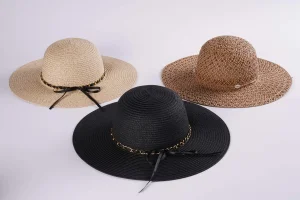
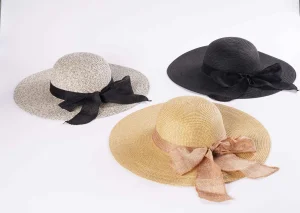
Three structural shifts are likely to shape U.S. and global floppy hat sourcing over the next several seasons — and each one favors buyers who build supplier relationships around transparency and responsiveness rather than unit price alone.
Floppy hats are increasingly marketed on measurable UV protection rather than style alone. Buyers will favor suppliers who can document weave density and fabric performance where claims are made.
Artisanal natural fibers carry a story that aligns with circular-economy messaging. Suppliers able to trace raffia and natural grass straw to documented origins will support stronger retail narratives.
Sampling, approval and documentation will continue moving into digital portals. Buyers who prefer remote decision-making will reward suppliers with searchable sample archives and structured order visibility.
Straight answers on minimums, customization, compliance, shipping and service. Need more detail? Our team replies within 8 hours.
Send us your style references, target quantity, destination port and compliance requirements. Our team will respond within 8 hours with material recommendations, a sampling plan, indicative pricing and a production timeline.