
Featured Hot Sales
Four Flagship Styles Already Moving Through Swedish Retail
These are the SKUs Nordic buyers request most often for the summer window — packable, sun-safe and priced for the mid-premium shelf.
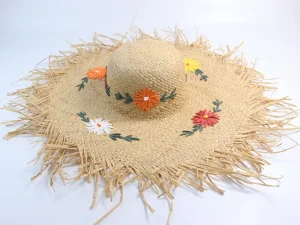
Wholesale Handmade raffia western hat female fashionable embroidery straw hat Manufacturers, Supplier
View Product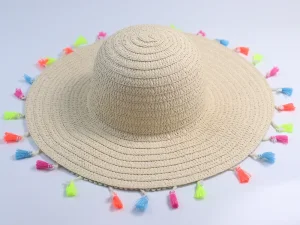
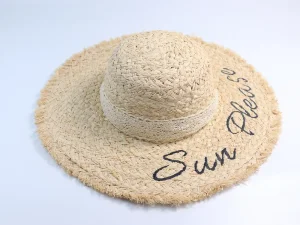
China Summer hat & bag for Kids Cute Beach Handbag and Hat Set Manufacturer, Factory
View Product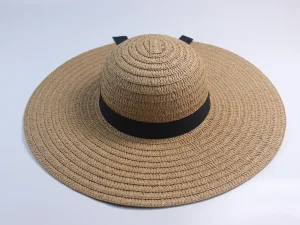
High-Quality Big hat new style paper straw hat summer hat lady hat floppy hat sun hats Manufacturers, Suppliers
View Product
Sweden Market Landscape
Why Sweden Is a High-Value, High-Standard Headwear Market
Swedish buyers are not browsing — they are procuring against a fixed seasonal calendar, sustainability mandates and strict consumer-protection rules.
Sweden is a compact but disproportionately influential market. With roughly 10.5 million inhabitants, a highly digitalised retail base and one of the highest e-commerce penetration rates in the European Union, a single successful Swedish listing can create a halo effect across Denmark, Norway and Finland. For a China-based straw hat manufacturer, Sweden functions as both a revenue market and a credibility gateway into Northern Europe.
Commercial and Industrial Reality on the Ground
Swedish headwear demand is driven by three structural forces. First, the seasonal compression effect: the productive summer window runs roughly from late April to early August, meaning purchase orders must be locked by Q4 of the prior year. Second, the outdoor-living culture — Allemansrätten, the right of public access — normalises hiking, archipelago boating and city cycling, all of which create functional sun-protection demand rather than purely decorative demand.
Third, Swedish retail is dominated by a handful of powerful organised players: the H&M and Lindex fashion groups, ICA and Coop grocery-adjacent general merchandise, Åhléns for mid-market department retail, plus a vigorous independent boutique segment in Stockholm, Gothenburg and Malmö. These buyers impose structured supplier requirements — traceability documentation, chemical compliance, and increasingly a documented carbon footprint per SKU.
Global Procurement Behaviour Shifting Toward Sweden
Global sourcing teams now treat Northern Europe as a single purchasing bloc for category planning. A hat programme approved for Sweden is typically extended to Norway, Denmark and Finland with minimal re-development, because sizing, material expectations and compliance requirements converge. This creates an attractive volume multiplier: a 3,000-piece Swedish order frequently becomes a 9,000–12,000-piece Nordic programme.
Simultaneously, global buyers are de-risking. Instead of five single-category suppliers, they consolidate toward partners that can deliver hats, bags and seasonal accessories under one quality management system. That consolidation directly favours vertically integrated manufacturers with in-house weaving, blocking, finishing and inspection.
Macro Industry Solutions for Nordic Buyers
- Seasonal forecasting partnership: sharing sell-through data so that the following year's MOQ and colourways are planned collaboratively rather than reactively.
- Consolidated container programmes: mixing straw hats, floppy hats, visors and straw bags into a single LCL or FCL shipment to reduce per-unit logistics cost.
- Compliance-first design: selecting materials and trims that pre-qualify for EU REACH and Swedish Chemicals Agency expectations before sampling begins.
- Private-label scalability: a 50–100 piece starting quantity that lets a Swedish boutique validate a shape before committing to a full Nordic roll-out.
Technical Roadmap and Future Outlook
- UPF verification as standard
Swedish consumers increasingly read the label. Documented UPF 50+ testing for paper straw and raffia constructions will move from premium differentiator to baseline expectation by 2027.
- Traceable natural fibre
Batch-level traceability for raffia and natural grass straw, supported by supplier declarations, aligns with the EU corporate sustainability reporting direction.
- Packability engineering
Foldable roll-up floppy hats matched to Nordic cabin-bag travel behaviour, with shape-recovery testing built into the QC protocol.
- Circular material trials
Recycled-content paper straw yarns and mono-material trims that simplify end-of-life separation for Swedish municipal recycling streams.
Supplier Capability Snapshot
Capacity That Matches Nordic Standards
Numbers a Swedish purchasing manager can put directly into a supplier scorecard.
15+Years of straw hat manufacturing
50–100Piece starting quantity per design
60+Export countries served
8hResponse and action commitment
Localisation & Compliance
Localised Support and Compliance Assurance for Sweden
Meeting Swedish requirements is a documentation discipline, not a marketing claim. Here is how the framework works.
Chemical Compliance Documentation
Material declarations aligned with EU REACH expectations, including dye and finishing statements for raffia and paper straw, prepared before the sampling stage.
Labelling & Language Adaptation
Care labels, fibre content and hang tags prepared in Swedish and English, with Nordic sizing conventions applied to head circumference charts.
Factory-Direct Quality Control
Raw material sorting, weaving, blocking, finishing and final inspection under one roof — with a QC manager holding 15 years of category experience.
Nordic Logistics Planning
FCL and LCL sea freight from Qingdao Port toward Gothenburg, with consolidation options that combine hats, visors and straw bags in one container.
Sampling Before Commitment
Physical pre-production samples with material, colour and trim confirmation, so Swedish buyers validate hand-feel before releasing bulk volume.
Dedicated Account Contact
One named contact per account, covering sampling questions, production follow-up and after-sales action within an 8-hour response window.
Sourcing Roadmap
A Six-Stage Path From Swedish Brief to Delivered Container
Transparent, auditable and built around the Nordic seasonal calendar.
Stage 1 — Seasonal Brief
Style references, material preference, head circumference range, colourway direction, branding and target quantity are agreed in writing.
Stage 2 — Material and Design Development
Designers recommend raffia, paper straw or natural grass straw based on the intended retail price point and packability requirement.
Stage 3 — Sample Approval
Pre-production samples are shipped for physical review; labels, hang tags and packaging are confirmed alongside the product itself.
Stage 4 — Production
In-house weaving, blocking, banding and finishing with documented in-process checks at each workstation.
Stage 5 — Final Inspection
Shape retention, brim symmetry, stitching integrity, size conformity and trim attachment are inspected before packing.
Stage 6 — Export and Delivery
Container loading at Qingdao Port, documentation issued, shipment tracked through to the Nordic receiving warehouse.
Buyer Q&A
Questions Swedish and Nordic Buyers Ask Most
Direct answers on quantity, compliance, logistics and support.
What is the minimum order quantity for straw hats shipped to Sweden?
The starting quantity for small orders is 50 to 100 pieces per design, depending on material and craftsmanship. This allows Swedish boutiques and emerging private-label brands to validate a shape before scaling into a full Nordic programme.
Can you produce private-label hats with our own Swedish brand identity?
Yes. OEM and ODM production is the core business. Shape, material, colour, size and hat band can all be customised, and branding elements such as woven labels, patches and hang tags can be added. In-house designers can also develop new styles from a mood board or a reference sample.
Where is the factory located and how are Swedish orders shipped?
The factory is in Linyi City, Shandong Province, China, close to Qingdao Port. Bulk orders typically move by sea freight as FCL or LCL shipments toward Gothenburg, while samples and urgent small orders can be sent by air or express courier.
How do you support Swedish chemical and labelling compliance?
Material declarations are prepared at sampling stage so that dye and finishing statements for raffia and paper straw are available before production. Care labels, fibre content and hang tags can be produced in Swedish and English, and head circumference charts are adapted to Nordic sizing conventions.
What sun-protection properties can be specified?
UPF 50+ constructions — particularly in paper straw and tightly woven raffia — can be specified at brief stage. Because Swedish consumers increasingly read protection claims on the label, the specification should be agreed before sampling rather than added afterwards.
How quickly does the team respond to a Nordic buyer request?
Response and action are committed within 8 hours, covering product questions, sampling arrangements, order follow-up and after-sales service.
What else is manufactured beyond straw hats?
Alongside straw hats, the range includes paper hats, straw bags, paper bags, children's straw hats, toy hats, lifeguard hats, sun visors and winter hats — which allows a Swedish buyer to consolidate several accessory categories with a single supplier.
Can multiple categories be consolidated into one shipment?
Yes. Hats, visors, children's sets and straw bags can be combined into a single LCL or FCL shipment, which materially improves freight economics for Nordic importers ordering across categories.
Full Hot Sales Range
Eight More Styles Ready for Swedish Assortments
Every silhouette below can be produced in raffia, paper straw or natural grass straw with custom bands, trims and branding.
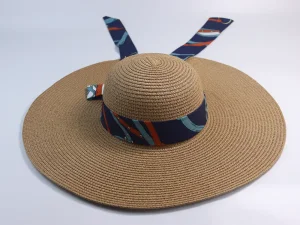
China Wholesale fashion female summer hats big brim hat sunshine hat Manufacturer, Supplier
View Product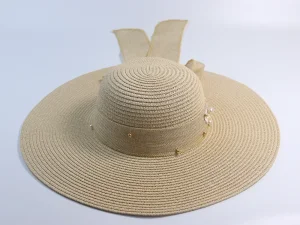
China Sun protective floppy beach straw hat lady flat top hat for women Suppliers, Factory
View Product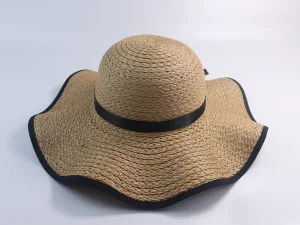
High-Quality Women's Large Brim Summer Beach Hat Wavy Edge Sun Protection Hat Supplier, Factories
View Product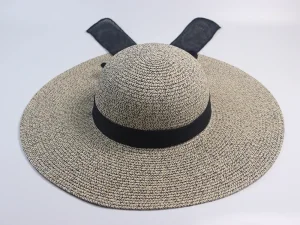
High-Quality Multi-colors lady hat summer hat floppy with big brim Suppliers, Factories
View Product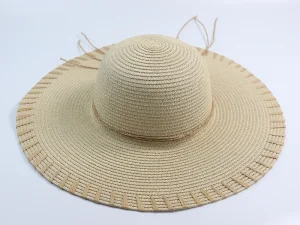
China Womens Sun Straw Hat Wide Brim UPF 50 Summer Hat Foldable Roll up Floppy Beach Hats Manufacturer, Factory
View Product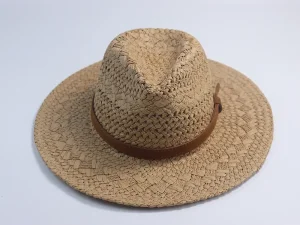
China Straw Fedora Hat Cowboy Hat Panama Hat Sun Hat Manufacturers, Manufacturer
View Product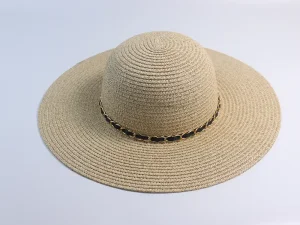
High-Quality Wholesale Women Summer Seaside Large Sun Visor Hat Sunshade Outdoor Sun Protection Straw Hat Supplier, Suppliers
View Product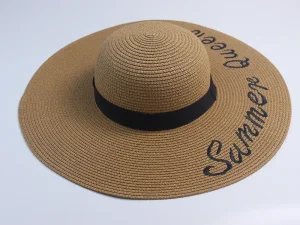
China Women Summer Wide Brim Floppy Custom Embroidery Letters Colors UV Protect Beach Straw Hats Manufacturer, Factory
View ProductBuild Your Swedish Summer Range With a Factory-Direct Partner
Send your style references, target quantity and destination port. Our team replies within 8 hours with material recommendations, a sampling plan and a production timeline aligned to the Nordic buying calendar.